CS Concentric Reducer: What Is It and Where Is It Used?
A CS Concentric Reducer is a buttweld pipe fitting that lets you connect two lines with different sizes so that they share a centerline. This part is made from carbon steel and has bevelled ends for full-penetration welding. It makes sure that fluid changes in vertical pipe systems go smoothly. It is essential in high-pressure industry settings like oil factories, chemical plants, and power plants because its symmetrical, cone-shaped shape reduces turbulence and pressure loss. Because it is built to last and meets international standards like ASME B16.9, engineers choose it over other options when they need reliable, leak-proof links for tough jobs.
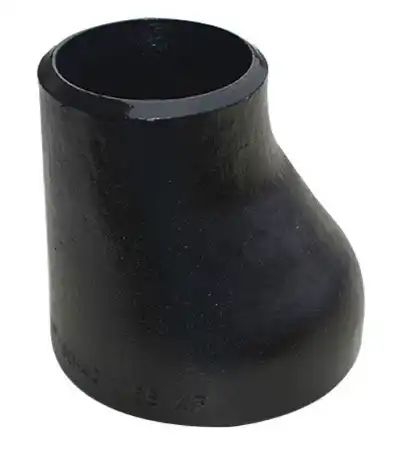
Understanding CS Concentric Reducers: Definition and Basics
CS Concentric Reducers are very important parts of industrial pipe networks that help pipes connect to each other. Buttweld fittings, unlike threaded or socket connections, make lasting, high-integrity parts that can handle high temperatures and pressures. The word "concentric" refers to the fact that both pipe ends are lined up along a single path. This is what makes them different from eccentric reducers.
What Defines a Carbon Steel Concentric Reducer?
Usually, either hot or cold making is used to make the product, and then it is heated to smooth out the grain structure. As required by ASME B16.25 standards, each end has a 37.5° ± 2.5° bevel angle and a 1/16" root face. This lets welders make full-penetration welds, which eliminates weak spots that are common in mechanical joints and improves structural integrity. The fitting's conical geometry gradually reduces flow area, which keeps laminar flow patterns that are important for pump efficiency and system longevity.
Material Specifications and Standards Compliance
Quality CS Concentric Reducers are made according to ASTM A234 WPB standards, which make sure that their chemical make-up and mechanical properties meet strict industry standards. At Oudi, we use normalising heat treatment on all shaped parts to get their hardness levels below 197 HB, which is required by international codes. Our production facility uses advanced spectroscopy and tensile testing equipment to make sure that the materials are consistent before they are fabricated. Wall thickness options from Schedule 10 to XXH meet a wide range of pressure needs, and dimensional tolerances are kept to ±1% per ASME B16.9.
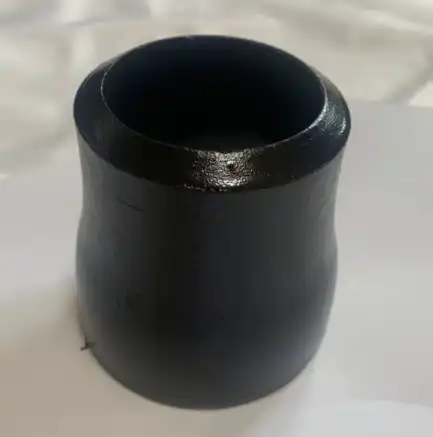
Pressure Ratings and Dimensional Parameters
CS Concentric Reducers take on the pressure rating of the seamless pipe that they are connected to. For example, a Schedule 40 reducer made of ASTM A234 WPB material can safely handle the same pressures as a Schedule 40 pipe of the same diameter and material grade. Our engineering team provides detailed pressure-temperature charts that are in line with ASME B31.3 process piping codes. These charts help procurement professionals match reducer specifications to system operating conditions.
Applications and Uses of CS Concentric Reducers in Industrial Pipelines
These CS Concentric Reducers are very useful because they can keep flow symmetrical even when the width changes. They are often chosen for important service in industries that need high reliability and operational safety.
Primary Industrial Applications
Offshore oil platforms use CS Concentric Reducers to connect vertical pump discharge lines to larger gearbox pipes. The centred alignment stops uneven loading on pipe supports, which lowers the risk of fatigue failures caused by vibration. In supercritical power plants, steam distribution systems working above 250 bar use these reducers to keep velocity profiles uniform, which stops erosion-corrosion at transition points. Chemical processing plants use them in reactor feed lines to keep them laminar.
These parts are very useful for water conservation in large-diameter distribution mains. For example, municipal water treatment plants use CS Concentric Reducers to connect the outlets of filtration equipment to transmission pipelines. The smooth bore transition minimises head loss, and commercial buildings' HVAC systems use them to improve air handler connections, which balances airflow and lowers noise.
Installation Best Practices
Making sure that the inside diameters of the pipes that are being installed match the reducer bore is the first step to a proper installation. If the wall thicknesses don't match, the reducer bore needs to be counterbored to get rid of the internal steps that cause turbulence hotspots. For wall thicknesses greater than 5mm, we recommend using qualified welders certified to ASME Section IX standards who use GTAW root passes followed by SMAW fill passes. Post-weld heat treatment is required for carbon steel parts in service temperatures above 400°F or when the base metal thickness exceeds 19mm.
Care must be taken during the alignment process, as a centerline variation of more than 1/8" over a 10-foot span can cause uneven pressure during thermal expansion cycles. We give each CS Concentric Reducer a mill test record that includes data from dimensional checks, hydrostatic testing, and chemical analysis. This makes sure that the parts can be tracked throughout the span of the project.
Core Advantages That Set Them Apart
Engineers like how CS Concentric Reducers give them real performance benefits when they're looking at pipe parts. When they are soldered into pipe systems, they don't create any leak paths that are common with mechanical connections. Long-term upkeep costs are lower because there are no seals or bolts, and the system is more available.
Efficient use of materials is another strong benefit. Carbon steel has a good strength-to-weight ratio, which means that wall pieces can be smaller than with lower-grade materials. This saves money on materials and time spent welding. The constant quality across production runs is made possible by ASTM A234 WPB's predictable weld fusion properties.
These benefits have a direct effect on how reliable operations are. Less turbulence at transition points lowers the risk of cavitation damage in pump flow situations where runs that go up and down require changes in diameter. The part's ability to withstand temperature cycling without joint degradation is very useful in steam service uses that start up and shut down a lot.
Comparing CS Concentric Reducers with Alternatives: Making the Right Choice
To make a purchase choice, you need to know how the total cost of ownership changes for different reducer setups and materials. Choosing between CS Concentric Reducer and eccentric forms changes how the system works and how it needs to be installed in a basic way.
Concentric vs. Eccentric Reducer Selection Criteria
CS Concentric Reducers work best in vertical pipes, where gravity automatically gets rid of trapped air. Their symmetrical shape properly spreads structural loads across support systems, which is very important for high-pressure steam lines that have to deal with thermal expansion forces. On the other hand, eccentric reducers with a flat top alignment stop air pockets from forming in horizontal pump pressure lines, which gets rid of the risk of cavitation. When engineers choose reduction types, they need to think about the flow direction and angle to avoid having to make expensive changes in the field.
Material Trade-offs: Carbon Steel vs. Stainless Alternatives
Stainless steel reducers are more resistant to rust than CS Concentric Reducers, but they usually cost three to four times more. CS Concentric Reducer is a great choice for services that don't involve rust or for uses that allow for enough corrosion. When paired with the right protective coats, our A234 WPB reducers can work for 40 years in settings where hydrocarbons are processed. Because the material can be welded, installation labour costs are lower, which cancels out any extra cost that might be seen over standard fittings.
Evaluating Total Ownership Costs
When making a purchase choice, you need to think about more than just the original unit price. An Oudi CS Concentric Reducer comes with full tracking paperwork, positive material identification records, and certificates for radiographic testing. Costly rework and project delays can be avoided with these quality guarantees. When you buy in bulk for big EPC jobs, you can save money and make sure that the qualities of the materials stay the same across multiple delivery batches.
Lifecycle cost analysis should take into account how often things need to be inspected and replaced. Higher-quality parts with tested mechanical qualities increase the average time between failures, which lowers the costs of unexpected downtime. Our technical team makes TCO calculators that model practical savings and repair cycles over the course of a 20-year project.
Procurement Insights: Buying CS Concentric Reducers for Your Business
When you strategically source pipe parts, you have to find a balance between quality, delivery reliability, and business freedom. Procurement managers can improve the performance of the supply chain by knowing what suppliers can do and how the market works.
Supplier Evaluation Criteria
The first step in qualifying a source is to check its certification. Our ISO 9001:2000 quality management system certification and special equipment production licence at Oudi show that we follow both foreign standards and Chinese government rules. We have our own testing labs with spectroscopy, tension testing machines, and ultrasonic inspection tools, so we don't have to rely on confirmation from a third party.
Production Capacity and Lead Times
Project timelines are directly affected by how much can be produced. Our yearly output of 16,000 tonnes makes sure that we always have enough, even during times of high demand. Keeping track of raw materials, work-in-progress, and produced things at different stages of inventory management protects against supply problems. Our distribution network helps clients in Europe, North and South America, Africa, Southeast Asia, and the Middle East meet tight building deadlines.
Navigating Minimum Order Quantities and Lead Times
Due to setup costs and inefficient material handling, small-lot purchases often come with higher prices. Our flexible production schedule can handle orders ranging from a few prototypes to full containers. Our price structures credit customers who commit to buying in bulk without punishing customers who buy less at first. Standard stock sizes ship in 7–10 business days, while special configurations take 4–6 weeks, based on how complicated they are.
Custom Fabrication Advantages
Project-specific needs often call for measurements or grades of materials that aren't available in catalogues. The engineering team at Oudi works with customers to come up with unique solutions using unusual metals, special heat treatments, and changed blade angles. Our manufacturing systems that are integrated with CAD send design details straight to CNC machining programs. This makes sure that the sizes are correct and cuts down on wait times. This ability comes in handy for projects that need to match the size of old equipment or for brownfield additions that need to connect to existing systems.
Ensuring Quality and Reliability: Certification and Supplier Trust
Protecting investments in industrial parts relies on quality systems that can be checked and clear ways of making them. To tell one provider from another, you need to look at both their qualifications and their past performance.
The Significance of Factory-Direct Sourcing
Direct connections with manufacturers get rid of the margin stacking that happens in dealer chains and give you access to technical knowledge. Being in Mengcun Hui Autonomous County, which is known as China's pipe fitting manufacturing hub, is convenient for Oudi because it's close to producers of raw materials and specialised subcontractors. Our 66,600-square-meter building combines forging, machining, heat treatment, and checking all under one quality control system. This makes sure that all of our output runs are the same.
Full traceability from raw material mill certificates through final inspection reports provides audit trails essential for pressure equipment directives and project quality plans. It is possible to fully track everything from the mill certificates for the raw materials to the final inspection reports. We use statistical process control on important dimensions, and real-time data collection lets us make changes right away when tolerances get close to the limits set by the specification.
Building Long-Term Partnership Value
When people do business with each other again and again, they get perks that go beyond transactional price. Oudi keeps track of detailed client specs and past order information, which speeds up the reordering process and stops specification mistakes. When problems happen in the field, our technical support team helps with fitting problems, making sure the weld process is correct, and figuring out why something failed. Because of this dedication to service, relationships with clients in the oil, chemical, water conservation, and power production industries have been maintained for many years.
Warranty terms reflect confidence in manufacturing quality. We stand behind our CS Concentric Reducers with a full guarantee that covers both material flaws and non-conformance with dimensions. Claims handling is based on written processes and quick responses, which keep project interruptions to a minimum.
Conclusion
In conclusion, CS Concentric Reducers are important parts of industrial pipe systems because they make diameter changes that are reliable and keep the flow intact in tough situations. Engineers and procurement workers can't do without them because they meet international standards, have a butt-welded design, and have been used in high-pressure situations before. By knowing the technical specs, what the application needs, and what the provider can do, you can make smart buying choices that meet both the short-term needs of the project and the long-term needs of operating reliability. As global industries keep pushing for higher performance standards, it becomes more and more important for projects to work with makers who can show they have quality approvals, production capacity, and technical know-how.
FAQ
When Should I Choose a Concentric Reducer Over an Eccentric One?
Choose CS Concentric Reducers for pipe runs that go up and down, as they ensure even flow and balanced structure loads. The centred orientation keeps the pressure on the pipe supports from being uneven when the pipe expands. When you use eccentric setups in horizontal pump pressure lines, the flat-top design stops air pockets from building up and causing damage called cavitation.
How Is the Pressure Rating Determined?
Buttweld CS Concentric Reducers don't have their own pressure values like flanged parts do. Instead, they are made to hold up under the same amount of pressure as seamless pipe made of the same grade of material and with the same wall thickness plan. According to ASME B31.3 estimates, a Schedule 40 reducer made of A234 WPB material can handle the same amount of pressure as a Schedule 40 carbon steel pipe.
Can Different Schedules Connect Directly?
To connect a CS Concentric Reducer to a Schedule 80 pipe, the inside sizes must be the same, which means that the insides must be counterbored. Without this preparation, the sudden change in wall thickness blocks flow, which causes turbulence and speeds up rusting in one area. If you follow the right steps for manufacturing, this internal step is not needed, and the hole transitions will be smooth.
Partner with Oudi for Premium Carbon Steel Concentric Reducers
Since 1998, Oudi has been making pipe fittings for over 300 users in 40 countries. They offer a wide range of carbon steel, stainless steel, and alloy steel parts. Our CS Concentric Reducers that are in line with ASME B16.9 can handle the tough needs of the oil, chemical, natural gas, and water conservation industries. With ISO 9001 certification and permits to make certain types of tools, we can offer goods that meet international quality standards at prices that are competitive. Our technical team can help you with project specifications, help you choose materials, and make things that are exactly what you need. Email us at oudi-04@oudiguandao.com to talk about your pipe fitting needs with a CS Concentric Reducer provider who cares about your business's success.
References
1. American Society of Mechanical Engineers. (2020). ASME B16.9: Factory-Made Wrought Buttwelding Fittings. New York: ASME Press.
2. ASTM International. (2019). ASTM A234/A234M: Standard Specification for Piping Fittings of Wrought Carbon Steel and Alloy Steel for Moderate and High Temperature Service. West Conshohocken: ASTM International.
3. Mohitpour, M., Golshan, H., & Murray, A. (2007). Pipeline Design & Construction: A Practical Approach (3rd ed.). New York: ASME Press.
4. Nayyar, M. L. (2000). Piping Handbook (7th ed.). New York: McGraw-Hill Professional.
5. Singh, R. (2017). Applied Welding Engineering: Processes, Codes, and Standards (2nd ed.). Oxford: Butterworth-Heinemann.
6. Ellenberger, J. P. (2014). Piping and Pipeline Calculations Manual: Construction, Design, Fabrication and Examination. Oxford: Butterworth-Heinemann.

Need help finding the right solution with our experts. Please contact us.

SINCE 1998 Your Reliable Pipeline Manufacturer



