CS Concentric Reducer Buying Guide: Tips for Industrial Projects
When sourcing a CS Concentric Reducer for critical industrial applications, procurement managers face a complex decision matrix involving material certification, dimensional accuracy, welding compatibility, and long-term performance reliability. This guide addresses the core selection criteria that matter most to professionals in oil refineries, chemical plants, natural gas facilities, and water conservancy projects—industries where a single pipe fitting failure can cascade into operational downtime costing hundreds of thousands in lost revenue. Understanding the nuanced differences between manufacturing processes, quality verification protocols, and supplier technical capabilities empowers you to make informed purchasing decisions that balance initial investment against lifecycle value.
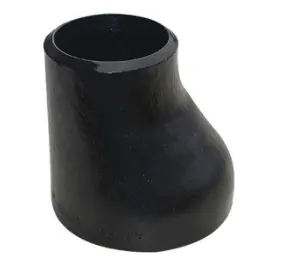
What Makes CS Concentric Reducer Different from Standard Pipe Fittings?
Carbon steel concentric reducers serve a specialised function in piping systems that standard fittings simply cannot replicate. Unlike threaded connections or socket-weld alternatives, these components create permanent butt-welded joints that withstand extreme pressure fluctuations and thermal cycling. The defining characteristic lies in the symmetrical diameter reduction—both inlet and outlet maintain a shared centerline, ensuring balanced flow distribution in vertical pipeline configurations.
The manufacturing origin significantly impacts performance characteristics. Hot-formed reducers exhibit superior grain structure refinement, particularly when normalising heat treatment follows the forming process. Cold-formed variants require careful attention to work-hardening effects, which can compromise ductility in heavy-wall applications. Material specifications like ASTM A234 WPB provide baseline mechanical properties, yet the execution quality varies dramatically between manufacturers.
Dimensional tolerances directly affect installation efficiency and long-term integrity. A reducer with improper bevel angles creates welding challenges, potentially leading to incomplete fusion or stress concentration points. Wall thickness consistency matters equally—variations exceeding industry standards can cause turbulence-induced erosion at transition zones. These technical realities underscore why specification compliance represents more than bureaucratic formality; it protects operational continuity in mission-critical systems.
Essential Selection Criteria for Heavy Industries
Selecting the appropriate carbon steel pipe reducer demands alignment between application environment and material capabilities. Pressure vessel systems in chemical processing plants require reducers engineered to match the parent pipe's pressure rating, calculated based on wall thickness (schedule) rather than arbitrary class designations. A Schedule 40 reducer paired with Schedule 80 piping introduces a problematic internal step that accelerates corrosion and disrupts laminar flow profiles.
Temperature service conditions dictate material grade selection of CS concentric reducers. Standard WPB carbon steel performs reliably up to 425°C, yet higher temperature regimes demand alloy upgrades. Power generation facilities operating supercritical steam systems require reducers with enhanced creep resistance—a property not immediately apparent from basic material certifications. Matching the thermal expansion coefficients between reducer and adjacent piping prevents stress accumulation during thermal cycling events.
Corrosion resistance considerations extend beyond simple material selection. Pipeline components transporting sour gas or H2S-laden fluids need additional qualification through NACE MR0175 compliance verification. The presence of chlorides in water conservancy applications mandates pitting resistance evaluation, particularly for stainless steel variants. These environmental factors transform a seemingly straightforward purchasing decision into a multi-dimensional technical evaluation.
Certification Requirements That Actually Matter
Quality documentation separates professional-grade suppliers from commodity vendors. ISO 9001 certification establishes minimum quality management system requirements, yet this baseline proves insufficient for high-stakes industrial applications. Look for manufacturers holding special equipment manufacturing licenses issued by national regulatory authorities—these credentials verify capability to produce pressure-bearing components meeting safety-critical standards.
Material test reports (MTRs) constitute non-negotiable documentation for every batch of reducers. Authentic MTRs trace chemical composition and mechanical properties to specific heat numbers, enabling full traceability from raw material to finished product. Third-party inspection agencies like TÜV, Lloyd's Register, or Bureau Veritas provide independent verification that transcends manufacturer self-certification. Insist on witnessing dimensional inspection and non-destructive testing protocols during factory acceptance procedures.
International standard compliance requires careful specification. ANSI/ASME B16.9 governs dimensions and tolerances for factory-made wrought fittings in North American projects, while DIN 2616 applies to European applications. Japanese JIS B2313 and British BS 1965 standards introduce subtle dimensional variations that affect interchangeability. Suppliers capable of manufacturing to multiple standards simultaneously demonstrate technical flexibility and global market sophistication—capabilities particularly valuable for EPC contractors managing multinational projects.
Understanding Manufacturing Processes and Quality Indicators
The production methodology fundamentally determines reducer performance characteristics. Seamless manufacturing begins with pipe blanks, eliminating longitudinal weld seams that represent potential failure points in high-cycle fatigue environments. Hot forming processes involve heating billets to forging temperature, then pressing them into reducer geometry using hydraulic equipment. This approach refines grain structure through recrystallisation, yielding superior impact toughness compared to cold-worked alternatives.
Cold forming techniques suit thin-wall applications where dimensional precision outweighs mechanical property concerns. However, this process introduces residual stresses that accumulate during diameter reduction. Manufacturers committed to quality excellence perform stress-relief annealing post-forming, restoring ductility and eliminating work-hardening effects. The presence of normalising furnaces and controlled cooling chambers in a facility signals investment in metallurgical quality rather than mere dimensional compliance.
Machine marks, die stamps, or surface oxidation indicate suboptimal process control. Professional-grade CS concentric reducers exhibit smooth transitions with uniform wall thickness verified through ultrasonic measurement. Bevel preparation deserves particular scrutiny—edge geometry directly impacts weld quality and fusion penetration. The standard 37.5° bevel angle with 1/16-inch root face (per ASME B16.25) facilitates consistent welding results across different operator skill levels.
Why Supplier Production Capacity Influences Project Success
Annual production capacity functions as a proxy indicator for operational maturity and supply chain reliability. Facilities producing 16,000 tons yearly demonstrate scale sufficient to justify advanced inspection equipment and specialised workforce development. This production volume supports inventory depth across specification ranges, reducing lead times for standard configurations while maintaining flexibility for custom requirements.
Equipment sophistication correlates with output consistency. CNC machining centres ensure dimensional repeatability across production runs, minimising field installation challenges caused by tolerance stacking. Automated ultrasonic testing systems detect internal defects that visual inspection misses—particularly critical for wall thickness verification in heavy-schedule reducers. Spectroscopic analysis equipment enables rapid material verification, preventing mix-ups that could introduce incompatible metallurgy into chemical processing systems.
Geographic positioning affects logistics efficiency and total landed cost. Manufacturers located near major ports reduce inland transportation expenses and transit damage risks. Proximity to steel mills provides raw material cost advantages and quality control opportunities through direct supplier relationships. These operational factors accumulate into competitive pricing without compromising technical specifications—a balance that separates strategic suppliers from transactional vendors.
Critical Questions to Ask Before Purchasing
How does the manufacturer check reducer profile wall thickness uniformity? For crucial applications, ultrasonic mapping verifies component specification compliance. Random sampling fails. Ask about inspection frequency and document retention. Suppliers that record reducer metrics digitally show traceability and responsibility.
What thermal treatments follow hot forming? Some producers forgo normalising to save costs, yet it improves grain structure and reduces forming stresses. Get furnace temperature and cooling cycle charts. Calibrated pyrometers and atmosphere-controlled furnaces imply process expertise beyond compliance claims.
Does the supplier provide internal machining for schedule mismatches? Counter-bored reducers avoid internal steps in mixed pipe schedule projects. This requires CNC boring equipment and programming skills, which sophisticated manufacturers have. This functionality may be verified during supplier assessment to avoid expensive field adjustments.
The proportion of output inspected by other parties? Conflict of interest in self-certification. Manufacturers that regularly invite independent inspectors show transparency and quality. Request inspection frequency, agency qualifications, and recent audit fault rates. These measurements go beyond marketing promises to measure success.
Common Pitfalls in Procurement and How to Avoid Them
Purchase failures most often include specification ambiguity. Generic terms like "carbon steel reducer" are open to interpretation across material grades, production techniques, and dimensions. Purchase orders provide ASTM material grades, ASME dimensional specifications, and certificates. This accuracy reduces supplier assumptions that cause project delays and non-delivery.
Low-price selection tactics often fail in industrial pipes. Underpriced components typically have poor material inputs, short testing processes, or poor heat treatment. Premium and economy reducers cost less than premature failure replacements. Total cost analysis includes installation labour, system downtime hazards, and estimated service life, which prioritise quality above savings.
Ignoring welding method compatibility causes field issues. Project welding processes may need preheat or post-weld heat treatment for non-standard reducers. Check if reducer chemistry meets WPS ranges. Fabrication yard-savvy suppliers solve compatibility concerns during quoting.
Insufficient delivery schedule buffers threaten project milestones. Manufacturing custom reducers takes longer than catalogue goods. Customs clearance and inspection delays are possible with international delivery. Contingency in procurement timelines allows for these realities without imposing subpar expediting. Suppliers with stock plans for common specs reduce scheduling uncertainty.
Application-Specific Considerations Across Industries
Sour service reducers are needed for oil and gas projects. The NACE MR0175 standard covers material selection and manufacturing process controls to avoid hydrogen-induced cracking. Weight optimisation reduces wall thickness while maintaining pressure ratings on offshore platforms. These opposing criteria are understood by subsea manufacturers who develop solutions.
In various process media, chemical processing facilities prioritise corrosion resistance. Selecting stainless steel and alloy grades for chemical exposures is crucial. Type 316L resists chloride, although phosphoric acid may need duplex alloys. Manufacturers supplying significant chemical industries have metallurgical knowledge that helps with material selection.
Power generating systems need creep-resistant materials at high temperatures. Supercritical boilers need reducers from alloy grades A234 WP11 or WP22 with chromium-molybdenum for high-temperature strength. These materials need specialised production and quality control because of work-hardening and heat treatment sensitivity.
Water conservation infrastructure projects balance budget and performance. Fusion-bonded epoxy coatings prolong municipal water system longevity in slightly corrosive settings. Surface preparation and curing process management are needed for coating application. Integrated coating manufacturers simplify logistics and assure substrate-protective system compatibility.
Global Market Dynamics and Supplier Selection
From local procurement to international sourcing, complexity increases. Communication and business expectations vary by culture. When both sides are receptive, email and video conferencing can solve problems quickly across time zones. Technical staff language expertise matters—engineering talks demand accuracy that generic translation services cannot offer.
International commerce maturity is shown by export experience. Certification, shipping, and payment instruments are typical for manufacturers supplying 40+ countries. Compared to domestic vendors entering export markets, this expertise streamlines project execution. Request regional customer references to check performance on comparable technical projects.
Knowing the regulatory environment reduces compliance surprises. CE marking and Pressure Equipment Directive compliance are required for European pressure equipment reducers. With National Board registration, North American projects may need ASME code compliance. Knowledgeable suppliers integrate destination market rules into production processes rather than as afterthoughts.
Currency exchange affects project cost for CS concentric reducers. Supplier price stability assurances or currency hedging help long-term initiatives. Suppliers with broad credit terms are confident in client satisfaction and cash flow. Financial factors complement technical evaluation to evaluate suppliers holistically.
Documentation Standards That Protect Your Investment
Mill test certifications provide chemical and mechanical raw material traceability. Each heat number should link to specific reducers via manufacturing records for fast metallurgical reactions during fabrication or servicing. Manufacturers using digital quality management systems can track more than paper records.
Dimensional inspections verify tolerances. Calliper measurements of outer diameter, length, and wall thickness at several places demonstrate uniformity. Specialised protractors check bevel angle for ASME B16.25 welding preparation. Calibrated equipment and skilled quality inspectors eliminate dimensional inaccuracies that inhibit field installation.
Non-destructive testing checks internal health. Penetrating liquids disclose non-visible surface-breaking flaws. Ultrasonic testing finds interior discontinuities in heavy-wall reducers without radiography. Inspection intensity relative to production volume measures quality confidence. Higher inspection rates reduce field failures and warranty claims.
Pressure integrity for qualified applications is verified by hydrostatic tests. Hydrostatic butt-weld fitting testing is optional but adds confidence in critical services. Leakage and deformation examinations employ 1.5 times design pressure for set durations. Quality-focused manufacturers destroy sample components for batch integrity testing.
Technical Support and After-Sales Service Value
Pre-purchase engineering consulting separates technical partners from transactional suppliers. Application engineers at suppliers help with material selection, schedule matching, and specification optimisation. This collaborative method prevents expensive mid-project adjustments and non-conforming deliveries by identifying possible concerns before orders are finalised.
Field operations are streamlined by installation support. Joint quality is optimised by welding method suggestions based on reducer chemistry, not material grade. Fabrication shop-formatted dimensional drawings decrease transcription mistakes and speed cutting and fitting. Even when component prices surpass bargain alternatives, these value-added services lower project cost.
Warranty periods show manufacturer confidence in product life. Standard warranties cover manufacturing defects, but some providers offer performance guarantees under certain operating circumstances. Replacement component lead times and logistical assistance during failure investigations distinguish dedicated partners from indifferent suppliers.
Technical documentation libraries share expertise. Customers may make educated selections using installation guidelines, material selection charts, and corrosion resistance data from manufacturers. Supplier openness creates confidence and presents the supplier as an industry resource rather than a product source. Education separates market leaders from followers.
Conclusion
Successful CS concentric reducer procurement balances technical specifications against supplier capabilities and total lifecycle value. Material certifications, manufacturing process sophistication, and quality documentation systems separate reliable partners from opportunistic vendors. Industries operating high-consequence systems—refineries, chemical plants, power stations—benefit from investing procurement effort proportional to component criticality. The supplier selection decision extends beyond price comparison to encompass technical support, regulatory compliance expertise, and operational transparency. By applying the evaluation framework outlined in this guide, procurement professionals protect project schedules, operational safety, and long-term asset integrity while optimising total cost of ownership.
Partner with Oudi: Your Trusted CS Concentric Reducer Manufacturer
Oudi brings over two decades of specialised experience manufacturing carbon steel pipe fittings that meet the demanding requirements of global heavy industry. Our 66,600-square-meter production facility achieves 16,000-ton annual capacity while maintaining the quality control rigour expected by EPC contractors and end-users across oil, chemical, and power generation sectors. Holding ISO 9001 certification and special equipment manufacturing licenses, we deliver CS concentric reducers with full material traceability and comprehensive inspection documentation to customers in 40+ countries. Contact our technical team at oudi-04@oudiguandao.com to discuss your project specifications and discover how our proven export expertise simplifies international procurement.
References
1. American Society of Mechanical Engineers. Pipe Fittings: Factory-Made Wrought Buttwelding Fittings Standards and Specifications. ASME International, 2021.
2. Davis, J.R. Carbon Steel Piping Systems: Materials Selection and Corrosion Control. ASM International Handbook Series, 2019.
3. European Pressure Equipment Research Council. Guidance on Material Selection for High-Pressure Industrial Applications. Brussels Technical Publications, 2020.
4. International Institute of Welding. Best Practices for Butt Welding of Carbon Steel Pipe Fittings. IIW Technical Commission Documentation, 2022.
5. Mohitpour, M., Golshan, H., and Murray, A. Pipeline Design and Construction: A Practical Approach for Engineers and Project Managers. Third Edition, Industrial Press Inc., 2021.
6. Zhang, L. and Chen, W. Manufacturing Processes and Quality Control in Heavy Industry Pipe Fitting Production. Journal of Materials Engineering and Performance, Vol. 30, Issue 8, 2023.

Need help finding the right solution with our experts. Please contact us.

SINCE 1998 Your Reliable Pipeline Manufacturer



