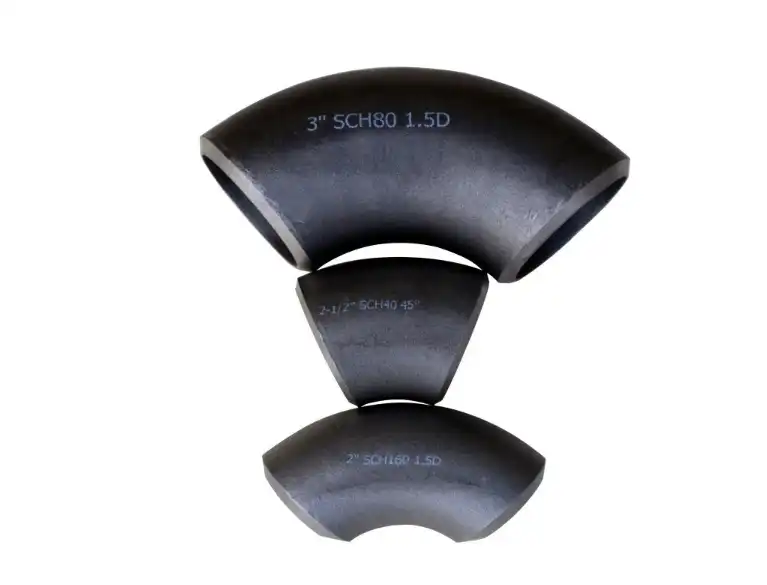
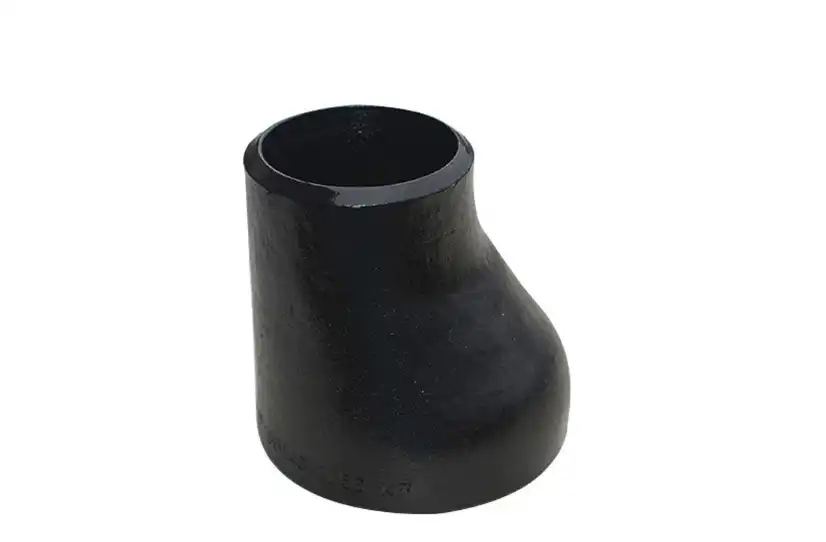
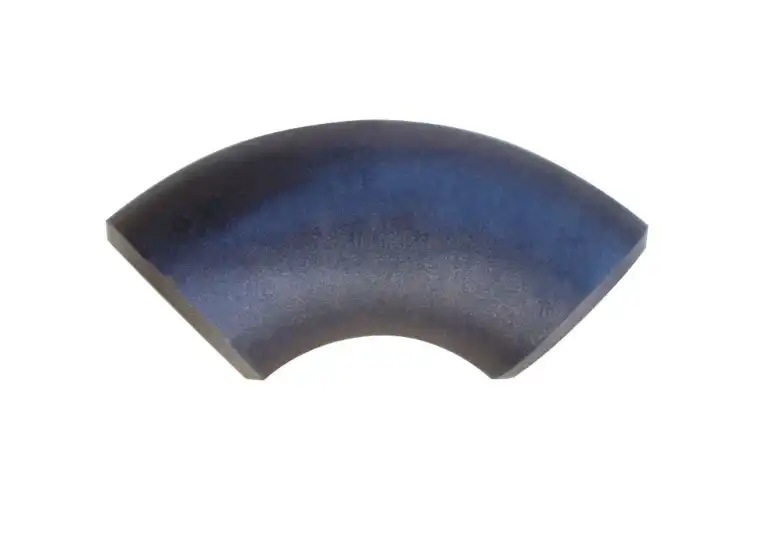
Top Concentric Reducer Carbon Steel Manufacturers for Global Buyers
When sourcing Concentric Reducer Carbon Steel for demanding industrial applications, global buyers need manufacturers who combine precision engineering with proven reliability. A concentric reducer is a cone-shaped pipe fitting that connects two pipes of different diameters while maintaining a common centerline, ensuring smooth fluid transition in vertical piping systems. The right manufacturer delivers not just a component but a critical solution that prevents turbulence, reduces pressure loss, and maintains structural integrity across oil, gas, chemical, and power generation facilities worldwide.
Understanding Concentric Reducer Carbon Steel – Essential Knowledge for Buyers
What Defines a Quality Concentric Reducer?
A steel pipe fitting circular reducer is an important part of pipe networks where the width changes along a vertical line. The circular design lines up both the inlet and exit centers correctly, while eccentric reducers move the centerline out of place to stop air pockets in horizontal lines. Because it reduces turbulence and friction losses, this uniform shape is a must-have for vertical steam lines, pump discharge systems, and high-pressure gas uses.
As the pipe width gets smaller, the cone-shaped transition lets the flow rate change gradually. This managed shift stops the cavitation and shaking stress that happen in systems that aren't built well. When keeping the axial orientation is more important than drainage, engineers choose circular reducers. This is especially true in vertical setups where gravity helps the flow direction.
Carbon Steel Grades and Material Properties
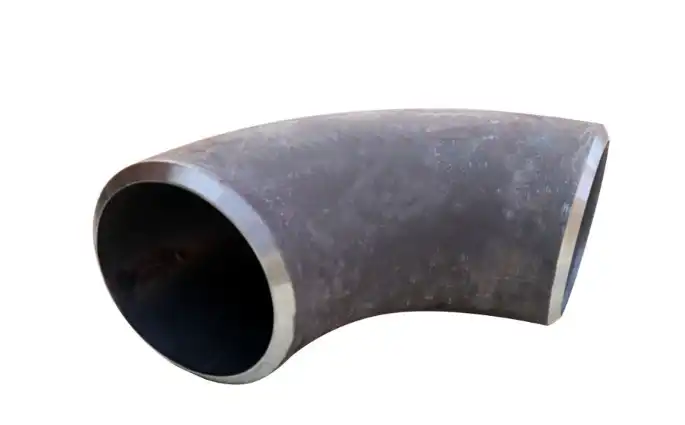
Because it is so strong for how much it costs, carbon steel is still the best material for reducers in big industry settings. The most popular grade is ASTM A234 WPB, which is easy to weld and has good mechanical qualities for temperatures up to 400°C. This grade has the right amount of carbon (0.30% max) and manganese (0.29–1.06%) to make it flexible without lowering its resistance to pressure.
Controlled amounts of nickel make ASTM A420 WPL6 tough down to -46°C, making it ideal for low-temperature uses like cold storage or arctic pipes. The choice of material has a direct effect on how long it will last. For example, more carbon makes the material harder but less easy to weld, and less carbon makes it easier to shape but weaker in tension. Buyers need to make sure that the material specs match the working conditions. They need to think about things like how fluids can corrode, how temperatures can change, and how pressure can change.
Critical Dimensions and Manufacturing Standards
ASME B16.9 sets the standards for dimensions that make sure that products can be used anywhere in the world. Face-to-face length (H dimension) is only affected by the bigger pipe width and not by the reduction ratio. The wall thickness usually matches the schedule of the bigger pipe, but in some high-pressure situations, the smaller end needs to be curved bored to match the thickness of the pipe further downstream.
For walls less than 22 mm thick, the normal 37.5° ±2.5° tilt angle makes it easier to weld through. There are different ways to make Concentric Reducer Carbon Steel, such as seamless joining (best for high-pressure work) and welded building (cheaper for lower grades). After hot pressing, a normalising heat process brings back the grain structure and reduces internal pressures. This keeps the dimensions stable during installation and use.
Comparison Guide: Why Choose Carbon Steel Concentric Reducers?
Material Performance Against Alternatives
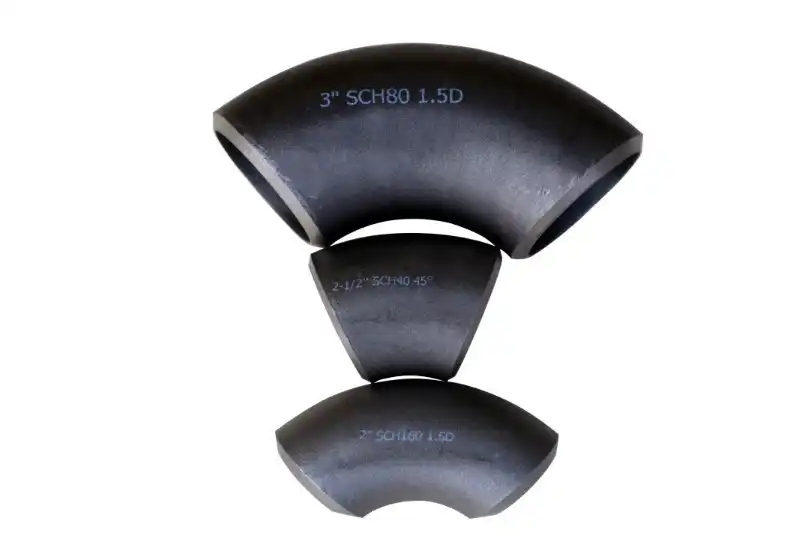
In some situations, carbon steel circular reducers are much better than stainless steel and metal choices. The difference in price is big: carbon steel parts usually cost 40–60% less than 304 stainless steel versions, but they work just as well in places that don't corrode. This cost benefit is very important when setting up big buildings that need hundreds of parts.
Another important difference is mechanical strength. When compared to austenitic stainless grades, carbon steel has a higher yield strength (at least 240 MPa for A234 WPB), which makes it better for high-pressure gas and steam systems. The thermal conductivity of the material also makes it easier to predict how it will expand when the temperature changes.
But the limits of rust protection can't be ignored. In acidic or wet places, where stainless steel would normally work without any upkeep, external coats or cathodic protection are needed. Total lifetime costs—initial savings vs. long-term upkeep costs and how often the product needs to be replaced—make the choice.
Concentric Versus Eccentric Design Selection
When you know when to use circular instead of eccentric reducers, you can avoid costly operating problems. Concentric reducers work best with vertical pipes because gravity keeps air from building up and centerline alignment makes support structures easier to build. The symmetrical design spreads stress evenly around the outside, which stops vibrations from getting to equipment that is linked.
When there is a horizontal pump flow line, an eccentric reducer is needed because the flat-top design (TOP flat) stops air pockets that cause damage from cavitation. In the same way, horizontal process lines use flat-bottom (BOP flat) eccentric reducers to make sure that all the fluid drains away when the line is shut down. When a circular reducer is used incorrectly in these horizontal situations, it causes operating problems that can't be easily fixed by field changes.
The extra difficulty of making eccentric reducers is reflected in the 15-20% price boost. People who are buying should fight the urge to stick with just one type. Good application engineering saves a lot more than the small cost difference by making things more reliable and requiring less upkeep.
Top Concentric Reducer Carbon Steel Manufacturers for Global Buyers
Evaluation Criteria That Matter
When choosing a factory partner, you need to look at more than just price quotes. You also need to look at the skills that will keep the supply chain stable in the long run. ISO 9001:2015 approval is a basic way to make sure that quality management is being done right, but specialised equipment manufacturing licenses show that Concentric Reducer Carbon Steel pressure tank components are being made in accordance with the rules. These licenses are checked on a regular basis by checks that make sure the process is controlled consistently from receiving the raw materials to the end inspection.
When the market is doing well, production capacity has a direct effect on how reliably deliveries happen. When manufacturers run at 60–70% of their normal capacity, they can handle pressing requests and changes in volume without lowering the quality of their products. If the annual output is more than 10,000 tonnes, it's likely that economies of scale will help keep prices low while still offering a wide range of sizes and plan choices.
The difference between skilled providers and just decent ones is their technical infrastructure. Hot pressing tools that are handled by CNC technology make walls that are all the same thickness, while human hydraulic presses don't. Automated acoustic testing systems find flaws below the surface that an X-ray might miss. This is especially useful for heavy-wall fittings where the inside health is very important.
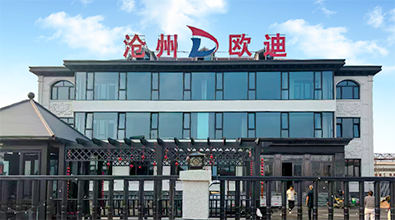
Cangzhou Oudi: Proven Excellence Since 1998
By always focusing on quality and speed, our business has built a name for serving over 300 people in over 40 countries. We are in the industrial zone of Mengcun Hui Autonomous County, which is known as "China's pipe fitting hub." This gives us access to a lot of experts and better transportation to major ports. The 66,600-square-meter building has combined production lines that turn raw pipe into finished reducers so that important tasks don't have to be outsourced.
We keep our production output at 16,000 tonnes per year, which means that we can always meet all ANSI, DIN, JIS, and BS requirements. The Special Equipment Manufacturing License and ISO 9001:2000 certification show that we take a structured approach to quality, from PMI testing of new materials to final hydraulic pressure proof. Every circular reducer is measured against ASME B16.9 standards and gets the right heat treatment approval, which shows that the normalising cycle was completed.
Modern spotting tools allow for thorough quality checks that many rivals can't match. Our ultrasound testing tools look for internal flaws in all of our seamless fittings, and spectral analysers make sure that every heat lot has the right chemical makeup. EPC companies that are in charge of important building projects and can't stand field mistakes trust this strict inspection process.
The expert team offers application engineering support that helps buyers get the best specs. Based on working pressures, we help choose the right plan, suggest the right heat treatment for low-temperature service, and can make custom beveling for unique welding processes. With this expert method, a purchase becomes a relationship where both parties work together.
Regional Manufacturing Landscape
North American manufacturers excel in rapid prototyping and small-batch custom production, serving niche applications with quick turnaround. European producers emphasize compliance with stringent PED and ATEX directives, making them preferred sources for projects requiring CE marking. Asian manufacturers, particularly in China, India, and Korea, dominate high-volume commodity production through optimized manufacturing costs and extensive capacity.
China's pipe fitting industry has matured dramatically over two decades, with leading manufacturers now matching international quality standards while maintaining 30-40% cost advantages. This price-performance balance explains why Asian suppliers have captured the majority market share in oil and gas megaprojects across the Middle East, Africa, and Southeast Asia. Buyers should evaluate Asian manufacturers based on certification depth and export track record rather than outdated quality perceptions.
Procurement Guide for Concentric Reducer Carbon Steel
Streamlining the Ordering Process
Successful procurement begins with accurate specification communication. Beyond basic dimensions (inlet size, outlet size, schedule), buyers should specify applicable standards (ASME B16.9, MSS SP-75), material grade with heat treatment requirements, end preparation (beveled, plain), and required markings. Providing design pressure and temperature helps manufacturers recommend appropriate materials if specifications contain ambiguities.
Bulk ordering delivers significant cost advantages through optimized production runs. Consolidating requirements for multiple project phases into single purchase orders can reduce unit costs by 15-25% while guaranteeing material consistency from the same heat lots. Many manufacturers offer inventory management programs for large consumers, maintaining consignment stock that reduces lead times without requiring upfront capital commitment.
Custom sizing capabilities vary considerably between manufacturers. Standard catalogs cover common transitions, but project-specific requirements sometimes demand non-standard combinations. We maintain flexibility to produce custom size ratios and special wall thickness combinations with reasonable minimum quantities, typically 100-200 pieces depending on complexity. This adaptability proves valuable during engineering changes that occur after initial procurement.
Understanding Pricing and Lead Times
Pricing structures reflect raw material costs, forming complexity, and order volume. Carbon steel prices fluctuate with scrap and iron ore markets, creating 10-15% quarterly variations. Reputable manufacturers provide price validity periods (typically 30-60 days) and transparent escalation clauses for long-term agreements rather than low-ball quotes that require renegotiation.
Standard size reducers from inventory ship within 1-2 weeks, while made-to-order production requires 4-6 weeks for forming, heat treatment, inspection, and surface preparation. Rush orders can sometimes compress timelines by 30-40% with expedite fees, though quality should never be sacrificed for speed. International shipping adds 3-8 weeks depending on destination and routing, making early procurement planning essential for project schedule adherence.
Minimum order quantities balance production efficiency against buyer flexibility. Commodity sizes may have 10-piece minimums, while specialized configurations require 50-100 pieces to justify setup costs. We work pragmatically with customers, occasionally combining small custom orders with standard production runs to accommodate urgent project needs without imposing unreasonable minimums.
Practical Applications and Industry Use Cases
Oil and Gas Infrastructure
Concentric reducers play critical roles throughout petroleum production and processing facilities. Vertical pump discharge lines use concentric reducers to transition from pump nozzles to larger transfer piping while maintaining structural alignment that simplifies support design. The symmetrical flow path minimizes turbulence that would otherwise cause premature wear in downstream instrumentation.
Gas gathering systems employ carbon steel concentric reducers at compressor stations where pressure boosting requires diameter changes. The material's strength handles pressure spikes during surge events, while proper heat treatment ensures ductility that prevents brittle fracture in cold climates. Field experience across Middle Eastern and North African projects demonstrates that properly specified carbon steel reducers deliver 20+ year service life in these demanding applications.
Offshore platforms face unique challenges combining corrosive salt atmospheres with weight constraints. Concentric Reducer Carbon Steel with specialized coatings (epoxy, polyurethane) provides corrosion protection at 60% the weight of equivalent corrosion-resistant alloy fittings. This weight savings translates directly to reduced structural steel requirements and installation costs on floating production platforms.
Chemical Processing and Power Generation
Chemical plants utilize concentric reducers in vertical reactor feed lines where maintaining precise flow distribution affects product quality and reaction efficiency. The gradual diameter transition prevents the localized turbulence that causes uneven temperature profiles. Carbon steel serves admirably in non-corrosive process streams (hydrocarbons, nitrogen) where material compatibility permits its use.
Power plants employ thousands of concentric reducers throughout boiler feedwater systems, steam distribution networks, and condensate return piping. The high-temperature strength of A234 WPB carbon steel withstands 350°C steam temperatures in main distribution headers. Proper heat treatment ensures dimensional stability during thermal cycling that occurs during load-following operation.
We supplied over 800 carbon steel concentric reducers for a 600MW coal-fired power station in Southeast Asia, ranging from 2-inch to 24-inch sizes. The project required coordinated delivery across 18 months to match construction sequencing, with batch material certificates consolidated for efficient documentation management. Three years post-commissioning, the plant reports zero fitting failures, validating the quality systems that governed production.
Water Treatment and Municipal Infrastructure
Water treatment facilities increasingly specify carbon steel reducers for non-potable process streams including backwash systems, sludge handling, and chemical feed lines. The cost advantages over stainless steel become compelling in large-diameter applications where internal coatings provide adequate corrosion protection. A 24-inch concentric reducer in coated carbon steel costs 50% less than a 316L stainless equivalent while delivering comparable service life in pH-controlled water.
Municipal pumping stations rely on concentric reducers for vertical turbine pump installations. The centerline alignment simplifies column pipe support and reduces lateral loads on pump bearings. Carbon steel's machinability facilitates on-site modifications when field conditions require adjustments, providing installation flexibility that exotic alloys cannot match.
Desalination plants represent a growing application area where material selection requires careful analysis. While seawater contact mandates corrosion-resistant alloys, many auxiliary systems handling treated water, chemicals, or process gases can utilize carbon steel reducers. We work with EPC contractors to optimize material selections across complex piping networks, maximizing value without compromising reliability.
Conclusion
Selecting the right concentric reducer carbon steel manufacturer requires balancing technical capabilities, quality systems, and commercial responsiveness. The global market offers diverse options, from specialized Western manufacturers to high-capacity Asian producers serving volume requirements. Carbon steel concentric reducers deliver unmatched value in appropriate applications—providing strength, weldability, and cost-efficiency that alternative materials struggle to match. Buyers who invest time understanding application requirements, material properties, and manufacturer capabilities make procurement decisions that optimize both upfront costs and lifecycle performance. The key lies in partnering with manufacturers who demonstrate consistent quality, maintain adequate capacity, and provide technical support that transforms specification challenges into engineered solutions.
FAQ
1. What distinguishes concentric from eccentric carbon steel reducers?
The centerline alignment creates the fundamental difference. Concentric reducers maintain a common axis between inlet and outlet, producing a symmetrical cone shape ideal for vertical piping where flow direction and gravity alignment matter. Eccentric reducers offset the centerlines, keeping one side flat (top or bottom) to prevent air accumulation in horizontal pump suction lines or facilitate drainage in process piping. Misapplication causes operational problems—using concentric reducers on horizontal suction lines creates air pockets that induce pump cavitation.
2. How do I verify a manufacturer's quality credentials?
Request copies of ISO 9001 certificates and special equipment manufacturing licenses, then verify validity through issuing bodies' online databases. Ask for material test reports (MTR) from recent production showing chemical composition and mechanical properties. Reputable manufacturers provide mill certificates traceable to heat numbers marked on each fitting. Consider requesting third-party inspection for initial orders—agencies like SGS or TUV can verify dimensional accuracy and conduct non-destructive testing before shipment.
3. Can I order custom sizes for specialized projects?
Most established manufacturers accommodate custom size combinations and special wall thickness requirements with reasonable minimum quantities. Custom orders typically require 50-200 pieces depending on complexity and involve 6-8 week lead times for tooling and production. Providing complete specifications early—including end preparation, marking requirements, and applicable standards—streamlines the quotation and production process.
Partner with Oudi for Reliable Concentric Reducer Carbon Steel Supply
Choosing the right concentric reducer carbon steel manufacturer directly impacts your project's success and operational longevity. At Oudi, we combine 25+ years of manufacturing excellence with comprehensive quality systems that meet the stringent demands of global oil, gas, chemical, and power industries. Our 16,000-ton annual capacity ensures consistent availability across complete size ranges, while ISO 9001 certification and Special Equipment Manufacturing License guarantee process integrity from raw material to finished product. We serve over 300 customers across Europe, the Americas, Africa, the Middle East, and Southeast Asia with proven delivery reliability.
Contact our technical team at oudi-04@oudiguandao.com to discuss your specific requirements. We provide detailed material certificates, dimensional inspection reports, and application engineering support that helps optimize specifications for your operating conditions. Request samples to evaluate our manufacturing quality, or schedule a facility tour to observe our production processes and inspection capabilities. Oudi delivers the combination of competitive pricing, technical expertise, and supply chain responsiveness that sophisticated buyers demand.
References
1. American Society of Mechanical Engineers. (2020). ASME B16.9: Factory-Made Wrought Buttwelding Fittings. New York: ASME Press.
2. ASTM International. (2021). ASTM A234/A234M: Standard Specification for Piping Fittings of Wrought Carbon Steel and Alloy Steel for Moderate and High Temperature Service. West Conshohocken: ASTM International.
3. Mohitpour, M., Golshan, H., & Murray, A. (2007). Pipeline Design & Construction: A Practical Approach (3rd ed.). New York: ASME Press.
4. Nayyar, M.L. (Ed.). (2019). Piping Handbook (8th ed.). New York: McGraw-Hill Education.
5. Perry, R.H., & Green, D.W. (Eds.). (2018). Perry's Chemical Engineers' Handbook (9th ed.). New York: McGraw-Hill Education.
6. Singh, R.K., & Solanki, V.S. (2017). Piping Materials Selection and Applications in the Oil and Gas Industry. Houston: Gulf Professional Publishing.

Need help finding the right solution with our experts. Please contact us.
SINCE 1998 Your Reliable Pipeline Manufacturer