High Temperature Pipe Tee Buying Guide: Tips for Engineers
Selecting the right High Temperature Pipe Tee is more than a procurement decision—it's a critical engineering choice that directly impacts system safety, operational efficiency, and long-term cost performance. Engineers working in power generation, petrochemical refineries, and heavy industrial environments face unique challenges when specifying these specialised fittings. This comprehensive guide walks you through essential technical considerations, material selection criteria, quality verification methods, and supplier evaluation strategies to ensure your high-temperature piping projects deliver reliable performance under extreme thermal and pressure conditions.
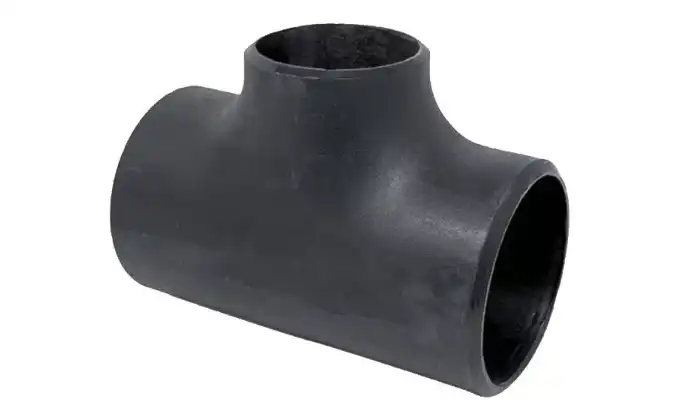
Understanding What Makes a High Temperature Pipe Tee Different
A High Temperature Pipe Tee is a special type of T-shaped pipe fitting that is designed to connect fluid branches in systems that are working at temperatures between 400°C and 1100°C. Unlike regular carbon steel fittings that break severely when exposed to high temperatures for a long time, these parts are made with advanced metallurgical formulas that stop them from deforming unevenly, wearing out quickly, and rusting. The main technical problem that these parts try to solve is how materials behave when they are exposed to high temperatures for a long time. Above 425°C, standard carbon steel loses its mechanical strength, so it can't be used for things like distributing superheated steam or handling chemicals at high temperatures. Chrome-Molybdenum alloys like ASTM A234 WP91 and WP22, high-grade stainless steels like 310S and 347H, or nickel-based alloys like Inconel 625 keep their shape when other materials would bend or break.
Industrial pipe tees that are used in places with very high or very low temperatures must also be able to handle cycles of thermal expansion and contraction without getting tiny cracks where the branches meet, which is where the most stress is applied. This is why it's so important to have very accurate measurements at the crotch radius, and ASME B16.9 standards must be strictly followed. Engineers at EPC companies who are in charge of building complicated industrial plants need to know these differences to avoid making mistakes that cost a lot of money. If you choose the wrong fitting, it could cause early failure, unexpected shutdowns, and safety issues that cost a lot more than the money you saved by choosing the wrong materials in the first place.
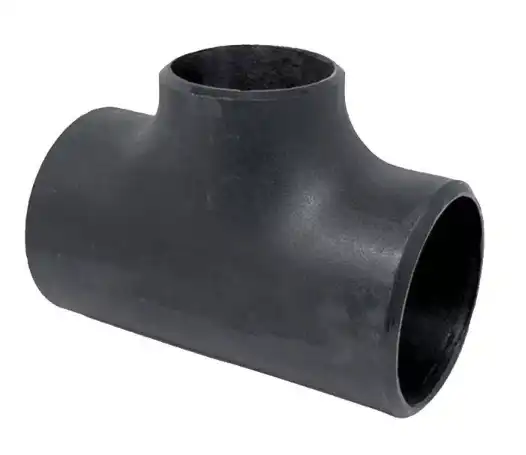
Critical Material Properties Engineers Must Verify
When choosing a heat-resistant pipe tee, namely a High Temperature Pipe Tee, the limits of its performance are set by its material qualities. The most important factor is the creep-rupture strength, which shows how well a material can keep its shape while being under steady stress at high temperatures for long periods of time. For example, Grade 91 (WP91) has great creep strength up to 600°C, which makes it perfect for supercritical boiler heads. Grade 22 (WP22), on the other hand, works reliably up to about 540°C in moderate-pressure steam systems.
Oxidation resistance tells us how long a surface will last. When temperatures go above 650°C, not enough chromium causes scaling, a type of high-temperature rust that makes pipe walls thinner over time. An oxide layer that is formed by chromium-rich metals slows down this breakdown. 310S stainless steel pipe tee shapes are very resistant to scaling up to 1050°C, which makes them ideal for furnaces and other heat processing equipment. How quickly a fitting reacts to changes in temperature is affected by its thermal conductivity. This, in turn, affects the patterns of thermal stress during starting and stopping processes. Different types of alloy steel pipe tees with lower thermal expansion factors have lower stress at welded joints, which lowers the chance of thermal fatigue breaking.
Positive Material Identification (PMI) using XRF or OES spectroscopy to check the chemical make-up should be a must in your buying requirements. This makes sure that the fitting's real metal chemistry fits what was planned. This is a very important safety measure against material change that could damage the system. When engineers buy things to build ships, make electricity, or make boilers, they must also think about the yield strength-to-weight ratio. Thinner wall designs are possible with higher-strength materials, which lowers the overall system weight without lowering the pressure values. This is especially helpful in situations where weight is limited.
Key Industrial Applications and Selection Criteria
Facilities that make electricity are one of the toughest places for high-temperature parts to work. Ultra-supercritical thermal plants have steam that is over 600°C hot and under pressures of more than 250 bar. The butt weld pipe tee joints that carry steam from the boiler to the turbine must not leak at all and must also not creep over more than 200,000 hours of use. Grade 91 or 92 metal parts are required, along with strict heat treatment procedures after welding. In ethylene splitting furnaces, where temperatures get close to 850°C, petrochemical companies use these special parts. In this case, engineers need to choose materials that can't be damaged by carburisation, a type of high-temperature carbon attack that weakens the metal structure. The pipe tee joint in hydrocracking units works in high-temperature settings that are high in hydrogen. It is important to think about both its heat and hydrogen embrittlement resistance.
Catalytic reforming units and fluid catalytic cracking systems are used in oil and gas processing plants with high-strength pipe tee designs. For these uses, parts need to be able to handle both high temperatures and acidic process streams that contain sulphur compounds. These problems can be solved with corrosion-resistant pipe tees made of 321H or 347H stainless steel. For nitric acid concentrators, sulphuric acid renewal systems, and other uses where harsh chemicals meet high temperatures, chemical processing plants ask for high-temperature steel parts. When choosing a material, it's important to think about both its temperature limits and its chemical compatibility. This is a tough problem that needs careful engineering analysis.
Different types of seamless pipe tees, including High Temperature Pipe Tee, are used in exhaust lines and burner connections in construction and industrial furnaces where fast gas flow causes high-speed thermal shocks. The part has to be able to keep its shape even when heated in cycles and not crack when heated.
Quality Control Standards That Protect Your Investment
Quality checks are very strict, which separates trustworthy sellers from those who sell iffy goods at low prices. Engineers should ask for full paperwork on non-destructive testing (NDT), which includes radiography testing (RT) or ultrasonic testing (UT) to find flaws inside the structure that can't be seen from the outside. The crotch area of any welding pipe tee needs extra attention because it is under a lot of stress and is most likely to have mistakes in the construction. Hardness testing is an important way to make sure that heat-treated metals are safe. Chrome-Moly grades need certain martensitic microstructures, which can only be achieved by heating the metal in controlled cycles. Brinell or Rockwell hardness tests show that the metal has been changed properly; numbers that are outside of the specified ranges mean that the heat treatment wasn't done right, which will lower the resistance to creep.
Dimensional verification makes sure that the wall thickness is the same all the way through, especially where two branches meet and localised thinning causes stress collection spots. Using ultrasonic thickness gauges or coordinate measuring machines to get accurate measurements proves that the dimensions meet ASME B16.9 standards. Deviations in this area cause early failure in real-world operations. Hydrostatic pressure testing makes sure that the structure is solid and doesn't leak. Manufacturers with a good reputation do these tests at 1.5 times the stated working pressure, which is written proof that the product works. Witness testing, in which a quality agent watches the testing process, adds another level of assurance for important apps.
Material tracking links each part to the batch it was made in, records of its heat treatment, and approvals for the raw materials used to make it. Every package should come with a full mill test record (MTR) that lists the chemical makeup, mechanical qualities, and heat treatment data. In fields like nuclear power, medicine handling, or pressure tank production, this paperwork is needed to follow the rules.
Evaluating Suppliers: Beyond Price Considerations
High-temperature pipe connection manufacturers must be evaluated beyond price. Your first assessment checkpoint is certification. ISO 9001:2015 accreditation shows dedication to quality practices. National regulatory bodies give special equipment manufacturing permits to manufacturers that fulfil strict production capability norms.
Production technologies and inspection equipment affect product consistency. CNC machining centres, automated welding systems, and computerised heat treatment furnaces improve dimensional accuracy and metallurgical homogeneity over manual manufacturing. PMI spectroscopy, NDT digital radiography or phased-array ultrasonic devices, and calibrated hardness testers should be available under traceable calibration procedures. Annual production capacity affects supply chain dependability. A 16,000-ton-per-year plant can serve major projects while preserving quality. This capability indicates financial stability and operational sustainability, which are vital when choosing partners for multi-year contracts or maintenance supply agreements.
Indirect quality validation for High Temperature Pipe Tee comes from exporting to demanding markets. Manufacturers in Europe, North America, Africa, Southeast Asia, and the Middle East satisfy ANSI, JIS, DIN, and BS standards. This broad client base indicates quality processes that meet various regulations. Product range completeness is practical. Suppliers offering bends, flanges, reducers, caps, and tees in carbon steel, stainless steel, and alloy steel configurations improve procurement logistics. Single-source supply simplifies administrative tasks, quality assurance, and usually reduces project costs via volume.
Technical support differentiates top suppliers from commodity ones. Does the manufacturer's technical staff help choose materials for exceptional service conditions? Are welding technique parameters and post-weld heat treatment suggestions available? Customise designs for non-standard applications? Through decreased engineering time and increased installation success rates, value-added services justify somewhat higher unit prices. Logistics costs and delivery dependability depend on transportation hub proximity. Facilities near major ports improve international shipping efficiency. Established industrial zones have developed raw material and specialised service supply chains, making manufacturers more cost-competitive and consistent.
Addressing Common Engineering Concerns and Misconceptions
Specification development often raises temperature rating concerns. Engineers commonly request alloy service temperature limits. WP91 fittings work until 600°C, when creep strength quickly declines. Applications around 650°C need Grade 92 or austenitic stainless steels. Understanding these material limitations avoids over- or under-specification that raises costs or threatens safety. Post-weld heat treatment (PWHT) requirements are confusing. PWHT is essential for chrome-Moly alloys to alleviate welding stresses. Skipping this step almost assures stress corrosion cracking or brittle fracture. PWHT temperatures and hold times vary per alloy—730-760°C for Grade 91, depending on wall thickness. Your supplier should provide full PWHT techniques in their technical documentation.
Some engineers doubt high-temperature alloys are suitable for low-temperature applications. Materials optimised for high temperatures lose hardness at sub-zero temperatures, rendering them unsuitable for cryogenic systems. Low-temperature carbon steel or austenitic stainless grades like 304L perform better below -29°C. Future maintenance planning is affected by scaling. Pipe walls thin with high-temperature oxidation and need replacement. Chromium over 9% creates protective oxide layers that greatly impede this process. For applications over 650°C, chromium-rich alloys enhance service life and lower lifetime costs despite greater initial investment.
Many buyers are confused between forged vs. seamless. For severe pressure header and manifold connections, forged high-pressure pipe tee variations have better grain structure and mechanical qualities. Standard branch connections at modest pressures operate well with seamless choices. Both processes produce ASME B16.9 fittings—selection depends on application pressure and temperature. Effective thermal expansion management involves engineering. Mechanical stress results from pipe lines and fittings expanding differently during temperature changes. Effective support, expansion loop integration, and fitting orientation reduce stress. For system-wide thermal expansion, your pipe designer should collaborate with fitting requirements.
Conclusion
Specifying high-temperature fittings demands careful attention to metallurgical properties, quality verification protocols, and supplier capabilities that extend beyond initial purchase price. Engineers protecting critical infrastructure in power generation, petrochemical processing, and heavy industry must evaluate creep resistance, oxidation behaviour, and thermal fatigue characteristics alongside dimensional accuracy and testing documentation. Partnering with established manufacturers offering comprehensive certifications, advanced production technology, and proven global supply experience provides the reliability foundation your high-stakes projects require. Thorough supplier evaluation and rigorous material verification protect both immediate project success and long-term operational integrity.
Partner with Oudi for Superior High Temperature Pipe Tee Solutions
Oudi has manufactured precision-engineered high-temperature piping solutions, including High Temperature Pipe Tee, since 1998, serving over 300 customers across 40+ countries. Our 66,600-square-meter facility combines 16,000-ton annual capacity with ISO 9001:2015 certification and special equipment manufacturing licenses. We maintain complete material traceability from raw material verification through finished product testing, ensuring every High Temperature Pipe Tee meets your exact specifications. Contact our engineering team at oudi-04@oudiguandao.com to discuss your project requirements with a trusted High Temperature Pipe Tee manufacturer.
References
1. American Society of Mechanical Engineers (2020). ASME B16.9: Factory-Made Wrought Buttwelding Fittings. New York: ASME Standards Publications.
2. Davis, J.R. (2018). High-Temperature Materials for Power Engineering: Proceedings of Conference on Alloys for the 21st Century. Materials Park, Ohio: ASM International.
3. Thompson, R. & Martinez, C. (2019). Creep-Resistant Steels for Power Plant Applications: Engineering Properties and Selection Guidelines. Cambridge: Woodhead Publishing.
4. International Organisation for Standardisation (2021). ISO 9001:2015 Quality Management Systems: Requirements for Manufacturing Organisations. Geneva: ISO Publications.
5. Khanna, A.S. (2017). High Temperature Oxidation and Corrosion of Metals and Alloys in Industrial Environments. Amsterdam: Elsevier Science.
6. Viswanathan, R., Coleman, K., & Rao, U. (2016). Materials for Ultra-Supercritical Coal-Fired Power Plant Boilers: Technical and Economic Assessment. Journal of Materials Engineering and Performance, Volume 25, Issue 3, pp. 896-917.

Need help finding the right solution with our experts. Please contact us.

SINCE 1998 Your Reliable Pipeline Manufacturer



