CS Concentric Reducer Factory Direct Supply with Certified Quality
When sourcing industrial pipe fittings for critical applications, finding a reliable CS concentric reducer supplier becomes paramount. At Oudi, we manufacture buttweld concentric reducers that connect pipes of different diameters while maintaining a common centerline—a design essential for vertical piping systems in oil, gas, chemical, and water treatment facilities. Our factory-direct approach eliminates intermediaries, delivering ISO 9001-certified carbon steel reducers at competitive pricing without compromising the quality standards your projects demand. With over two decades of manufacturing experience and proven export credentials across 40+ countries, we understand the precise specifications B2B buyers require when selecting pipe fittings that will perform reliably under demanding conditions.
Understanding CS Concentric Reducers: Specifications, Materials & Applications
What Defines a Buttweld Concentric Reducer
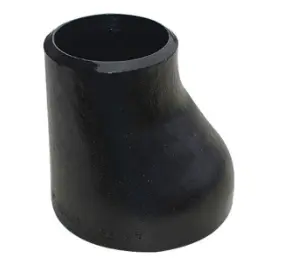
A CS Concentric Reducer has a cone shape with bevelled sides that are made to meet ASME B16.25 standards. This lets full-penetration welding happen, which makes the joints stronger than the pipe itself. The symmetrical design keeps the centerlines of both pipes perfectly aligned. This makes it perfect for vertical runs, where gravity naturally stops air pockets from forming. These fittings are made by hot forming or cold forming and then normalising heat treatment. This refines the grain structure so that they meet the highest hardness standards of 197 HB for carbon steel grades.
The shape solves a basic engineering problem: if the change in fluid velocity isn't smooth, turbulence and pressure drops can happen when the circle gets smaller. Our CS Concentric Reducers have carefully calculated taper angles that keep these effects to a minimum. This keeps the laminar flow traits that are important for pump efficiency and stops wear and rust in high-velocity situations. This aspect of design is especially important in chemical processing, where even small amounts of turbulence can change the rate of reactions or make solids that are suspended settle in the wrong place.
Material Grades and Compliance Standards
When we make CS Concentric Reducers, we use A234 WPB material, which is the standard grade in the industry and has great mechanical qualities across a wide temperature range. This material specification ensures that it works with the seamless and welded pipes that are often used in industrial construction. This lets procurement teams base their supply chain on tried-and-true materials that are easy to find. The amount of carbon in the material and the way the grains are arranged meet strict standards for use with acidic fluids, changing temperatures, and steady pressure loads.
Multiple foreign standards are met at the same time by our production site. For the American market, ANSI B16.9 sets the rules for tolerances in size and industrial standards. In Europe and Asia, DIN 2605 and JIS B2313 are used for projects. With this multi-standard capability, you don't have to worry about managing different supplier relationships for each market, which makes buying things easier for multinational projects. Before the shaping process starts, spectrographic analysis is used to check the material in each production batch and make sure it has the right chemical makeup.
Critical Application Environments
In oil and gas operations, vertical pump discharge lines are one of the main places where CS Concentric Reducers make a real difference in performance. The symmetrical design spreads forces evenly across the pipe supports, which reduces vibration and stops the fatigue failures that happen in transitions that aren't designed well. Our reducers make it easier to route pipes vertically on offshore platforms where space is limited and piping plans need to be small. They also keep the structure strong enough to withstand tough marine environments and earthquakes.
Power plants have high-pressure steam distribution systems that work at temperatures and pressures higher than 250 bar and 540°C. Even small design mistakes can cause erosion-corrosion zones that cause catastrophic breakdowns in these harsh conditions. The concentric geometry makes sure that steam moves through the diameter reduction without making fast jets that would hit the walls of the fitting at weird angles. Our normalising heat treatment process smooths out the microstructure, making it more resistant to creep for parts that need to stay the same size for decades of continuous use.
Chemical processing columns and reactor feed lines need to be able to handle stable flow. The symmetrical profile of the CS Concentric Reducer stops the preferential flow paths that would form when multiple streams merge or when dilution happens. In slurry transport applications, this property is very important because any change in flow can cause particles to settle, which could cause blocks that stop whole process trains. When the full-penetration butt weld is done, a smooth interior bore is made without any protrusions that could trap solids or start rusting.
CS Concentric Reducer vs Eccentric Reducer: A Critical Comparison for Decision-Making
When Pipe Orientation Dictates Reducer Selection
When you have a vertical duct, CS Concentric Reducers work really well because gravity automatically pulls any air that gets trapped up through the system. The straight centerlines keep the flow symmetrical, which stops the uneven speed profiles that cause vibration and wear before their time. This is shown by pump discharge lines going up from basement equipment rooms to higher distribution headers. The concentric design makes the structure stable, and the even flow distribution makes the pump seal last longer by reducing the risk of cavitation.
There are different problems that come up with horizontal runs where air builds up. To fix this, eccentric reducers keep either a flat-top or flat-bottom shape. This lets air flow along the crown of the pipeline for venting while liquids drain completely when the system is turned off. For pump pressure lines, eccentric reducers with a flat top fitting are especially important to keep air pockets from forming that could damage the line through cavitation. Knowing these application-specific standards can help you avoid having to make expensive changes in the field when parts that weren't properly described don't work as expected.
Pressure Rating Considerations and Wall Thickness Matching
Buttweld CS Concentric Reducers have pressure ratings that are the same as the pipe schedule they fit, while flanged fittings have separate pressure ratings (150#, 300#, 600#). A Schedule 40 reducer can handle the same amount of pressure inside as a Schedule 40 pipe made of the same material—about 150 bar for carbon steel at room temperature. This rating method gives designers more freedom, but it needs close attention during specification to make sure that the wall thicknesses are compatible throughout the system.
To avoid the step change in bore width that would cause turbulent flow zones and stress concentration places when connecting different schedules, internal counter-boring is needed. When a Schedule 40 reducer joins a Schedule 80 pipe, the heavier-wall part needs to be machined to match the internal diameter of the lighter part across the weld zone. We can perform precision counter-boring operations, which means that the reducers we send you are ready to be installed right away and don't need any changes made in the field that would affect quality control. This service is especially helpful for projects that need a lot of custom transitions between different schedules that are running on the same system.
Long-Term Value Analysis Beyond Initial Pricing
When people only look at the cost of purchase, they often don't consider the costs that come up over time, which are much higher than the original savings. A CS Concentric Reducer that costs 15% more but is made with confirmed material approvals and full dimensional compliance removes the risk of failing too soon, which would mean having to pay for a replacement, stopping the process, and possibly causing a safety issue. Our quality assurance program keeps track of every step of the production process, from receiving the raw materials to the final inspection. This gives insurance companies and government agencies the traceability they need more and more.
Another secret cost factor is how well the installation was done. When reducers arrive, they are properly prepared for the bevel, the right size, and the material chemistry has been checked. They are easy to install and have high-quality welds on the first pass. On the other hand, parts that need to be fixed in the field because of wrong measurements or sharp angles take more trained labour hours and may have weld flaws that don't show up until the system is in use. Our investment in CNC machine centers and automatic bevel preparation equipment guarantees consistent sizes, which directly leads to lower installation costs and faster project completion times.
Factory Direct Supply: Advantages for Global B2B Procurement Clients
Eliminating Intermediary Markups While Enhancing Transparency
Warehouse fees, sales commissions, and profit margins at each level of traditional distribution add 30 to 50 percent to the cost of parts. Our factory-direct model gets rid of these middlemen, so we can offer certified CS Concentric Reducers at prices that make your project more cost-effective without lowering the quality standards that your specs call for. When you work directly with our engineers and production teams, you can see everything about the industrial processes, where the materials come from, and how quality control is done. This is something that distribution routes can't do.
We have direct relationships with more than 300 customers in more than 40 countries because procurement professionals value being able to talk about specific needs without having to pass the information back and forth several times. When people ask technical questions, the engineers who make our tools and set the parameters for our process, not salespeople reading from generic catalogues, answer them. This access to knowledge is very helpful when there are odd requirements, harsh working conditions, or short delivery times that require manufacturers to be able to respond quickly and adaptively.
Certification Compliance That Satisfies Global Requirements
Since the beginning, when we got ISO 9001:2000 approval, we have kept improving our quality management system to keep up with changing standards in the business. Our current ISO 9001:2015 certification shows that we follow the most up-to-date quality standards. Additionally, our Special Equipment Manufacturing License from the Chinese government confirms that we can make pressure-containing parts for important applications. Every year, these certifications are checked by third parties who are not affiliated with us. This is done to make sure that our processes consistently deliver high quality.
Every shipment comes with a material test record that lists the chemicals used, the mechanical properties, and the heat treatment settings for each production lot. These MTRs go all the way back to the certificates that the steel mill gave for the raw materials. This makes a perfect chain of custody that meets all the strict requirements for buying things. Before leaving our plant, dimensional inspection reports make sure that every reducer meets the tolerance standards set by ANSI B16.9, DIN 2605, or another standard. This documentation package works perfectly with your quality assurance procedures, which speeds up the review process and cuts down on project delays.
Customization Capabilities for Specialized Applications
It is common for standard catalogue parts to work in industrial settings, but some projects need to be changed to fit their specific needs. Our engineering team works with customers to come up with unique solutions, such as longer tangent lengths for certain structural reasons, special bevel preparations for automated welding systems, or middle sizes that aren't shown in standard tables. We can meet these needs because we have 66,600 square meters of production room and high-tech forming tools. We can also do this without the usual wait time problems that come with custom fabrication.
OEM relationships add another level of customisation to what we can do. Private labelling, custom packing, and planned shipping plans that work with their production needs are all benefits for equipment makers who use our CS Concentric Reducers in packaged systems. These setups make it easier for them to handle their supply chain and make sure that parts are always available, which keeps the assembly line from having to stop. We have built ties with boiler makers, shipbuilders, and process equipment fabricators that show we are more than just a transactional provider. We work as an extension of your engineering and procurement team.
Logistics Solutions Supporting Global Project Schedules
Our site is 120 kilometres from Tianjin Port and has direct highway access. It ships containers quickly and easily to places all over the world. We know a lot about export paperwork, shipping consolidation, and goods forwarding, which makes buying things from other countries easier. By knowing Incoterms and working with your logistics providers, we can set up delivery under terms ranging from EXW (factory pickup) to DDP (delivered duty paid). This way, you can choose the arrangement that works best for your project and your budget.
Our annual production capacity of 16,000 tonnes can handle both large orders and smaller, more specific needs. Bulk buyers benefit from better production scheduling that lowers the cost per unit, and customers who need shipments of different sizes and on different dates enjoy that we can combine orders to save money on freight. We keep a strategic inventory of common sizes in popular materials so that we can quickly meet pressing needs that can't wait for made-to-order production processes. This investment in inventory shows that we know that project schedules can get squished without warning, causing instant needs for parts that need to be met.
How to Choose the Right CS Concentric Reducer: A B2B Buyer's Guide
Matching Technical Specifications to Operating Conditions
To choose the right CS Concentric Reducer, you need to write down a lot of information about the service conditions, such as the type of fluid and its properties, the working pressure and temperature, the direction of the pipeline, and the flow speed. Chemical compatibility is very important because some process fluids eat away at carbon steel in ways that speed up rust at weld areas. If you know whether your application uses sour gas (H2S), chloride-containing solutions, or other harsh media, you can tell if normal A234 WPB material is enough or if you need to upgrade the alloy steel specs.
Temperature cycling causes thermal fatigue stresses that build up over time and eventually cause cracks to appear. Applications that start up and shut down a lot need materials that are more resistant to low-cycle fatigue. This could mean that they need a stress-relieving heat treatment in addition to normalising. Our scientific team looks at working patterns and uses decades of experience with similar tasks to suggest the right material grades and heat treatments. This consultative approach stops the mistakes in the specifications that cause things to break down early and need expensive repairs or replacements.
Dimensional Verification and Standard Compliance
Accuracy in measurements has a direct effect on the quality of the work and the stability over time. End-to-end length affects how the pipeline is routed and where supports are placed. Outside diameter tolerances at both ends make sure that the pipes fit correctly with other parts. Consistency in wall thickness stops stress from building up in one place during welding and operation. We manufacture to tighter tolerances for size than what is required by the standard. This is because we know that better fit-up quality cuts down on installation time and makes welds that are more durable and less likely to break.
The quality of the bevel preparation has the most impact on the strength of the weld. ASME B16.25 says that standard bevels should be 37.5° ± 2.5° and have a 1/16-inch root face. These measurements work with the welding methods and tools that are widespread in industrial construction. When the wall width is more than 22 mm, complex bevels are needed to make sure that the whole hole is filled without putting too much heat in. Our CNC machining centers make these bevels with such accuracy that you don't have to do the grinding and fitting that you would have to do when using parts that were prepared by hand. This directly increases the speed of your welding and lowers the cost of consumables.
Supplier Evaluation Criteria for Long-Term Partnerships
Verification of certification is the basis of evaluating a seller. People who are interested in doing business with us should look at our ISO 9001 license, Special Equipment Manufacturing License, and most recent audit reports. Not only do these papers show that we have certain skills, but they also show that independent inspectors have confirmed that our processes work as described. We allow full access to production areas, quality control labs, and record systems during customer audits of our facility. This level of openness is what sets manufacturers who truly care about quality apart from those who just use it as marketing language.
A manufacturing capability assessment should look at how well the equipment is maintained and how complex it is. Our building has hydraulic presses, CNC machining centers, heat treatment ovens with customisable controls, and inspection tools like hardness testers and ultrasonic flaw detectors. Preventive repair programs and regular equipment testing make sure that this machinery works within the parameters that guarantee the quality of the parts. We keep records of the equipment qualification that show that our production and testing tools meet the standards for measurement precision set by international codes.
Procurement Strategy Development for Optimal Value
A structured review system is needed to balance many goals, such as cost, quality, delivery, and service. When things like meeting specifications, delivering on time, and having good technical help are taken into account, the lowest price isn't always the same as the lowest total cost. We suggest that buying teams come up with weighted scoring systems that put numbers on these factors so that providers can be compared objectively. This analytical approach is supported by our desire to give you detailed quotes that break down the costs of materials, manufacturing processes, and testing. This gives you a better understanding of the cost drivers that simple price quotes don't show.
Minimum order quantities are based on the real costs of setting up a factory. We can take small orders for prototypes or repairs in an emergency, but buyers who buy in bulk save money because the cost per unit is lower. These numbers can be used by combining needs from several projects or working with other departments to make bigger orders. Our sales team helps customers find ways to save money by buying more of certain things at once. Sometimes, they store parts so that they can be delivered in stages that fit with the construction schedule. This service lets you get the best prices on bulk purchases without having to keep track of a lot of inventory.
Conclusion
When looking for industrial pipe fittings, you need to carefully consider the technical specs, the quality of the manufacturing, and how reliable the provider is. When choosing CS Concentric Reducers, the right ones have a direct effect on how well the system works, how much it costs to maintain, and how safe it is to use. When you buy directly from certified manufacturers, you don't have to pay the markups that come with buying through a distributor. You also get the transparency and technical support that complicated industrial projects need.
We've spent more than 20 years making sure our manufacturing and quality methods meet the highest standards around the world. Our ISO 9001 certification, Special Equipment Manufacturing License, and track record of exporting to over 40 countries show that we are dedicated to providing parts that work reliably in tough situations. We have the technical knowledge and production ability to meet your needs for reducers, whether your project is for oil and gas infrastructure, chemical processing facilities, power plants or water treatment systems.
FAQ
1. What pressure ratings apply to buttweld concentric reducers?
Buttweld joints don't have clear pressure class values like flanged parts do. Instead, they can handle the same amount of pressure inside as a seamless pipe of the same grade of material and schedule thickness. At room temperature, a CS Concentric Reducer of Schedule 40 can handle about 150 bar, and a Schedule 80 carbon steel reducer can handle about 250 bar. According to material stress-temperature curves set out in ASME B31.3 and other similar piping rules, these values go down as temperatures rise. The pressure-temperature ratings in our technical documentation are very specific to the materials and schedules we use.
2. How quickly can you fulfill bulk orders for international delivery?
Standard-size reducers from our strategic stock are sent out 7–10 days after the order is confirmed. Made-to-order production for specific sizes or special requirements usually takes 25 to 35 days, but this can change based on how complicated the order is and how busy production is at the moment. We work with goods forwarders to find the best ways to load and move containers. Usually, it takes 18–25 days to get to US East Coast ports and 12–18 days to get to West Coast destinations. When production capacity allows, rush orders are given priority scheduling. This can cut lead times by 30–40% for customers with tight project deadlines.
3. Can reducers be customized for unique industrial applications?
Our tech team often comes up with custom methods to meet specific needs. We can make changes to standard catalogue sizes, non-standard size combinations, special bevel configurations, and dimensions in between standard catalogue sizes. These are all examples of customisations that we can make. We look over your detailed plans, talk about the conditions of the application, and suggest ways to make the product that meet your needs and keep costs low. Custom orders usually need at least 50 pieces, but we can sometimes work with smaller amounts for prototype testing when we think that the future production numbers will support the setup cost.
Partner with Oudi for Certified Quality CS Concentric Reducer Manufacturing
Choosing the right carbon steel pipe fitting supplier has effects on the success of your project that go far beyond the cost of the parts. Our reputation is based on providing certified CS Concentric Reducers that meet strict requirements at prices that are competitive when bought directly from the factory. You can talk to our technical sales team at oudi-04@oudiguandao.com about your specific needs, whether you need ANSI B16.9 standard sizes for an American project, DIN-compliant parts for a European building project, or custom sizes for a unique use. Our engineers look over your specifications, suggest the best grades of materials, and give you detailed quotes that make it clear what you're buying. We can handle 16,000 tonnes of cargo every year, and our location near Tianjin Port makes it easy for us to send large orders on time, so your projects don't get held up by delays that happen with less-capable suppliers.
References
1. American Society of Mechanical Engineers. (2020). ASME B16.9: Factory-Made Wrought Buttwelding Fittings. New York: ASME International.
2. American Society of Mechanical Engineers. (2018). ASME B16.25: Buttwelding Ends for Pipe, Valves, Flanges, and Fittings. New York: ASME International.
3. American Society of Mechanical Engineers. (2022). ASME B31.3: Process Piping Design and Construction Standards. New York: ASME International.
4. ASTM International. (2021). ASTM A234/A234M: Standard Specification for Piping Fittings of Wrought Carbon Steel and Alloy Steel for Moderate and High Temperature Service. West Conshohocken: ASTM International.
5. Deutsches Institut für Normung. (2019). DIN 2605: Steel Butt-Welding Pipe Fittings: Concentric and Eccentric Reducers. Berlin: DIN Standards.
6. Japanese Standards Association. (2017). JIS B2313: Steel Butt-Welding Pipe Fittings for Pressure Piping. Tokyo: Japanese Standards Association.

Need help finding the right solution with our experts. Please contact us.

SINCE 1998 Your Reliable Pipeline Manufacturer



