Socket Weld Pipe Tee Buying Guide for Global Buyers
Small-bore piping systems in high-pressure applications rely on fittings that deliver leak-tight performance in compact spaces. A Socket Weld Pipe Tee—designed with socket-style recesses that accept pipe ends for fillet welding—excels in this role, offering superior fatigue resistance and structural strength compared to threaded alternatives. For global buyers sourcing these fittings from China, understanding tee configurations, material options, standards compliance, and supplier quality systems is essential. This buying guide walks through every critical decision point, from selecting the right tee type to verifying manufacturer certifications, so your procurement delivers fittings that perform reliably in demanding industrial environments.
Understanding Socket Weld Pipe Tee Types and Configurations
Equal vs. Reducing Tees
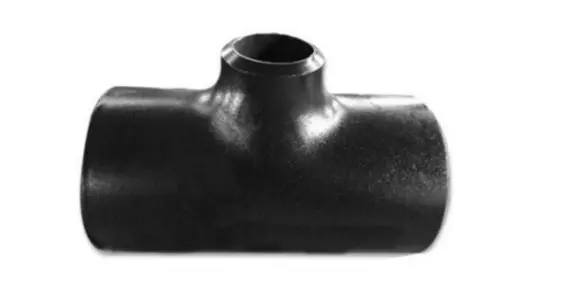
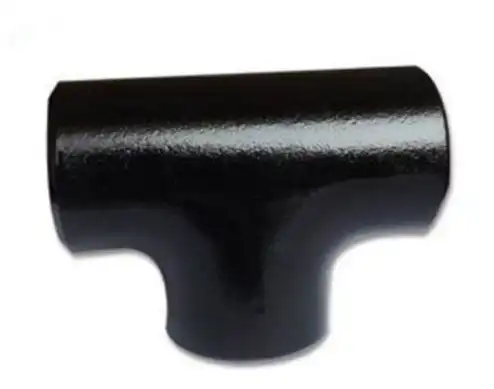
The first decision when specifying a Socket Weld Pipe Tee is whether the branch diameter matches the run (equal tee) or is smaller (reducing tee). Equal tees maintain uniform flow capacity across all three connections, making them ideal for distribution points where flow symmetry matters. Reducing tees saves weight and cost when a smaller branch line is needed, such as when tapping a main line for instrumentation or sampling. Both types are manufactured to ASME B16.11 dimensions, with socket depths and bore tolerances engineered to ensure proper pipe insertion and weld preparation. Buyers should confirm whether their project requires schedule-matched or Class-designated fittings, as this affects wall thickness and pressure rating.
Pressure Class Ratings and Size Ranges
Socket weld fittings are classified by pressure rating: Class 3000, Class 6000, and Class 9000, each corresponding to different wall thicknesses and permissible service pressures. A Socket Weld Pipe Tee in Class 3000 suits moderate-pressure applications up to NPS 4, while Class 6000 and 9000 fittings handle higher pressures in smaller sizes. Selecting the correct class requires matching the fitting schedule to the connected pipe—Class 3000 pairs with SCH 80 pipe, Class 6000 with SCH 160, and Class 9000 with SCH XXS. Understanding these correlations prevents mismatched fittings that could compromise joint integrity under operating pressure and thermal cycling.
| Tee Configuration | Branch Diameter | Typical Application |
|---|---|---|
| Equal Tee (Straight) | Same as run | Flow distribution, mainline branching |
| Reducing Tee | Smaller than run | Instrument taps, sampling lines, bypass |
| Class 3000 | SCH 80 wall | Moderate-pressure systems |
| Class 6000 | SCH 160 wall | High-pressure process piping |
| Class 9000 | XXS wall | Extreme-pressure applications |
Material Selection and Standards Compliance
Carbon Steel, Stainless Steel, and Alloy Options
Material choice for a Socket Weld Pipe Tee depends on the process media, operating temperature, and corrosion environment. Forged carbon steel (ASTM A105) is the most common and economical option for general-purpose oil, gas, and water service. Forged stainless steel (ASTM A182 F304/F316L) provides excellent corrosion resistance for chemical, pharmaceutical, and marine applications. Low-alloy steel grades (ASTM A182 F11/F22) serve elevated-temperature service in power generation and refining. A manufacturer offering all three material categories from stock allows buyers to consolidate orders across different service requirements, reducing lead times and ensuring consistent quality documentation across the entire fitting package.
ASME, MSS, and International Standard Requirements
A Socket Weld Pipe Tee must conform to dimensional and pressure standards recognized in the buyer's destination market. ASME B16.11 governs socket-weld forged fittings in the American system, MSS SP-79 covers socket-weld reducing inserts, and MSS SP-95 addresses swaged nipples and bull plugs often used alongside tees. For projects in Japan, JIS B2316 applies; in Germany, DIN 2353 fittings are common for hydraulic and instrumentation lines. A manufacturer producing to multiple standards from one facility gives global buyers the flexibility to source fittings for mixed-system projects without managing multiple suppliers or worrying about dimensional incompatibility between fitting batches.
| Material Grade | Standard | Service Environment |
|---|---|---|
| ASTM A105 | Carbon steel forging | General oil, gas, and water service |
| ASTM A182 F304 | Stainless steel forging | Chemical, food, pharmaceutical |
| ASTM A182 F316L | Low-carbon stainless | Marine, corrosive process media |
| ASTM A182 F11/F22 | Chrome-moly alloy | High-temperature steam, refining |
Supplier Evaluation and Quality Verification
Manufacturing Capability and Certification
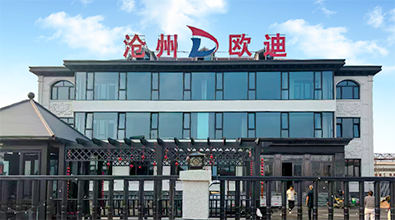
Selecting the right supplier for a Socket Weld Pipe Tee starts with verifying their manufacturing infrastructure and quality credentials. Look for manufacturers with ISO 9001:2000 certification, a special equipment manufacturing license, and self-managed import and export authority—these indicate a systematic, government-recognized operation capable of international trade. A facility covering 66,000+ square meters with 16,000-ton annual output demonstrates the scale needed for both stock orders and custom production runs. Equally important is the range of fitting types produced: a manufacturer making tees, elbows, couplings, caps, and flanges under one roof can serve as a single-source supplier, simplifying procurement and ensuring uniform metallurgical quality.
Inspection Protocols and Documentation
Quality verification does not end at the production stage—it extends through inspection and documentation. A trustworthy Socket Weld Pipe Tee supplier implements a full-inspection system: chemical composition analysis at raw material intake, dimensional verification during forging and machining, and nondestructive examination on finished fittings. Advanced detection equipment enables ultrasonic testing, magnetic particle inspection, and dye penetrant examination to catch surface and subsurface defects. Each fitting should ship with a Material Test Report (MTR) documenting the heat number, chemical analysis, and mechanical test results. For critical applications, buyers can request third-party inspection by SGS, BV, or TUV before shipment to confirm compliance with project specifications.
| Verification Step | What to Check | Acceptance Evidence |
|---|---|---|
| Supplier Certification | ISO 9001, manufacturing license | Current certificate copies |
| Material Traceability | Heat number, chemistry | MTR with mill certification |
| Dimensional Inspection | Socket depth, bore, face-to-face | Gauging report per ASME B16.11 |
| NDE Results | Surface and subsurface integrity | UT/MT/PT inspection records |
| Third-Party Verification | Independent compliance audit | SGS, BV, or TUV report |
Conclusion
A Socket Weld Pipe Tee may be a small component, but its role in pressure-piping integrity is enormous. By understanding tee configurations, matching pressure classes to pipe schedules, selecting the right material for the service environment, and verifying supplier quality systems, global buyers can source with confidence. Since 1998, Cangzhou Oudi Pipe Manufacture Co., Ltd. has delivered ISO 9001-certified fittings to 300+ customers across 40+ countries, combining full-inspection protocols with self-managed export capability. Choose a manufacturer that treats every fitting as critical—because in your piping system, it is.
FAQ
Q1: What is the difference between an equal and a reducing Socket Weld Pipe Tee?
A1: An equal tee has a branch diameter identical to the main run, maintaining uniform flow. A reducing tee has a smaller branch diameter, used when tapping a main line for a smaller connection, such as instrumentation or sampling.
Q2: What pressure classes are available for socket weld tees?
A2: Socket weld tees are manufactured in Class 3000 (SCH 80), Class 6000 (SCH 160), and Class 9000 (XXS). The class selection must match the connected pipe schedule to ensure proper pressure rating and joint integrity.
Q3: Which material should I choose for a Socket Weld Pipe Tee in corrosive service?
A3: For corrosive environments, forged stainless steel such as ASTM A182 F316L provides superior pitting and crevice corrosion resistance. For high-temperature service, chrome-moly alloy grades like ASTM A182 F22 are recommended.
Q4: What standard governs socket weld fitting dimensions?
A4: ASME B16.11 is the primary standard for forged socket-weld fittings in the American system. JIS B2316 applies in Japan, and DIN 2353 covers similar fittings in German hydraulic and instrumentation systems.
Q5: What quality documents should accompany a Socket Weld Pipe Tee order?
A5: Each order should include a Material Test Report (MTR) with heat number traceability, dimensional inspection records, and nondestructive examination results. For critical applications, third-party inspection certificates from SGS, BV, or TUV can be requested.
Order Your Socket Weld Fittings with Confidence
Don't leave your high-pressure piping to chance. Cangzhou Oudi Pipe Manufacture Co., Ltd. brings over 25 years of forging expertise, ISO 9001-certified quality systems, and a proven export record serving 300+ customers across 40+ countries. Whether you need Class 3000 carbon steel tees or Class 9000 stainless steel Socket Weld Pipe Tee fittings for critical service, our team delivers with full traceability and on-time global shipping. Email us today at oudi-04@oudiguandao.com to request a quote, share your specifications, or arrange a third-party inspection. Certified quality, competitive pricing, worldwide service—let's build your piping system right.
References
1. ASME. ASME B16.11-2016: Forged Fittings, Socket-Welding and Threaded. American Society of Mechanical Engineers, New York, 2016.
2. ASTM International. ASTM A105/A105M-18: Standard Specification for Carbon Steel Forgings for Piping Applications. West Conshohocken, PA, 2018.
3. ASTM International. ASTM A182/A182M-19: Standard Specification for Forged or Rolled Alloy and Stainless Steel Pipe Flanges, Forged Fittings, and Valves and Parts. West Conshohocken, PA, 2019.
4. Manufacturers Standardization Society. MSS SP-79: Socket-Welding Reducing Inserts. Vienna, VA, 2012.
5. Nayyar, Mohinder L. Piping Handbook. 7th ed., McGraw-Hill Education, New York, 2000.
6. International Organization for Standardization. ISO 9001:2000 Quality Management Systems – Requirements. Geneva, Switzerland, 2000.

Need help finding the right solution with our experts. Please contact us.
SINCE 1998 Your Reliable Pipeline Manufacturer