CS Concentric Reducer vs Eccentric: Which Fits Your Project?
Choosing between a CS Concentric Reducer and an eccentric reducer may directly affect the long term performance of your pipeline. A CS Concentric Reducer is a symmetrical cone-shaped body with both ends on the same central axis, perfect for vertical pipe runs with balanced flow. One flat side is offset by an eccentric reducer to maintain the pipe bottom or top level. This is to avoid air pockets in horizontal lines. Knowing what kind is best for your unique project conditions—pressure range, pipe orientation, and fluid type—can save you significant rework and system failure down the road.
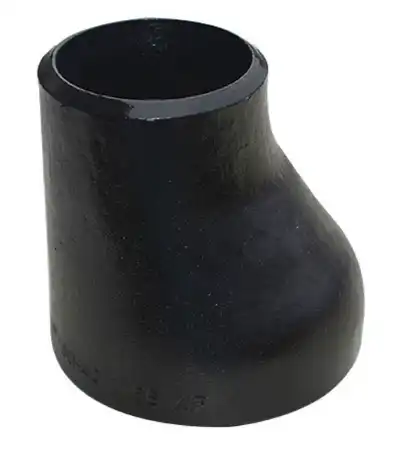
Understanding CS Concentric Reducers and Eccentric Reducers
What Is a CS Concentric Reducer?
CS Concentric Reducer is a kind of fitting that joins two pipes with various diameters while both their ends remain on the same centerline. Its cone-shaped body helps the fluid to change smoothly from a bigger bore to a smaller bore, thereby decreasing turbulence and pressure loss. Normally, these reducers are made of carbon steel (A234 WPB), stainless steel, or alloy steel and meet the ASME B16.9 dimensional criteria. Face-to-face lengths are interchangeable from manufacturer to manufacturer and are based on the outside diameter of the bigger pipe.
What Is an Eccentric Reducer?
An eccentric reducer links pipes of various sizes with one flat side, which is maintained throughout the whole length of the fitting. This offset design maintains a level top or bottom of the pipe throughout a diameter change. It is the optimum configuration for horizontal pump suction lines. The flat-top orientation prevents air from collecting within the pipe, which would cause cavitation damage to the pump. The eccentric design might also be employed for drainage lines where a uniform bottom elevation is needed.
How Installation Orientation Affects Performance
The direction of the pipe will dictate what kind of reducer you choose. Concentric reducers are good for vertical lines because gravity will tend to dissipate any gas that may be trapped in the flow stream. However, in horizontal lines, the symmetric geometry of a concentric reducer means a high point is formed at the top of the fitting where air may gather. Eccentric reducers do this by having one flat side. One of the most typical field mistakes in the design of pipe systems is selecting the improper orientation for your application.
Key Differences Between CS Concentric and Eccentric Reducers
Shape, Dimensions, and Pressure Ratings
The most obvious change is in the geometry. A concentric reducer is like a symmetrical cone, while an eccentric reducer is like a cone that has been sliced on one side. Both styles conform to ASME B16.9 for butt-weld fittings; therefore, face-to-face measurements are standardized by the outside diameter of the bigger pipe. Pressure ratings are not stated as set class numbers (i.e., 150#, 300#). Instead, both CS Concentric Reducers have the same pressure capacity as a seamless pipe of the same material and wall schedule, which provides engineers with an easy reference for system design.
Material Compatibility and Weld Preparation
Carbon steel reducers (ASTM A234 WPB) are common in oil, gas, and general industrial service. Stainless steel grades (304, 316) are used for corrosive chemical or hygienic applications. For wall thicknesses < 22 mm, a conventional 37.5° ± 2.5° bevel according to ASME B16.25 is used. In the case of thicker walls, a compound bevel is necessary for full-penetration welding. Where pipes of different schedules are joined, the bore should be counter-drilled to match the inner diameter of the mating pipe. This prevents a step which may start corrosion or turbulence.
Advantages and Limitations Side by Side
Each reducer type has a specific role where it performs best. Here is a direct comparison to help you assess which fits your project requirements:
- Concentric Reducer: Best for vertical pipe runs; provides symmetrical flow and even load distribution on supports; widely used in high-pressure steam lines in power plants and reactor feed lines in chemical columns where laminar flow is critical.
- Eccentric Reducer: Best for horizontal pump suction lines; flat-top orientation prevents air pocket formation and protects pumps from cavitation; also used in sloped drainage systems where bottom elevation must stay constant.
Understanding these trade-offs helps procurement engineers avoid the mistake of specifying a concentric fitting in a horizontal suction application, which is one of the more expensive field corrections in process piping projects.
Selecting the Right Reducer for Your Pipeline Project
F-1 Criteria Screening: Define Your System Variables
Before ordering, identify three key variables: pipe orientation (vertical or horizontal), fluid type (liquid, gas, slurry), and operating pressure and temperature range. A vertical line carrying high-pressure steam above 250 bar calls for a concentric reducer in carbon steel or alloy steel. A horizontal water supply or pump suction line calls for an eccentric reducer with the flat side positioned at the top. Defining these variables upfront reduces specification errors that delay projects.
F-2 Demand Matching: Match Reducer to Application
Once system variables are clear, match the reducer type to the industry application. Here are the most common pairings drawn from real project experience:
- Oil and Gas (vertical pump discharge): CS Concentric Reducer in A234 WPB; ensures balanced force distribution on pipe supports and minimizes vibration in high-flow conditions.
- Chemical Processing (reactor feed lines): Concentric reducer; maintains laminar flow profile during pipe size transitions to avoid disrupting reaction rates.
- Water Treatment and HVAC (horizontal runs): Eccentric reducer, flat side up; prevents air lock and ensures consistent pump performance.
- Power Generation (steam distribution): Concentric CS Concentric Reducer in alloy steel; handles supercritical pressures while preventing erosion-corrosion from asymmetric flow impact.
These applications reflect direct field use across industries that Oudi has supplied since 1998.
Cost, Compliance, and Lead Time Considerations
The two kinds of reducers are priced similarly on conventional schedules. Custom bore machining or non-standard dimensions adds expense and lead time. Products have to satisfy ANSI, DIN, JIS, or BS standards according to the intended market. U.S. projects need ASME B16.9 and ASTM material certifications. Normalizing heat treatment is necessary for normalizing carbon steel reducers generated at high temperatures to maintain the integrity of grain structure and hardness values within the acceptable 197 HB maximum.
Procurement Guide for CS Concentric and Eccentric Reducers
Certifications and Supplier Verification
Reducers should be purchased from suppliers who are ISO 9001 certified and have a Special Equipment Manufacturing License for critical service. These certificates demonstrate that quality controls include incoming raw material inspection, in-process dimensional checks, and final nondestructive testing. Without these certificates, fittings may not pass third-party inspection at the project site, and this might lead to significant delays.
Oudi: A Trusted CS Concentric Reducer Supplier
Cangzhou Oudi Pipe Manufacture Co., Ltd. has been a professional manufacturer of carbon steel, stainless steel, and alloy steel pipe fittings since 1998. Oudi has an annual production of 16,000 tons, and its plant covers an area of 66,600 square meters. Oudi is ISO 9001 and PRC Special Equipment Manufacturing License certified. Products are manufactured to American, German, Japanese, and British standards and sold to over 40 countries in Europe, North and South America, Africa, Southeast Asia, and the Middle East. All fittings are fully and non-destructively inspected for flaws prior to shipping.
Standard vs. Custom Sizes and Bulk Orders
Standard reducers under ASME B16.9 provide the quickest lead time and lowest per-unit cost. Special bevel preparations, non-standard schedules, or custom sizes will need extra machining time. Bulk purchases provide advantages of scale, especially for EPC contractors and International distributors buying for major plant projects. Oudi’s manufacturing capabilities can reliably produce large volume purchases while maintaining inspection requirements.
Maintenance Tips and Long-Term Performance Optimization
Routine Inspection and Cleaning Protocols
Scheduled maintenance intervals must include inspection of reducer welds and exterior surfaces. For carbon steel fittings in corrosive environments, visually inspect for surface oxidation and integrity of coatings. Flush interior passageways to eliminate scale or silt build-up that reduces the bore size and increases the pressure drop across the fitting.
Avoiding Common Installation Errors
The most prevalent mistake is to place a concentric reducer on a horizontal pump suction line where it retains air and produces cavitation. Another typical mistake is to mismatch pipe schedules and not counterbore the reducer bore. This results in a step which promotes erosion at the transition point. Before welding, check the bore alignment.
Monitoring for Long-Term Pipeline Efficiency
During commissioning, pressure gauges should be installed on either side of a reducer to determine the baseline pressure difference. Differential, progressive over time indicates partial blockage or internal deterioration. Proactive monitoring every six months enhances the service life of fittings and avoids unforeseen shutdowns, which are far more costly than regular inspections.
Conclusion
The choice between a CS Concentric Reducer or an eccentric reducer is dependent on the pipe orientation, kind of fluid, and operating circumstances. Concentric reducers are used in vertical lines and high-pressure systems where symmetric flow is needed. Eccentric reducers are used in horizontal runs and pump suction lines where protection of air pockets is paramount. Both kinds should fulfill the material specifications for industrial service of ASME B16.9 and ASTM. Getting this option right at the specification stage will save huge expense and downtime across the life cycle of the project.
FAQ
1. When should I choose a concentric reducer over an eccentric one?
Choose a concentric reducer for vertical pipe runs where flow symmetry and balanced support loads matter. Use an eccentric reducer on horizontal pump suction lines to prevent air pockets and avoid cavitation.
2. Can I use a CS Concentric Reducer on a horizontal line?
It is generally not recommended. A concentric reducer on a horizontal line creates a high point where air collects, which disrupts flow and can damage pumps. An eccentric reducer with the flat side up is the standard solution for horizontal service.
3. How is the pressure rating of a butt-weld reducer determined?
Butt-weld reducers do not carry fixed pressure class ratings. Their pressure capacity equals that of a seamless pipe of the same material and wall schedule, which engineers use as the design reference.
4. Is heat treatment required for carbon steel reducers?
Yes. Carbon steel reducers formed at high temperatures typically require normalizing to refine grain structure and keep hardness at or below 197 HB, meeting A234 WPB specifications.
5. What is the standard bevel angle for butt-weld reducers?
Per ASME B16.25, the standard bevel is 37.5° ± 2.5° with a 1/16-inch root face. Walls thicker than 22 mm require a compound bevel for full-penetration welds.
Get CS Concentric Reducer Quotes from Oudi — ISO-Certified Since 1998
Oudi has supplied ISO 9001-certified carbon steel pipe fittings to clients across 40+ countries for over 25 years. Whether you need a standard CS Concentric Reducer or custom eccentric reducer specifications, our team responds promptly with pricing and technical support. Contact us directly at oudi-04@oudiguandao.com to request a quote and start a conversation with our engineering team today.
References
1. ASME B16.9 — Factory-Made Wrought Buttwelding Fittings, American Society of Mechanical Engineers, 2018.
2. ASTM A234/A234M — Standard Specification for Piping Fittings of Wrought Carbon Steel and Alloy Steel for Moderate and High Temperature Service, ASTM International, 2022.
3. ASME B16.25 — Buttwelding Ends, American Society of Mechanical Engineers, 2017.
4. Nayyar, M. L. — Piping Handbook, McGraw-Hill, 7th Edition, 2000.
5. Mohinder L. Nayyar — Piping Databook, McGraw-Hill, 2002.
6. ISO 9001:2015 — Quality Management Systems — Requirements, International Organization for Standardization, 2015.

Need help finding the right solution with our experts. Please contact us.

SINCE 1998 Your Reliable Pipeline Manufacturer



