Where Is Lap Joint Flange CS Used in Piping Systems?
Lap joint flange CS is extensively used in oil and gas pipelines, chemical processing plants, water treatment facilities, and power generating stations. As a two-piece arrangement, a backing flange and butt-welded stub end, it allows maintenance crews to easily remove pipe connections without cutting welds or straining nearby pipelines. The rotating backing ring removes the need to line up bolt holes in tight pipe racks, and the material separation method enables engineers to combine a carbon steel flange with a higher-alloy stub end, resulting in a 40-60% reduction in material costs for corrosive applications.
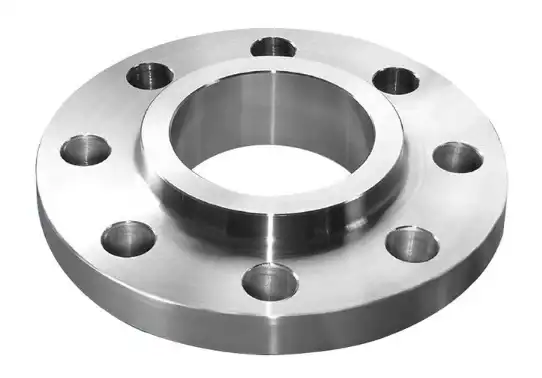
Understanding Lap Joint Flange CS: Specifications and Material Properties
Before specifying this flange type for a project, it helps to understand exactly what you are ordering and why the numbers matter for your system.
Standard Dimensions and Pressure Ratings
Carbon steel lap joint flanges are produced to ASME B16.5 for sizes ½” through 24” and ASME B16.47 for diameters 26” through 60”. Pressure Classes: 150# to 2500#. The hole has a machined radius or chamfer that clears the weld fillet of the mating stub end, a feature that renders it physically incompatible with slip-on flanges and assures accurate load transfer to the stub end face.
Material Grade and Mechanical Properties
ASTM A105 is the most frequent material used for the backing flange. ASTM A105 has a minimum yield strength of 36,000 psi and a minimum tensile strength of 70,000 psi. These values are sufficient to allow for bolt load transfer through the joint. The flange is never in contact with the process fluid; therefore, the carbon steel grade has a huge service temperature range without the need for expensive alloy improvements.
Corrosion Resistance and Temperature Limits
ASTM A105 carbon steel flanges are the trusted choice for dry gas and neutral-pH liquid services. In slightly corrosive settings, a protective coating or galvanizing may greatly increase service life. In the case of hostile process fluids such as strong acids, the right strategy is to upgrade just the stub end to an alloy such as Hastelloy C-276 or SS316 and leave the backing flange in carbon steel. This is the “dissimilar metal pairing” method that makes Lap Joint Flange CS assembly economical in chemical plants.
Typical Applications of Lap Joint Flange CS in Piping Systems
The design features of this kind of flange are immediately translated into benefits in a number of sectors. Here are three real-world examples of the operational utility of carbon steel lap joint flanges.
- High-Corrosion Chemical Processing: When pipe contains aggressive acids such as sulfuric acid, operators combine a Hastelloy C-276 stub end with a regular carbon steel backing flange. Only the stub end meets the fluid; thus, the pricey alloy is utilized only where required. Material cost savings of 40–60 percent compared with entirely exotic-alloy assemblies have been reported for projects using this technology.
- Water and slurry systems requiring frequent maintenance: Wastewater and slurry lines need periodic shutdowns for sediment cleaning and inspection. The free backing flange enables the bolt to be removed and the pipe separated without the need to cut any welds or move large pieces of pipe, significantly reducing the time needed for maintenance.
- Access restrictions for retrofitting refinery pipe racks: Often, physical constraints of dense refinery installations make it hard to spin a stiff pipe into bolt-hole alignment. Because the lap joint backing flange can spin freely around the pipe, installers may align the bolt pattern at any angle without pre-stressing or torsioning the existing pipeline.
These three cases are the basic technical reasons for the use of lap-joint flanges instead of fixed-face flanges. Oil and gas EPC contractors, chemical plant operators, and municipal water authorities use this flexibility during original construction and continuing maintenance cycles.
Comparison: Lap Joint Flange CS Versus Other Flange Types
Understanding where this flange fits in the broader product family helps procurement teams specify the right component the first time.
Lap Joint vs. Weld Neck Flange
Weld neck flanges are welded directly to the pipe using a full penetration butt weld. Weld neck flanges have around 10 times the fatigue strength of a lap joint assembly. Weld necks are the right solution for high-pressure, high-cycle services, such as steam headers or hydraulic lines. Lap joint flanges are suitable for low- to medium-pressure applications where the flexibility of alignment and ease of access for maintenance are more important than maximal resistance to fatigue.
Lap Joint vs. Slip-On Flange
Slip-on flanges are also loose-fitting prior to welding, which may occasionally create misunderstanding. The big difference is that the slip-on flange is fillet welded directly to the pipe on the inside and exterior, forming a permanent installation. The lap joint backing flange is never welded to the pipe and is free to spin throughout the life of the installation. This makes lap joint assemblies easy to examine and replace.
Carbon Steel vs. Stainless Steel and Alloy Steel
Carbon steel flanges are less costly and suitable for neutral service applications. Stainless Steel Flanges are often ASTM A182 F304 or F316. It is corrosion resistant and used in food-grade, medicinal, or marine situations. Alloy Steel grades for extreme temperature and hydrogen service in refinery applications. The lap joint assembly is unusual in that it enables engineers to mix materials between the two components, something no other sort of flange allows.
How to Select and Procure Lap Joint Flange CS for Your Piping Projects
Getting the specification correct before ordering saves expensive rework. Compare pipe nominal diameter and schedule and the pressure class needed with the design circumstances of your system. Then check if the supplier is ISO 9001 certified and, for pressure equipment markets, has a special equipment manufacturing license. All carbon Lap Joint Flange CS flanges at Oudi are supplied with complete material test certificates and third-party inspection reports to satisfy your quality assurance files.
Matching Size and Pressure Class to System Requirements
Verify flange dimensions by cross-referencing pipe nominal bore to ASME B16.5 tables. Inspection authorities will quickly see a pressure class mismatch, for example, a 150# flange on a 300# line, as a safety issue. Always state the class clearly on the purchase order.
Evaluating Supplier Certifications
Before making your choice, ask to see copies of ISO 9001 certifications and special equipment production permits. Oudi has maintained ISO 9001:2000 system certification since 1998 and has a special equipment production license issued by the People's Republic of China. The two certifications may be verified via official channels. It manufactures 16,000 tons of pipe fittings and flanges a year and meets the demands of clients in over 40 countries.
Lead Time and Logistics Planning
Oudi's Cangzhou plant is 66,600 square meters and usually delivers standard sizes in ASTM A105 carbon steel under regular production cycles. The plant’s location 120 kilometers from Tianjin Port helps maintain ocean freight transit times competitive for North American and European customers. With bulk orders, there are combined shipping agreements that minimize the landing cost per item.
Installation and Maintenance of Lap Joint Flange CS in Piping Systems
Pre-Installation Alignment Check
Before assembly, slide the backing flange onto the pipe with the flange face pointing toward the stub end weld location. Confirm that the bore chamfer clears the weld fillet. Misalignment at this stage, if ignored, transfers bending stress to the stub end weld, shortening joint life.
Assembly and Bolt Torquing
Rotate the backing flange to align bolt holes with the mating flange without touching the pipe. Install a full-face or raised-face gasket as the design specifies. Tighten bolts in a cross-pattern sequence to the torque values listed in ASME PCC-1, ensuring even gasket compression and leak-free sealing.
Ongoing Inspection and Preventive Maintenance
Inspect backing flanges for surface corrosion and bolt-hole wear at each planned maintenance interval. Check stub end faces for scoring or pitting that could compromise the gasket seat. Because the backing flange never contacts process fluid, wear is usually mechanical rather than chemical, and a corroded or damaged flange can be replaced without disturbing the pipe weld.
Conclusion
Carbon Lap Joint Flange CS flanges occupy a specific and well-defined place in piping engineering. They are the right choice when maintenance access, bolt-hole alignment flexibility, or material cost reduction on corrosive services are priorities. They are not the right choice for high-fatigue, severe-cyclic, or extreme-pressure services, where weld neck flanges perform better. Understanding where each flange type belongs in your system leads to safer, more cost-effective installations. Oudi's product range covers the full spectrum of carbon steel, stainless steel, and alloy steel flanges, giving procurement teams a single verified source for compliant, well-documented components.
FAQ
1. What pressure ratings are available for carbon steel lap joint flanges?
Carbon steel lap joint flanges manufactured to ASME B16.5 are available in pressure classes 150#, 300#, 600#, 900#, 1500#, and 2500#. The appropriate class depends on operating pressure and temperature. Always consult the ASME B16.5 pressure-temperature rating tables for your specific ASTM A105 material grade before specifying.
2. Can I use a carbon steel backing flange with a stainless steel stub end?
Yes. Mixing flange and stub end materials is one of the primary engineering advantages of this assembly type. The backing flange carries the bolt load and never contacts the process fluid, so carbon steel performs adequately even when the stub end is a high-alloy material in corrosive service.
3. How does a lap joint flange reduce maintenance downtime?
Because the backing flange rotates freely, maintenance crews can remove bolts and separate flanged joints without cutting pipe or realigning heavy sections. This significantly reduces the time required for inspections, filter cleaning, and valve replacements on systems that require frequent access.
4. Are carbon steel lap joint flanges suitable for sour gas service?
Standard ASTM A105 carbon steel requires additional consideration for H₂S-containing (sour) service per NACE MR0175/ISO 15156. Consult with your metallurgist and confirm that the material hardness and heat-treatment condition meet the standard's requirements before ordering for sour gas applications.
Get Your Lap Joint Flange CS Quote from Oudi Today
Oudi has manufactured carbon steel pipe fittings, flanges, and related components since 1998, with an annual output of 16,000 tons exported to customers in more than 40 countries. As a trusted Lap Joint Flange CS manufacturer, Oudi holds ISO 9001 certification and a special equipment manufacturing license. Contact our team directly at oudi-04@oudiguandao.com to request a quote or discuss your project specifications.
References
1. ASME B16.5 — Pipe Flanges and Flanged Fittings: NPS ½ Through NPS 24 Metric/Inch Standard, American Society of Mechanical Engineers, 2017.
2. ASME B16.47 — Large Diameter Steel Flanges: NPS 26 Through NPS 60 Metric/Inch Standard, American Society of Mechanical Engineers, 2017.
3. ASTM A105/A105M — Standard Specification for Carbon Steel Forgings for Piping Applications, ASTM International, 2021.
4. NACE MR0175/ISO 15156 — Petroleum and Natural Gas Industries — Materials for Use in H₂S-Containing Environments in Oil and Gas Production, NACE International / ISO, 2015.
5. Nayyar, M. L. — Piping Handbook, 7th Edition, McGraw-Hill, 2000.
6. ASME PCC-1 — Guidelines for Pressure Boundary Bolted Flange Joint Assembly, American Society of Mechanical Engineers, 2019.

Need help finding the right solution with our experts. Please contact us.

SINCE 1998 Your Reliable Pipeline Manufacturer



