Custom Carbon Steel Elbow Applications in Industrial Piping Systems
Custom carbon steel elbow fittings serve as critical directional change components in industrial piping networks, enabling fluid or gas flow redirection while maintaining system pressure integrity. These engineered fittings are manufactured from high-grade carbon steel through seamless or welded processes, designed to meet stringent specifications including ANSI, ASME, JIS, DIN, and BS standards. Their applications span petroleum refineries, chemical processing plants, natural gas distribution networks, water treatment facilities, power generation stations, and shipbuilding operations. With customizable angles (typically 45 or 90 degrees), radius options (short or long), and various end connections (butt-welding, socket-welding, threaded), these fittings address complex piping layout requirements across demanding industrial environments.
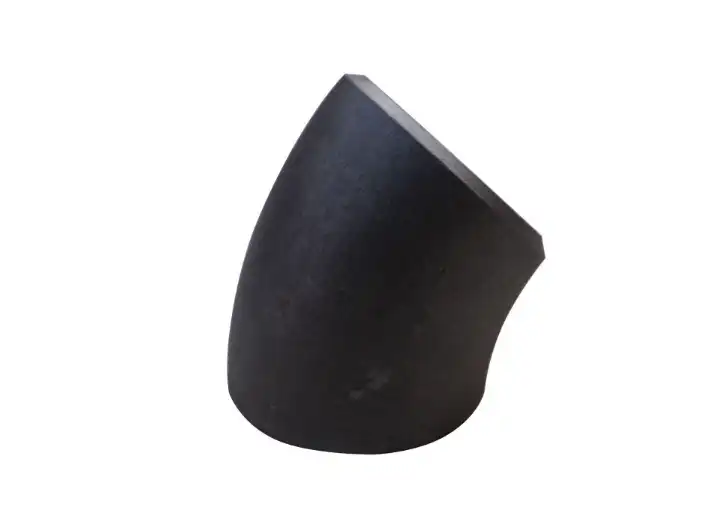
Understanding Custom Carbon Steel Elbows in Industrial Piping Systems
What Defines a Custom Carbon Steel Elbow
A carbon steel elbow is a carefully made pipe fitting that changes the direction of flow in industrial pipe networks. "Custom" means that these parts are made to meet special size, material, or technical needs that can't be met by standard catalogue items. These fittings make up about 80% of all pipeline fittings used in industrial settings, which makes them essential to system design.
First, high-quality carbon steel billets are used, which are then either hot-formed or cold-formed. When hot forming, the material is heated until it is soft, and then the elbow is shaped with hydraulic tools or mandrels. This method works for elbows with thicker walls and bigger sizes. Cold forming uses mechanical force at room temperature and is best for making fits with thinner walls, from Schedule 10 to Schedule XXS.
Manufacturing Methods and Quality Assurance
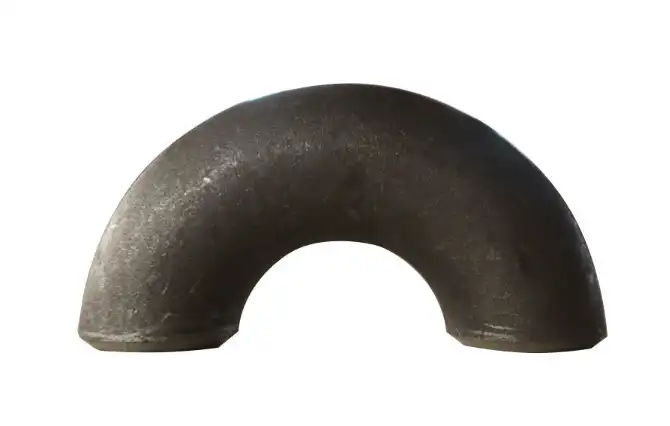
Two main ways of making things control the production of carbon steel elbows. Seamless elbows are made from solid steel lines that are heated and bent without any lengthwise welds. This gives them more strength and a more even wall thickness. Steel plates are rolled into tubes and then combined with lengthwise welds before they are bent to make welded bends. There are pros and cons to each way. Seamless construction offers better pressure values, while soldered models are more cost-effective for less demanding uses.
Our Cangzhou factory makes Oudi products. It uses high-tech hot-pushing and precision bending machines that transform raw materials through controlled heating processes. To find problems inside the elbow, it is inspected for size, tested for hydrostatics, and given a nondestructive examination that may include ultrasound or radiography testing. Our Special Equipment Manufacturing License from the People's Republic of China and ISO 9001:2000 certification show that we are committed to structured quality control from the time we receive materials until they are shipped out.
Types, Sizes, and Material Grades Available
Carbon steel elbows for Custom carbon steel elbows can be shaped in different ways to meet the needs of different pipes. The 45-degree elbow changes the direction of flow moderately and is good for smooth shifts. The 90-degree elbow, on the other hand, lets you make sharp turns in tight areas. Short radius (SR) elbows have a central radius that is the same size as the pipe's standard diameter. This makes installations small. Long radius (LR) elbows have a central radius that is 1.5 times the width. This makes them less turbulent and lowers the pressure drop.
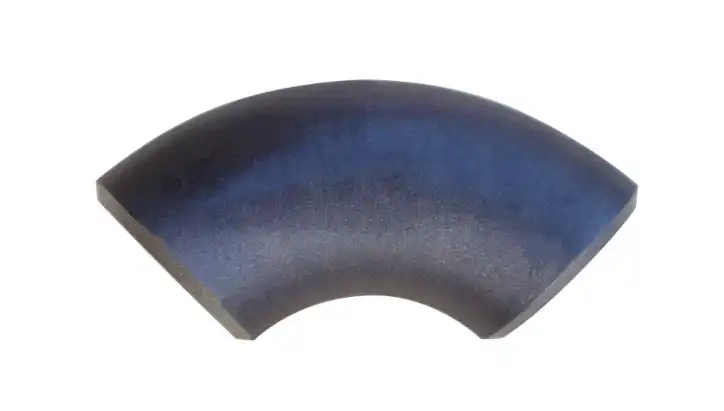
Reducing elbows change both the direction and the width of a pipe, so you don't need to use different reduction fittings. There are different kinds of end connections, such as threaded connections for mechanical joining, socket holes for butt welding (SW), and bevelled ends for butt welding (BW). Different types of materials are available, from the normal ASTM A234 WPB for general use to metals like WP11 or WP22 that are made to work at high temperatures. Dimensional rules are based on ASME B16.9 for factory-made fittings and ASME B16.28 for short radius elbows. This makes sure that parts from different makers can be used together.
Key Industrial Applications of Custom Carbon Steel Elbows
Oil and Gas Pipeline Networks
Carbon steel elbow joints are used a lot in petroleum transportation and extraction systems to get through complicated refining plans and cross-country pipes. These parts can handle temperatures up to 400°C and pressures higher than 1,500 PSI. They can also handle hydrogen sulphide in sour gas conditions. Long radius 90-degree elbows last longer than sharp-angle joints because they protect against wear from harsh crude oil solids that are floating in the fluid.
Offshore platforms are made of carbon steel types that don't rust and can handle salt spray and conditions at sea. Our history of providing elbows to oil fields in the Middle East and drilling operations in Southeast Asia shows that our products work well in harsh environments. For a big job in Singapore, ANSI B16.9 seamless elbows with sizes from 6 inches to 24 inches had to be supplied all at once within eight weeks to meet strict deadlines.
Chemical Processing and Petrochemical Plants
Elbows that can stand up to acids, alkalis, and organic solvents are needed in places that make chemicals. Carbon steel elbows with the right coats or a higher chromium content can handle acidic process streams and keep their shape even when they are heated and cooled many times. Being able to change the width of the walls makes sure that there is enough rust protection for the specific chemical mix and working temperature.
For a catalytic cracker unit, a European petrochemical client recently asked for 45-degree short radius elbows made of ASTM A234 WP11 material. The short radius design worked with the reactor's limited room, and the chromium-molybdenum metal could handle gas temperatures of 500°C. Our engineering team worked with their EPC contractor to provide measurement models and material test results that proved agreement with DIN standards. This made it easier to get the goods through European customs.
Power Generation and Water Treatment Infrastructure
Carbon steel elbows are used in the high-pressure pipes that connect economizers, steam drums, and superheaters in coal-fired and combined-cycle power plants' boiler feedwater systems. These fittings have to be able to handle steady changes in temperature and water hammer forces without breaking. In small-bore sensor lines, where leak-tight joints are important for the stability of the control system, socket-welding elbows are the best choice.
Carbon steel elbows for Custom carbon steel elbows are used in the pipes that bring in raw water, the systems that dose chemicals, and the mains that distribute cleaned water in municipal water treatment plants. The material is naturally resistant to rust in drinkable water, which makes it a good choice for large-diameter uses. This is especially true when the inside is lined with cement mortar or epoxy coats. We were able to support infrastructure-scale developments when we sent 450 tonnes of 10-inch and 12-inch long radius elbows to a water conservation project in North America.
How to Choose the Right Custom Carbon Steel Elbow for Your Project
Evaluating Operating Conditions and Material Selection
Proper elbow selection begins with thoroughly analyzing the service environment. Operating pressure, temperature range, and fluid characteristics directly influence material grade selection. Standard ASTM A234 WPB carbon steel suits ambient to moderate temperatures up to 400°F with non-corrosive fluids. Applications exceeding these parameters require alloy steel grades—WP5 for 1.25% chromium service to 650°F, or WP11 for 1.25Cr-0.5Mo service to 1,000°F.
Fluid corrosivity dictates whether additional protective measures are necessary. Mildly acidic streams may only require increased wall thickness as corrosion allowance, while highly aggressive media necessitate stainless steel alternatives or specialized coatings. Abrasive slurries benefit from long radius configurations that reduce flow velocity at direction changes, minimizing erosion-related wall thinning. Engineers should calculate Reynolds numbers and erosional velocity limits to determine appropriate radius selections.
Seamless Versus Welded Construction Comparison
Deciding between seamless and welded elbows involves balancing performance requirements against budget constraints. Seamless elbows offer uniform metallurgical properties throughout the cross-section without heat-affected zones that could introduce weak points. This construction excels in high-pressure applications, cyclic loading conditions, and services where weld inspection adds project cost.
Welded elbows provide economic advantages for lower-pressure systems and larger diameters where seamless pipe availability becomes limited. Modern welding procedures and post-weld heat treatment produce joints approaching base metal strength, making welded construction acceptable for many industrial applications. Our facility maintains both seamless pipe inventory and automated welding stations, allowing us to recommend the most cost-effective solution after reviewing project specifications.
Certification Standards and Supplier Evaluation Criteria
Compliance with recognized standards ensures product reliability and facilitates regulatory approvals. ASME B31.3 Process Piping Code governs material selection and pressure design in chemical plants, while ASME B31.1 applies to power piping systems. Fittings must bear appropriate markings indicating heat number traceability, material grade, and dimensional specification.
When evaluating suppliers, verify their quality management certifications and manufacturing licenses. Our ISO 9001:2000 certification and Special Equipment Manufacturing License validate our systematic approach to quality assurance. Request mill test reports certified by third-party inspection agencies showing chemical composition and mechanical property test results. Assess production capacity—our 16,000-ton annual output ensures consistent availability without extended lead times. Examine export experience; our track record serving 40-plus countries demonstrates proficiency in international documentation and logistics coordination.
Procurement Insights: Streamlining the Purchase of Custom Carbon Steel Elbows
Supplier Assessment and Bulk Pricing Strategies
Efficient procurement starts with identifying manufacturers offering direct factory pricing rather than intermediary distributors. Factory-direct sourcing eliminates markup layers, particularly beneficial for large-volume purchases exceeding 50 tons. When requesting quotations, provide complete specifications including material grade, dimensions, end preparation type, and required certifications to receive accurate pricing.
Bulk orders typically qualify for tiered discounting—projects exceeding 100 tons may achieve 15-20% savings compared to small-lot pricing. Negotiate payment terms that align with project cash flow; our standard terms include 30% deposit with balance against copy of shipping documents, though we accommodate letter of credit arrangements for first-time international buyers. Compare lead times carefully, as expedited production often incurs premium charges. Our standard manufacturing cycle runs 4-6 weeks for stock sizes, extending to 8-10 weeks for custom specifications requiring special material procurement.
Cost Factors and Value Engineering Opportunities
Several variables drive elbow pricing. Material grade represents the primary cost component—standard carbon steel WPB costs substantially less than alloy grades containing chromium, molybdenum, or nickel. Size affects pricing exponentially; a 24-inch elbow costs disproportionately more than double a 12-inch elbow due to increased raw material consumption and specialized forming equipment requirements.
Manufacturing method influences pricing subtly. Seamless construction commands modest premiums justified by superior mechanical properties, while welded versions offer savings in larger diameters. Wall thickness dramatically impacts weight and material cost—Schedule 40 versus Schedule 80 in the same nominal size nearly doubles the weight and corresponding price. Value engineering opportunities emerge by matching wall thickness precisely to calculated requirements rather than defaulting to standard schedules.
Supply Chain Considerations and Export Logistics
International procurement requires attention to logistics details beyond the product itself. Minimum order quantities often range from 5 to 10 tons to justify container shipping economics. We coordinate with freight forwarders experienced in industrial goods to arrange containerization that maximizes payload while protecting fittings from transit damage through proper dunnage and securing.
Export documentation preparation includes commercial invoices, packing lists, certificates of origin, and material test reports translated as needed for destination country customs. Our team handles these requirements routinely, having shipped to European Union nations requiring CE marking documentation, North American destinations needing ASTM certifications, and Middle Eastern markets with specific legalization requirements. Port proximity matters—our location 120 kilometres from Tianjin Port enables cost-effective trucking and minimizes inland transportation delays.
Comparison and Decision-Making: Carbon Steel Elbows Versus Other Materials
Performance Characteristics Across Material Options
Carbon steel elbows compete primarily with stainless steel and galvanized steel alternatives in industrial applications. Carbon steel offers excellent strength-to-cost ratios, with yield strengths typically ranging from 30,000 to 60,000 PSI depending on grade. Corrosion resistance proves adequate for many non-aggressive services, particularly when protective coatings are applied or corrosion allowances are incorporated into wall thickness design.
Stainless steel versions like 304L or 316L provide superior corrosion resistance in acidic environments, coastal atmospheres, or food-grade applications where material purity matters. This performance comes at 3-5 times the material cost of carbon steel. Galvanized carbon steel combines the mechanical strength of carbon steel with zinc coating protection against atmospheric corrosion, suitable for outdoor installations or underground services at moderate price premiums over bare carbon steel.
Temperature capabilities vary significantly for Custom carbon steel elbows. Standard carbon steel maintains mechanical properties to 400°F, while alloy steel grades extend service to 1,000°F. Stainless steels function reliably to 1,500°F in certain grades. Low-temperature applications below -20°F require impact-tested carbon steel grades or austenitic stainless steels that retain ductility in cryogenic conditions.
Certification Impact on Safety and Compliance
Certification standards serve as quality gatekeepers ensuring fittings meet minimum safety requirements. ASME standards establish dimensional tolerances, material composition ranges, and marking requirements that facilitate interchangeability. Products bearing ASME stamps undergo third-party inspection by Authorized Inspection Agencies, providing insurance companies and regulatory authorities confidence in their reliability.
Project specifications often mandate specific certifications based on application severity. Pressure vessel piping may require ASME B16.9 compliance with material meeting ASTM A234 specifications. European installations cite EN 10253 standards with material conforming to EN 10216 specifications. Our manufacturing processes and quality documentation satisfy multiple international standards simultaneously, allowing clients to specify their preferred standard without custom production runs.
Lifecycle Cost Analysis and Value Proposition
Initial purchase price represents only one component of total ownership cost. Maintenance expenses, replacement frequency, and downtime costs substantially impact lifecycle economics. Carbon steel elbows in appropriate services deliver decades of reliable operation with minimal maintenance beyond external coating touch-up. Conversely, material misapplication leads to premature failure requiring emergency replacement at inflated costs.
Consider a chemical plant comparing carbon steel WPB versus 316 stainless steel elbows for a cooling water system. The carbon steel option costs 70% less initially but may require replacement after 15 years due to general corrosion, while stainless steel lasts 30-plus years. When the discount rate and replacement labour costs are factored into lifecycle calculations, carbon steel still proves economical if the system will be decommissioned within 20 years.
Installation labour also influences total cost. Carbon steel's weldability allows faster joint completion compared to stainless steel, requiring special purging gases and slower welding procedures. Our technical support team assists clients with material selection trade-off analyses to identify the optimal balance between capital expenditure and operational longevity.
Conclusion
Custom carbon steel elbows remain indispensable across industrial piping applications due to their mechanical strength, design flexibility, and economic value. Proper material selection aligned with operating conditions ensures reliable long-term performance, while attention to manufacturing quality and certification compliance provides project stakeholders confidence in system integrity. Procurement professionals benefit from partnering with established manufacturers offering comprehensive product ranges, technical expertise, and proven international supply chain capabilities. The comparison between carbon steel and alternative materials reveals that thoughtful specification matching service requirements to material properties delivers optimal lifecycle value rather than defaulting to premium alloys unnecessarily.
FAQ
1. How does corrosion resistance vary among carbon steel grades?
Standard ASTM A234 WPB carbon steel provides basic atmospheric corrosion resistance suitable for indoor installations or coated outdoor applications. Alloy grades like WP5 (1.25% chromium) and WP11 (1.25Cr-0.5Mo) offer enhanced oxidation resistance at elevated temperatures but not significantly improved aqueous corrosion protection. Applications involving corrosive media require either protective coatings, corrosion allowances in wall thickness design, or upgrading to stainless steel materials. Our engineering team evaluates specific service conditions to recommend appropriate material grades and protective measures.
2. What lead times should I expect for bulk custom elbow orders?
Standard configurations in common sizes typically ship within 4-6 weeks after order confirmation. Custom specifications requiring non-stock materials or special heat treatments extend timelines to 8-10 weeks. Expedited production accommodates urgent project needs with 2-3 week delivery possible for premium charges. Our 16,000-ton annual capacity and maintained raw material inventory enable faster turnaround than many competitors. Large-volume orders exceeding 200 tons may require phased deliveries aligned with construction schedules.
3. Can your facility produce elbows meeting specific industry certifications?
Absolutely. Our quality management system addresses ASME, ANSI, JIS, DIN, and BS standards simultaneously. We maintain documentation procedures satisfying European Pressure Equipment Directive requirements, NORSOK material data sheet formats for North Sea applications, and API specifications for petroleum industry projects. Third-party inspection arrangements with TUV, Lloyd's Register, or Bureau Veritas can be coordinated as needed. Our ISO 9001:2000 certification and Special Equipment Manufacturing License demonstrate systematic compliance capabilities verified through regular audits.
Partner with Oudi for Your Custom Carbon Steel Elbow Requirements
Oudi has manufactured premium pipe fittings since 1998 from our 66,600-square-meter facility strategically located near Tianjin Port. As a leading custom carbon steel elbow supplier, we combine advanced production technology with rigorous quality control to deliver components that meet ANSI, JIS, DIN, and BS standards. Our comprehensive product range includes seamless and welded elbows in carbon steel, stainless steel, and alloy steel configurations, backed by ISO 9001:2000 certification and full import-export licensing.
Whether your project requires standard radius fittings or complex reducing elbows with special end preparations, our engineering team provides technical consultation to match specifications with optimal material grades and manufacturing methods. With 16,000 tons annual capacity and proven delivery to 40-plus countries, we ensure supply chain reliability for projects of any scale. Contact oudi-04@oudiguandao.com today to discuss your requirements with our technical specialists and receive a detailed quotation for custom carbon steel elbow solutions tailored to your industrial piping system.
References
1. American Society of Mechanical Engineers. (2020). ASME B16.9: Factory-Made Wrought Buttwelding Fittings. New York: ASME Press.
2. ASTM International. (2019). ASTM A234/A234M-19: Standard Specification for Piping Fittings of Wrought Carbon Steel and Alloy Steel for Moderate and High Temperature Service. West Conshohocken: ASTM International.
3. Mohitpour, M., Golshan, H., & Murray, A. (2007). Pipeline Design and Construction: A Practical Approach (3rd ed.). New York: American Society of Mechanical Engineers.
4. Nayyar, M. L. (2000). Piping Handbook (7th ed.). New York: McGraw-Hill Professional.
5. Singh, R. K., & Srivastava, V. (2018). Materials Selection for Oil and Gas Industry Applications. Materials Performance and Characterization, 7(4), 672-695.
6. European Committee for Standardization. (2018). EN 10253-2: Butt-welding pipe fittings - Part 2: Non-alloy and ferritic alloy steels with specific inspection requirements. Brussels: CEN Publications.

Need help finding the right solution with our experts. Please contact us.

SINCE 1998 Your Reliable Pipeline Manufacturer



