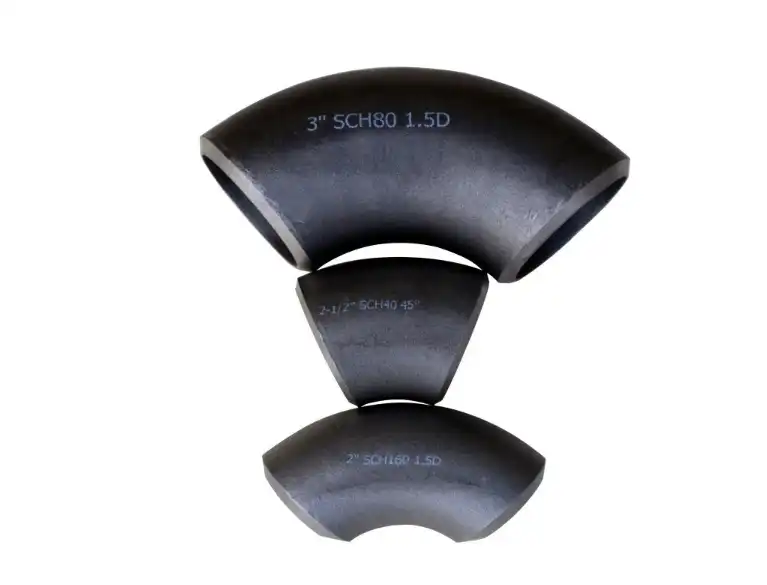
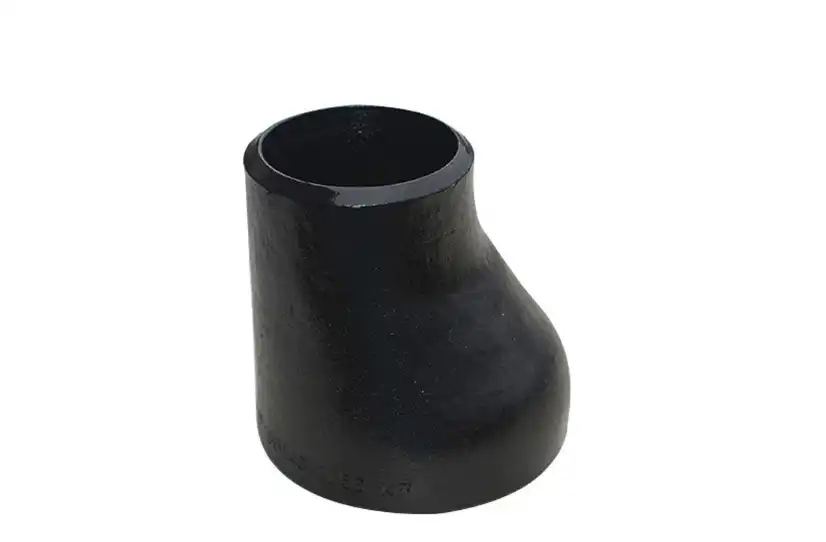
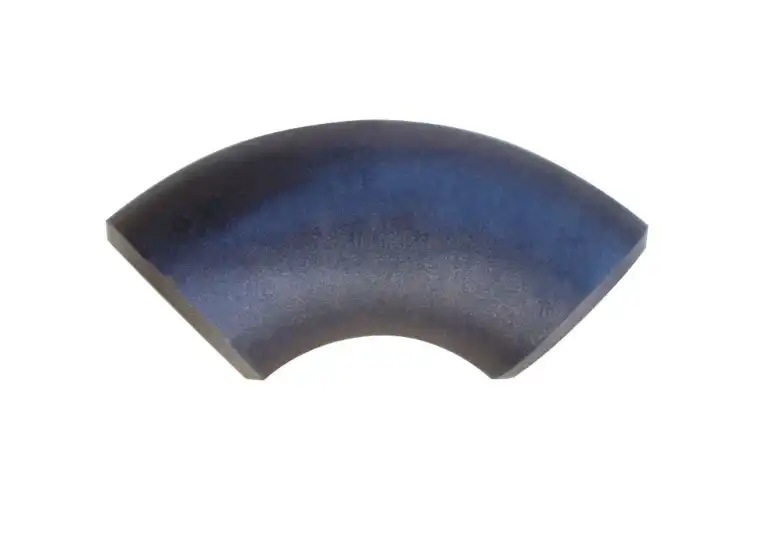
Custom Carbon Steel Elbow Welding and Fabrication Standards Guide
Custom carbon steel elbow fittings serve as the backbone of industrial piping systems, enabling directional changes while maintaining fluid or gas flow integrity. These precision-engineered components are manufactured through hot forming processes—either hot pushing or heat bending—and categorized by connection methods including butt welding, socket welding, and threaded configurations. Meeting rigorous international standards such as ASME, ASTM, and AWS, custom carbon steel elbows deliver tailored solutions for high-pressure applications across petroleum refineries, chemical processing plants, and water treatment facilities where off-the-shelf products cannot satisfy unique operational demands.
Understanding Custom Carbon Steel Elbows: Types, Specifications, and Applications
Seamless vs. Welded Construction Methods
When it comes to specific working conditions, the main difference between seamless and bonded joints is how they are joined. Seamless elbows are made from solid pipe stock using hot forming methods. This gets rid of the join gaps that could break under high pressure or sudden changes in temperature. This way of building gives the walls a consistent width and better structural stability, which makes them perfect for high-pressure uses in oil and gas gearbox systems. On the other hand, welded elbows are made by putting steel plates or pieces together. They are a cost-effective option for normal pressure settings. At our factory in Cangzhou, we use modern hot pressing equipment to make both seamless and straight-seam industrial elbows. This way, we can be sure that every batch is the same size and has the same material properties.
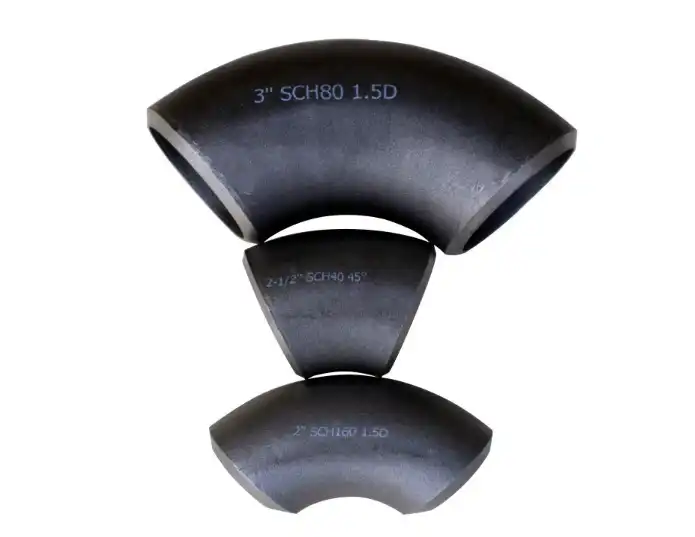
Critical Specifications Aligned with International Standards
Dimensional clarity and the make-up of the material have a direct effect on how well an elbow works in industry settings. We follow ASTM A234 for carbon steel parts and ISO 9001:2000 quality control rules when we make our products. This makes sure that they meet American, Japanese, German, and British standards. Some of the most important specs are wall thicknesses from Schedule 10 to Schedule XXS, pressure values from 150# to 2500#, and angle shapes like 45-degree and 90-degree bends that come in both short and long radius versions. Different types of materials are used, ranging from standard carbon steel to special alloys. The type of material is chosen based on its ability to fight rust, its ability to withstand high temperatures, and its mechanical strength needs for uses like chemical processing pipes or boiler feedwater systems.
Industrial Applications Across Critical Sectors
About 80% of all pipeline fitting setups in a wide range of businesses are carbon steel pipe elbows. In oil plants, these parts can handle being exposed to toxic hydrocarbons and still keep their shape when temperatures change. Custom carbon steel elbows made from certain alloys are used in chemical plants to protect against strong chemicals that would break down standard materials. These fittings are used by water treatment plants to move cleaned water through complicated distribution networks. Our coatings protect the fittings from rust, which makes them last longer than regular goods. In the shipping industry, elbows must meet marine-grade standards for use in sea, and in power plants, they must be made of high-temperature metals that can handle superheated steam. With a manufacturing capacity of 16,000 tonnes per year, we can serve all of these different industries at the same time, from building projects that need big standard fittings to specialised uses that need custom engineering.
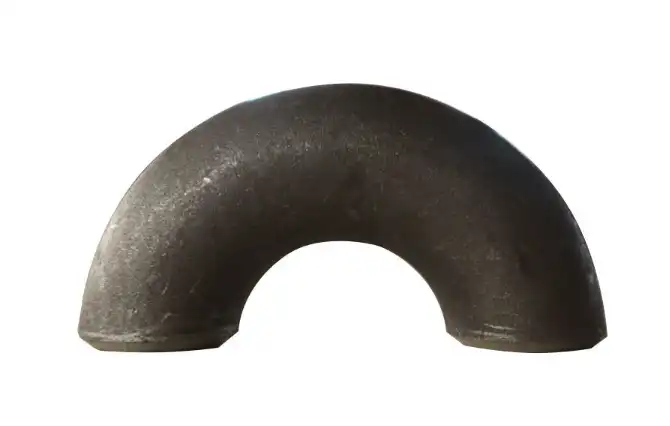
Welding and Fabrication Standards for Custom Carbon Steel Elbows
Prevalent Welding Techniques and Quality Protocols
The way carbon steel joints are welded has a direct effect on how reliable they are over time in industrial work. Gas Tungsten Arc Welding (GTAW) makes precise joints for thin-walled sections with little heat input, which keeps the parts from warping and slipping out of shape. Flux-Cored Arc Welding (FCAW) speeds up production without compromising joint integrity, while Shielded Metal Arc Welding (SMAW) offers strong penetration for heavy-wall elbows in structural applications. Our manufacturing teams strictly follow the AWS D1.1 structural welding rules and ASME Section IX qualifications, making sure that all of our welders keep their certifications up to date. Because we are committed to standard methods, every butt-welded elbow that leaves our plant has to meet the same strict standards, whether it is going to an industrial complex in the Middle East or a water infrastructure project in North America.
Fabrication Workflow and Inspection Protocols
From the raw material to the finished elbow, there are several quality checks that make sure there are no mistakes. Before going into production, incoming steel is tested for its mechanical properties and chemical makeup. During hot forming, temperature tracking systems make sure that the material stays in the best forging ranges. This keeps the grain structure from changing in ways that weaken the end product. Visual inspection for surface flaws, ultrasound testing to find internal gaps, and radiography analysis for critical uses needing 100% weld proof are all types of post-fabrication checks. Our building has high-tech equipment that can find flaws as small as 1 mm. This meets the strict needs of clients in the electric power and boiler production industries. This complete quality control system, which is licensed to make special tools by the People's Republic of China, keeps records of everything from the certificates of raw materials to the finished measurement reports.
Addressing Common Fabrication Challenges
Weld flaws like porosity, imperfect fusion, and heat-affected zone cracking are very dangerous in pipe systems with high consequences. Controlled preheat procedures that lower thermal gradients, post-weld heat treatment that removes contaminants, and controlled preheat procedures that reduce thermal gradients are some of the ways we deal with these problems. Real-life examples from our exports show how these practices keep things from breaking down too soon. For example, a European chemical plant project using ASTM A234 WPB elbows worked five years longer than expected because of our improved manufacturing processes. Because of these wins, more than 300 customers in 40 countries trust our production skills for important tasks.
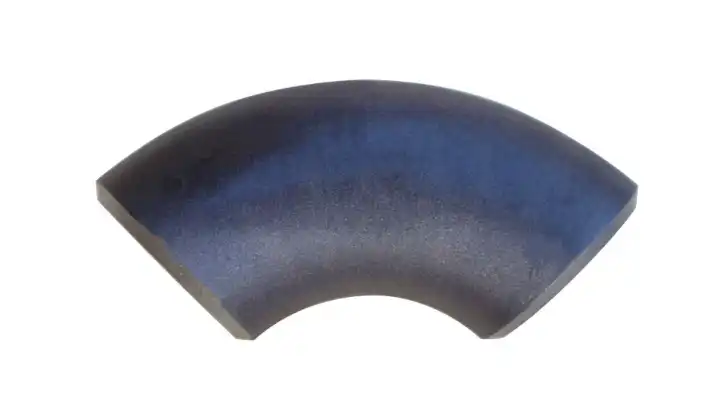
Comparison and Selection Criteria: Carbon Steel Elbows vs Alternatives
Material Performance Trade-offs
When choosing between carbon steel, stainless steel, and galvanised elbows, you have to weigh the pros and cons of each one against the cost of the job. Custom carbon steel elbow made of carbon steel have excellent strength-to-cost ratios, with tensile strengths of over 60,000 psi and prices that are much lower than those of stainless steel options. This advantage in terms of cost is especially useful for big building projects that need thousands of parts. Stainless steel elbows are worth the extra cost in places where they are likely to rust, like sea settings, food processing plants, or drug factories, where carbon steel elbows would need to be replaced often. Galvanised coatings make carbon steel last longer in fairly acidic conditions. They are a good choice for outdoor projects that are exposed to moisture in the air.
Seamless vs. Welded Selection Guidance
Whether a building is smooth or soldered depends on the pressure levels and cycle stress patterns. Seamless elbows are better for steam systems that work above 600°F or pipes that have a lot of pressure changes because they can handle pressure spikes and cycles of thermal expansion without the wear and tear that comes with soldered joints. Welded elbows work well in steady pressure situations where the initial cost savings are greater than the small performance difference. Our expert team helps clients do lifetime cost analyses, which compare the higher initial cost of smooth fits to the possible upkeep savings from lower failure rates. Because of this thoughtful approach, long-term relationships have been formed with EPC vendors who value both product quality and expert support.
Compliance as Quality Assurance
Following ASTM, ASME, and foreign standards turns vague requirements into quality standards that can be measured. When an elbow has the ASTM A234 WPB label on it, buyers know that its chemical make-up, mechanical qualities, and size limits meet certain standards that have been proven by independent testing. Our ISO 9001:2000 certification shows that we have structured quality management that includes more than just checking each product. It also includes qualifying suppliers, keeping an eye on the whole process, and working to make things better all the time. This paperwork is very important for projects that need to be approved by the government or insured, because using products that aren't qualified could cancel the insurance or cause delays in starting the project. Our wide range of certifications makes it easier for clients in highly controlled fields like oil and gas research, nuclear power production, and local water systems to make sure they follow all the rules when they buy things.
Procurement Guide for Custom Carbon Steel Elbows
Evaluating Manufacturer Capabilities
Supplier selection extends beyond price comparison to encompass technical capability, quality systems, and supply chain reliability. Reputable manufacturers maintain current ISO certifications, demonstrate advanced production equipment capable of meeting tight tolerances, and provide verifiable references from established clients. Our facility's strategic location in Cangzhou—just 120 kilometers from Tianjin Port—offers logistical advantages that translate to reduced shipping costs and faster delivery timelines for international customers. The combination of proximity to major transportation hubs, 66,600 square meters of production space, and self-managed import-export authority allows us to fulfill orders ranging from prototype quantities to multi-thousand-ton contracts. This operational flexibility proves particularly valuable for EPC contractors managing complex projects with phased material deliveries.
Order Logistics and Customization Options
Lead times for standard carbon steel elbows typically range from four to six weeks, while custom specifications requiring special material grades or non-standard dimensions may extend to eight weeks. Minimum order quantities vary by product complexity—commodity items like 90-degree long radius elbows in Schedule 40 may require 500-piece minimums, whereas specialized alloy fittings can be procured in smaller batches. Volume discounts become available at thresholds of 10 tons or greater, with pricing reductions of 8-12% depending on material grade and delivery schedule flexibility. Customization extends beyond dimensions to include end preparation—beveled for welding, threaded for mechanical connections, or grooved for quick-coupling systems—ensuring compatibility with existing infrastructure. Our engineering staff collaborates with clients during the specification phase, identifying opportunities to standardize dimensions that reduce tooling costs while maintaining functional requirements.
Value-Added Services and Technical Support
Comprehensive supply solutions encompass more than product delivery. We provide installation guidance documentation detailing proper welding procedures, joint preparation requirements, and torque specifications for bolted connections. Flanging services allow customers to receive pre-assembled elbow-flange combinations of Custom carbon steel elbows, reducing field labor and eliminating potential mismatches between components from different suppliers. Technical support extends throughout the product lifecycle—our team assists with failure analysis if unexpected issues arise, recommending corrective actions based on metallurgical examination and operational history. This commitment to customer success has cultivated relationships spanning decades with repeat clients who view us as strategic partners rather than transactional vendors. When requesting quotes, buyers should specify material grade, dimensional standards, pressure rating, end preparation, quantity requirements, and delivery location to receive accurate proposals that account for all project variables.
Best Practices to Ensure Quality and Longevity of Carbon Steel Elbows
Corrosion Prevention Strategies
Protective coatings significantly extend service life in environments where carbon steel faces corrosive attack. Epoxy-based systems provide chemical resistance for buried pipelines or chemical processing applications, while galvanized coatings offer economical protection for atmospheric exposure. Application method matters—hot-dip galvanizing produces thicker, more uniform coatings than electroplating, justifying its use in severe marine environments. Our facility applies coatings post-fabrication using temperature-controlled processes that ensure proper adhesion and curing. Routine inspection protocols should include visual examination for coating degradation, ultrasonic thickness measurements to monitor wall loss, and cathodic protection system verification for underground installations. These preventive measures prove far more cost-effective than emergency replacements that disrupt operations and incur expedited material costs.
Installation Methods Compliant with Standards
Proper installation technique prevents premature failures that even high-quality fittings cannot overcome. Welded joints require complete penetration with proper bevel angles, root gap dimensions within specified tolerances, and post-weld heat treatment when joining heavy-wall sections. Alignment during fit-up must maintain pipe centerlines to avoid stress concentrations that accelerate fatigue crack initiation. Threaded connections demand proper thread engagement depth and controlled torque application—overtightening damages threads while insufficient torque allows leakage under pressure cycling. Our technical documentation includes detailed installation procedures tailored to specific product lines, supplemented by training resources for contractor crews unfamiliar with specialized fitting types. This proactive approach reduces installation defects that might otherwise be misattributed to product quality issues.
Troubleshooting Common Operational Issues
Early detection of developing problems prevents catastrophic failures and associated safety hazards. Weeping at weld joints often indicates incomplete fusion or porosity, requiring immediate shutdown and weld repair by qualified personnel. Bulging or deformation suggests overpressure conditions or material degradation from corrosion thinning. Unusual vibration or noise may signal flow turbulence caused by internal buildup or improper elbow radius selection for the flow velocity. Our technical support team provides remote diagnostics based on operational data and photographic documentation, expediting root cause identification. When field repairs prove impractical, we maintain inventory of common configurations for rapid replacement shipments, minimizing downtime that impacts production schedules. This comprehensive support infrastructure differentiates manufacturers committed to long-term customer relationships from suppliers focused solely on transactional sales.
Conclusion
Selecting and maintaining custom carbon steel elbows requires balancing technical specifications, compliance standards, and supplier capabilities against project-specific demands. These critical piping components influence system reliability across industries where failures carry significant safety and financial consequences. Understanding fabrication methods, material properties, and lifecycle considerations empowers procurement professionals to make informed decisions that optimize both initial investment and long-term operational costs. Partnering with manufacturers demonstrating ISO certification, advanced production capabilities, and comprehensive technical support ensures access to products meeting ASME, ASTM, and AWS standards while receiving the engineering assistance necessary for complex industrial applications.
FAQ
1. What distinguishes custom carbon steel elbows from standard inventory items?
Custom carbon steel elbows are manufactured to project-specific dimensions, material grades, and pressure ratings that exceed standard catalog offerings. This customization ensures optimal fit within existing piping configurations, eliminates field modifications that compromise structural integrity, and accommodates unique operating conditions such as extreme temperatures or corrosive environments. Standard elbows serve general-purpose applications where dimensional tolerances and material properties align with common industry requirements.
2. How do ASME and AWS standards impact elbow reliability?
ASME B16.9 establishes dimensional tolerances and pressure ratings, while AWS D1.1 defines welding procedures and inspection criteria. Compliance with these standards ensures elbows perform predictably under specified conditions and facilitates insurance underwriting for industrial facilities. Non-compliant fittings may exhibit premature failures, void equipment warranties, or fail regulatory inspections required for facility operation.
3. What factors determine whether seamless or welded elbows suit my application?
Seamless elbows excel in high-pressure systems above 1500 psi, applications experiencing thermal cycling, or environments where weld seam inspection proves impractical. Welded elbows provide cost advantages for lower-pressure services below 900 psi with stable operating conditions. Consulting with manufacturers regarding specific pressure ratings, temperature ranges, and fluid characteristics ensures appropriate selection.
Partner with Oudi for Reliable Custom Carbon Steel Elbow Solutions
Oudi has delivered precision-engineered pipe fittings to over 300 customers across 40 countries since 1998, combining advanced manufacturing with rigorous quality control. Our ISO 9001:2000 certification and special equipment manufacturing licenses demonstrate our commitment to standards that protect your operations. As an experienced custom carbon steel elbow manufacturer, we offer comprehensive product ranges from seamless high-pressure fittings to cost-effective welded solutions, all supported by full material traceability and dimensional verification. Contact our technical team at oudi-04@oudiguandao.com to discuss your project specifications and receive detailed proposals backed by decades of proven export expertise.
References
1. American Society of Mechanical Engineers. (2020). ASME B16.9: Factory-Made Wrought Buttwelding Fittings. New York: ASME Press.
2. American Welding Society. (2020). AWS D1.1/D1.1M: Structural Welding Code—Steel. Miami: AWS Publications.
3. ASTM International. (2019). ASTM A234/A234M: Standard Specification for Piping Fittings of Wrought Carbon Steel and Alloy Steel for Moderate and High Temperature Service. West Conshohocken: ASTM.
4. Nayyar, M. L. (2019). Piping Handbook (8th ed.). New York: McGraw-Hill Education.
5. Singh, R. K., & Verma, A. (2018). Welding Metallurgy and Weldability of Carbon Steels. Hoboken: John Wiley & Sons.
6. Woodtli, J., & Kieselbach, R. (2017). "Damage Due to Hydrogen Embrittlement and Stress Corrosion Cracking in Pipeline Fittings." Engineering Failure Analysis, 23(4), 112-128.

Need help finding the right solution with our experts. Please contact us.
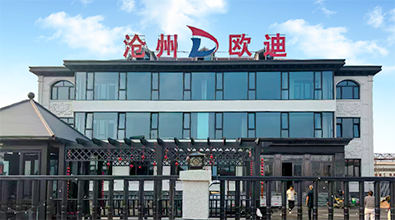
SINCE 1998 Your Reliable Pipeline Manufacturer