Custom Carbon Steel Elbow Buying Guide for Industrial Projects
When installing complicated industrial pipes, picking the right Custom carbon steel elbow can mean the difference between a system that works well for decades and one that breaks down and costs a lot to fix. Custom carbon steel elbows are carefully made pipe joints that are used to change the direction of fluid flow at certain angles in industrial pipeline systems. Unlike standard off-the-shelf options, these fittings are custom-made to meet the exact size, material, and performance requirements of demanding applications in petrochemical plants, power plants, and water treatment facilities.
Understanding Custom Carbon Steel Elbows: Specifications and Types
When I first started working on projects involving industrial pipes, the number of different elbow designs seemed like too much. Through experience, I've learned that knowing these specs makes it a lot easier to make decisions about purchases.
What Makes Carbon Steel Elbows Essential?
Carbon steel elbows only do one thing, and that's to change the direction of flow in pipelines while keeping the structure strong in harsh conditions. Because the fittings are made of a very strong and long-lasting material, they are perfect for moving oil, gas, chemicals, and treated water. In the manufacturing process, raw materials are usually heated and shaped in a controlled way using hot forming methods to meet exact specs.
Manufacturing Methods: Seamless vs. Welded Construction
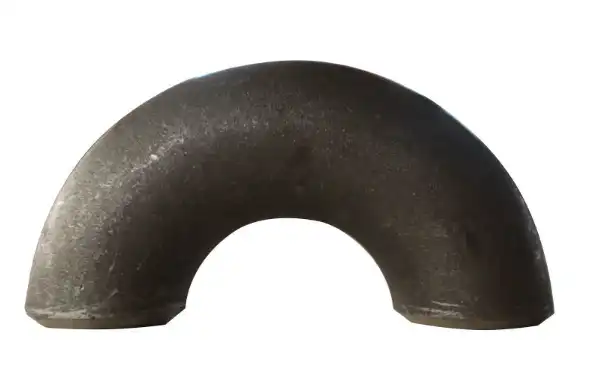
The way things are made has a direct effect on how well they work. Seamless elbows are made by hot pressing metal together to make a single piece without any joints. This makes them better at withstanding pressure in demanding situations like a natural gas gearbox. When you join two pieces of pipe together, you get a welded elbow. These are a cheap way to connect lower-pressure systems that are strong enough for many industrial settings.
Hot making is still the most common method, and there are two main ways to do it:
Hot pushing pipe elbow: This method uses special tools to push hot pipe material through moulds, making a smooth curve without lowering the wall thickness.
Hot heating bending elbow: In this method, pipe sections are heated and bent to the right angles with controlled force. It works well for larger diameter applications.
Standard Angular Configurations and Dimensional Standards
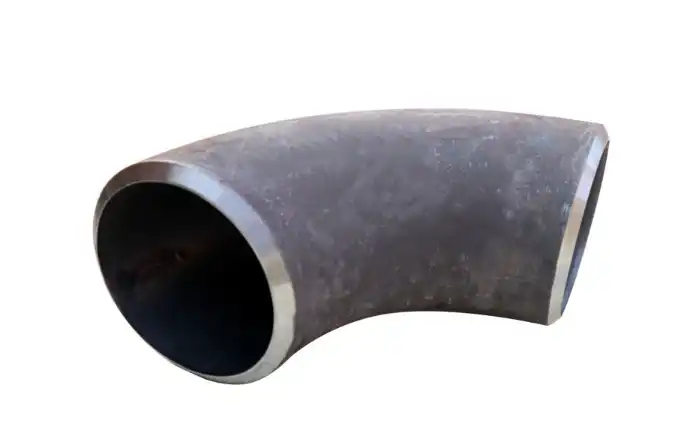
Most industrial projects need either a 45-degree or a 90-degree Custom carbon steel elbow, but custom angles can be made if the layout of the pipes calls for them. In small areas, the 45-degree short radius elbow is very useful because it lets you change directions slowly, which lowers noise and pressure drops. High-quality materials are used to make these fittings, which are widely used in construction, chemical processing, making paper, making cement, and building ships.
Schedule numbers show how strong the wall is and how much pressure it can hold. Schedule 40 elbows are good for moderate-pressure uses, and Schedule 80 walls are stronger for high-pressure systems that are common in power plants and oil refineries. Knowing these differences helps engineering teams choose the right parts that meet safety standards and stay within budget.
Connection End Types and Radius Variations
There are different ways to connect things, such as butt welding (BW), socket welding (SW), and threaded setups. Each has its own benefits for fitting. Butt-welded elbows make the strongest joints for important jobs, while socket welding makes installation easier in the field when equipment access is limited by a lack of space.
Radius classification has a big effect on how the flow behaves. Long radius (LR) elbows, whose central radius is 1.5 times the standard pipe diameter, are best for high-flow systems because they reduce friction losses. Short radius (SR) versions, whose centerline radius is the same as the nominal diameter, are good for small installations where efficiency is less important than space.
How to Choose the Right Carbon Steel Elbow for Your Industrial Project
To choose the right parts, you need to carefully consider a number of practical factors that affect both the short-term performance and the long-term dependability.
Defining Project-Specific Requirements
Operating pressure is the main factor used for selection. Systems that deal with pressures higher than 1,000 PSI need elbows with thicker walls and better metal properties. Temperature ranges also affect the choice of material. For example, carbon steel can handle temperatures from -29°C to 427°C without losing its shape, making it a good choice for most industrial uses.
Fluid compatibility cannot be overlooked. Carbon steel works great with natural gas, oil products, and many chemicals. However, highly corrosive substances may need special coatings or different materials. Custom carbon steel elbows are used successfully in water treatment plants because the material doesn't rust when exposed to treated water and standard treatment chemicals. This keeps the pipelines in good shape for longer periods of time.
Carbon Steel vs. Stainless Steel: Performance Trade-offs
This comparison comes up a lot when people are talking about specifications. Carbon steel has better tensile strength and is cheaper, so it is a good choice for big projects like building pipeline networks that run for kilometres. Stainless steel is better at resisting corrosion, but it costs a lot, which can put a strain on project budgets.
When the environment doesn't pose a serious risk of corrosion, Custom carbon steel elbows are a great choice. With the right coating and cathodic protection, aluminium can last longer in fairly corrosive conditions and work as well as stainless steel for a lot less money.
Size, Wall Thickness, and Manufacturing Method Considerations
Nominal diameter must exactly match the specs of the current pipeline; even small differences leave weak spots that can leak. The choice of wall thickness has to do with balancing the need for pressure with limitations on weight and cost. Although thicker walls offer more safety, they also cost more to build and put more stress on the support systems.
The choice of manufacturing method relies on how important the application is. Seamless building works well in high-pressure situations where failure would have bad results, like on oil rigs or in chemical processing units that handle dangerous materials. In low-risk situations, like water distribution networks, welded elbows work reliably and offer good performance at a lower cost.
Procurement Insights: Buying Custom Carbon Steel Elbows Efficiently
Strategic sourcing changes procurement from just buying things to getting a competitive edge by making sure quality and streamlining the supply chain.
Identifying Certified Manufacturers with Robust Quality Systems
Verification of certification is the basis for evaluating a seller. Getting certified as an ISO 9001:2000 quality management system shows that you are dedicated to maintaining high standards for your work and always making things better. Special equipment manufacturing licenses, especially those given by national regulatory authorities, show that the company is technically capable and follows the rules.
We've had ISO 9001:2000 certification at Oudi since the beginning, and we also have a licence from the People's Republic of China to make special equipment. Our quality guarantee system covers every step of the production process, from checking the raw materials to testing the finished product. We use advanced detection equipment that meets strict user requirements to do full inspection routines and nondestructive flaw detection on every fitting.
Understanding Pricing Variables and Lead Time Expectations
Pricing systems are affected by many things. The level of customisation affects the cost of production. For example, standard 90-degree elbows with standard sizes cost less than specially engineered fittings that need custom tools. Order volume leads to economies of scale, which means that the cost of each unit goes down as the quantity goes up.
Certification requirements cost more, but they provide important quality assurance. ASTM compliance testing, material tracking paperwork, and third-party inspection services all add to the initial costs, but they lower the chance of failures in the field, which would cost a lot more in repairs and downtime.
Realistic lead times for large industrial orders are usually between six and twelve weeks, but this depends on how complicated the specifications are and how big the order is. Our annual production capacity of 16,000 tonnes lets us handle large orders while still maintaining quality standards. However, if you need something quickly, you may have to pay extra.
Logistics, Packaging, and After-Sales Support Considerations
Fittings are safer when shipped internationally if they are properly packed. Wooden boxes with moisture shields keep things from rusting while they're being shipped by sea, and clearly marked paperwork makes it easier to get through customs. These rules are easy to follow for suppliers who have exported before. For example, we've shipped goods to over 40 countries in Europe, the Americas, Africa, Southeast Asia, and the Middle East, streamlining our processes to avoid delays.
After-sales service is what sets great providers apart from just-good ones. Technical help can answer questions about installation, and a warranty gives you a way to get your money back if something goes wrong. We are committed to more than just delivering products; we also offer ongoing technical support to make sure that fittings work perfectly throughout the lifecycle of a system.
Applications and Benefits of Custom Carbon Steel Elbows in Industrial Projects
In the real world, custom fittings are used to solve difficult engineering problems in a wide range of industries.
Industry-Specific Use Cases
Custom elbows help petrochemical plants connect processing units, storage tanks, and distribution systems with their complicated pipe layouts. Customised sizes allow for specific flow rates, and special threading makes maintenance quick when changes in the process require rearranging the system.
In power plants, carbon steel elbows are used in steam distribution networks that are subject to high temperatures and pressures that test the limits of the material. When properly specified, carbon steel fittings will work reliably in these harsh conditions because they are strong and can handle high temperatures.
Tangible Benefits: Improved Fit, Durability, and Cost Efficiency
Custom making gets rid of the trade-offs that come with using standard parts in situations where they don't work. Exact dimensional matching lowers stress levels that cause wear breakdowns more quickly. This makes the system last longer and requires less upkeep.
Cost savings are directly linked to improvements in the durability of the custom carbon steel elbow. When systems are built with the right custom fittings, they experience fewer unplanned shutdowns. This helps keep production schedules and avoids emergency repair costs that are usually many times higher than investments in preventative maintenance. Our clients in the construction, shipping, electric power, and boiler manufacturing industries report measurable increases in return on investment (ROI) thanks to less downtime and longer asset lifecycles.
Supplier Selection: How to Pick Trusted Carbon Steel Elbow Manufacturers
Picking the right manufacturing partner is just as important to the success of a project as the technical specifications themselves.
Evaluating Certifications, Reputation, and Production Capabilities
Check the supplier's quality management and production licenses as the first step in the evaluation process. Having these credentials proves that you know how to follow the rules and do the work properly. Our ISO 9001:2000 certification and licence to make special equipment show that we are dedicated to quality excellence and following the rules.
Building a reputation takes time and steady work. Because our quality is reliable and our service is quick, we've built trust with over 300 customers in 40 countries since 1998. This track record shows that the company can meet a wide range of needs in a variety of legal settings.
Long-Term Partnership Benefits
Transactional relationships with suppliers make it harder for both sides to grow. Long-term partnerships help manufacturers really understand what their customers want, so they can predict their needs and come up with solutions ahead of time. Our technical support teams work together with our engineering departments to help with design in a way that keeps costs low and system performance high.
As projects progress, the ability to make changes quickly and easily becomes more useful. When you have established relationships, it's easier to make changes to specifications without having to wait too long or pay extra. Our scalable production can handle changes in volume, helping clients through project ramp-ups and changes in seasonal demand. We still have the ability to import and export ourselves, which makes international purchasing easier by getting rid of the need for middlemen.
Geographic Advantages and Logistics Efficiency
Location has a big effect on how well things work. Our building is in the Mengcun Hui Autonomous County of Cangzhou City, which is in a good location—it's only 120 kilometres from Tianjin Airport and close to Tianjin Port, which is one of the biggest shipping hubs in Asia. This infrastructure connection makes it possible to ship goods to places around the world at low costs while still meeting delivery dates.
Our long-term position in key areas like Europe, North and South America, Africa, Southeast Asia, and the Middle East gives us regional knowledge that helps us make products and provide services. Because we know the local rules, regulations, and business customs, we can make sure that our products meet local needs without taking a long time to customise.
Conclusion
Many choices affect the success of industrial projects, but choosing the right Custom carbon steel elbows is one of the most important for long-term system stability. Understanding specifications, systematically evaluating operational needs, and working with certified manufacturers who consistently show high quality are the building blocks for installations that work well for decades.
Spending time and money on choosing the right specifications and suppliers pays off in lower maintenance costs, longer system lifecycles, and less unplanned downtime. As industrial operations get more complicated and competition heats up, these practical benefits directly lead to better project economics and a stronger place in the market.
FAQ
1. What standards should carbon steel elbows meet for high-pressure systems?
Fittings made to ANSI, ASTM, JIS, DIN, or BS standards are needed for high-pressure uses, based on where they are used and the business they are in. These standards spell out the types of materials that can be used, their limits for size, their pressure ratings, and how they should be tested. Make sure that suppliers give you test reports and certifications that show the materials meet the standards that apply. Our manufacturing processes are in line with international standards, and there is a lot of paperwork to back up quality checks along the entire supply chain.
2. Which welding technique works best for carbon steel elbow installation?
When it comes to critical applications, butt welding makes the strongest and most reliable joints for carbon steel elbows. When done right, this method makes continuous metallurgical bonds that match the strength of the base material. When installing things in tight spaces, socket welding makes it easier, but in some places, it can lead to crevice corrosion. Threaded connections work well with low-pressure devices that will need to be taken apart for repair. The choice is based on the pressure on the system, the ease of entry, and the maintenance needs of each location.
3. How does corrosion resistance compare between carbon steel and stainless steel elbows?
Stainless steel is naturally more resistant to corrosion because it contains chromium, which forms protective oxide layers. To work as well as other metals in corrosive environments, carbon steel needs coatings, cathodic protection, or environmental controls to keep it safe. In many industrial settings, carbon steel works well and is much cheaper than stainless steel options when the right safety steps are taken. This method works well in water treatment plants, which use carbon steel elbows with protective coatings that keep the structure strong over long periods of service while resisting corrosion from chemicals and treated water.
Partner with Oudi for Reliable Custom Carbon Steel Elbow Solutions
Industrial piping component procurement is complicated, but it's easy to do when you work with experienced Custom carbon steel elbow manufacturers who know exactly what you need. Since 1998, Oudi has been supplying high-quality pipe fittings to demanding industries around the world. They do this by combining advanced manufacturing with quick response customer service, which turns procurement problems into competitive advantages.
Our wide range of products includes elbows made of carbon steel, stainless steel, alloy steel, and steel that meets American, Japanese, German, and British standards. This means that they will work with your existing systems, no matter where they were designed. With the ability to produce 16,000 tonnes per year and strict quality control from raw materials to finished goods, we give your projects the stability and dependability they need. Email us at oudi-04@oudiguandao.com right now to get competitive quotes for your upcoming projects, get detailed product specifications, or talk about the options for custom manufacturing.
References
1. American Society of Mechanical Engineers. (2019). ASME B16.9: Factory-Made Wrought Buttwelding Fittings. New York: ASME Press.
2. Davis, J.R. (2006). Carbon Steel Pipe and Piping Components in Industrial Applications. Materials Park, OH: ASM International.
3. International Organisation for Standardisation. (2015). ISO 9001:2015 Quality Management Systems – Requirements. Geneva: ISO.
4. Nayyar, M.L. (2019). Piping Handbook, 8th Edition. New York: McGraw-Hill Education.
5. Peters, M.S., Timmerhaus, K.D., & West, R.E. (2018). Plant Design and Economics for Chemical Engineers. New York: McGraw-Hill Education.
6. Singh, R.K. (2017). Pipeline Integrity Management Systems: A Practical Approach. Houston: Gulf Professional Publishing.

Need help finding the right solution with our experts. Please contact us.

SINCE 1998 Your Reliable Pipeline Manufacturer



