Custom carbon steel elbow Export Solutions for Worldwide Buyers
Infrastructure projects around the world need a steady supply of pipe fittings that are made to exact specifications. For changing directions in pipes holding oil, gas, chemicals, and water at different temperatures and pressures, you need a custom carbon steel elbow that is designed to exact bend angles, wall thicknesses, and material grades. For people around the world who want to buy these fittings from China, they have to figure out how to make them, how to export them, and how to check the quality across borders. This article talks about complete export solutions that make it easy to get custom carbon steel elbows. These solutions range from customised production and documentation management to full-inspection quality systems that can handle scrutiny from around the world.
Tailored Manufacturing Solutions for Diverse Project Requirements
Custom Dimensional Specifications and Bend Configurations
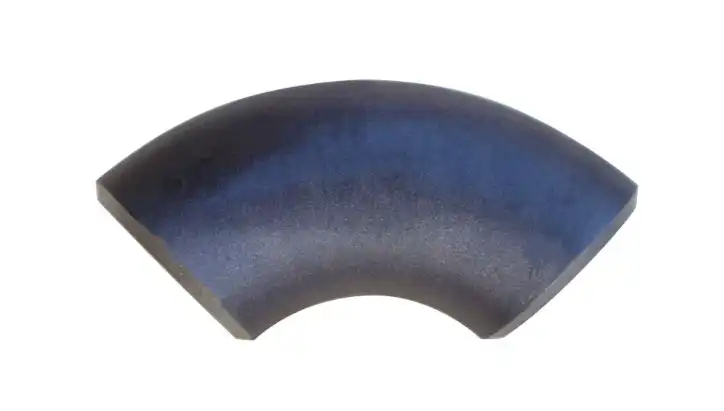
Every pipe job has its own unique geometry problems. For low-pressure-drop flow, some systems need bends with long radii. For systems with limited room, small radius elbows are needed. A skilled maker can make a unique carbon steel elbow with bend angles of 45°, 90°, or 180°. Other angles can be requested. To make sure the pipes fit exactly with the project plans, you can choose from wall thickness schedules from SCH 10 to SCH XXS, end preparations like bevelled, plain, or threaded, and outside diameter ranges from 1/2 inch to 48 inches. When a company offers this level of customising dimensions along with rapid prototyping and sample production, buyers are sure that each fitting will fit perfectly into their pipe layout without having to make expensive changes in the field.
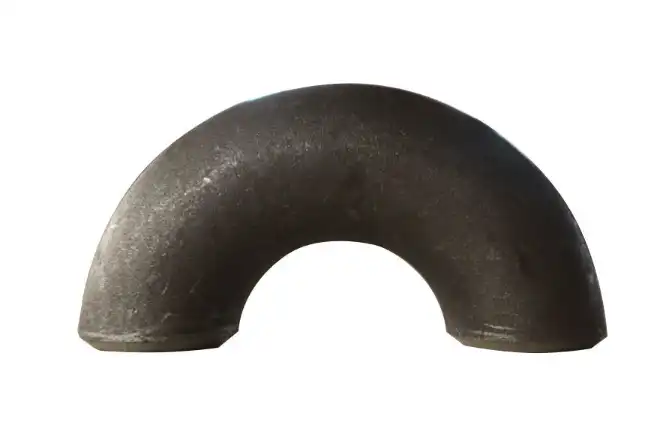
Multi-Standard Production Capabilities
Pipe systems that aren't all the same are common in international projects, especially when the infrastructure was built to meet different national standards. When a company makes a custom carbon steel elbow that meets American (ASME B16.9), Japanese (JIS B2311), German (DIN 2605), and British (BS 1640) standards from a single location, buyers can get all the parts they need with just one purchase order. This ability to work with multiple standards makes buying easier, makes sure that the quality of the metal is the same throughout the order, and makes paperwork easier. This makes the supply chain run more smoothly, and every fitting comes marked, certified, and ready to install, no matter what international standard the project needs.
| Specification Parameter | Available Range | Standard Reference |
|---|---|---|
| Nominal Pipe Size | 1/2" – 48" | ASME B36.10M / B36.19M |
| Bend Angle | 45°, 90°, 180°, custom | ASME B16.9 |
| Wall Thickness Schedule | SCH 10 – SCH XXS | ASME B36.10M |
| Material Grade | A234 WPB, WP1, WP11, WP22 | ASTM A234/A234M |
| End Type | Bevelled, plain, threaded | ASME B16.25 / ASME B1.20.1 |
Streamlined Export Workflows for International Buyers
Documentation Management and Customs Compliance
For industrial fittings to be exported, there needs to be a clear chain of paperwork that meets both Chinese export rules and the customs rules of the country where the fittings are going to be used. This is done in-house by a maker who has the power to control their own import and export. They make business invoices, packing lists, bills of lading, Material Test Reports (MTRs), and certificates of origin without having to go through a third party. For a custom carbon steel elbow going to a controlled market, extra paperwork like mill test certificates and third-party inspection certificates (SGS, BV, or TUV) can be made upon request. Exporters with a lot of experience know what each country needs, like FORM E for ASEAN free trade preferences or EUR.1 for European priority treatment. This helps buyers get lower import taxes and faster customs clearance.
Packaging, Logistics, and Port Efficiency
How parts are packed and shipped has a direct effect on how much they cost to land and how reliable the delivery is. When you ship a handmade custom carbon steel elbow by sea, it should be in waterproof packaging with anti-corrosion oil and on wooden boxes or crates made for that purpose. Manufacturers who are close to Tianjin Port (120 kilometres) benefit from short inland transit, regular vessel schedules, and established relationships with goods forwarders. These things shorten lead times and lower the risk of demurrage. You can choose FOB terms if you want to control costs with your own forwarders, or you can choose CIF/DDP terms for full delivery. The most important thing is to work with a provider whose transportation system fits the size and speed of your project plan.
| Export Document | Purpose | Required For |
|---|---|---|
| Commercial Invoice | Valuation and payment terms | All international shipments |
| Material Test Report (MTR) | Material traceability | Pressure-bearing applications |
| Certificate of Origin | Duty preference eligibility | FTA-qualifying destinations |
| Third-Party Inspection Cert. | Independent quality verification | Regulated or high-risk projects |
| Packing List | Customs and warehouse handling | All shipments |
Quality Assurance Systems for Global Shipments
Material Traceability and Certification
Being able to track a fitting back to the steel mill is the first step in trusting it. A trustworthy company keeps a full record of every custom carbon steel elbow, connecting the finished fitting to the heat number of the raw material, a study of its chemical makeup, and test results for its mechanical properties. Quality systems that are ISO 9001:2000-certified must keep and easily access these records. This gives buyers and third-party testers the proof they need to see that the product meets ASTM A234 WPB or other standards. This tracking is more than just paperwork; it's the proof that keeps your project safe from material replacement risks and gives the audit trail that engineering teams and insurance companies need for pressure-piping systems.
Nondestructive Testing and Final Inspection Protocols
After being inspected in several steps, a handmade custom carbon steel elbow should be ready to leave the plant. When raw material is received, it is chemically and mechanically checked. During the forming and machining processes, dimensional tolerances are checked during in-process checks. Finally, finished fittings are subjected to nondestructive examination (NDE), which can include ultrasonic testing, radiographic inspection, and magnetic particle testing, as needed. Instead of random selection, a full-inspection method makes sure that all fittings meet the requirements, not just a statistical group. For critical-service uses, manufacturers with advanced detection tools can also do extra tests like hardness testing, metallographic analysis, or hydraulic testing. Make sure you know what your supplier's NDE covers and how they accept it before they start making things.
| Inspection Stage | Method | Defects Detected |
|---|---|---|
| Raw Material Intake | Spectrometer, tensile test | Off-spec chemistry or strength |
| In-Process Forming | Dimensional gauging | Angle, OD, wall-thickness deviation |
| Final NDE | Ultrasonic, magnetic particle | Laminations, cracks, inclusions |
| Hardness Survey | Brinell or Rockwell test | Heat-treatment adequacy |
Conclusion
To sell a custom carbon steel elbow around the world, you need more than just low prices. You also need custom production, efficient paperwork, and quality systems that won't be compromised. Cangzhou Oudi Pipe Manufacture Co., Ltd. has done all three since 1998, providing fittings that are ISO 9001-certified, full inspection protocols, and export expertise that is self-managed to more than 300 customers in over 40 countries. Every step is designed to make global sourcing reliable, from production that meets multiple standards to logistics that work well with ports. Partner with a maker whose export solutions have been proven, not just offered, when your project needs precise fits that can be fully tracked.
FAQ
Q1: What bend angles and sizes are available for a custom carbon steel elbow?
A1: Standard angles include 45°, 90°, and 180°, with custom angles available upon request. Sizes range from 1/2 inch to 48 inches nominal pipe diameter, with wall thickness schedules from SCH 10 to SCH XXS.
Q2: Which international standards can manufacturers produce custom carbon steel elbows to?
A2: Reputable manufacturers produce to ASME B16.9 (American), JIS B2311 (Japanese), DIN 2605 (German), and BS 1640 (British) standards, allowing buyers to match project specifications across different regional codes.
Q3: What documents are provided with an export order of custom carbon steel elbows?
A3: Standard documents include a commercial invoice, packing list, bill of lading, Material Test Report (MTR), and certificate of origin. Third-party inspection certificates can be arranged for regulated markets.
Q4: How are custom carbon steel elbows packaged for international shipping?
A4: Fittings receive anti-corrosion oil treatment, waterproof wrapping, and are secured on wooden pallets or in crates designed for sea freight, ensuring protection against moisture and mechanical damage during transit.
Q5: What quality testing is performed before a custom carbon steel elbow ships?
A5: A full-inspection system covers raw material chemical and mechanical verification, in-process dimensional checks, and final nondestructive examination (ultrasonic, magnetic particle, and hardness testing) to ensure every fitting meets specification.
Start Your Custom Elbow Export Order Today
Your piping project cannot wait for unreliable suppliers. Cangzhou Oudi Pipe Manufacture Co., Ltd. combines 25+ years of manufacturing experience, ISO 9001-certified quality systems, 16,000-ton annual capacity, and self-managed export authority to deliver custom carbon steel elbows that perform worldwide. Whether you need ASME, JIS, DIN, or BS standard fittings with custom dimensions, our team handles production, documentation, and logistics end to end. Email us at oudi-04@oudiguandao.com to share your specifications, request an MTR sample, or get a competitive quote. Precision fittings, global service, honest pricing—let's move your project forward together.
References
1. ASME. ASME B16.9-2018: Factory-Made Wrought Butt Welding Fittings. American Society of Mechanical Engineers, New York, 2018.
2. ASTM International. ASTM A234/A234M-19: Standard Specification for Piping Fittings of Wrought Carbon Steel and Alloy Steel for Moderate and High Temperature Service. West Conshohocken, PA, 2019.
3. ASME. ASME B36.10M-2018: Welded and Seamless Wrought Steel Pipe. American Society of Mechanical Engineers, New York, 2018.
4. Nayyar, Mohinder L. Piping Handbook. 7th ed., McGraw-Hill Education, New York, 2000.
5. Mohitpour, M., Golshan, H., and Murray, A. Pipeline Design and Construction: A Practical Approach. 2nd ed., ASME Press, New York, 2007.
6. International Organisation for Standardisation. ISO 9001:2000 Quality Management Systems – Requirements. Geneva, Switzerland, 2000.

Need help finding the right solution with our experts. Please contact us.

SINCE 1998 Your Reliable Pipeline Manufacturer



