ISO Certified Lap Joint Flange CS Manufacturer You Can Trust
When it comes to industrial piping systems, flanges are the most important joints that hold everything together. Picking the wrong one can cause leaks, downtime, and safety risks. A Lap Joint Flange CS is a flexible and affordable option for systems that need to be taken apart often, especially when used with stub ends in harsh or hot environments. But not every maker can meet the needs of challenging projects when it comes to accurate measurements, reliable materials, and certification support. This guide tells you what makes an ISO-certified lap joint flange CS manufacturer reliable, from basic design principles and quality systems to the ability to ship products all over the world, so you can buy with confidence.
Understanding Lap Joint Flange Design and Carbon Steel Applications
How Lap Joint Flanges Work with Stub Ends
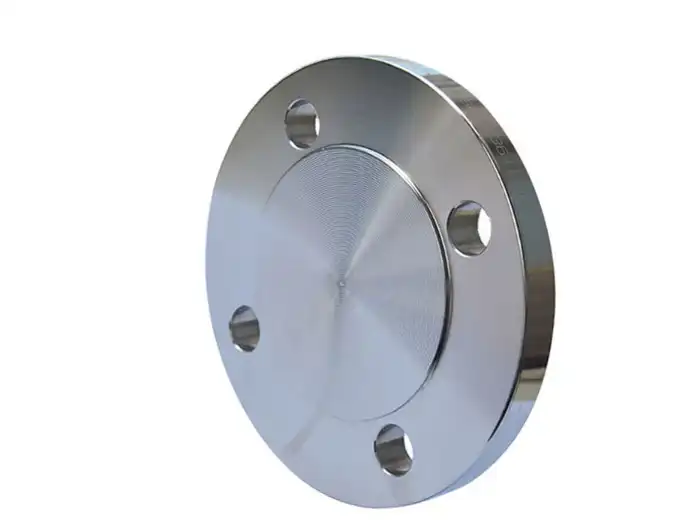
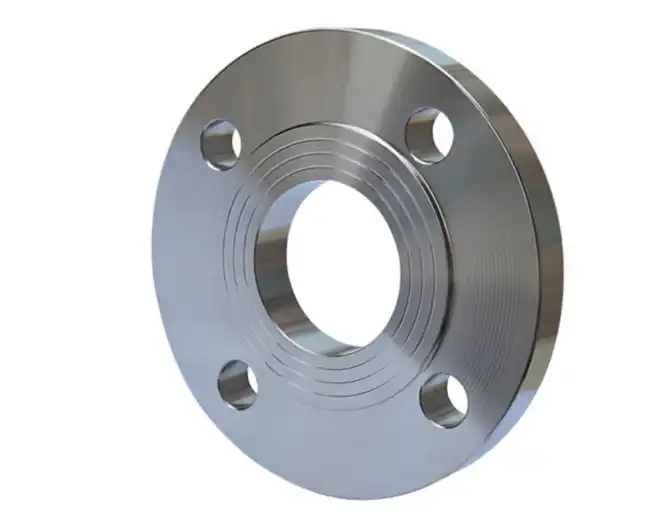
There are two parts to a lap joint flange: a flat backing flange that slides over the pipe easily, and a stub end that is butt-welded to the pipe and acts as the seal. The backing flange can rotate with this design, which makes it easier to line up the bolt holes during assembly. This is helpful for large or hard-to-reach pipe configurations. When made to the specifications of ASME B16.5 or EN 1092-1, a Lap Joint Flange CS reliably holds pressure while letting the stub end material be different from the flange material. This lets engineers choose the best combination of cost and performance by pairing a carbon steel flange with an alloy stub end that doesn't rust.
Why Carbon Steel Is Ideal for Lap Joint Flanges
After many years, carbon steel is still the most popular choice for lap joint flange backing rings because it is strong, easy to weld, and cheap. A Lap Joint Flange CS usually has ASTM A105 forged carbon steel for pressure classes 150 to 2500. This type of steel has good tensile strength and toughness, so it can be used in oil and gas, chemical, and power generation settings. The stub end, not the backing flange, touches the process media directly. This way, carbon steel provides structural integrity without the high cost of stainless or alloy alternatives. This makes it the best choice for projects on a budget that still want to be safe.
| Flange Component | Common Material | Primary Function |
|---|---|---|
| Backing Flange | ASTM A105 (Carbon Steel) | Bolting and structural support |
| Stub End | ASTM A403 WP304/316L or A234 WPB | Process media contact, sealing face |
| Bolting | ASTM A193 B7 / A194 2H | Mechanical clamping force |
| Gasket | Spiral Wound or Ring Type Joint | Pressure sealing between faces |
The Role of ISO Certification in Flange Manufacturing
ISO 9001 Quality Management System Requirements
The most basic qualification that sets systematic manufacturers apart from informal workshops is ISO 9001:2000 certification. When a company makes Lap Joint Flange CS, getting ISO certification means that all of their steps, from getting the raw materials and forging them to machining, marking, and final inspection, are governed by written procedures that can be tracked. The standard calls for management reviews, corrective action systems, and internal audits that are always looking for ways to make things better. When a buyer buys from an ISO-certified maker, they know that each flange has a heat number that can be checked, fits the standard's limits for size, and comes with paperwork that engineers and inspection teams can use to make sure the pressure system is compliant.
Full-Inspection and Nondestructive Testing Protocols
Certification alone is not enough—testing proves the product. A reliable Lap Joint Flange CS manufacturer uses a full inspection system that includes checking the dimensions of raw materials as they come in, checking the dimensions of finished flanges while they are being machined, and using nondestructive examination (NDE) to make sure they are perfect. Ultrasonic testing, magnetic particle inspection, and dye penetrant testing can find flaws on the surface and below that can't be seen with the naked eye. When manufacturers have the latest monitoring tools, they can meet even the strictest project requirements, such as NACE MR0175 for bad service or extra requirements for low-temperature uses. Before you place an order, you should always ask providers to describe their NDE skills and show you examples of their inspection reports.
| Quality Check Stage | Inspection Method | What It Detects |
|---|---|---|
| Raw Material Intake | Chemical analysis, mechanical testing | Material grade conformance |
| In-Process Machining | Dimensional measurement (CMM, calipers) | Tolerance deviations |
| Final NDE | Ultrasonic, magnetic particle, dye penetrant | Surface and subsurface flaws |
| Documentation Review | MTR and certificate verification | Full traceability chain |
Global Export Capability and Trusted Manufacturer Criteria
Production Scale and Multi-Standard Capability
When choosing a flange supplier, size is important. A company that covers 66,600 square meters and makes more than 16,000 tonnes of products a year has the tools, workers, and large enough supplies to meet the deadlines for both standard and special Lap Joint Flange CS orders. Multi-standard capability is also very important. Being able to produce to American (ASME B16.5), Japanese (JIS B2220), German (DIN), and British (BS) standards from a single facility lets buyers combine purchases for multiple projects. This range cuts down on the costs of managing vendors, makes sure that all fittings are of the same high quality, and makes it easier to record mixed-material pipe kits that are going to be used in foreign projects.
International Service Network and Customer Trust
One of the best ways to tell if a manufacturer is reliable is to look at how many times they have exported goods. Suppliers who have worked with more than 300 customers in more than 40 countries, including those in Europe, the Americas, Africa, Southeast Asia, and the Middle East, know how to deal with different quality standards, regulatory requirements, and customs procedures. With self-managed import and export authority, these manufacturers can handle shipping paperwork themselves, which cuts down on mistakes and speeds up clearance. Lap Joint Flange CS orders that ship from a facility near Tianjin Port have shorter transit times and lower freight costs. This adds to the value of a globally connected, locally rooted supplier that is committed to long-term partnerships.
Conclusion
A Lap Joint Flange CS maker that is ISO-certified provides more than just fittings. They also provide the quality systems, testing rigour, and export infrastructure that mission-critical pipe projects need. Over 300 customers from around the world trust Cangzhou Oudi Pipe Manufacture Co., Ltd. because it has ISO 9001-certified processes, a full-inspection quality system, a capacity of 16,000 tonnes per year, and has served more than 40 countries since 1998. If you need lap joint flanges that close well, come on time, and are fully documented for your project, choose a maker whose credentials and track record speak for themselves. Quality is the only choice; it's the norm.
FAQ
Q1: What is the difference between a lap joint flange and a weld neck flange?
A1: A lap joint flange slides freely over a stub end and allows rotation for easy bolt alignment, while a weld neck flange is permanently butt-welded to the pipe. Lap joint flanges are preferred for systems requiring frequent disassembly or retrofitting.
Q2: What material is used for a Lap Joint Flange CS backing ring?
A2: The backing ring is typically forged carbon steel conforming to ASTM A105, providing high mechanical strength for bolting. The stub end, which contacts process media, can be a different material, such as stainless steel, for corrosion resistance.
Q3: What pressure classes are available for lap joint flanges?
A3: Lap joint flanges are manufactured in pressure classes from 150 to 2500 per ASME B16.5, covering a wide range of operating pressures and temperatures for industrial piping applications.
Q4: Why is ISO 9001 certification important for flange manufacturers?
A4: ISO 9001 certification ensures that a manufacturer follows documented quality management procedures for every production stage, from raw material control to final inspection, providing traceable, consistent product quality that meets international standards.
Q5: Can a Lap Joint Flange CS be used in corrosive environments?
A5: Yes, when paired with a corrosion-resistant stub end material such as ASTM A403 WP316L stainless steel. The carbon steel backing flange provides structural support while the stub end handles media contact, offering a cost-effective solution for corrosive service.
Request Your Lap Joint Flange Quote Now
Your piping project deserves fittings backed by certification, not guesswork. Cangzhou Oudi Pipe Manufacture Co., Ltd. brings over 25 years of flange manufacturing experience, ISO 9001-certified quality systems, and a proven export record serving 300+ customers across 40+ countries. Whether you need standard ASME B16.5 lap joint flanges or custom Lap Joint Flange CS specifications with NDE requirements, our team delivers on time and to spec. Email us at oudi-04@oudiguandao.com to request a quote, discuss material options, or arrange a third-party inspection. Certified quality, competitive pricing, global service—let's secure your piping systems together.
References
1. ASME. ASME B16.5-2017: Pipe Flanges and Flanged Fittings NPS 1/2 Through NPS 24 Metric/Inch Standard. American Society of Mechanical Engineers, New York, 2017.
2. ASTM International. ASTM A105/A105M-18: Standard Specification for Carbon Steel Forgings for Piping Applications. West Conshohocken, PA, 2018.
3. ASTM International. ASTM A403/A403M-19: Standard Specification for Wrought Austenitic Stainless Steel Piping Fittings. West Conshohocken, PA, 2019.
4. Nayyar, Mohinder L. Piping Handbook. 7th ed., McGraw-Hill Education, New York, 2000.
5. NACE International. NACE MR0175/ISO 15156: Petroleum and Natural Gas Industries – Materials for Use in H2S-containing Environments. Houston, TX, 2015.
6. International Organization for Standardization. ISO 9001:2000 Quality Management Systems – Requirements. Geneva, Switzerland, 2000.

Need help finding the right solution with our experts. Please contact us.

SINCE 1998 Your Reliable Pipeline Manufacturer



