Custom CS Elbow Fabrication for Industrial Use
Custom carbon steel elbows are the most important part of modern industrial pipe systems because they allow exact changes in direction while keeping the flow intact in harsh working conditions. These specialized parts are made to exact specs for use in chemical processing, natural gas transportation, water treatment facilities, and the mining of petroleum. Custom-fabricated elbows can handle different pipeline shapes, pressure needs, and environmental issues better than off-the-shelf options because they are made to order. We've spent more than 20 years at Oudi improving the art of making carbon steel elbows. We do this work by mixing cutting-edge hot forming technology with strict quality control to give clients in more than 40 countries solutions that meet ASME, ANSI, DIN, and BS standards.
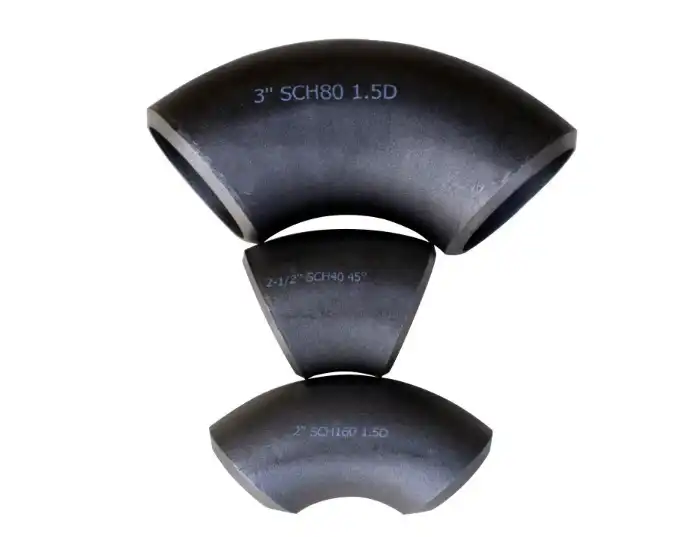
Understanding Custom Carbon Steel Elbows: Types, Specifications, and Advantages
Defining Custom Carbon Steel Elbows
Custom carbon steel elbows are very different from normal catalog items because they are made to order and have different sizes, materials, and performance qualities. Standard elbows are made to fit certain pipe sizes, but custom elbows are made to fit the exact needs of the pipeline, whether they have odd widths, wall thicknesses, or angular deflections that go beyond the normal 45-degree and 90-degree configurations. This customization includes the choice of material. For example, ASTM A234 WPB grades are chosen for use in mild temperatures, while A105 grades are chosen for use in higher-strength situations.
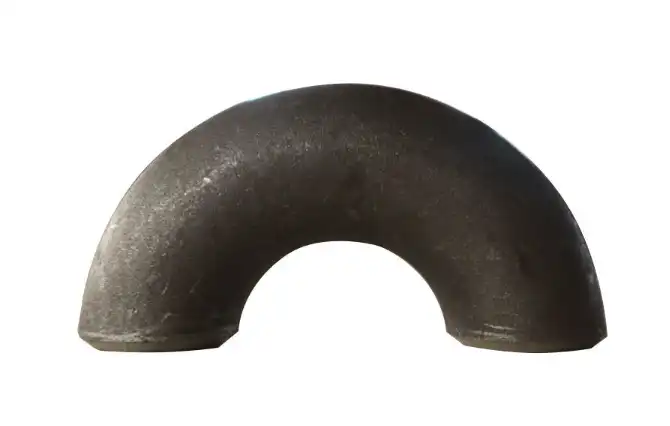
Seamless Versus Welded Construction
The manufacturing method greatly affects elbow performance and its applications. When solid steel billets are heated and shaped without lengthwise seams, the process is called hot forming. This makes seamless carbon steel elbows with a regular grain structure and better pressure resistance. This way of building works exceptionally well for high-pressure systems in oil plants and bases out at sea. Welded elbows, on the other hand, are made from steel plates that are joined together using fusion processes. They are cheaper for bigger diameters and lower-pressure uses that are popular in HVAC systems and water distribution networks.
Material Comparisons and Performance Benefits
When choosing pipe parts, knowing the pros and cons of different materials helps keep project costs low without sacrificing safety. Carbon steel elbows are strong mechanically and cost-effectively, especially for temperatures up to 400°C that are normal to mild. Depending on the grade, their yield strength is usually between 240 MPa and 415 MPa, which is enough to keep structures strong under most industry forces. Carbon steel is a material that is about 40–60% cheaper than stainless steel options. It also works just as well in non-corrosive settings. Alloy steel elbows cost more, but they can handle high temperatures above 500°C for a longer time without creeping.
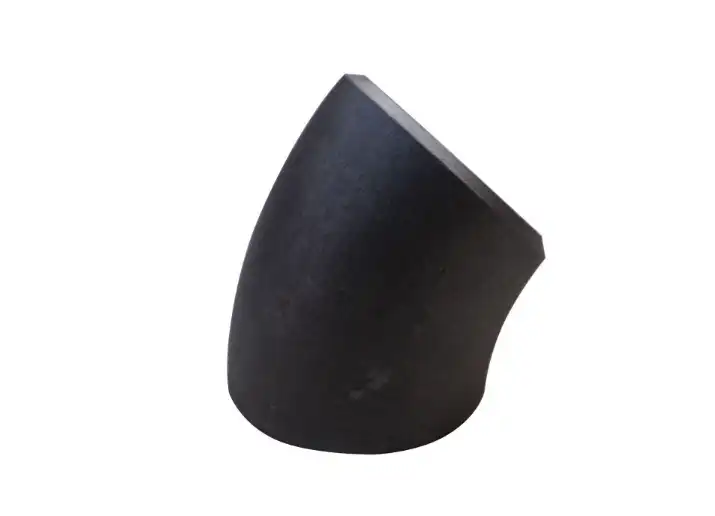
The advantages that make carbon steel elbows a preferred choice include:
- Cost-effectiveness: The costs of materials and assembly are still much lower than with specialty metals, so projects can be completed on a budget without losing quality.
- Weldability: The metallurgical features of carbon steel make it straightforward to weld reliably using standard methods. This makes installation easier and requires less work.
- Availability: The ability to produce goods all over the world ensures stable supply lines and faster lead times compared to rare materials that need to be sourced in a specific way.
- Mechanical Strength: The material can withstand forces between 150 psi and 2500 psi, based on its thickness and diameter. It has excellent tensile and yield qualities.
These characteristics position carbon steel elbows as versatile solutions across diverse industrial settings, from heavy industry to public structures.
How to Choose the Right Custom Carbon Steel Elbow for Your Project
Material Grade Selection Criteria
Analyzing practical factors is the first step in writing the right material specification. ASTM A234 WPB is the standard grade for general pipeline service. It can handle temperatures from -29°C to 400°C and is used in most oil, gas, and water uses. ASTM A105 forged carbon steel has better mechanical qualities when higher strength is needed, like in important pressure tanks or boiler connections. Chemical differences between types affect how well they can be welded and how tough they are. This is why talking to metallurgy experts when making specifications is helpful.
Pressure and Temperature Compatibility
Every pipe system works within certain pressure and temperature ranges that determine the grades of its parts. Schedule 40 custom carbon steel elbows can typically handle pressures of up to 1000 psi at room temperature. Schedule 80 and XXS forms can handle pressures of 1500 psi and higher. As the temperature rises, the allowed pressure goes down because the material becomes weaker. Careful reference to ASME B16.9 derating data is required. For projects that use steam or move hot chemicals, it's important to pay close attention to creep limits and thermal expansion factors.
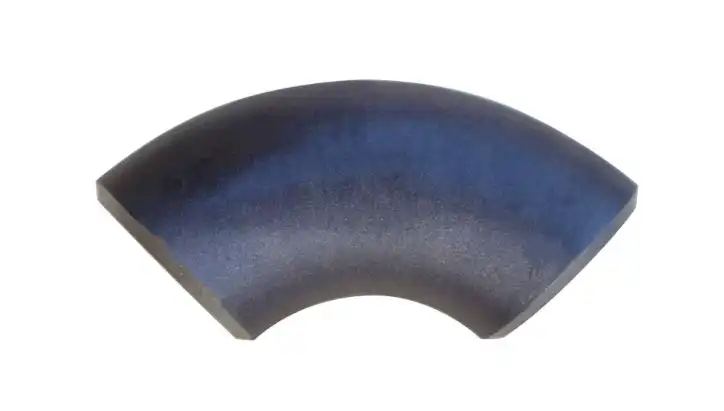
Seamless or Welded Decision Framework
When deciding between seamless and welded structures, you have to weigh the cost and efficiency needs. When maximum reliability is needed, like in underwater pipeline links, high-cycle fatigue settings, and ultrahigh-pressure systems where weld joint integrity is at high risk, seamless elbows are worth the extra cost. For water treatment plants, building services, and light chemical processes where pressures stay below 600 psi and testing procedures can monitor the quality of the weld over time, welded elbows work just fine.
Environmental and Corrosion Considerations
External working factors have just as much of an effect on material choice as fluid qualities inside the material. Different types of dirt can change the rate of corrosion on the outside of buried pipelines, which means that protective layers or cathodic protection systems are sometimes needed even if the fluid inside the pipeline is compatible. Chloride is present in marine settings, so carbon steel's limits must be weighed against corrosion-resistant options. In industrial areas, devices in the atmosphere may experience acidic buildup, which means that they need special coatings or better materials to last longer.
Fabrication and Installation Process of Custom Carbon Steel Elbows
Manufacturing Techniques and Quality Control
Hot shaping is still the most common way to make elbows from custom carbon steel. Induction heating is used to heat steel billets to about 1000°C, and then hydraulic pressing forms the material around mandrels. This process keeps the purity of the grain structure while meeting exact radius requirements. Our building has CNC-controlled bending machines that can keep the sizes of parts within ±1mm all the way from 1/2" to 48" in diameter. After the forming process, the microstructure is optimized for service conditions through normalizing processes that relieve any remaining strains.
Quality assurance includes a number of different checking steps. Spectrographic analysis is used to verify the chemical makeup of incoming raw materials and make sure they meet the requirements set by ASTM. Coordinate measuring tools are used for dimensional checking to check the uniformity of wall thickness, the accuracy of angles, and the shape of the end preparation. Nondestructive testing includes using ultrasound waves to look for cracks inside the material and color penetrants to see flaws on the outside. This all-around method makes sure that every elbow that leaves our factory floor meets both foreign and contractual requirements.
Installation Best Practices
A careful pre-welding preparation is the first step to a successful field installation. Beveled ends need to be cleaned down to bare metal, getting rid of mill scale, rust, and other impurities that hurt the quality of the fusion. Fit-up procedures make sure that the parts are lined up correctly within the allowed tolerances, which are usually no more than a 1/16" offset for butt-welded joints. This keeps stress concentrations from building up and causing failure. Qualified welders following approved procedures make sure that the joints are strong, and the welding parameters are recorded so that they can be tracked.
Post-weld treatments depend on the code and how important the service is. For thick-wall sections or high-pressure applications, stress relief through controlled heating and cooling cycles may be required. This process lowers residual stresses that could lead to stress corrosion cracking. Before the system is pressurized, radiographic or ultrasonic testing makes sure the weld is sound, and hydrostatic testing at 1.5 times design pressure makes sure the system is solid before it is put into service.
Maintenance and Longevity Optimization
Regular inspection programs help elbows last longer by finding damage before they break. Visual inspection during planned shutdowns can detect external corrosion, coating deterioration, or mechanical damage. Ultrasonic thickness measurement tracks internal erosion or corrosion rates, so replacement can be planned before wall thickness falls below minimum safe values. In corrosive environments, injecting corrosion inhibitors and renewing protective coatings keeps the barrier against chemical attack.
Extreme service conditions need stricter monitoring. For example, high-temperature applications can benefit from regular metallurgical replication that checks for microstructural changes that happen before creep rupture. Cyclic loading environments may need crack detection through magnetic particle or eddy current inspection that targets fatigue-prone zones. Proper maintenance documentation creates historical records that help with decisions about life extension and reliability-centered maintenance strategies.
Procurement Strategies for Custom Carbon Steel Elbows
Supplier Evaluation and Selection
To find reliable suppliers, you need to carefully look at many different aspects of their abilities. For example, ISO 9001 certification shows that quality management systems are in place, but it's even better to see proof that they're working by doing audits or checking references. A manufacturing license shows that the company is in line with the rules, which is especially important for special equipment like pressure vessel parts. Production capacity directly affects lead time reliability—our 16,000-ton annual output makes sure that we can keep our promises even when the market goes crazy.
Technical skills are what set good fabricators apart from great partners. Advanced inspection tools like spectrometers, ultrasonic flaw detectors, and pressure test systems demonstrate a commitment to quality control. Engineering support for material selection, stress analysis, and specification development goes beyond just fulfilling orders. Export experience to regulated markets like North America and Europe shows that they know how to deal with strict documentation requirements and international shipping logistics.
Cost Optimization and Value Analysis
Pricing structures for custom carbon steel elbows take into account more than just the cost of materials. For example, fabrication becomes more difficult when the angles aren't standard, the radius needs to be minimal, or the ends need to be prepared in a certain way. The grade of the material has a big effect on the price—upgrading from ASTM A234 WPB to alloy steel grades can double unit costs. Order volume offers big savings opportunities, as buying in bulk lowers per-piece costs through manufacturing efficiency and raw material procurement leverage.
Taking into account the total cost of alternatives to carbon steel is important. For example, stainless steel elbows are pricier to buy, but their resistance to corrosion may mean that you don't have to pay for coatings and can go longer between replacements in some situations. On the other hand, the need for frequent replacements outweighs the initial cost savings of carbon steel. A lifecycle cost analysis that includes installation labor, maintenance needs, and expected service life gives more accurate value comparisons than just looking at purchase price.
International Procurement Considerations
When you buy things from other countries, called "global sourcing," things get more complicated. For example, you need to coordinate shipping heavy industrial parts with freight forwarders who know how to handle oversize cargo and fill out customs paperwork. It also takes 4–8 weeks for ocean freight from Asia to North America, which means you need to plan or move your inventory around. Furthermore, changes in currency can affect the prices you pay, which is why some purchase agreements include "forward contracts" or "price adjustment clauses."
When buyers are far away from the factories that make the goods they buy, quality control becomes more important. Third-party inspection services make sure that the specs are followed before the goods are shipped, which cuts down on the number of expensive rejections that happen after delivery. It's also important to be clear about which standards apply; for example, specifying ASME B16.9 instead of assuming that they are the same as national standards makes sure that the sizes will work with existing systems.
Ensuring Quality and Performance: Technical Considerations in Custom CS Elbows
Dimensional Tolerances and Pressure Ratings
Precision manufacturing keeps dimensional parameters within acceptable ranges, which is important for integrating systems correctly. ASME B16.9 sets acceptable variations for center-to-end dimensions, which range from ±1mm for small diameters to ±3mm for large sizes. Wall thickness tolerance affects pressure rating calculations, with a negative tolerance directly lowering burst strength. Our manufacturing protocols aim for nominal dimensions, reducing the occurrence of negative tolerance through process control and measurement verification, which is critical when purchasing carbon steel elbows made to order.
Stress Analysis and Heat Treatment
Complex pipe geometries create stress concentrations that need to be evaluated by engineers. Elbows create secondary stresses through changes in flow direction, with shorter-radius designs generating higher stress intensities than long-radius designs. Finite element analysis models stress distribution under operating loads, identifying critical locations and confirming that the design is adequate. The right placement of pipe supports and expansion joints reduces excessive bending moments that could overload elbow connections.
When you heat a material to about 900°C and then cool it in air, you refine the grain structure. This makes the steel tougher and relieves manufacturing stresses. Tempering operations make the steel more flexible, which is especially helpful for low-temperature service where brittle fracture is a risk. Controlled cooling rates stop changes in hardness and the buildup of residual stress that could hurt performance.
Troubleshooting Common Issues
Even when specifications and fabrication are carefully thought out, problems can still happen in the field. For example, premature corrosion is often caused by not applying the right coating or choosing the wrong material for the job. To stop this from happening again, corrosion experts recommend upgrading materials or installing better protection systems. Weld joint failures are usually caused by bad procedures, not preheating enough, or not treating the joint properly after welding. To fix this, qualified welders need to be retrained, and procedures need to be changed.
Dimensional mismatches during installation could mean that the specifications were wrong or that the tolerances for manufacturing were not met. Checking the installation drawings against the purchase order specifications shows any discrepancies, and inspection reports confirm that the manufacturing standards were met. Ensuring clear communication between the engineering, procurement, and installation teams stops expensive changes from having to be made in the field. Our technical support helps solve these problems by drawing on decades of experience in a wide range of industrial applications.
Conclusion
Custom carbon steel elbow fabrication uses metallurgical science, precision manufacturing, and application engineering to make sure that reliable piping parts are used in important industrial systems. From choosing the right material to installation and maintenance, paying close attention to technical details ensures performance that meets operational needs while optimizing project economics. Working with experienced manufacturers who have a wide range of capabilities, such as advanced equipment, quality certifications, and global logistics expertise, guarantees that custom-fabricated elbows will perform as specified throughout their service life. As industrial systems get more complicated and performance standards rise, the value of expertly engineered custom solutions becomes clearer.
FAQ
What distinguishes seamless from welded carbon steel elbows?
What makes custom carbon steel elbows different if they are seamless rather than welded? Seamless elbows are made from solid steel billets that are hot-formed without longitudinal welds. This creates uniform material properties and better pressure resistance. Welded elbows are made by forming and welding steel plates, which makes them cheaper for larger sizes but adds weld seams that may be a problem for inspection and performance. Seamless construction is best for high-pressure critical applications, while welded options work well for moderate-duty service.
How do I select appropriate material grades for specific applications?
How do I choose the right types of materials for different uses? The choice of material depends on the temperature range, the pressure needed, and the compatibility of the fluid. ASTM A234 WPB is good for general-purpose uses from -29°C to 400°C, and ASTM A105 is stronger for high-pressure systems. Corrosive environments may need stronger materials or protective coatings. Talking to metallurgical experts makes sure that choices match the conditions of use while keeping costs low.
What lead times should I expect for custom carbon steel elbows?
What is the wait time for making carbon steel elbows to order? After an order is confirmed, standard configurations usually ship within 3–4 weeks. Custom specifications that need non-standard dimensions, special materials, or a lot of testing may extend lead times to 6–8 weeks. International shipping by ocean freight adds another 4–6 weeks. Adding enough time to your procurement schedule to avoid project delays is important.
Partner with Oudi for Your Custom Carbon Steel Elbow Requirements
If you need a custom carbon steel elbow, work with Oudi. We want engineering and purchasing professionals to experience the quality and service that have made Oudi a trusted carbon steel elbow supplier on four continents since 1998. Our technical team is ready to talk about your project needs, whether you need standard configurations or complex custom fabrications that meet specific performance criteria. With ISO 9001 certification, special equipment manufacturing licenses, and an annual capacity of 16,000 tons, we deliver reliable solutions that arrive on time and do what you need them to do. Email us at oudi-04@oudiguandao.com to get competitive quotes, technical advice, or detailed specifications for your upcoming projects. Let our knowledge of American, Japanese, German, and British standards help you reach your engineering goals.
References
1. American Society of Mechanical Engineers. (2020). ASME B16.9: Factory-Made Wrought Buttwelding Fittings. New York: ASME Press.
2. Davis, J.R. (Ed.). (2006). Carbon and Alloy Steels: ASM Specialty Handbook. Materials Park, OH: ASM International.
3. Mohitpour, M., Golshan, H., & Murray, A. (2007). Pipeline Design and Construction: A Practical Approach (3rd ed.). New York: ASME Press.
4. Nayyar, M.L. (Ed.). (2000). Piping Handbook (7th ed.). New York: McGraw-Hill Professional.
5. Singh, R. (2017). Applied Welding Engineering: Processes, Codes, and Standards (2nd ed.). Burlington, MA: Butterworth-Heinemann.
6. Zahrani, E.M., & Alfantazi, A.M. (2013). Corrosion behavior of API steels in simulated oilfield produced water. Materials and Corrosion, 64(5), 409-419.

Need help finding the right solution with our experts. Please contact us.

SINCE 1998 Your Reliable Pipeline Manufacturer



