Durable High-Temp Pipe Elbows – Industrial Grade
When industrial pipe systems are under a lot of thermal stress, it's important that every link point works properly. High-temperature carbon steel elbows are special joints that are made to change the flow of fluid in pipe networks while keeping the structure stable at high temperatures and pressures. These parts are critical to the process industries because they make it safe to change the direction of systems that carry very hot fluids, steam, or chemicals that break down things. Because they can handle changing temperatures without losing their mechanical strength, they are essential in facilities around the world that refine oil, make electricity, and process chemicals.
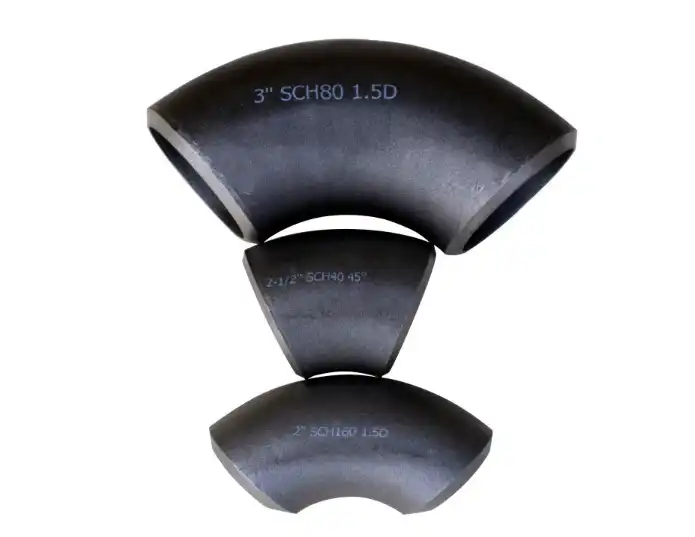
Understanding High-Temperature Carbon Steel Elbows
Industrial pipe layouts don't usually go in straight lines. They must navigate tools, climb structures, and adapt to the facility layout, so directional fits are crucial. High-temperature carbon steel elbows differ from regular pipe fittings due to their manufacturing and materials.
What Defines High-Temperature Performance
The main difference between normal and high-temperature carbon steel elbows is how the material reacts to heat. Tensile strength in carbon steel stays good up to about 400°C, but exact performance limits depend on the grade makeup. Elements like molybdenum and chromium make a material better at resisting creep, which is when it doesn't change shape when heated for a long time. Standards for manufacturing, like ASTM A234 WPB, set limits on chemical makeup and mechanical qualities that ensure products work the same way at all temperatures.
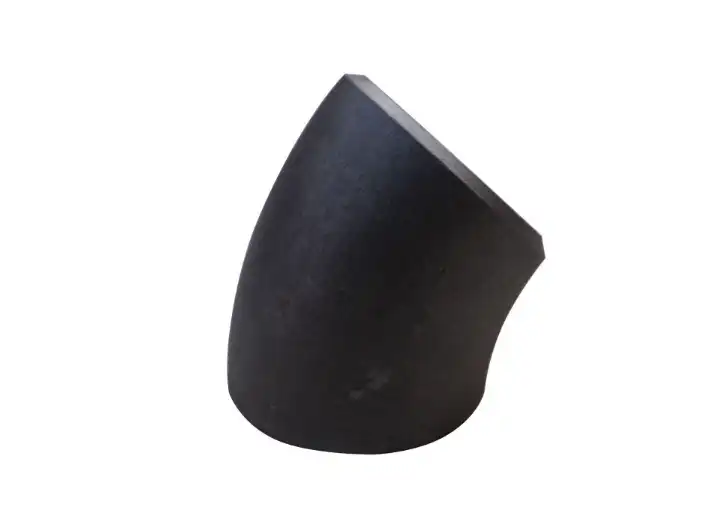
Common Configurations and Specifications
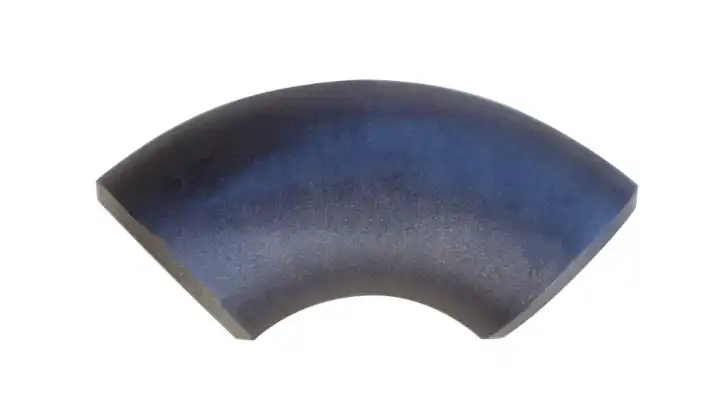
In workplace settings, 90-degree and 45-degree bend angles are most common. The 90-degree high-temperature carbon steel elbow makes right-angle turns, which are necessary when pipes need to go around objects or quickly change height. Most of the time, these fittings come in two types: short radius (SR), where the centerline radius is the same as the pipe diameter, and long radius (LR), where the radius is 1.5 times the diameter. Long radius shapes are better for systems where fluid dynamics are important because they lower pressure drop and flow turbulence.
The 45-degree high-temperature carbon steel elbow makes changes in direction softer, lowering hydraulic resistance in situations where a slow path shift is enough. This arrangement works well in systems that want to save energy or work with flows that don't like instability. Both directions can be used for butt welding or socket welding end preparations, which makes it straightforward to connect to current systems.
Metallurgical Considerations for Thermal Environments
When it comes to high-temperature carbon steel elbows, thermal expansion is a big problem. When engineers build a system, they take into account the fact that carbon steel has predictable expansion factors of about 11 to 13 μm/m°C. The elbows must be able to bend and flex without putting too much stress on the weld joints. Also, protection from oxidation is important above 450°C, where protective coatings or changes to the metal may help it last longer. The choice of material strikes a balance between the original cost and the costs of repairs and replacements over many years of use.
Comparing High-Temperature Elbow Materials – Making the Right Choice
The choice of materials has a direct effect on how reliable a system is, how often it needs upkeep, and its total cost of ownership. Different metals can be used for different high-temperature carbon steel elbow tasks, and each has its pros and cons.
Carbon Steel Versus Stainless Steel
High-temperature carbon steel elbows are used in most businesses where moderate corrosion protection is enough and cost is the main factor in buying choices. Their mechanical strength-to-weight ratio makes them perfect for structural uses, and the fact that they are widely available makes them easier to find. For continued service, the highest temperature that shouldn't go above 425°C is usually when creep starts to cause problems. Alternatives made of stainless steel, especially austenitic grades like 304 or 316, can handle higher temperatures (up to 870°C for some grades) and are better at resisting rust in places that are acidic or chloride-rich. Stainless steel, on the other hand, is usually three to five times more expensive than carbon steel, so it's only economically viable to use it in places where its special qualities are needed.
Alloy Steel Options
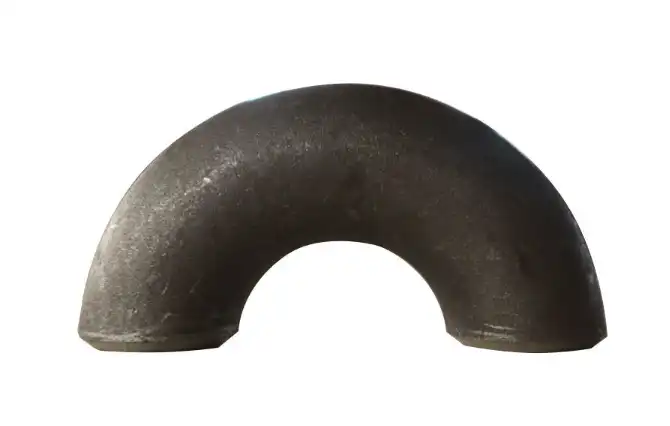
When carbon steel can't do what it needs to do anymore and stainless steel costs too much, low-alloy steels can be used instead. Chromium-molybdenum alloys, such as types A335 P11 or P22, can withstand temperatures up to 595°C and are still more affordable than high-temperature carbon steel elbows. These materials are often used in industrial reformers and power plant steam systems, where temperatures are higher than what carbon steel can handle but don't need full stainless steel standards.
Lifecycle Cost Analysis
Lifecycle costs tell a more complete story than unit prices, which are what procurement teams usually look at. In harsh settings, high-temperature carbon steel elbows may need to be inspected and replaced more often. Stainless steel, in contrast, lasts longer and costs more initially, but it saves money over time by reducing downtime and maintenance work. In 20 years of use, corrosive service could mean replacing carbon steel fittings twice, while stainless steel versions would still work. Such a scenario would change the cost benefit, even though the prices were different at first. Material selection economics accounted for how often temperatures change, the nature of the fluid, and how straightforward it is to do upkeep.
Procurement Guide – Sourcing High-Temperature Carbon Steel Elbows
The ability to locate suitable sources separates projects that fail and cost a lot of money. There are thousands of companies that make pipe fittings around the world, but only a few have the technical know-how and quality processes needed for important high-temperature carbon steel elbows.
Essential Supplier Qualifications
Manufacturing certificates are the basis for judging a seller. The ISO 9001 approval for quality management shows that a company is dedicated to using consistent methods, but it doesn't ensure the quality of the products they make. Special equipment manufacturing licenses and third-party material approvals are more important for pressure-retaining parts. For each output lot, suppliers should provide mill test reports (MTRs) that list the chemical makeup, the results of mechanical tests, and the heat treatment details. These papers show where the raw materials came from and ensure they meet standards like ASTM A234 or ASME B16.9.
Testing Capabilities
The ability to test matters the same. Reputable makers have their own labs where they do tensile testing, impact testing (especially Charpy V-notch for low-temperature service), and non-destructive examinations like ultrasound or x-ray checking. Facilities that produce 16,000 tons a year show that they have enough production capacity to meet the needs of big projects while still keeping economies of scale that keep prices low.
Customization and Technical Support
Catalog goods meet about 70% of industrial needs, but they still face significant demand for products tailored to unique requirements. Specific needs for a project could include wall widths that aren't standard, radius sizes that aren't standard, or unusual material grades. Manufacturers with engineering teams can work together to improve designs by suggesting changes that keep the functionality while making them easier to make or cheaper to produce. This technical partnership is very helpful when putting parts into complicated systems that need to be carefully coordinated in terms of size limits and material compatibility.
International Logistics Considerations
Lead times for buying things from other countries are usually between 8 and 12 weeks, which includes production, quality control, and ship freight. Buyers who have to stick to tight project plans benefit when sellers keep popular sizes in stock at key distribution points. When you buy something FOB (Free On Board) or CIF (Cost, Insurance, and Freight), knowing the Incoterms makes it clear who is responsible for what and how to calculate the landing cost. Exporters with a lot of experience take care of the paperwork for customs, make sure containers are loaded correctly to avoid damage during shipping, and keep track of your goods while they're in transit.
Practical Applications and Performance Insights
Putting theoretical requirements into practice gives them value. High-temperature carbon steel elbows are used in many different industries, and each one has its own set of practical difficulties.
Petrochemical Processing
In crude oil plants, the distillation columns are used at temperatures of up to 370°C. This means that the pipe networks have to be able to handle both high temps and high pressures without breaking. High-temperature carbon steel elbows move hot material between processing units. They go through constant thermal cycles as the rates of operation change. The type of material used takes into account the amount of sulfur in the treated streams, which speeds up rusting at high temperatures. Facilities usually ask for A234 WPB grade material with weathering limits, which means extra wall thickness above and beyond what is needed for structural reasons, to ensure the design lasts for 20 years.
Power Generation Systems
Superheated steam is pumped through turbine networks in coal-fired and combined-cycle power plants. The main steam lines are at 540°C and 170 bar of pressure. In these situations, long-radius bends keep the system's effectiveness high by reducing the pressure drop. Thermal expansion loops can handle changes in size during starting and shutdown processes, and elbows are placed in key spots to control how stress is distributed. Ultrasonic thickness readings are taken on a regular basis to monitor how much the fittings' guts are wearing away, especially at the extrados (outer curve), which is where flow rates are highest.
Chemical Manufacturing
Reactive compounds are pumped through hot reactors and heat exchanges to make plastics, fertilizers, and industrial chemicals. When working with ammonia synthesis gas or ethylene cracking streams, high-temperature carbon steel elbows need to be able to handle high and low temperatures and chemicals. Material compatibility studies help with the choice, and occasionally a heat treatment after the welding process is needed to get rid of leftover stresses that make cracking faster in some chemical conditions. Maintenance plans include checking the surface regularly for coloring that could mean oxidation and testing its hardness every so often to find changes in the metal's structure caused by long-term heat exposure.
Why Choose Our High-Temperature Carbon Steel Elbows?
Since 1998, Cangzhou Oudi Pipe Manufacture Co., Ltd. has sent pipe parts to more than 300 users in 40 countries. They have built a good name by always providing high-quality high-temperature carbon steel elbows that work well with other systems. Our factory in Mengcun Hui Autonomous County is in a great spot—120 kilometers from Tianjin Port—and has 66,600 square meters of modern production space.
When raw steel comes into our building, we can start keeping track of it. When a coil or plate comes in, it is inspected to make sure that its chemical makeup meets the standards. Our annual production capacity of 16,000 tons uses hot-forming methods to get the best grain structure and mechanical qualities, which is especially important for parts that hold pressure. The nominal sizes of the long radius and short radius versions range from DN15 to DN1200, so they can be used for a wide range of jobs, from small refurbishments to large building additions.
Quality assurance isn't just for industry. We keep our ISO 9001:2000 certification and our People's Republic of China special equipment manufacturing license, which show that we obey the strict rules set by the government. Our testing lab checks output samples for tension, impact, and hardness, as well as non-destructive tests like ultrasound and radiographic testing based on what the customer wants. This complete quality system makes sure that every elbow that leaves our factory meets the performance and size limits needed for safe industrial use.
Our self-managed import-export authority helps international customers save time and money on paperwork and buying processes. In Europe, the Americas, Africa, Southeast Asia, and the Middle East, our goods are used in the chemical, oil, natural gas, water conservation, construction, shipbuilding, and electric power industries. This range of locations shows that we can meet a number of different foreign standards, including ANSI, JIS, DIN, and BS. We can also adapt to local tastes while keeping quality high.
Our service model is unique because you can customize it. When engineers work together, they can find the best fitting standards for each project, even if it has non-standard pressure classes, special inspection needs, or a tight delivery plan. Clients get not only goods but also expert teams that help them complete projects successfully, from the first question to final approval.
Conclusion
To choose the right For a high-temperature carbon steel elbow, you have to weigh the scientific performance, the cost of the material, and the supplier's ability to meet your needs. If purchasing teams put quality checks, the right material specs, and maker dependability at the top of their list of priorities, these important fittings can keep industrial systems safe when they are under a lot of heat. A high-temperature carbon steel elbow is still the practical choice for uses within its temperature range. It performs impressively at a low cost and has been used in industry for decades. Understanding the limits of the materials, knowing when to use alternatives, and working with skilled makers are all things that can be done to make sure that piping infrastructure lasts for decades and supports core industry processes.
FAQ
What temperature range can carbon steel elbows withstand?
Standard high-temperature carbon steel elbows can work effectively up to 400–425°C for long periods of time. The grade's make-up and external factors such as fluid chemistry and pressure cycles affect performance. After these temperatures, the resistance to creep decreases, so we must use low-alloy or stainless steel instead. During operational upsets, short-term temperature changes slightly above rating limits may be acceptable. However, repeated overheating speeds up deterioration.
How do I select between 45-degree and 90-degree configurations?
The choice of configuration is based on available space and hydraulic factors. The 90-degree high-temperature carbon steel elbow is particularly well-suited for situations where you need to make quick changes in direction and don't have enough room for gentle turns. The 45-degree choice lowers pressure drop and flow turbulence, which is helpful for systems that want to save energy or work with fluids that are sensitive to shear. When it comes to flow, two 45-degree bends are better than one right-angle fitting for making 90-degree turns.
Can custom specifications be accommodated for specialized projects?
Manufacturers who are also engineers often make things that don't meet standard requirements, like ones with custom radius sizes, high-temperature carbon steel elbow wall thicknesses, or material grades. For custom manufacturing to happen, there needs to be clear technical discussion about limits for dimensions, testing needs, and relevant standards. Lead times are longer than for catalog items—usually an extra two to four weeks—but they allow for the best system integration when normal parts don't work.
Partner with Oudi for Reliable High-Temperature Carbon Steel Elbow Solutions
People working on industrial projects need pipe parts that work perfectly even in the worst situations. Oudi makes high-temperature carbon steel elbows that meet international standards for important uses all over the world. They do this job by combining more than 20 years of manufacturing experience with complete quality systems. Our engineering team works with sourcing experts to come up with the best solutions that balance performance needs with the cost of the project. Our ISO-certified production center and strict testing procedures make sure that the parts you order are ready for safe, long-term use, whether you need standard setups or fittings that are made just for you. Get in touch with our expert sales team at oudi-04@oudiguandao.com to talk about your project needs with a reliable high-temperature carbon steel elbow source. If you ask, we'll give you competitive prices, an open work schedule, and expert help.
References
1. Boyer, H.E. (Ed.). Atlas of Stress-Strain Curves (2nd ed.). ASM International, 2002.
2. Davis, J.R. Alloying: Understanding the Basics. ASM International, 2001.
3. American Society of Mechanical Engineers. ASME B16.9: Factory-Made Wrought Buttwelding Fittings. ASME Standards, 2018.
4. Mohitpour, M., Golshan, H., & Murray, A. Pipeline Design and Construction: A Practical Approach (3rd ed.). ASME Press, 2007.
5. Becht IV, C. Process Piping: The Complete Guide to ASME B31.3 (4th ed.). ASME Press, 2017.
6. Porter, D.A., Easterling, K.E., & Sherif, M.Y. Phase Transformations in Metals and Alloys (3rd ed.). CRC Press, 2009.

Need help finding the right solution with our experts. Please contact us.

SINCE 1998 Your Reliable Pipeline Manufacturer



