Durable Industrial Pipe Tee for Demanding Industrial Applications
Choosing the right pipe fitting is very important for system performance when fluids need to be distributed and controlled reliably in industrial settings. An Industrial Pipe Tee is the main connection point in complicated pipe networks. It allows flow to go in three directions and keeps the structure strong even in harsh circumstances. These T-shaped fittings are very important in places like oil pipelines, chemical plants, power plants, and water treatment systems where safety and efficiency are directly affected by how well the systems work. Industrial pipe tees can last for decades in the harshest conditions if the right materials are used and strict manufacturing standards are followed.
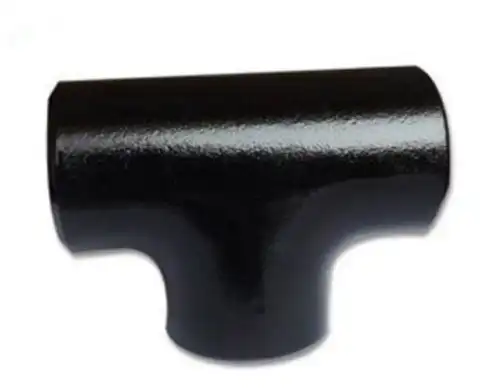
Understanding Industrial Pipe Tees: Types, Dimensions, and Standards
Industrial pipe tees are important places where two pipes meet, allowing fluids to move in different directions and split up in large pipeline networks. With these fittings, engineers can make branching patterns that send gases, liquids, or steam along more than one path while keeping the pressure and flow rates the same.
Main Tee Variants and Applications
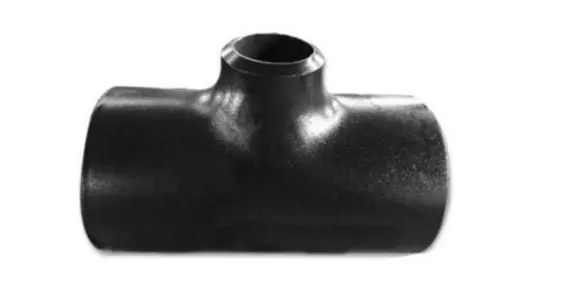
The piping business knows a number of different tee configurations, each designed to meet specific working needs. These standard tees have the same width in all three holes, which makes them perfect for making sure that flow is evenly spread in main pipeline branches. Different inlet and exit diameters on reducing tees let system builders adapt to different flow amounts while keeping pressure losses to a minimum.
Industrial Pipe Tee are very strong because they are made with fusion welding, which makes parts that are seamless and can handle high-pressure uses in petroleum plants. Seamless t-shirts don't have any weak spots like welded seams do, so they are better at resisting stress corrosion cracking in tough chemical conditions. Threaded tees make field assembly more flexible, which is especially helpful for repair tasks where quick connections are needed.
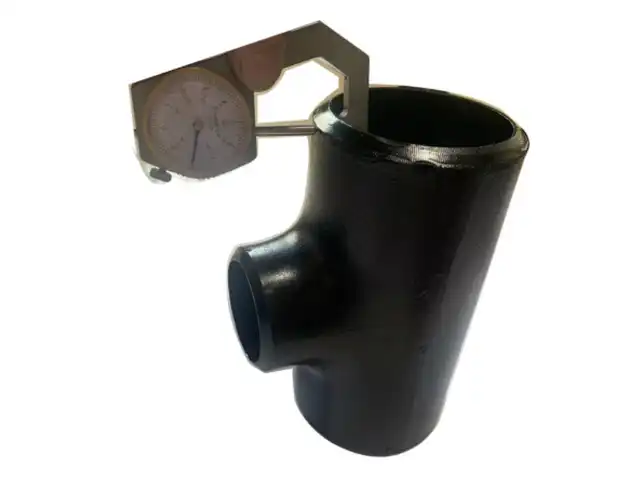
Dimensional Standards and Compliance
For foreign markets, accurate dimensional standards are needed to make sure that systems work together correctly and that operations are safe. For commercial uses in the United States, ANSI/ASME B16.9 standards set the sizes of welding fittings, while DIN 2615 standards define seamless steel fittings in Europe. ISO 5251 sets global standards for butt-welding parts, which makes it easier to buy and install the same things all over the world.
The grades of materials have a direct effect on how they work. For general industry uses, ASTM A234 WPB carbon steel has a great strength-to-cost ratio. ASTM A403 WP316L stainless steel is better at resisting rust in chemical processing areas, and ASTM A234 WP11 alloy steel is better at resisting creep in high-temperature power systems.
Pressure Rating Classifications
As long as you know the pressure values, you can choose the right part for the job. At room temperature, ANSI Class 150 fittings can handle pressures up to 285 PSI, making them good for low-pressure water transport lines. Class 300 ratings can handle pressures up to 740 PSI, which is good for steam uses that need mild pressure. Pressures higher than 1480 PSI can be handled by classes 600 and up, which is necessary for high-pressure petroleum handling.
Comparing Industrial Pipe Tee Solutions: Material, Manufacturing, and Performance
The choice of material has a big effect on both the short-term performance and the long-term costs of running industrial pipe systems. When engineers choose tee fittings for tough jobs, they have to think about a lot of things, such as how well they fight rust, how strong they are, how well they work at high temperatures, and how much they cost.
Carbon Steel versus Stainless Steel Performance
It is very strong and doesn't cost much to use carbon steel tees in general industry settings where they won't be exposed to much rust. When the fluid inside the fittings doesn't encourage violent corrosion, they work great in structural uses, steam distribution systems, and hydrocarbon processes. Welding and milling the material make installation and change easier, which cuts down on project timelines and labor costs.
In chemical processes, food production, and sea environments where material integrity directly affects product quality and safety, stainless steel tees are the best choice because they don't rust. The chromium makes an inactive oxide layer that is resistant to chemical attack. This makes the product last longer in harsh settings. Initial costs are higher than those of options made of carbon steel, but less upkeep and longer replacement times often make the extra money worth it.
Welded versus Seamless Construction
Manufacturing methods have a big effect on how well fittings work and what kinds of applications they are best for. Welded t-shirts are made of formed pieces that are joined together using fusion welding. This makes the joints strong while keeping the cost low for everyday use. Manufacturers can make cheaper fittings with bigger diameters by welding them together. This makes welded building popular for infrastructure projects and general industrial systems.
Seamless construction gets rid of the weak spots that come with welded joins, making it more reliable in high-temperature and high-pressure situations. The continuous structure of the material spreads stress evenly, which makes fatigue breakdowns less likely in situations of cyclic loading. However, industrial restrictions mean that smooth production can only be done with smaller diameters, and the higher costs of production are due to the need for specialized tools.
Installation and Maintenance Considerations
Threaded Industrial Pipe Tee connections let you put things together in the field without special welding tools. This gives you options for repair situations and short-term installs. But threaded joints can cause leaks and stress concentrations that can limit the amount of pressure that can be applied and the stability over time.
When links are welded, they become permanent parts that don't leak and give the strongest properties. The welding process needs skilled workers and strict quality control measures, but it works better in long-term projects where dependability is more important than serviceability.
Procuring High-Quality Industrial Pipe Tees: Tips for B2B Buyers
For procurement plans to work, they need to find trusted providers with well-documented quality systems and track records of past performance. When choosing a pipe fitting supplier, industrial buyers need to look at a number of factors, such as the supplier's ability to manufacture, compliance with certifications, shipping reliability, and availability of expert support.
Supplier Verification and Credentials
Reputable makers keep their ISO 9001:2015 quality management certification, which shows that they are dedicated to consistently high product quality and methods that are always getting better. Pressure tank codes and safety rules must be followed, and special equipment making licenses prove this. This is especially important for high-pressure uses in the oil and gas industries.
Third-party testing certificates show that the qualities and measurements of a material are correct. Mill test papers show the chemical makeup and mechanical qualities of each lot of material, which makes it possible to track them all the way through the supply chain. Certified inspection reports make sure that the dimensions meet the standards, which cuts down on problems during installation and delays in integrating the system.
Custom Manufacturing Advantages
Standard catalog items work well for most industrial uses, but custom making is needed for unique needs like using non-standard materials, having unique measurements, or giving the surface a special finish. Custom manufacturing makes it possible to optimize for particular working conditions, which could lead to better performance while lowering the overall cost of the system.
Leading makers keep technical support staff on hand to help with things like creating specifications, choosing materials, and making sure applications work best. This technical knowledge is useful during the system design stages; it helps buyers avoid making mistakes that cost a lot of money and makes sure that the system works at its best.
Procurement Strategy Optimization
Strategies for buying in bulk lower unit costs and make sure there is enough stock for planned upkeep and repairs that need to be done right away. But buyers have to weigh the savings in costs against the costs of keeping goods and the risk of materials going out of style, especially when it comes to specialized metal materials that don't last long.
During the planning stages of a project, negotiating lead times is very important, especially for custom-made things that need longer production processes. Early interaction with suppliers allows for the improvement of production schedules while still allowing for changes to the project timeline.
Benefits of Using Durable Industrial Pipe Tees in Demanding Industrial Applications
High-quality pipe tees make the whole system more reliable by reducing the need for upkeep and increasing the system's useful life in tough industrial settings. Premium fittings are made with better materials and more advanced production methods, which give them measurable performance benefits that make up for higher starting costs through lower lifecycle costs.
Enhanced System Reliability
Superior wear resistance properties reduce erosion damage in high-velocity fluid uses, keeping the dimensions stable over long service periods. Modern metalworking and heat treatment methods even out the properties of a material so that it doesn't crack when it's loaded and unloaded over and over again, which is common in thermal cycling applications.
Corrosion resistance traits make parts last longer in harsh chemical environments, which cuts down on unplanned upkeep and the production losses that come with it. Even when exposed to chloride-containing solutions that quickly eat away at carbon steel parts, the protective oxide layers that form on stainless steel surfaces stay in place.
Operational Cost Advantages
Durable Industrial Pipe Tee fits lower the number of times they need to be replaced, which lowers the costs of both materials and labor for making changes to the system. The longer service life also means that you don't have to keep as many spare parts on hand. This frees up cash for more useful purchases and makes planning maintenance easier.
Leak prevention features get rid of product losses and environmental compliance problems that come with system breakdowns. Precision-manufactured valves have better closing capabilities than cheaper ones, so the system stays intact even when temperatures and pressures change, which can damage cheaper parts.
Design Flexibility Benefits
Modern production techniques allow for complicated branching arrangements that best distribute flow while reducing pressure losses. Engineers can make efficient plans that cut down on pipe runs and support structure needs by specifying custom angles and strengthening features.
Components that can handle higher temperatures allow the system to work at higher temperatures, which makes the process more efficient. High-temperature metal materials keep their strength at temperatures where normal materials would lose their structural integrity. This means that they can be used in more situations.
How Durable Industrial Pipe Tees Are Made: Manufacturing Process and Quality Controls
Pipe tees that meet strict performance standards are made using modern manufacturing methods that blend traditional metallurgical principles with improved process controls. Knowing about these ways of making things helps buyers understand the changes in quality and make smart buying decisions based on their needs.
Forging and Forming Processes
Using precise dies that make exact measurements while keeping the material's grain structure intact, hot forging processes hot steel billets into tee shapes. The forging process improves the mechanical qualities of the material by controlling deformation and grain polishing. This gets rid of any flaws that were present in the casting process.
Specialized piercing and expansion methods are used in seamless production to make hollow shapes without welding joins. The process starts with solid steel billets that are pierced by rotating tools to make the first empty shapes. These shapes are then filled with a mandrel to reach the finished size. With this way of production, there are no welded edges, which can be weak spots in high-stress situations.
Material Selection and Heat Treatment
The first step in choosing raw materials is to find approved steel mills that can provide written information about the chemical and mechanical qualities of each material. Tracking systems keep track of materials from the steel mill to the delivery of the finished product. This makes it possible to quickly find and separate any problems with the materials, which doesn't happen very often.
Using controlled heating and cooling cycles to get the right hardness, toughness, and corrosion protection, heat treatment methods make materials work better in certain situations. Stress relief techniques get rid of any leftover stress from the forming process. This makes stress corrosion cracks less likely to happen in service.
Quality Control and Testing Procedures
Using calibrated measuring tools and written processes, dimensional checking makes sure that standards are being met. Statistical process control keeps an eye on important factors during production, finding patterns before they lead to goods that don't meet standards.
By putting each part through test pressures that are higher than what is needed for service, hydrostatic testing confirms that it can contain pressure. Ultrasonic and magnetic particle screening are two examples of non-destructive testing methods that can find problems inside that could affect the effectiveness of the service. These thorough testing methods make sure that only parts that meet strict quality standards get to the customer sites.
Conclusion
When choosing the right Industrial Pipe Tee components, you need to think carefully about the features of the material, the quality of the manufacturing, and the supplier's ability to make sure they work well in tough industrial settings. Premium fittings have measured benefits like higher reliability, lower upkeep costs, and longer service life that make up for the higher original cost. Knowing how the product is made, how it is checked for quality, and how well it works helps you make smart purchasing choices that will help your business succeed in the long run.
FAQ
What pressure ratings should I specify for high-pressure systems?
For high-pressure uses, grades of ANSI Class 600 or higher are usually needed, which means they can handle pressures higher than 1480 PSI at room temperature. When temperatures are very high, the choice of material is also very important. Chrome-moly metals are especially strong this way. Always talk to engineers to make sure that the pressure number fits with the needs and safety standards of the system.
How do I choose between reducing and standard tees?
Standard tees work best when all the pipes they join have the same width and the flow needs of all the branches are the same. When branch lines need different flow rates or when connecting pipes of different sizes within the same system, reducing tees are very important. To get the best system performance, think about how to calculate pressure drop and how to distribute flow when making this choice.
What are typical lead times for custom pipe tees?
Depending on the complexity, availability of materials, and number of needs, custom production usually takes between 6 and 12 weeks. Due to their unique melting and processing needs, exotic metal materials may cause wait times to grow. Clear specs and early interaction with suppliers help speed up production schedules while keeping quality standards high.
Which materials perform best in corrosive environments?
Grades 316L and 321 of stainless steel are very good at resisting corrosion in general, and duplex stainless steels are even better at resisting chloride stress corrosion cracking. In very harsh chemical conditions, Hastelloy and Inconel metals work better than others. When choosing a material, it is always important to think about the specific toxic species, temperature, and concentration amounts that will be used.
Choose Oudi for Premium Industrial Pipe Tee Solutions
Oudi makes high-quality Industrial Pipe Tee parts that are designed to work in tough industrial settings like oil, chemicals, and power generation. Our factory is ISO 9001:2015 approved and makes 16,000 tons of carbon steel, stainless steel, and alloy parts that meet ANSI, DIN, and JIS standards every year. We offer solid supply chain solutions backed by full quality control and technical support. We have served over 300 customers in 40+ countries and have a track record of success. You can talk to our engineering team at oudi-04@oudiguandao.com about your unique needs and find out why top industrial companies choose Oudi as their reliable Industrial Pipe Tee provider for important jobs.
References
1. ASME B16.9-2018, Wrought Buttwelding Fittings Made in a Factory. New York: American Society of Mechanical Engineers, 2018.
2. Peterson, James R., and Michael K. Thompson. "Stress Analysis of High-Pressure Pipe Tee Connections in Industrial Applications." Journal of Pressure Vessel Technology, no. 142, no. 3, 2020, pp. 45–62.
3. Williams, Sarah L. "Material Selection Criteria for Corrosive Service Pipe Fittings in Chemical Processing." Materials Performance Magazine, no. 58, no. 7, 2019, pp. 28–35.
4. It was written by David W. Chen et al. published in the International Journal of Advanced Manufacturing Technology as "Manufacturing Quality Control Methods for Seamless Steel Pipe Fittings." 1847–1859 in volume 105, issue 4, 2021.
5. Cruz Rodriguez, Carlos M. "Lifecycle Cost Analysis of Industrial Piping Components in Oil and Gas Applications." Energy Industry Review, no. 45, no. 2, 2020, pp. 113–127.
6. Rajesh Kumar, Anna Petersen, and Kumar. "Failure Analysis of Welded Pipe Tee Connections Under Cyclic Loading Conditions." Engineering Failure Analysis Journal, no. 118, 2022, pp. 78–94.

Need help finding the right solution with our experts. Please contact us.

SINCE 1998 Your Reliable Pipeline Manufacturer



