Heat-Resistant Pipe Tee for Extreme Conditions
Every part is important when manufacturing systems are working at very high temperatures. A high-temperature pipe tee serves as an important connection point in pipe networks that are exposed to very high temperatures. It allows fluids or gases to flow while keeping the structure strong at high temperatures. These specialized fittings differ from regular pipe tees in their materials, technical limits, and strict temperature standards. Many different types of industries, from petrochemical factories to power plants, rely on these parts to keep things from going wrong when temperatures regularly go over 500°F.
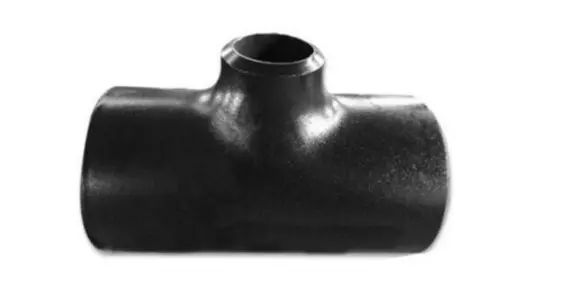
Understanding Heat-Resistant Pipe Tees: Basics and Specifications
High-temperature pipe tees can be used to branch off pipes in places where regular fittings would not work. Their technology addresses specific issues that occur when temperatures exceed normal operating levels.
What Sets Heat-Resistant Tees Apart
Unlike regular pipe tees that are made to work in normal situations, heat-resistant versions are made using special techniques that make them more stable at high temperatures. The metal structure of these parts doesn't change phases like most materials do when they get hot, which makes them lose their tensile strength. During production, controlled heat treatment processes smooth out the grain structure. This makes parts that don't change size when they are heated and cooled many times.
When you look at failed trends, the difference becomes clear. Standard carbon steel tees may deform over time at temperatures above 800°F, but heat-resistant options that have been properly designed continue to work well. This difference directly affects the uptime of systems in places where unplanned outages cost a lot of money every hour.
Material Selection for Thermal Performance
The highest working temperature and lifespan of a high-temperature pipe tee depend on the material it is made of. Carbon steel grades like A234 WPB can be used at temperatures up to 650°F and are cheaper in settings with relatively high temperatures. 304L and 316L types of stainless steel can be used up to 1500°F and are better at resisting rust in environments that are harsh on chemicals.
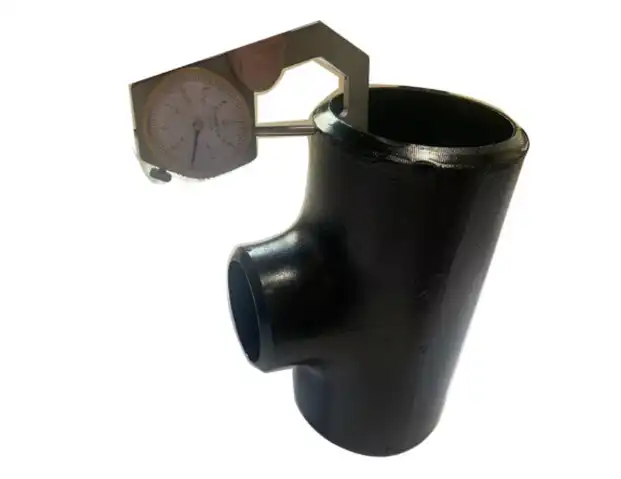
Adding chromium, molybdenum, and vanadium to alloy steel formulas makes them even more resistant to high temperatures. Tees made of Grade P91 alloy steel can handle being exposed to 1200°F for long periods of time in steam systems. This makes them essential for current power plants that work at supercritical temperatures. The metallurgical balance in these metals stops carbide precipitation, which reduces grain boundaries when heated for a long time.
When choosing a material, heat expansion factors are also taken into account. When pipe tees and linked pipes expand at different rates, stress builds up and cracks start to form. Engineers choose materials with suitable growth properties to maintain the integrity of the joint when temperatures change.
Temperature Ratings and Compliance Standards
International standards govern the making and testing of heat-resistant pipe parts. ASTM A234 specifies the minimum mechanical qualities for wrought carbon steel and alloy steel parts that are used in high temperatures. ASME B16.9 sets the standards for measurements, tolerances, and markings that ensure products can be used anywhere in the world.
Verification of compliance includes a number of different testing methods. Tensile strength tests at working temperatures prove how well a material works, while impact tests check how flexible it is when heated. Non-destructive testing methods find internal flaws that could spread during service, and hydrostatic pressure tests confirm the stability of the seals.
These standards provide people who work in procurement faith that approved fittings will do what they're supposed to do. Documentation that can be tracked from the approval of raw materials to the testing of produced products makes a quality record that can be checked, which is crucial for industries that are controlled.
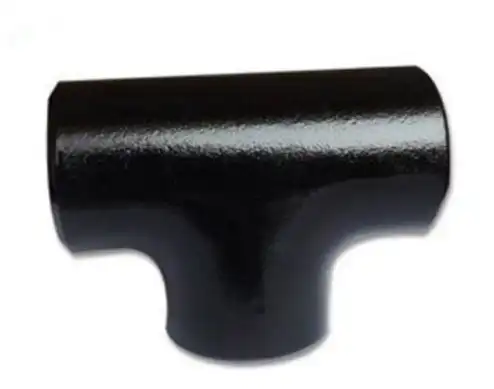
Comparing High-Temperature Pipe Tees: Making Informed Material Choices
To choose the right pipe ends, you need to know how different types of materials and styles work in certain situations. The choice affects the original payment, how often maintenance is done, and the total cost of ownership.
Material Performance Analysis
Stainless steel tees cost more than carbon steel ones, but this difference in price gets smaller when you look at how long the fittings will last. For uses below 650°F, where rust rates are still doable, carbon steel is a cheap and forceful option. But after this point, scaling and rust happen much faster, so you need to make repairs more often.
At temperatures close to 1500°F, stainless steel types show wonderful resistance to rust. Chrome in the metal creates an oxide layer that protects it and fixes itself when it is broken. This makes it last longer in corrosive settings. This benefit is especially useful in chemical processes, where corroded connections can contaminate the product and make quality control difficult.
Alloy steel is in the middle of carbon steel and stainless steel in terms of efficiency. These types are stronger than stainless steel at high temperatures because they contain elements like chromium and molybdenum that make them better. They cost about 60% less than stainless steel. Because of this, alloy steel tees are a good choice for large-diameter steam lines where the cost of materials has a big effect on project funds.
Design Variations and Application Fit
The choice between flanged and soldered joints affects how easily and quickly the system can be installed and maintained. Flanged tees make it easier to take parts apart for inspection or repair, which cuts down on downtime during maintenance. This design works well in situations where the system needs to be changed on a regular basis or where rules require frequent internal checks.
Welded connections make parts that last forever and are more structurally sound. Because the metal link is continuous, there are no possible leak paths like there are in flanged systems. This makes welded tees better for handling dangerous fluids. The downside is that links have to be cut and re-welded in order to get to downstream parts during repair.
High-pressure uses make things more complicated. To keep stress from building up in tees that work above 1500 PSI, the walls need to be larger and the branch links need to be stronger. There is a difference between high-temperature and high-pressure grades. For example, a fitting that is marked for 1000°F might only be able to handle 600 PSI at that temperature because the material isn't as strong.
Evaluating Manufacturers and Quality Indicators
Certification paperwork shows that the maker is skilled and that the product is reliable. Getting ISO 9001 approval shows that you handle quality in a planned way, and getting a license to make specialized equipment shows that you follow the rules for making pressure vessel parts. When looking for fittings for code-stamped piping systems, where liability worries require strict paperwork, these qualifications are especially important.
Consistency and scale are shown by production skills. Companies that make more than 15,000 tons of goods a year usually have high-tech tools and well-honed methods that make their products more accurately measured. This size lets you spend money on high-tech inspection tools like automatic ultrasound testing systems that can find small flaws that human inspectors might miss.
Exporting to controlled markets is a way to indirectly prove quality. Suppliers that do business with people in Europe and North America have to follow strict rules that are often higher than the rules in developing markets. Serving more than 300 people in 40 countries over the past few years shows that you can react to different quality and specification needs.
Installation and Maintenance: Ensuring Optimal Performance of High-Temperature Pipe Tees
Even the best fittings break early if you put or keep them incorrectly. Paying attention to the details of construction and doing preventative maintenance keeps the system reliable and extends the life of high-temperature pipe tee components.
Installation Best Practices
By ensuring proper alignment before welding, leftover stresses that speed up wear failures can be avoided. Expert welders use alignment clamps and accurate measuring tools to make sure that gaps are within 1/16 inch, which makes sure that the heat is spread evenly during the fusion process. Misalignment makes stress points that focus thermal expansion forces, which starts cracks that spread as the material is heated over and over again.
The details of the welding process must match the properties of the base metal and the conditions of service. Before welding, heating carbon steel parts to 200–400°F slows down the cooling rates that make microstructures weak. Post-weld heat treatment reduces leftover stresses and softens the heat-affected area, which brings back the flexibility that was lost during the welding process.
Supports need to be placed carefully in thermal expansion accommodation. Fixed anchors in certain places force expansion to move into specific expansion loops or bendable connections. Too little space between supports causes too much sagging, which puts too much stress on branch connections. Supports that are too tight stop natural growth, which creates destructive forces inside the pipe system.
Preventive Maintenance Strategies
Inspections that are planned ahead of time find signs of wear and tear before they become catastrophic. Visual inspections find surface flaking, splitting, or deformation, while ultrasonic thickness measures figure out how much wall loss there is due to erosion or corrosion. Infrared thermography shows hot spots, which mean there are problems with the insulation or flow inside the material that speed up the breakdown process of the high-temperature pipe tee.
Managing corrosion makes things last a lot longer. Protective layers on the outside keep the metal from rusting in the air, and linings inside keep process fluids from attacking the metal chemically. Controlling the water chemistry in steam systems lowers the amount of oxygen pitting and pH-related rust that wears down pipe walls over time.
Recording check results makes trend data that can be used to estimate how long something will last. Tracking measures of wall thickness over a period of time that includes multiple inspections shows corrosion rates, which lets you make choices about when to replace things based on facts. This method keeps parts from being thrown away too soon and avoids the expensive problems that come up out of the blue.
Procurement Guide: How to Source and Buy High-Temperature Pipe Tees?
Strategic buying matches the need for quality with the need to stick to a budget and meet deadlines. Better buying results come from knowing the different types of suppliers, how they set prices, and what to think about when placing an order.
Supplier Selection Strategies
Direct ties with manufacturers can save you money and give you more freedom when it comes to customization. When you buy directly from the factory, you don't have to pay markups to distributors. This cuts costs by 15–25% compared to buying through multiple outlets. This method is especially cost-effective for big jobs that need a lot of supplies, since volume prices make saves even bigger.
Manufacturers with well-established quality systems can be more sure that their products will meet specifications. Companies that have ISO 9001 certification and licenses to make unique tools show that they are dedicated to quality control that is done in a planned way. Spectroscopic analysis, mechanical testing, and non-destructive examination are some of the testing services they offer. These check the features of materials and find problems with how they were made.
Even though they cost more per unit, distributors play important roles. Because they keep a lot of inventory on hand, they can quickly get what they need for repair problems where wait time is more important than cost. Well-known wholesalers also collect products from many makers, which makes buying easier when projects need a variety of fitting types and specs.
Pricing Dynamics and Order Considerations
Pricing is based on the choice of material. Stainless steel tees cost 200–300% more than carbon steel ones of the same style, and expensive metals like Inconel cost over 500% more. When you buy more, these differences get a little smaller because the fixed setup costs are spread out over more units.
Both price and wait time are affected by calls for customization. Standard dimension ratio (SDR) fittings can be shipped within days from stock at a wholesaler. However, production times can take up to 8 weeks for custom wall thicknesses or special end preparations. The extra cost for tailoring usually adds 20 to 40 percent to the price of a normal product, but this increase goes down as the number of orders goes up.
Minimum order numbers show how much it costs to make something. Setting up small special orders costs a lot and can't be done below a certain level. For special orders, many makers set MOQs between 500 and 1000 pounds, but standard items can usually be shipped in any number. If procurement managers know about these limits, they can combine needs to get better prices.
Logistics and Delivery Planning
Fittings are safer when they are stored and transported when they are properly packaged. Impact damage can be avoided with wooden boxes or steel frames, and machined surfaces can be kept clean with secure end caps. Moisture barrier wrapping stops rusting from the air during long periods of storage or ocean freight transport.
When planning lead times, you need to think about when things need to be made, inspected, and shipped. Rush orders shorten wait times, but they cost extra, and the prices can double from regular ones. If you place your order during a manufacturer's slow season, on the other hand, you may get savings because companies are trying to keep up production levels.
International shipping makes things more complicated. Export paperwork, clearing customs, and delays at the port can add two to four weeks to the arrival time compared to exports within the same country. Exporters with a lot of experience can easily meet these standards by using their existing relationships with freight forwarders to keep things simple.
Why Choose Oudi for Your High-Temperature Pipe Tee Needs?
Cangzhou Oudi Pipe Manufacture Co., Ltd. has been making pipe parts that can handle the roughest industrial situations since 1998. Our building in Mengcun Hui Autonomous County is 66,600 square meters and has high-tech production tools that turn raw materials into precisely made parts.
Proven Quality Through Certification
Our dedication to systematic quality control is shown by our ISO 9001:2000 quality management system approval. We can make pressure tank parts for code-stamped uses thanks to the People's Republic of China's special equipment manufacturing license. These credentials show that our methods have been carefully checked by a third party, from making sure the raw materials are correct to testing the end product.
Quality control starts as soon as the ingredients come into our building. Spectroscopic analysis proves that the chemical composition meets the standards, and mechanical testing proves that the strength qualities are correct. During production, measurement checks make sure that the shapes are correct, and non-destructive testing finds any problems inside the part. We have over 300 customers in 40 countries who believe this all-around method.
Comprehensive Product Range and Capacity
We can make things that meet American, Japanese, German, and British norms, so we can meet a wide range of specification needs. Fittings made of carbon steel, stainless steel, and alloy steel come in shapes like bends, flanges, tees, reducers, and caps. This wide range lets customers combine their sources, which makes buying easier and makes sure that the quality is the same for all size types.
With an annual production capacity of 16,000 tons, the company can support both big projects and long-term supply deals. With this level of volume and advanced inventory management, shipping plans can be trusted to keep projects on track. Our self-managed import and export operations make foreign business easier and faster by cutting down on the paperwork delays that come with using middlemen.
Global Reach and Application Expertise
Our goods are very important in the oil, chemical, natural gas, water conservation, power generation, shipbuilding, construction, and boilermaking industries. Our technical knowledge has grown over a wide range of working conditions thanks to these different applications. This lets us suggest the best options for each customer's needs.
Our goods are sold in export markets in Europe, North and South America, Africa, Southeast Asia, and the Middle East. These markets have different rules and standards for quality. Meeting these different needs has helped us improve our quality standards and manufacturing methods so we can now make goods that meet the strictest requirements.
Customer-Focused Service Philosophy
We know that technical help is just as important to the success of a project as the quality of the result. Our team helps customers choose the right specifications by giving them advice on how to match performance needs with price limits. Using decades of application knowledge, we help you choose the right material based on things like temperature, pressure, and rust.
Support after delivery makes sure that installation and use go smoothly. We give installation instructions, suggestions for welding procedures, and upkeep tips that are unique to each application. This all-around method creates friendships instead of transactional ones, which is why customers come back for more work.
Conclusion
Heat-resistant, high-temperature pipe tees are important parts of infrastructure that can fail in ways that go far beyond the cost of replacing. The choice of materials, adherence to specifications, and quality of production all affect how long these parts last and whether they need to be replaced early. Knowing the differences between carbon steel, stainless steel, and alloy steel lets you make smart choices that lower the costs over the product's lifetime. When you put these parts correctly and do regular upkeep, you can keep them working as well as the day they were made. When making purchases, strategic approaches weigh short-term budget concerns against long-term value issues, knowing that the cheapest price at first doesn't always mean the lowest total cost of ownership. Partnering with experienced makers who show their dedication to quality through certifications, testing capabilities, and a presence in markets around the world lowers risk and helps the project succeed.
FAQ
What temperature range can heat-resistant pipe tees handle?
Temperature powers depend mostly on the makeup of the material. Carbon steel tees can handle temperatures up to 650°F, stainless steel types can work effectively up to 1500°F, and certain alloy steels can handle being exposed to temperatures close to 1200°F all the time in high-pressure steam systems. These scores are based on the idea that installation and upkeep should be done correctly so that damage doesn't happen too quickly.
How do I select the right material for my application?
When choosing a material, it's important to think about the temperature, pressure, fluid properties, and cost limits. If the temperature is below 650°F and the surroundings are not corrosive, carbon steel works well, but stainless steel is better for higher temps or chemically harsh situations. Alloy steels fill in the gaps in performance by being able to handle higher temperatures at a slightly higher cost than stainless steels.
What lead times should I expect for custom orders?
Standard-sized parts usually ship between 7 and 14 days after they are stocked. When custom specs call for different wall thicknesses or grades of material, production times can go up to 6 to 8 weeks, based on how long the production line is and how much material is available. Placing orders during planning phases rather than construction urgency helps avoid expediting fees that significantly increase costs.
Partner with a Trusted High-Temperature Pipe Tee Manufacturer
Oudi can handle even the most difficult pipe jobs because they have more than twenty years of experience in specialized manufacturing. We are dedicated to making parts that meet foreign standards like ANSI, JIS, DIN, and BS. Our ISO 9001-certified quality management system and special equipment manufacturing license are proof of this. We can handle projects of any size because we can produce more than 16,000 tons of goods every year. Our consistent quality has won the trust of customers in 40 countries. Our technical team helps you choose the right materials, gives you advice on how to put them, and provides fast after-sales support that lasts beyond the transaction. We have reasonable prices and a lot of quality documentation for high-temperature pipe tees made of carbon steel, stainless steel, or alloy steel that are designed to work in harsh circumstances. Please email us at oudi-04@oudiguandao.com right away to talk about your needs with our skilled staff and get a detailed quote that fits your needs.
References
1. American Society of Mechanical Engineers. (2020). ASME B16.9: Factory-Made Wrought Buttwelding Fittings. New York: ASME Press.
2. Davis, J.R. (2006). Corrosion of Weldments. Materials Park, OH: ASM International.
3. Becht, C. & Lancaster, R. (2018). High-Temperature Piping Design: Engineering and Materials Considerations. Professional Engineering Publishing.
4. ASTM International. (2019). ASTM A234 Standard Specification for Pipe Fittings of Wrought Carbon Steel and Alloy Steel for Moderate and High-Temperature Service. West Conshohocken, PA: ASTM International.
5. Singh, R. (2017). Applied Welding Engineering: Processes, Codes, and Standards. Amsterdam: Elsevier.
6. Chuse, R. & Eber, S.M. (2013). Pressure Vessels: The ASME Code Simplified. New York: McGraw-Hill Professional.

Need help finding the right solution with our experts. Please contact us.

SINCE 1998 Your Reliable Pipeline Manufacturer



