Affordable CS Elbows Without Compromising Quality
Finding inexpensive, cost-effective carbon steel elbow options that meet strict quality standards is still one of the biggest problems that buyers and workers in all industries have to deal with. A lot of businesses have trouble with the false belief that cheap products instantly mean low quality or short service life. The truth is completely unique: cost-effective carbon steel elbows that are well-made and come from reputable sources are a great deal because they combine low prices with high-quality materials, modern manufacturing methods, and strict quality controls. This mix helps companies in the oil, chemical, natural gas, and water treatment industries make the most of their budgets while keeping system safety and dependability high for tough tasks.
Introduction
Cost-effective carbon steel elbows are very important parts of industrial pipe systems because they make it possible for fluid and gas flow to change directions reliably throughout complex infrastructure. Buyers, project engineers, dealers, and original equipment manufacturers (OEMs) are always pressured to find the best ways to cut costs without compromising the purity of the system or its long-term performance. It's not difficult to find the cheapest parts; it's hard to find sellers who offer real value through quality that has been proven, thorough certifications, and regular production standards.
Since 1998, we've worked with over 300 customers in more than 40 countries and seen that the key to good business-to-business buying is knowing everything about the market, including how it works, what materials are acceptable, and how suppliers can help. This complete guide looks at these important factors in detail, giving businesses the information they need to make choices that balance operating needs with cost goals and help them build relationships with makers who value both quality and price.
Understanding Cost-Effective Carbon Steel Elbows
Defining True Cost-Effectiveness in Pipe Fittings
Real cost-effectiveness goes beyond the price of the original buy. It includes how well it is installed, how often it needs maintenance, how long it lasts, and how often it needs replacing. Cost-effective carbon steel elbows achieve this balance, providing great mechanical power, workability, and durability in a wide range of industry settings. The biggest mistake buyers need to avoid is thinking that cheaper means lower quality. Reputable makers use production efficiency, knowledge of where to find materials, and quality systems to give reasonable excellence instead of cheap compromises.
Classification and Technical Specifications
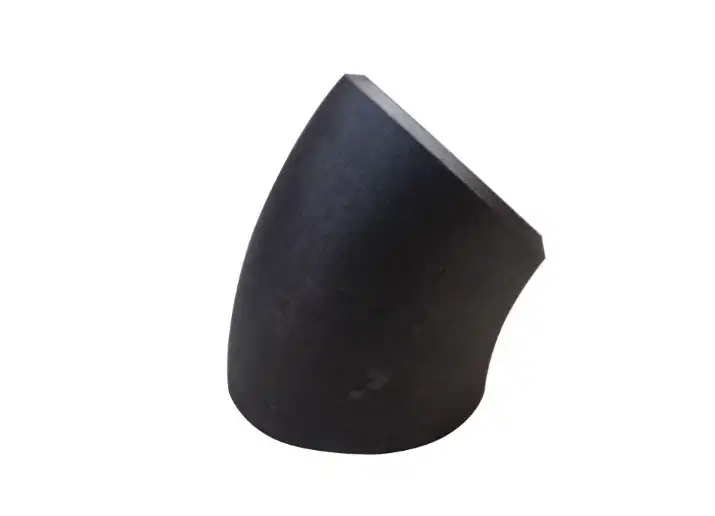
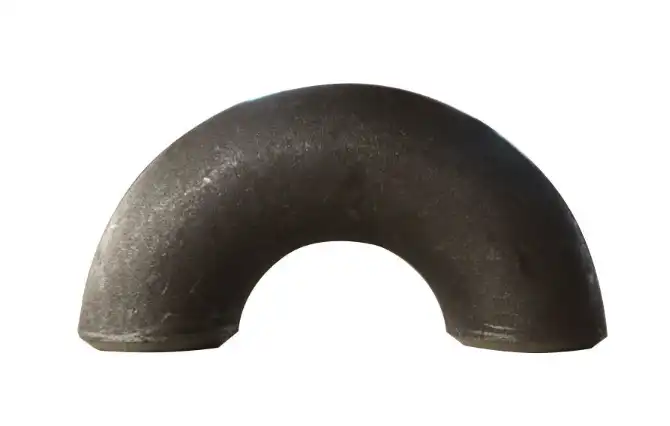
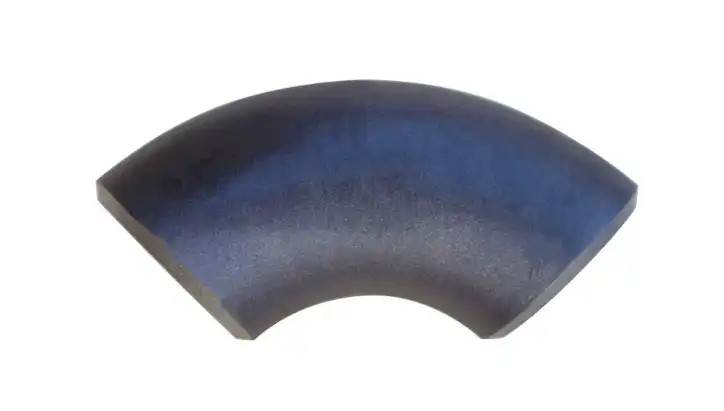
Carbon steel elbows are divided into different groups based on how they are built and their size. Butt-welding elbows join two pieces of pipe together by welding the ends of the joints together, while socket elbows have a socket shape for insertion connections. It is possible to make either seamless elbows, which are made by hot or cold working solid pipe stock, or welded elbows, which are made by joining steel plates along their length.
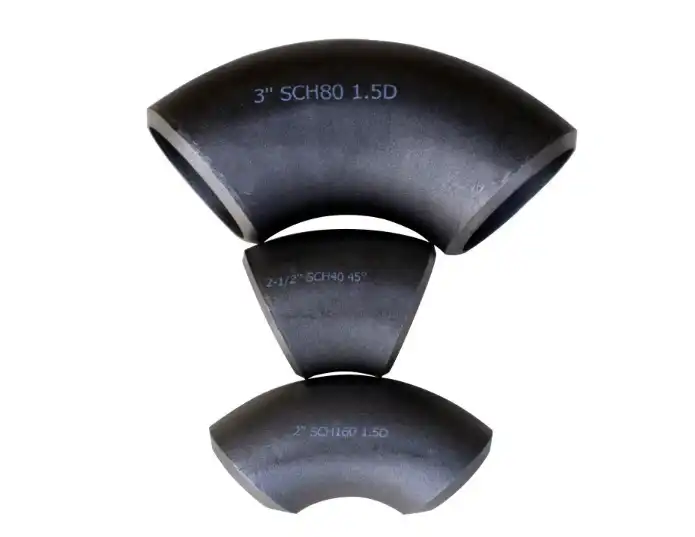
Long radius elbows have a midline radius that is 1.5 times the standard pipe diameter, and short radius elbows have a centerline radius that is the same as the pipe diameter. Long radius designs cause less turbulence and friction loss, so they can be used in chemical and fuel systems that need continuous flow. Short-radius versions can be used in setups with limited room where direction changes need to be made quickly.
Material standards control the chemical make-up, mechanical qualities, and industrial tolerances. ASTM standards, such as A234 WPB, specify the requirements for carbon steel parts that are used in both low and high temperatures. API standards cover uses that are specific to the oil and gas businesses, while ISO standards provide benchmarks that people use all over the world. Knowing these specs helps buying teams match a product's features with a system's needs. This makes sure that the product works with the system's current infrastructure and meets all the rules in all the markets it's sold in.
Comparing Carbon Steel Elbows with Alternative Materials
Material Performance and Economic Analysis
When compared to stainless steel and metal options, cost-effective carbon steel elbows have clear benefits in a wide range of industrial settings. While stainless steel is better at resisting rust in harsh settings, carbon steel is cheaper and works well for many water, gas, and oil systems. The difference in lifetime costs is especially important for big projects that need hundreds or thousands of fittings. This situation is because material savings have a direct effect on the project's ability to make money and stay in business.
According to standard working conditions, carbon steel's mechanical qualities make it work well. Carbon steel elbows can handle mild temperatures and pressures found in most industrial pipe systems. They have a tensile strength of 60,000 to 75,000 PSI and are easy to shape. Because they can handle heat up to about 450°C, they can be used in boilers, power plants, and thermal processing systems. Some physical properties, like the ability to be machined or welded, make fitting easier and faster, which saves money on work and time.
Manufacturing Considerations and Real-World Performance
The methods used to make something greatly affect both the quality of the result and its cost. Seamless carbon steel elbows, which can be made by hot pressing or cold forming, don't have lengthwise joints that could become weak under pressure or temperature changes. These fittings work great in high-pressure situations where they don't harm the structure's stability. Welded elbows, which are made by shaping and joining steel plates, are cheaper for lower-pressure systems and bigger diameter uses where smooth production is technically difficult or not cost-effective.
A global petrochemical business recently reviewed the specifications for its pipe parts for new buildings being built in Southeast Asia. At first, the standards called for a lot of stainless steel fittings to be used in process pipe systems. After talking to engineering teams and looking at the service conditions, the procurement department found places where carbon steel elbows could be used instead in many situations where rust was not a problem and the temperature needs were within the range of what carbon steel could handle. The change in materials led to a 35% drop in the cost of fittings while still meeting all safety and code requirements for pressure vessels. Field performance tracking over the coming years of operation showed that carbon steel parts were just as reliable as their stainless steel peers in these specific uses. This proved that the cost-effective choice was the right one without compromising operational integrity.
How to Identify and Select Cost-Effective Carbon Steel Elbows?
Essential Evaluation Criteria for Quality Assurance
To choose cheap, cost-effective carbon steel elbows without sacrificing quality, you need to carefully consider a lot of different factors. Material approvals are written proof that goods meet certain requirements. For each output lot, manufacturers should send mill test results that prove the chemical make-up, mechanical properties, and heat treatment methods. ISO 9001 certification shows that providers have quality management systems with written methods, regular checks, and ways to keep improving. Special permits for making equipment make sure that makers meet safety and quality standards set by the government. This process is especially important in places like China, where regulations guide the production of pressure vessel parts.
Professional providers can tell the difference between marginal workers and those who can do physical inspections. Modern detection tools can perform ultrasonic flaw detection, radiographic examination, and hydraulic pressure testing. These skills ensure that goods leaving the plant meet the requirements and work well for as long as they are used. As part of the process of qualifying a provider, buyers should ask about testing methods and ask for written records of inspection procedures.
Sourcing Strategies and Supply Chain Optimization
Finding makers instead of just depending on middlemen is the first step to effective sourcing. When you work directly with a factory, you don't have to pay markups to a middleman. You can also ask technical questions directly and get unique solutions when standard goods don't perfectly meet your needs. Suppliers who can handle their own imports and exports make foreign business easier. This advantage is because they don't have to deal with the paperwork and communication problems that can happen when multiple people are in charge of logistics and papers.
Strategies for buying in bulk can save you a lot of money. Longer production batches with uniform specs help manufacturers save money on production, and these economies of scale are usually reflected in the volume savings they give. Projects that need many materials should look into partnership agreements that keep prices stable over multiple shipping stages. This method is good for everyone: buyers get good prices and a steady supply, and manufacturers get better insight into their production plans, which makes the best use of their capacity.
Geographic factors affect overall landed costs in more ways than just the price of the goods. Being close to important ports lowers the cost of shipping goods within the country, and well-established export infrastructure makes sure that customs processing and paperwork go smoothly. When manufacturers are in well-known industrial areas, they can often take advantage of specialized supply lines, pools of skilled workers, and service providers that help keep costs low. As an example of this type of industry concentration, the Mengcun Hui Autonomous County in Hebei Province, China, which is known as the "China Fitting Capital," is home to many pipe fitting makers with decades of experience and full support facilities.
Common Procurement Pitfalls to Avoid
Several common mistakes make buying less effective. If you only look at price and don't check the specifications, you might get goods that don't meet the required material standards, pressure ratings, or limits for size. These differences make it difficult to install, cost a lot to return and replace, and could put system safety at risk. You can avoid these kinds of problems by using detailed specification sheets that clearly show the sizes, grades, and testing needs for each material.
Another big risk is not doing enough research on potential suppliers. When you get quotes from suppliers who don't have the right licenses, quality control systems, or production capabilities, they may seem like a good deal at first, but eventually they offer substandard products, inconsistent quality, or unreliable delivery performance. These things don't happen when there are thorough screening processes that check certifications, inspect production sites, check customer references, and check for financial security. The small extra work that goes into qualifying suppliers pays off in the form of reliable long-term relationships that help meet business goals and project deadlines.
Procurement Best Practices for B2B Buyers
Structured Purchasing Workflows
Efficient buying uses organized steps, from figuring out what to buy to accepting the final delivery. The first step in the process is creating a thorough blueprint that lists the exact dimensions, material grades, pressure classes, end connections, and standards that apply. Clear specifications get rid of confusion and let potential providers give accurate quotes. Request for quote papers should include not only technical details but also delivery dates, payment terms, and standards for quality paperwork, as well as the amount of work that needs to be done.
When you evaluate a supplier, you consider other factors in addition to comparing prices. Verification of certifications shows that makers have the right government licenses and quality system approvals. A production capacity review makes sure that suppliers can meet the amount needed and meet the deadlines without using too many resources, which could hurt the quality. References from current customers give you an idea of how well the cost-effective carbon steel elbow works in real life in terms of quality, delivery trustworthiness, technical help responsiveness, and issue settlement effectiveness. With these thorough reviews, you can find sellers who can work with you for a long time instead of just for one transaction.
Negating the minimum order number strikes a mix between managing supplies and taking advantage of volume discount chances. Suppliers usually have tiered price systems, which mean that the cost per unit goes down as the order size goes up. When deciding how much to buy, buyers should think about all the costs, such as the costs of warehousing, keeping goods, and using cash. Some makers are willing to take smaller orders at first when they are getting to know a new customer. They do this by offering discounts on larger orders made later, as the relationship grows and trust grows between both parties.
Logistics Management and Post-Purchase Support
To make a delivery schedule, production schedules, shipping plans, and project installation schedules must all work together. Suppliers with a lot of experience give accurate lead times based on how full their capacity is at the moment and know how important it is to keep their promises. When choosing a method of transportation—ocean freight for large amounts or air freight for urgent needs—cost and time needs must be balanced. Clear Incoterms meanings set limits on who is responsible for what when it comes to transportation, risk sharing, and how costs are split between buyers and sellers.
Warranty terms and help after the sale show that the seller trusts the quality of the product. Full warranties cover both flaws in the materials and the way they were made, and they make it clear how to file claims and get them resolved. Having technical support available helps buyers with questions about installation, problems with applications, and fixing problems. When it comes to suppliers who care about their customers' success, after-sales service is seen as an opportunity to build relationships rather than a duty. They offer quick help that builds partnerships and gets return business by showing they can be trusted.
Future Trends and Innovations in Carbon Steel Elbows
Technological Advancements in Manufacturing
Manufacturing advances that improve both quality and cost-effectiveness keep the cost-effective carbon steel elbow business growing. Using computer-monitored forming processes, precise heating control, and automatic measurement verification, advanced seamless production methods make the product more consistent while lowering the number of defects. Because makers have invested in new technology, they can get tighter tolerances and more consistent mechanical qualities across production runs. Better welding methods, like automatic orbital welding systems and new filler materials, make joints in welded designs stronger and more reliable. This means that welded elbows can be used in more situations than seamless ones.
With the help of computer-aided design and finite element analysis tools, makers can make elbow shapes work best for certain uses. Modeling how stress is distributed under different pressure and temperature conditions lets you find possible weak spots before production starts. This lets you make design changes that improve performance gaps. Because of these features, custom engineering solutions can be made for specific uses where normal configurations don't perfectly meet working needs.
Environmental Considerations and Sustainability
Concerns about sustainability are becoming more important in B2B purchasing decisions as companies try to meet environmental goals along with their business and financial ones. Carbon steel is naturally more environmentally friendly because it can be recovered. Steel is one of the most recyclable products in the world, and the recycling process uses a lot less energy than making steel from iron ore. This circular process has less of an effect on the environment and helps companies meet their green goals and environmental regulations.
When manufacturers use environmental management systems and cleaner ways to make things, their sustainability ratings get even better. Emission control systems, trash reduction programs, and energy-efficient production tools all show that a company cares about the environment, which is something that customers value. More and more, procurement experts are asking suppliers about their environmental practices and using sustainability factors along with quality, cost, and dependability as criteria for choosing suppliers.
Market Dynamics and Strategic Planning
Availability and prices will continue to be affected by changes in the supply chain after 2024. Prices change all the time because of changes in global steel production capacity and demand patterns in the building, automobile, and industrial sectors. Procurement teams have to keep an eye on these changes and plan for them. Geopolitical factors that affect trade relationships, tax structures, and shipping processes add more variables that need to be planned for strategically, and relationships need to be diversified to ensure supply continuity.
New uses in infrastructure for green energy, the spread of water treatment systems, and natural gas transport networks create growth possibilities that affect how the market develops. When manufacturers engage in increasing their production capacity and quality, they put themselves in a good situation as these industries grow. Businesses can find providers that can grow with them and adjust production levels to meet changing needs without lowering the quality standards or cost structures that made them want to work together in the first place by keeping an eye on these trends.
Conclusion
A buyer can reach their goal of getting affordable cost-effective carbon steel elbows without sacrificing quality if they use structured evaluation criteria, build relationships with capable makers, and follow structured buying processes. Knowing how to classify products, what the standards are for materials, and how to make them lets you make better specifications. A thorough review of suppliers finds partners with quality systems that are recognized, advanced production skills, and a dedication to customer success. To get the most value, use strategic buying methods like factory-direct relationships, bulk ordering optimization, and lifecycle cost analysis. As industry markets change and concerns about ecology become more important, carbon steel elbows will continue to provide dependable, low-cost options that can be recycled and have been tested to work well in tough situations.
FAQ
How can I verify the quality of carbon steel elbows before purchasing?
The first step in checking for quality is to ask for test results on the materials that show that their chemical make-up and mechanical features meet certain standards. Suppliers should show proof that they are ISO 9001 certified and have the right production licenses. A strong dedication to quality can be seen in the physical inspection tools that include ultrasonic testing, radiographic examination, and measurement proof equipment. Customer recommendations from related industries can help you figure out how well a supplier will do in the real world and how reliable they are for sourcing your cost-effective carbon steel elbow needs.
What specifications should I prioritize when selecting elbows for high-pressure systems?
For high-pressure uses, you need smooth construction to get rid of possible weak spots in the welds, the right wall thickness based on the pressure class estimates, and material grades that are strong enough to stretch and bend. ASTM A234 WPB is a standard for carbon steel that is used in mild to high-temperature situations. It is important for engineers to make sure that the fittings they choose meet or go beyond the system's design pressures, leaving enough safety gaps for both static pressure and possible surge situations.
Does bulk purchasing genuinely reduce costs beyond unit price discounts?
In addition to lowering prices directly, buying in bulk has other cost benefits as well. When you combine shipping for bigger sales, the cost of freight per unit goes down. Manufacturers can optimize production schedules and material purchases when specs are the same across large orders. Long-term relationships with volume commitments can often unlock extra services, such as dedicated technical support, priority production scheduling, and flexible delivery arrangements that lower the cost of keeping inventory by allowing just-in-time deliveries that are in sync with project progress schedules.
Partner with Oudi for Reliable Carbon Steel Elbow Solutions
As a company that has been in business for more than 25 years, Cangzhou Oudi Pipe Manufacture Co., Ltd. knows how to make high-quality, low-cost, cost-effective carbon steel elbow fittings for the oil, chemical, natural gas, and water conservation industries. Our Special Equipment Manufacturing License and ISO 9001-certified quality management system make sure that all of our products meet strict foreign standards like ANSI, JIS, DIN, and BS. We have the complete solutions that B2B procurement teams need. Our yearly production capacity of 16,000 tons, state-of-the-art detection equipment, and full product categories that include both seamless and welded setups make this possible.
We've worked with over 300 customers in 40 countries across Europe, the Americas, Africa, Southeast Asia, and the Middle East as a reliable carbon steel elbow provider that can handle its own import and export. Because we work directly with the factories, we don't have to pay extra for markups. We also get quick technical help from developing specifications to offering service after the sale. Our team is ready to talk about your needs and give you custom quotes, whether your project calls for large amounts at volume discounts or unique configurations that meet the needs of a particular application. Get in touch with us right away at oudi-04@oudiguandao.com to find out how Oudi's approved quality, reasonable pricing, and reliable delivery can help you turn buying problems into supply chain benefits that support your project and routine success.
References
1. American Society of Mechanical Engineers. (2021). ASME B16.9: Factory-Made Wrought Buttwelding Fittings. New York: ASME International.
2. Davis, J.R. (2006). Corrosion of Carbon Steels. In Corrosion: Understanding the Basics (pp. 277-320). Materials Park, OH: ASM International.
3. Liu, H. & Zhang, Y. (2019). Manufacturing Technology and Quality Control of Seamless Steel Pipe Fittings. Beijing: Chemical Industry Press.
4. Mohitpour, M., Golshan, H., & Murray, A. (2007). Pipeline Design and Construction: A Practical Approach (3rd ed.). New York: ASME Press.
5. Nayyar, M.L. (2019). Piping Handbook (8th ed.). New York: McGraw-Hill Education.
6. Smith, P.R. & Zappe, R.W. (2004). Valve Selection Handbook: Engineering Fundamentals for Selecting the Right Valve Design (5th ed.). Oxford: Gulf Professional Publishing.

Need help finding the right solution with our experts. Please contact us.

SINCE 1998 Your Reliable Pipeline Manufacturer



