High Temperature Pipe Tee Top Manufacturers & Factory Guide
Choosing the right High Temperature Pipe Tee maker is very important when you need to get industrial pipe parts for places with very high temperatures. When put under a lot of pressure, these special T-shaped fittings are made to stay structurally sound at temperatures ranging from 400°C to over 1100°C. Standard fittings fail horribly in high-heat situations, but good high-temperature tees use advanced metallurgy and precise manufacturing to stop creep deformation, thermal fatigue, and oxidation, all of which happen to standard carbon steel parts in tough industrial settings.
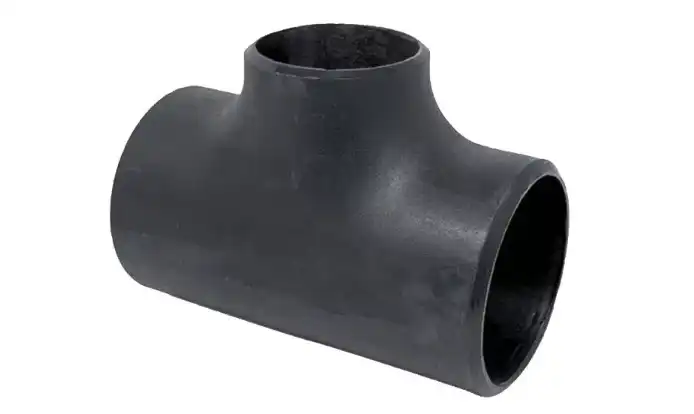
Understanding High Temperature Pipe Tees: Specifications and Applications
What Makes High Temperature Pipe Tees Different?
There is more to a High Temperature Pipe Tee than just a higher price tag. The main difference is in the metals it is made of and how precisely it was engineered. These special fits fix important problems that regular parts can't, like lasting deformation from long-term temperature stress (called "creep"), structural weakness from repeated cycles of expansion and contraction, and fast surface oxidation that lowers wall thickness. These High Temperature Pipe Tees keep their mechanical properties for a long time, while regular steel would lose its strength in just a few hours. This is possible by carefully choosing the materials and using manufacturing methods like forging or precision casting.
Critical Material Specifications
The highest temperature that a High Temperature Pipe Tee can handle depends on what materials it is made of. Chrome-molybdenum metals like ASTM A234 WP91 and WP22 have great creep-rupture strength up to 600°C, which makes them perfect for use with supercritical steam. High-quality stainless steels, such as 310S and 347H, are better at resisting rust in corrosive environments. Nickel-based alloys, like Inconel 625, work better than any other material in industrial settings where volatile chemicals and high temperatures exist together. Each type of material has different temperature limits, pressure rates, and chemical resistance profiles that need to match the needs of your business.
Aside from makeup, uniformity in dimensions is very important. Tolerances are set by ASME B16.9 standards, especially when it comes to wall thickness at the branch crossing, which is where stress concentration is highest. In high-pressure systems, a High Temperature Pipe Tee with thin walls at the crotch area is like a time bomb that is about to go off. The ratio of yield strength to weight must stay the same even when the fitting is red-hot. This ensures long-term safety without spending too much on materials.
Industrial Applications Across Critical Sectors
In supercritical and ultra-supercritical steam plants, these parts are very important for making electricity. High Temperature Pipe Tees carry steam from boilers to turbines at temperatures of up to 600°C and pressures of more than 250 bar. Any weakness in the fitting will directly lead to a catastrophic failure and a long period of downtime.
Conditions at petrochemical plants are just as tough. These High Temperature Pipe Tees work with volatile fuels at temperatures close to 850°C in ethylene cracking ovens and hydrocracking units. The parts need to be able to withstand carburisation, a process in which carbon gets into the metal and weakens it. Another factor is that aerospace manufacturing and big industrial furnaces need valves that can handle fast gas flow and high-velocity thermal shocks without getting microcracks or losing their seal integrity.
The use of these specialised parts is also needed for water conservation projects, construction, and making boilers, though usually at lower temperatures. In all of these uses, the one thing that is always needed is complete dependability in situations where regular parts would break in days or weeks.
Top Manufacturers & Factories of High Temperature Pipe Tees: A Market Overview
Global Manufacturing Landscape
The High Temperature Pipe Tee business is centred on a few main production hubs. Hebei Province in China, especially the Mengcun area in Cangzhou, has become the biggest producer of carbon steel and alloy steel parts. German and Italian companies are still very good at making specialised stainless steel and alloys from other metals. There are a few companies in the US that make nuclear-grade and aerospace-specification parts, but they are much more expensive.
Buying teams can find the best mix between cost, quality, and logistics by learning about the strengths of each area. Chinese makers have a lot of production capacity and low costs. European suppliers are great at working with specialised materials and customising small batches. American factories, on the other hand, put local supply chains and nuclear certification requirements first.
Oudi Pipe Manufacture: Certified Excellence Since 1998
Cangzhou Oudi Pipe Manufacture Co., Ltd. is in the middle of China's pipe fitting making centre and has been in business for over 25 years. We have 66,600 square meters of modern production space in the industrial zone of Mengcun Hui Autonomous County. This is a strategic location 120 kilometres from Tianjin Port that makes global logistics easy.
Our mindset of putting quality first and a wide range of certifications makes Oudi stand out in the industrial world. We have the People's Republic of China Special Equipment Manufacturing License and the ISO 9001:2000 quality management system approval. These show that we can make safety-critical parts for regulated businesses. We can make up to 16,000 tonnes of goods every year, so we can keep up with both big tasks and ongoing supply ties without any problems.
Full-spectrum quality control is at the heart of how we make things. From the time the raw materials come in until the finished product is shipped, every High Temperature Pipe Tee is carefully checked. We keep up-to-date detection tools that can positively identify materials using XRF and OES research, making sure that the chemistry of the alloys exactly fits the requirements. Radiographic and ultrasound methods of non-destructive testing can find problems inside a structure that can't be seen with the naked eye. Testing for hardness makes sure that the right amount of heat was applied. This is especially important for P91 and P92 grade parts that need an exact martensitic structure.
We make parts to the American standard (ANSI), the Japanese standard (JIS), the German standard (DIN), and the British standard (BS). The materials we use are carbon steel, stainless steel, and different alloys. With this wide range, buying teams can combine their suppliers, which makes the shipping and quality control processes easier. We sell bends, flanges, High Temperature Pipe Tees, reducers, and caps, as well as everything else you need to put together a full pipe system.
Essential Certifications and Standards
Manufacturers you can trust show their dedication by getting recognised certificates. It's important to note that ISO 9001 approval is not the highest level of quality control; it's just the starting point. Material approvals from ASTM make sure that metals meet certain chemical composition standards. API certificates are important, especially for oil and gas uses, where failure could have very bad results.
In China, pressure tanks and vital High Temperature Pipe Tee parts need to be approved by a Special Equipment Manufacturing License, which is a very strict process. This certification needs proof of technical skill, the right tools for production, and written quality control methods. This rule rules out makers who aren't up to par.
Production Processes That Define Quality
The way a High Temperature Pipe Tee is made has a direct effect on how reliable it is. Forged tees are better for high-pressure headers and important branch links because they have better grain structure and strength than cast or manufactured ones. During the forging process, internal gaps are filled and directed grain flow is created, which stops cracks from spreading.
With seamless production, there are no weld gaps, which are places where things could go wrong. Even though seamless High Temperature Pipe Tees are more expensive than stitched ones, the extra money is well spent in situations where a catastrophic failure would have terrible results.
Professional makers are different from commodity companies in how they handle heat. Post-Weld Heat Treatment (PWHT) is a must for Chrome-Moly High Temperature Pipe Tees because it gets rid of the leftover stresses that would otherwise cause stress corrosion cracks and brittle fracture. During heat treatment processes, our facilities keep exact temperature control, and time-temperature profiles are recorded so that things can be tracked.
How to Choose the Best High Temperature Pipe Tee Manufacturer: Decision Criteria
Material Grade Selection Strategy
Before you can choose between stainless steel, carbon steel, and alloys for your High Temperature Pipe Tees, you need to know what your working range is. Carbon steel that has Chrome-Molybdenum added to it has a good creep strength and isn't too expensive. It can be used in steam systems up to 600°C. Austenitic stainless steels, such as 310S and 347H, are better at resisting rust and staying strong at higher temperatures, but they cost more to make.
Nickel-based metals are the best and should only be used when the conditions are too harsh for stainless steel. Inconel 625 keeps its mechanical qualities even after being heated to 1000°C, and it doesn't oxidise or carburise in harsh conditions. The price difference can be 10–15 times that of carbon steel, so it's important to be very clear about what you want.
Compliance and Quality Verification
International standards are the language that is used to describe needs across countries. Dimensional limits and pressure-temperature values are set by ASME B16.9. The ASTM material standards list the chemical makeup ranges and the lowest levels of mechanical properties. Material test records (MTRs) that show the real chemistry and properties of each output batch should be required by procurement teams.
Traceability is another important part of proof. Can the company that makes the High Temperature Pipe Tee find the source material heat number for each one? Does their quality system keep track of the checks that were done and the results that were found? Manufacturers with strong tracking can quickly find and fix any quality problems, which lowers your risk.
Custom Solutions and OEM Capabilities
Standard catalogue items work well for many uses, but complicated projects often need custom sizes, unusual materials, or extra testing. Manufacturers that offer OEM services can tailor High Temperature Pipe Tee designs to your unique needs, which could lead to better performance at a lower cost.
We've learned that being flexible is just as important as being technically savvy from working with over 300 people in 40 countries. Standard catalogues don't always have the right wall sizes, metal grades, or unique dimensional arrangements that we can make. With this customisation feature, you don't have to choose between goods that are already on the market and the best High Temperature Pipe Tee specs.
Procurement Considerations: Pricing, Availability, and Logistics
Understanding Price Structures
Most of the time, 60 to 70% of the total cost of making High Temperature Pipe Tees is made up of the cost of the raw materials. Nickel, molybdenum, and chromium costs change with the global commodity markets. This means that even sellers who have been in business for a long time can offer different prices. Size is very important. Fittings with a bigger diameter need more material and special tools to handle, which makes the costs go up exponentially beyond normal sizes.
Cost optimisation is possible when volume is taken into account. Our yearly capacity of 16,000 tonnes lets us offer competitive prices on big orders while keeping prices low for smaller amounts. Buying more than one type of High Temperature Pipe Tee in one order can often get you better prices than buying them separately because it spreads out the costs of setup and makes handling easier.
Stock Availability and Lead Time Planning
Because they are made of special materials and go through more steps of processing, High Temperature Pipe Tees need longer production runs than normal parts. Just the heat process can add 5 to 7 days to the production plan. Getting materials for exotic metals can take 8 to 12 weeks if mills don't have enough in stock.
Reliable makers keep a strategic stock of popular sizes and materials, which lets pressing needs be met more quickly. Our inventory management system keeps track of how much of each High Temperature Pipe Tee different customers want. This lets us predict what they will need and keep the right amount of stock on hand. We've been able to help customers who had to deal with sudden shutdowns or project speedups by using this method.
International Logistics Considerations
Global sourcing adds more problems than just local purchase. Because we are close to Tianjin Port, we can send High Temperature Pipe Tee freight quickly to North America, Europe, and other markets. When compared to less-than-container-load exports, container consolidation lowers the cost of sending each unit.
Different countries have different standards for export documents. Our team has the power to handle its own imports and exports and has a lot of experience dealing with customs rules in many areas, such as the US, EU, Middle East, Southeast Asia, and Africa. We prepare the paperwork, which makes sure that customs clearance goes smoothly and that there aren't too many delays at the places of arrival.
Installation, Maintenance, and Performance Optimisation Tips
Best Practices During Installation
Before welding starts, the right way to put a High Temperature Pipe Tee together starts with making sure that the parts that were sent match the specs. The width of the wall, the outside diameter, and the branch angle are checked to make sure they match the plans. Material proof through PMI testing makes sure that the right alloy was sent, so carbon steel isn't installed when a high-temperature alloy was supposed to be.
The way you weld has to match the grade of the fitted material. To avoid cracking, chrome-molybdenum metals need to be heated up, and their interpass temperatures need to be carefully managed. Stainless steels need careful control of how much heat they get so that carbide doesn't form, which weakens their resistance to rust. Qualified welders who know how to work with High Temperature Pipe Tees are what make the difference between parts that last and ones that break too soon.
Maintenance Routines for Longevity
High-temperature pipe tee fittings last a lot longer when they are maintained regularly. During planned shutdowns, visual checks should be done to look for discolouration, which means the machine is too hot, cracks near the welds, or scaling, which means the machine is oxidising too much. Ultrasonic thickness readings show how much the wall is wearing away over time, so it can be replaced before it fails.
Scaling is a sneaky way that things break down at high temperatures. Oxide layers form on both the outside and the inside of the metal, eating away at the base metal and making the walls thinner. Chromium-rich metals create protective scales that stop rust from going any further, but even these layers need to be checked regularly. Scaling that is too thick means that the High Temperature Pipe Tee was used at temperatures above its recommended level or in settings that are more acidic than expected.
Performance Optimisation Strategies
The most important performance decision is the choice of material. If you specify materials that are too strong for the situations they will be used in, you will lose money, and if you specify High Temperature Pipe Tee materials that are too weak, they will fail early. Accurate working data, such as highest temperatures, pressure cycle patterns, and fluid chemistry, is needed to choose the best material.
How High Temperature Pipe Tees are used has a big effect on how long they last. When starting up, gradual temperature changes are better than fast heating because they reduce thermal shock. Thermal cycling tiredness can be reduced by keeping working temperatures stable. Corrosion rates can be slowed down by controlling the chemistry of fluids, especially the amounts of sulphur and salt in petroleum streams.
Conclusion
To choose the best High Temperature Pipe Tee maker, you need to think about their technical skills, quality control, shipping reliability, and cost. Because these parts are so specialised, they need to come from sources that have a track record of being good at metallurgy, accurate manufacturing, and strict quality control. Basic assurance comes from certifications like ISO 9001 and Special Equipment Manufacturing Licenses. However, material traceability and thorough testing procedures are what set exceptional makers apart from average ones. Logistics and wait times are affected by location, but modern supply lines make it possible to source from anywhere in the world when quality and dependability make it worth it.
FAQ
What temperature range can ASTM A234 WP91 fittings handle?
Up to 600°C (1112°F), High Temperature Pipe Tees made of WP91 alloy work reliably in constant service. After this point, the creep strength starts to drop quickly, which means that the material could deform under long-term pressure. For uses that need higher temperatures, grade 92 or other austenitic stainless steel options should be used.
Why is Post-Weld Heat Treatment mandatory for Chrome-Moly tees?
PWHT reduces the stresses that are left over from welding that could otherwise lead to stress corrosion cracks and brittle fracture. The heat treatment cycle fixes the metallurgical structure of the High Temperature Pipe Tee that was messed up by the welding temperature cycles. This makes sure that the part keeps its strength and flexibility as designed.
Can high-temperature alloy fittings work in cryogenic applications?
When temperatures drop below zero, materials designed for a High Temperature Pipe Tee often break easily. For cryogenic uses, you need certain low-temperature metals, such as austenitic stainless steels (304L, 316L), or special materials that have been tested and shown to be tough against contact at the working temperature.
How does scaling affect fitting performance?
Scaling is oxidation that makes High Temperature Pipe Tee walls thinner over time by changing base metal into oxide compounds. Chromium-rich metals create protected oxide layers that slow down this process, but too much scaling means that the system is being used outside of its design parameters or that the wrong materials were chosen for the corrosive climate.
Partner with Oudi for Reliable High Temperature Pipe Tee Supply
Oudi has been providing high-performance High Temperature Pipe Tees to the power generation, petroleum processing, and heavy industrial markets around the world since 1998. These fittings meet the strict requirements of these industries. We are a reliable manufacturer for projects of any size because we have an ISO 9001 certification, a Special Equipment Manufacturing License, and the ability to produce 16,000 tonnes of products every year. From making sure the raw materials are correct to doing the final check, we make sure that every fitting meets the performance standards that were set. Our engineering team has decades of experience choosing materials and making things to order, which helps customers get the best specs for their individual needs. Get in touch with us at oudi-04@oudiguandao.com to talk about your high-temperature pipe needs and find out how our technical knowledge and production skills can help your next project.
References
1. American Society of Mechanical Engineers. (2020). ASME B16.9: Factory-Made Wrought Buttwelding Fittings. New York: ASME Press.
2. Davis, J.R. (2006). Corrosion of Weldments. Materials Park, OH: ASM International.
3. Viswanathan, R. (1989). Damage Mechanisms and Life Assessment of High-Temperature Components. Metals Park, OH: ASM International.
4. Boyer, H.E. (1987). Atlas of Creep and Stress-Rupture Curves. Materials Park, OH: ASM International.
5. Swindeman, R.W., Santella, M.L., Maziasz, P.J., Roberts, B.W., & Coleman, K. (2004). Issues in Replacing Cr-Mo Steels and Stainless Steels with 9Cr-1Mo-V Steel. Oak Ridge: Oak Ridge National Laboratory Technical Report.
6. American Petroleum Institute. (2015). API Standard 5L: Specification for Line Pipe. Washington, DC: American Petroleum Institute.

Need help finding the right solution with our experts. Please contact us.

SINCE 1998 Your Reliable Pipeline Manufacturer



