Steel Concentric Pipe Reducer Best Factory Supply Options 2026
In 2026, you need to know both the technical details and the realities of the supply chain to find a trusted Steel Concentric Pipe Reducer provider. A Steel Concentric Pipe Reducer is a buttweld fitting that connects pipes of different sizes while keeping the same centerline. This makes sure that the fluid flows smoothly in situations with vertical or balanced flow. As global infrastructure projects speed up and industries demand higher standards, it becomes more important than ever to choose plant partners with proven certifications, full production capacity, and the ability to track materials for project success and operating safety.
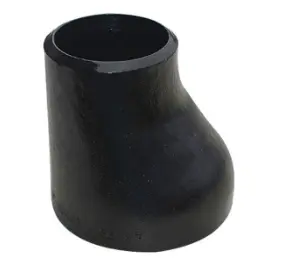
Understanding Steel Concentric Pipe Reducers: Key Concepts and Dimensions
What Defines a Concentric Reducer in Industrial Piping
A Steel Concentric Pipe Reducer stays aligned along a single centre line. This makes a cone shape that moves fluid from a bigger bore diameter to a smaller one. This style cuts down on noise and pressure loss, which makes it perfect for gravity-fed systems and vertical pump output lines. When it comes to horizontal runs, eccentric reducers move one side out of place to avoid air pockets. Centrifugal versions, on the other hand, focus on structural balance and even stress distribution. Since 1998, our factory in Cangzhou has specialised in making these parts. Parts for pipelines, chemical plants, and city water systems in North America and Europe come from this factory.
The cylindrical shape gives the hoop better strength distribution than sudden changes in width. When the speed of the fluid goes up while the cross-sectional area goes down, the slow drop stops erosion at the transition zone. This quality is very important for moving sludge and high-velocity steam, where localised wear can cause the part to break down too soon.
Material Standards and Mechanical Properties
The choice of material has a direct effect on service life and how well it works when it's under stress. For general use, carbon steel types like ASTM A234 WPB are very strong and easy to weld. They can handle temperatures up to 400°C and pressures over 1500 PSI. Some types of stainless steel, like ASTM A403 WP304 and WP316L, are better at resisting rust in settings that are acidic or chloride-rich, like those found in chemical processing and offshore platforms.
Alloy steels like ASTM A234 WP11 and WP22 can handle high temperatures in industrial and power generation processes. Our yearly production capacity of 16,000 tonnes covers these types of materials, and all of them can be tracked back to their sources thanks to Positive Material Identification testing done on every batch. The wall thickness is based on Schedule numbers (SCH 40, SCH 80, XS, and XXS), which are exactly matched to the standards of the connecting pipes to ensure seamless welding in the field and long-term stability.
Dimensional Specifications Aligned with International Standards
How well an installation works and how reliable a system is depend on how accurate the measurements are. Factory-made buttwelding fittings are governed by ASME B16.9, which lists limits for sizes from NPS 1/2 to NPS 48. To keep the reducer length (H dimension) and end bevels from being out of alignment during welding, which could lead to stress concentration places or weaken the joint, tight geometric requirements must be met.
Before a product is shipped, our quality control procedures check that the approved plans match the outer diameter, wall thickness at both the major and minor ends, and taper angle. We keep popular reducer combinations like 6" × 4", 10" × 6", and 24" × 18" in stock, and our production lines are flexible enough to meet the needs of EPC companies in charge of big infrastructure projects. Because we are flexible, we can serve over 300 customers in 40 countries with regular wait times and measurements.
Comparing Steel Concentric Pipe Reducers: Making the Right Choice for Your Project
Concentric Versus Eccentric Reducer Selection Criteria
Whether to use a concentric or an eccentric design relies on the flow patterns and the direction of the pipes. When there is no need to keep air inside, like in pump suction columns in water treatment plants or riser systems on offshore platforms, Steel Concentric Pipe Reducers work well in vertical installations. The uniform design keeps the central support aligned, which makes it easier to place hangers and figure out how much they will expand when heated or cooled.
Eccentric reducers are used in horizontal uses where keeping the top of the pipe at a certain level stops air pockets or ensures that all the water drains away. This shift stops vapour lock in crude oil transfer lines or condensate systems and makes repair shutdown easier. Our engineering team helps sourcing experts match the shape of the reducer to the needs of the operation, which lowers the risk of having to make expensive changes in the field.
Material Comparison: Stainless Steel Versus Carbon Steel
Longevity and upkeep times must be balanced with how much something costs. Carbon steel reducers save money at first and work well in moderately heated and non-corrosive places like compressed air systems or steam delivery networks where the pressure is not too high. Their ability to be machined and welded makes it easier to make things and fix things.
When seawater, acidic condensate, or chemical reactions risk the purity of carbon steel, stainless steel is needed. The chromium-nickel alloy matrix stops pitting and crevice rust, which makes it last longer in marine, food processing, and pharmaceutical production. Material costs go up by 200 to 300 per cent, but the investment is worth it for key process lines because it gets rid of the need for regular replacements and the risk of contamination. To help clients with their quality control programs, our material certification packages come with mill test results that list the chemical makeup and mechanical features of the material.
Pressure Ratings and Lightweight Steel Solutions
Ratings for pressure are directly related to the width of the wall and the grade of the material. ANSI Class 150 standard carbon steel reducers can handle pressures of up to 285 PSI at room temperature and are good for HVAC and low-pressure steam systems. Class 300 grades raise the maximum pressure to 740 PSI, which covers moderate-pressure uses in refineries and chemical processing plants.
For situations with a lot of pressure, like hydraulic fracturing fluid lines or supercritical boiler feedwater systems, the walls need to be Schedule XXS thick or made of special metal types that stay strong at high temperatures. Our hydrostatic testing methods make sure that every batch can handle 1.5 times the original pressure without breaking or leaking. Optimised wall schedules for lightweight choices lower the amount of work needed for installation and the load on support systems. This is important to think about for shipbuilding and modular plant construction, where weight limits have a direct effect on project costs.
Best Factory Supply Options for Steel Concentric Pipe Reducer in 2026
Oudi's Manufacturing Capabilities and Quality Certifications
Cangzhou Oudi Pipe Manufacture Co., Ltd. has a 66,600-square-meter building in Mengcun Hui Autonomous County. The building is 120 kilometres from Tianjin Port and has direct highway access, which makes exporting easier. We started our business in 1998 and have since built up state-of-the-art production lines that can shape, heat-treat, and finish Steel Concentric Pipe Reducer from NPS 1/2 to NPS 48 made of carbon steel, stainless steel, and alloy steel.
Our ISO 9001:2000 certification and People's Republic of China Special Equipment Manufacturing License show that we follow the rules for quality management set by the international community. A complete quality assurance system includes checking the raw materials, inspecting the dimensions while the product is being made, and performing final non-destructive testing. Ultrasonic testing finds flaws below the surface in the transition zone, which is where most of the stress is, and x-rays prove the stability of the weld on manufactured reducers. Charpy V-Notch impact tests prove that the material is tough at low temperatures, meeting ASTM A420 WPL6 standards down to -46°C.
Customisation Services for Specialised Project Requirements
Normal stock covers a common mix-and-match of sizes and types of materials, but special needs are often needed for big projects. Our engineering department works with customers to create custom reducer sizes, unusual metal mixes, or unique end preparations like flanged or threaded connections. As part of OEM services, distributors can get private labelling and packing that fits their needs.
A recent job for a European chemical complex needed 316Ti stainless steel reducers with longer tangent lengths to work with the way pipes had to be routed inside a modular process box. In eight weeks, our team delivered the whole order after making thorough factory drawings and inspecting the first item with the client's representative. Because of this ability to adapt to specific needs, long-term relationships have been formed with EPC contractors who are in charge of multi-year building projects.
Pricing Structures and Supply Chain Reliability
Clear pricing takes into account the cost of materials, the difficulty of production, and the number of orders. When you buy in bulk for a job that will be done more than once, you can get graduated savings that make it easier to plan your costs for big projects. Our yearly capacity of 16,000 tonnes makes sure that we always have enough products, even during times of high demand.
We keep a planned stockpile of raw materials to protect our clients from cost increases in the middle of a project caused by changes in the price of steel around the world. Lead times for normal specifications are usually between four and six weeks, but fast production is available for sudden shutdowns or important dates on the plan. Export paperwork services, which include business invoices, packing lists, and certificates of origin, make it easier to get goods through customs in North America, Europe, and Southeast Asia.
How to Install and Maintain Steel Concentric Pipe Reducers for Optimal Performance
Step-by-Step Installation Best Practices
The first step in a proper installation is to make sure that the reducer is positioned correctly and that the larger diameter connects upstream in the flow direction. Alignment tools make sure that the axis stays straight during the fit-up process. This stops the angle from changing, which would cause stress in one area when the system is pressed down. Before tack welding at four points around the edge, bevelled ends need to have the right gap spacing, which is usually 1/16 to 1/8 inch.
When welding, the process must follow qualified method standards that are right for the grade of material. To keep hydrogen from breaking, carbon steel reducers usually use E7018 electrodes that need to be heated above 50°F. Low-carbon filler metals and inert gas protection are needed in stainless steel uses to keep the metal's corrosion resistance in the heat-affected zone. For alloy steel parts that will be used at high temperatures, a post-weld heat treatment may be requested to get rid of any remaining strains.
After fitting, hydrostatic testing makes sure the joint is solid before process fluids are added. The pressure should rise to 1.5 times the highest possible working pressure and stay there for as long as the relevant rules say it should, like ASME B31.3 for process piping or B31.1 for power piping systems.
Routine Inspection and Corrosion Prevention
Inspection times for Steel Concentric Pipe Reducer depend on how bad the service is and how exposed the area is to the outdoors. Every six months for outdoor installations, the surface should be visually inspected to record its state. This includes looking for rust pits, mechanical damage, or coating wear and tear. Ultrasonic thickness gauging in the transition zone finds wall thickness loss due to erosion or rust before it goes below the minimum design standards.
Cathodic protection systems keep underground carbon steel pipe networks safe, and passivation processes for stainless steel parts bring back the protective oxide layer after they've been welded or cleaned mechanically. Insulation systems must keep out moisture, which speeds up rusting on the outside. This is a usual way for steam condensate lines working below dew point temperatures to fail.
Troubleshooting Common Performance Issues
Flow problems or sudden pressure drops could be signs of an internal blockage caused by weld spatter, scale buildup, or foreign material introduced during building. Inspection holes or temporarily removing the thread lets you check and clean visually. If there are persistent leaks at welded joints, it means that the metal hasn't fully fused or penetrated, which means that the joint needs to be cut out and welded again according to proper procedures.
Cavitation can be detected by strange noises or vibrations if the reducer causes too much turbulence because it was installed in the wrong place or wasn't the right size. Computer-based fluid dynamics research helps find problematic velocity profiles, which helps with deciding whether to make the fitting bigger or change the shape of the pipes upstream. Our technical support team helps clients figure out what went wrong and suggest ways to fix it so that the problem doesn't happen again.
Future Trends and Innovations in Steel Concentric Pipe Reducer Manufacturing for 2026 and Beyond
Advanced Alloy Development and Coating Technologies
New types of duplex stainless steel blend austenitic corrosion protection with ferritic strength. They work better in chloride environments and cost less than superaustenitic options. These materials make it possible to reduce weight without lowering pressure ratings. This is a huge benefit for underwater and subsea uses, where installation costs go up as component weight goes up.
Using thermal spray to apply ceramic-reinforced coats makes slurry transport systems more resistant to wear and tear, which extends their useful life in mining and material processing. Coatings that are safe for the environment get rid of hexavalent chromium and other harmful chemicals while keeping their ability to stick and not break when heated and cooled.
Smart Manufacturing and Quality Control Integration
The ideas behind Industry 4.0 change the way things are made by collecting and analysing data in real time. Automated dimensional inspection systems that use laser scanning technology compare the shape of a reduction to CAD models with micron-level accuracy. This gets rid of the need for human mistakes in measuring. Statistical process control programs find changes in trends before they cause products that don't meet specifications. This lowers the amount of scrap and raises the material output.
Through the use of QR codes, digital material tracking for Steel Concentric Pipe Reducer connects each part to the heat number of the raw material, the production factors, and the test results. Secure websites let clients access full documentation packages, which speeds up project quality reports and regulatory compliance checks. This openness builds trust and makes it easier for people to work together to solve problems in the field.
Strategic Procurement Approaches for 2026
Problems in the global supply chain have shown how important it is to use a variety of buying methods and get in touch with suppliers early on. Long-term framework deals with makers that offer technical support and inventory management services, shortening the time it takes to buy something and keeping costs from going up and down. Digital buying platforms let bidders compete while keeping quality standards high with lists of pre-qualified vendors.
Sustainability factors are becoming more important in choosing a provider, and lifecycle carbon footprint studies are being used along with standard cost and quality factors. As environmental rules get stricter across all industries, companies that invest in production methods that use less energy and materials with recycled content will be in a good situation. Our promise to always be better fits with how our clients' goals are changing, which helps both of us grow as the market changes.
Conclusion
To find the best Steel Concentric Pipe Reducer supplier for projects in 2026, you need to carefully look at their production skills, quality systems, and customer service. Technical standards must perfectly match the needs of the application, while material qualities must be balanced against budgets and delivery times. Oudi has been working with the oil, gas, chemical, and infrastructure industries for 26 years. This shows that we can provide approved goods that meet ASME, ASTM, and ISO standards while keeping prices low by using efficient production methods. Because we are strategically located near Tianjin Port and have a well-established export system, we can reliably send to markets in North America and Europe.
FAQ
How do I choose between concentric and eccentric reducers for my piping system?
The selection is mostly based on the flow patterns and the way the pipes are arranged. Steel Concentric Pipe Reducers work best in vertical lines or situations where keeping the axis straight is important for supporting the structure and controlling heat expansion. When avoiding air pockets or making sure full drainage is important, eccentric types work best for straight runs. Our engineering team looks at the layout of the pipes and the variables of the process to find the best design.
Does material selection significantly affect reducer service life?
Material choice has a direct effect on how well something resists rust, how well it works at high temperatures, and how strong it is. In non-corrosive settings, carbon steel works well and doesn't cost much. Stainless steel types, on the other hand, can handle high temperatures and chemicals. With alloy steel choices, you can use them for more specialised high-pressure and high-temperature tasks. Matching the qualities of the material to the conditions of use increases repair times and lowers the total cost of ownership.
Can I order custom-sized concentric reducers for specialised applications?
Our OEM services regularly meet the needs of customers with unique requirements. To meet the needs of a particular project, non-standard diameter pairings, longer tangent lengths, unusual metal compositions, and specialised end preparations can be made. Custom orders come with detailed engineering plans and material certifications to help clients make sure the quality meets legal standards and to meet their own needs.
Partner with Oudi for Reliable Steel Concentric Pipe Reducer Supply
Oudi offers complete solutions for purchasing managers looking for a reliable company that makes Steel Concentric Pipe Reducers and has experience exporting their products around the world. Our factory is ISO 9001-certified and makes parts out of carbon steel, stainless steel, and alloy steel that meet ASME B16.9 size standards and ASTM material requirements. We have low prices for large orders, fast production for projects that need to be done on time, and full paperwork packages that include mill test results and records of non-destructive testing. You can email our team at oudi-04@oudiguandao.com to get full product catalogues, technical specs, or quotes that are made just for your project. Trust a provider that has been in business since 1998 and has helped over 300 customers in 40 countries.
References
1. American Society of Mechanical Engineers, "ASME B16.9: Factory-Made Wrought Buttwelding Fittings," 2018 Edition, New York: ASME Press.
2. ASTM International, "ASTM A234/A234M: Standard Specification for Piping Fittings of Wrought Carbon Steel and Alloy Steel for Moderate and High Temperature Service," West Conshohocken: ASTM International, 2021.
3. Nayyar, Mohinder L., "Piping Handbook," 8th Edition, New York: McGraw-Hill Education, 2019.
4. Parisher, Roy A. and Rhea, Robert A., "Pipe Drafting and Design," 3rd Edition, Burlington: Gulf Professional Publishing, 2012.
5. Singh, Rajendra and Soler, Alfredo I., "Mechanical Design of Heat Exchangers and Pressure Vessel Components," Berlin: Springer-Verlag, 2019.
6. Ellenberger, J. Phillip, "Piping and Pipeline Calculations Manual: Construction, Design, Fabrication and Examination," Oxford: Butterworth-Heinemann, 2014.

Need help finding the right solution with our experts. Please contact us.

SINCE 1998 Your Reliable Pipeline Manufacturer



