How are piping elbows selected?
When choosing an industrial piping elbow, you need to carefully think about how it will be used, whether it is made of compatible materials, what its dimensions are, and whether it meets international standards. What to choose relies on things like the type of fluid, the temperature, the pressure grade, and how resistant it is to corrosion. Carbon steel pipe elbows and stainless steel versions are used in different places, like oil refineries and chemical plants. To get the best flow efficiency, safety, and long-term dependability in harsh industrial settings, it's important to match the elbow angles, radius types, and manufacturing methods to the needs of the system.
Introduction
Every part of industrial infrastructure is important because it is so complicated. When gases or fluids move in a different way through a pipe system, the industrial piping elbow steps in and quietly keeps things running while under a lot of mechanical stress. Whether you are in charge of buying things for an offshore oil platform, building something at a chemical processing plant, or making sure that shipments get to water treatment plants on time, knowing how to choose the right elbow can mean the difference between running smoothly and having to pay a lot for downtime.
Many projects have been held up because the procurement team chose elbows based only on price, only to find out months later that they didn't work with each other or failed early. The hard part is finding the right balance between technology requirements, budget, and strict safety rules in many different foreign markets. This guide shows you a methodical way to do things that our team at Oudi has improved over more than 20 years of working with companies around the world.
There is a lot at stake. If you don't choose the right elbow, you could end up with leaks, drops in pressure, inefficient systems, or even catastrophic breakdowns. But if you know what you're talking about, you can safely choose parts that meet ANSI, JIS, DIN, and BS standards, improve system performance, and lower upkeep costs. Let's look at how people who work in buying make smart choices that keep processes and budgets safe.
Understanding Industrial Piping Elbows: Types and Standards
The Role of Elbows in Industrial Systems
Piping elbows are very important in chemical plants, natural gas transport networks, oil facilities, and water conservation projects. These fittings change the directions of flow while keeping the pressure stable and reducing turbulence. In places that make electricity, elbows can handle high heat and harsh conditions. For shipbuilding, solutions need to be light, long-lasting, and resistant to saltwater damage. Every choice you make after that is based on what you know about your unique business.
Classification by Angle and Radius
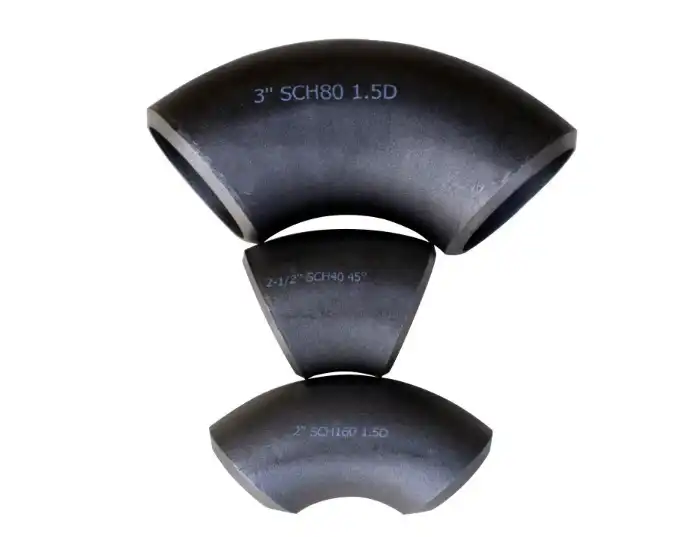
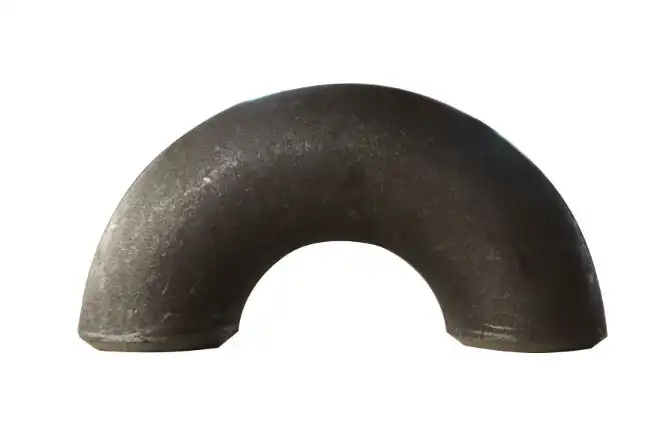
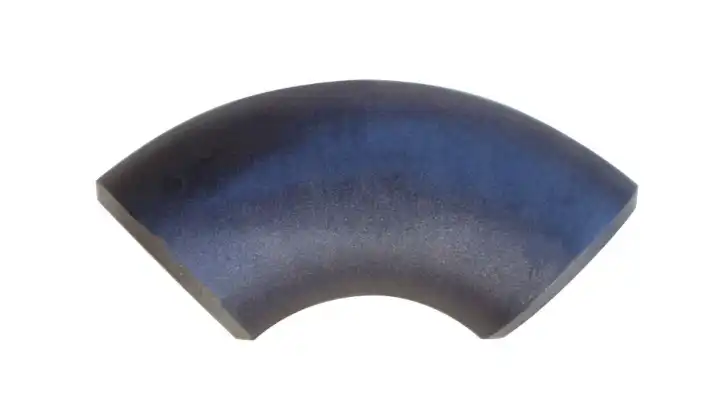
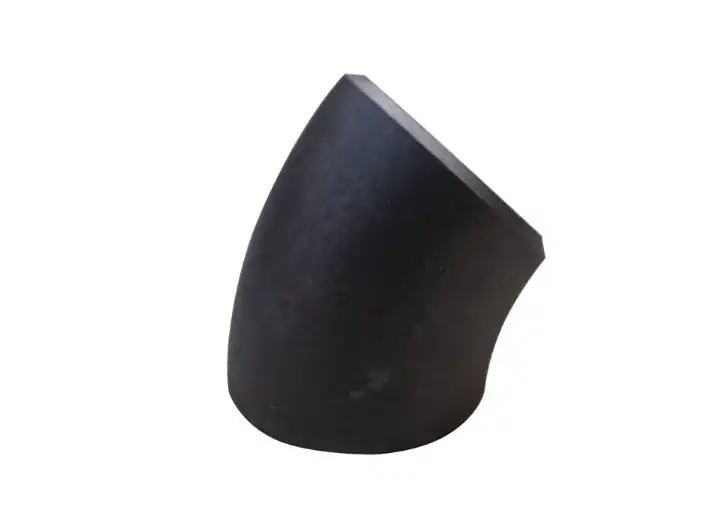
90-degree and 45-degree elbow positions are the two most common ones. In small areas, like boiler setups and tight pipe layouts, a 90-degree elbow makes quick changes in direction. The 45-degree version makes smoother changes in flow, which lowers pressure loss in places where hydraulic efficiency is important, like water treatment systems. Elbows are further broken down by radius into two types: long radius (LR) and short radius (SR). Long radius elbows, which have a centerline radius 1.5 times the standard pipe diameter, make the flow easier and reduce the amount of friction lost. When the radius of an elbow is 1.0 times its diameter, it can fit into smaller areas, but the pressure drop is higher. This is a trade-off that many building projects have to carefully consider.
Manufacturing Methods Matter
When seamless elbows are made from solid pipe stock, there are no bonded gaps. This makes them stronger and more reliable under high pressure. Our factory makes seamless carbon steel pipe elbows that are used in the oil and gas industries for important tasks. Welded elbows connect formed pieces with longitudinal or spiral welds, which are cheap options for uses with lower pressure. Forged elbows are shaped mechanically under a lot of stress, which creates thick molecular structures that work well in high-stress situations. Each way of making something has its own performance traits that match up with specific operating needs.
International Standards and Certifications
Well-known standards must be followed for global tasks. In North American markets, ASME B16.9 sets the rules for factory-made wrought steel butt-welding parts. It says what the measurements, tolerances, and marking standards are. Forged and manufactured parts are covered by MSS SP-43. The European market is covered by DIN 2605, and the Japanese market is covered by JIS B2311. Class 150, 300, 600, and higher pressure grades show the highest pressures that can be used at certain levels. Material certifications check the chemical makeup and mechanical qualities of elbows to make sure they work safely under certain circumstances. Teams in charge of buying things should check that suppliers have ISO 9001 quality management systems and licenses to make certain kinds of equipment. These qualifications show that the suppliers follow regular production standards and can be tracked.
Key Factors to Consider When Selecting Piping Elbows
Material Selection Based on Operating Conditions
Carbon steel elbows are most often used with fluids that don't corrode at normal temperatures. When rust isn't a big deal, these fittings are perfect for water distribution, steam systems, and transporting hydrocarbons because they are strong, easy to connect, and cheap. 304 and 316 types of stainless steel are especially resistant to oxidation and chemical attack, making them useful in food processing, pharmaceutical production, and marine environments. Alloy steel elbows with chromium, molybdenum, or nickel can handle the high temperatures and corrosive chemicals that are common in power plants and petroleum factories. Choosing the right material has a direct effect on how long something lasts and how much it costs to own. To avoid overspecification and early failure, make sure that the alloy qualities are right for the fluid chemistry, temperature range, and pressure conditions.
Dimensional Requirements and Compatibility
Correct measurements make sure that elbows fit perfectly with the pipes that are already in place. Pipe sizes (NPS), wall thicknesses (schedule rate), and end fittings (butt weld, socket weld, threaded) must all line up with the parts next to them. Long radius elbows take up more room when they are installed, but they stop erosion and pressure loss, which is especially helpful when moving slurry or high-speed gases. When equipment rooms are busy or on ships, where every inch counts, short-radius options save space. Pressure capacity is related to wall thickness, which is shown by schedule numbers (Schedule 40, 80, 160). Stronger walls can handle more pressure, but they cost more and are heavier. By checking for dimensional compatibility before manufacturing starts, we've helped buying teams avoid having to do expensive repairs.
Design Considerations for Longevity
In some situations, like when a system is vibrating or going through thermal cycles, it needs strengthened joints at stress concentration points. Protective coats, like galvanizing, epoxy filling, or special paints, make things last longer in environments that are acidic or where they will be touching dirt. Internal coatings lower the friction in the flow of fluid, which increases flow efficiency and lowers the amount of energy the pump needs to run. Inspection rules are different for each business and area. Some industries require non-destructive tests, like X-rays or ultrasounds, to find problems inside that can't be seen with the naked eye. Setting clear acceptance criteria with your seller before production makes sure that the parts they send you meet your quality standards and any legal requirements.
Comparing Options for Optimal Performance and Cost Efficiency
Forged Versus Welded Elbows
The way the product is made has a big effect on its function and the cost of the job. Because the grains are aligned during the forging process, forged elbows have better mechanical properties. This makes them suitable for high-pressure steam systems, important petrochemical uses, and offshore platforms where failure would have serious effects. These parts cost a lot, but they are worth it because they are more reliable. Welded elbows work well in standard-pressure situations where cost is more important than strength. Because they are easier to make, welded versions can fit bigger diameters and special curves that would be too expensive to forge. Lead times are very different. Welded elbows usually ship within weeks, but forged components may take months, based on the size and material requirements. Knowing about these trade-offs helps buying teams make good use of budgets at different stages of a project.
Angle Selection and Flow Dynamics
Choosing between 45-degree and 90-degree elbows changes how the system works hydraulically and how hard it is to install. A 90-degree elbow makes more noise and pressure drop but takes up less horizontal space. This is why it is essential in small spaces like equipment skids or building mechanical rooms. When two 45-degree elbows are put next to each other, they can make the same direction change with less pressure loss and erosion, which is good for systems that are pumping abrasive slurries or are close to full capacity. Engineers can use flow modeling tools to figure out how big these differences are, but real-world knowledge is also important. We've seen that many chemical processing plants use 45-degree layouts for corrosive services. This is because softer flow changes slow down localized erosion, which speeds up failure. Which angle gives you the best results depends on your individual application.
Cost Considerations and Supplier Relationships
Unit prices don't always tell the whole story. It's cheaper per piece to buy in bulk, but it takes up more cash and warehouse space. Procurement workers can correctly predict budgets for multi-phase projects when they work with certified suppliers whose pricing systems are clear. Different manufacturers' prices are okay because they use different quality control methods, from checking the raw materials to trying the finished product. A cheap elbow that breaks too soon costs a lot more than a high-quality part that works well for decades. We have strict quality control from the time we receive the materials until they are shipped. To make sure every part meets the requirements, we do full checks and non-destructive tests. When project deadlines get pushed or requirements change, responsive service is important. When suppliers offer tech support, open customization options, and reliable logistics networks, they stop being just sellers and become strategic partners.
Practical Steps for Selecting the Right Industrial Piping Elbow
Define Your Operating Parameters
Start by writing down the exact working conditions. What kind of gas or liquid will move through the part? Material temperature values and thermal expansion factors are based on the highest and lowest temperatures that can be reached. The minimum wall thickness and schedule are set by the design pressure and surge pressure conditions. Corrosion-resistant alloys are chosen based on fluid chemistry, such as pH levels, chloride content, and hydrogen sulfide. Compliance standards are different depending on the area and type of business, so check the relevant rules early on. Offshore sites and mainland reactors have different rules. Food preparation plants and water cleaning plants are regulated in different ways. By making a detailed design document, you can avoid misunderstandings and make sure that the parts you are offered actually work with your project.
Collaborate Across Departments
A good elbow pick needs feedback from a lot of different people. The engineering teams know the physical limits, forces, and flow rates that affect the design of a system. Professionals in procurement look at what suppliers can do, how much they charge, and when they can deliver. Quality assurance staff check certificates, inspection standards, and testing procedures. Maintenance sections can tell you about a company's past of dependability and serviceability issues. When these groups look over the specs together before purchase orders are sent out, projects go more smoothly. A checklist helps make sure that all the needs are met, such as the type of material, how it is made, the end connection type, the pressure rating, the size standards, the finishing requirements, the testing needs, and the marking information. This way of working together cuts down on revisions and avoids expensive changes in the field.
Evaluate Supplier Credentials Thoroughly
Qualifying your suppliers shields your project from problems with quality and late deliveries. Make sure that the makers have the most up-to-date ISO 9001 certification and any special equipment licenses that are needed in your area. Ask for proof of the quality control systems, inspection methods, and ways to track down materials. Before agreeing to big orders, samples and dimensional inspection reports are used to make sure that the production skills are sound. CAD drawings show that elbows will work with the current designs. Oudi has had over 300 customers in 40 countries since 1998. They have built a good name by providing consistent quality and expert help. Our 66,600-square-meter factory near Tianjin Port uses cutting-edge production tools and strict quality control systems to make 16,000 tons of approved carbon steel, stainless steel, and alloy steel parts that meet ANSI, JIS, DIN, and BS standards every year. To choose the correct industrial piping elbow in real life, you must follow these verification steps.
Installation and Inspection Best Practices to Maximize Elbow Lifespan
Proper Handling and Storage
Protecting elbows before installation keeps parts from breaking and saves you money on repairs. Keep parts in dry, closed places that are away from groundwater and airborne pollutants. Stainless steel and alloy steel types are especially likely to get surface contamination that can start rusting once they are in use. Plastic end caps keep the inside of the tube clean and protect the threaded connections while it's being shipped. Use the right lifting gear when working with large-diameter elbows. Dropping or pulling parts can damage the surface and cause cracks that can't be seen at first glance. We ship goods with protections that are right for the way of travel and the climate where they are going, but site conditions are different. Keeping storage areas clean and organized shows a professional dedication to quality that goes beyond the completion of a job.
Installation Techniques That Prevent Damage
Service life is directly affected by how well the installation was done. To butt-weld, experienced welders must follow approved methods that are specific to the type of material and the thickness of the wall. The preheat and post-weld heat treatment needs depend on the thickness and type of material being used. While carbon steel may not need much preparation, chrome-moly alloys need careful heat control to keep the microstructures from becoming brittle. For socket-welded and threaded connections, the torque specs must be followed exactly. If you don't tighten them enough, leaks can happen, and if you tighten them too much, the fittings will crack. Alignment during fit-up lowers joint loads and stops fatigue breakdowns before they happen. Support spacing around elbows accounts for stress buildup at direction changes, especially in systems that are expanding or vibrating due to heat. These details separate successful installations from those plagued by maintenance issues.
Inspection Protocols and Failure Prevention
Wear, corrosion, and distortion can be found before they fail through routine checking. Surface rust, coating degradation, and clear mechanical damage can all be seen with the naked eye. Ultrasonic thickness testing checks how much wall loss is caused by erosion inside or rust outside. Cracks in the surface can be seen with magnetic particle or dye penetrant tests. Radiography or advanced ultrasonic methods can find problems inside vital services. How often you should inspect something depends on how bad the service is. Corrosive settings and high-cycle fatigue uses need to be inspected more often than normal water service. Some common ways things break are erosion from fast or rough flows, stress corrosion cracking in alloy-environment pairs that are prone to it, fatigue from temperature or pressure cycles, and external rust under insulation. Root reasons are dealt with in preventative strategies, such as better coating upkeep, faster flow rates, or better cathodic protection systems. Based on the results of the check and the estimated remaining service life, corrective steps can range from fixing the coating to replacing the whole part.
Conclusion
To choose the right industrial piping elbow, you need to follow a methodical process that balances technical needs, cost considerations, and working limitations. Material qualities, dimensional requirements, manufacturing methods, and compliance standards all affect the success of a project right away and the stability of a system in the long term in complex ways. When procurement workers take the time to learn about these connections, they can make choices that improve performance while keeping costs low.
Environmental laws are getting stricter, materials technology is getting better, and performance standards are going up. This is all changing the global industrial scene. Protect your investment by working with providers who have been in business for a long time, understand these changes, and keep high-quality standards. The principles described here can be used to make confident decisions that meet working goals and budget needs, whether you are choosing parts for a new petrochemical complex or keeping an old water treatment plant in good shape.
FAQ
What determines whether I should use a 90-degree or 45-degree elbow?
The choice relies on how much room there is and how the water flows. A 90-degree elbow can fit in smaller areas, but it makes more commotion and higher pressure drops. When working close to capacity or with abrasive fluids, 45-degree layouts often help because they lower corrosion and pressure loss. If there is enough room, two 45-degree elbows can be used instead of one 90-degree elbow to improve flow.
How do I select elbow material based on my fluid and operating conditions?
Match the qualities of the material to how it will be used. Carbon steel can handle fluids that don't corrode and temperatures up to about 800°F. In corrosive settings, types of stainless steel like 316 don't rust or react with chemicals. Chromium, molybdenum, or nickel-based alloy steels can handle high temperatures and harsh chemicals. When choosing material grades, you should think about the pH, chloride level, temperature changes, and pressure conditions of the fluid.
Can elbows be customized to exact project specifications?
Custom manufacturing can meet special needs like angles that aren't standard, special alloys, private coatings, and dimensions that aren't common. When you ask for custom parts, you must include thorough drawings, material certifications, and testing standards. Lead times usually go beyond normal goods, so plan for that when you're planning your project. Working with makers that offer engineering help speeds up the process of customization and makes sure that it is technically possible.
Partner With Oudi for Reliable Industrial Piping Elbow Solutions
Picking the correct industrial piping elbow provider can affect how long a job takes, how reliable the system is, and how much it costs to own the whole thing. Since 1998, Oudi has been making high-quality pipe fittings out of carbon steel, stainless steel, and alloy steel. They work with industries in Europe, the Americas, Africa, Southeast Asia, and the Middle East that use oil, chemicals, natural gas, water conservation, construction, shipping, and power production. Our ISO 9001-certified factory uses cutting-edge tools for production and thorough screening procedures for all stages of the process, from checking the raw materials to performing final non-destructive testing to make sure that every part meets ANSI, JIS, DIN, and BS standards.
We provide the dependability that procurement pros need with a 16,000-ton annual capacity and a full range of products, such as seamless and welded elbows in a variety of specs. Our engineering team helps you choose the right materials, make sure the measurements are correct, and come up with custom solutions that fit your specific needs. Get in touch with us at oudi-04@oudiguandao.com right away to talk about your project needs and get competitive prices from a reliable industrial piping elbow maker that is dedicated to quality, openness, and quick service.
References
1. American Society of Mechanical Engineers. (2020). ASME B16.9: Factory-Made Wrought Buttwelding Fittings. New York: ASME Press.
2. Manufacturers Standardization Society of the Valve and Fittings Industry. (2018). MSS SP-43: Wrought Stainless Steel Butt-Welding Fittings. Vienna, VA: MSS.
3. Nayyar, M.L. (2019). Piping Handbook (8th ed.). New York: McGraw-Hill Education.
4. British Standards Institution. (2017). BS 1640: Specification for Pipe Fittings for Petroleum Industry Purposes. London: BSI Standards.
5. Deutsches Institut für Normung. (2016). DIN 2605: Steel Pipe Fittings - Technical Delivery Conditions. Berlin: DIN Standards.
6. Japanese Industrial Standards Committee. (2018). JIS B2311: Steel Butt-Welding Pipe Fittings. Tokyo: Japanese Standards Association.

Need help finding the right solution with our experts. Please contact us.

SINCE 1998 Your Reliable Pipeline Manufacturer



