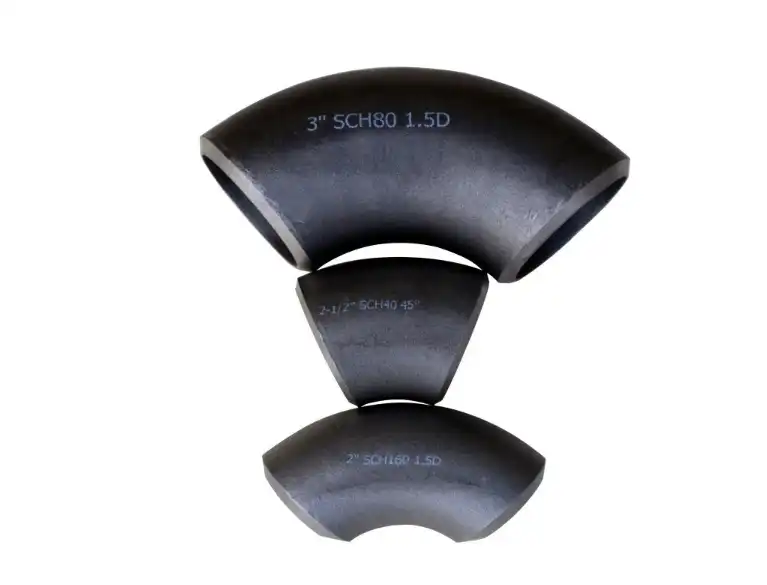
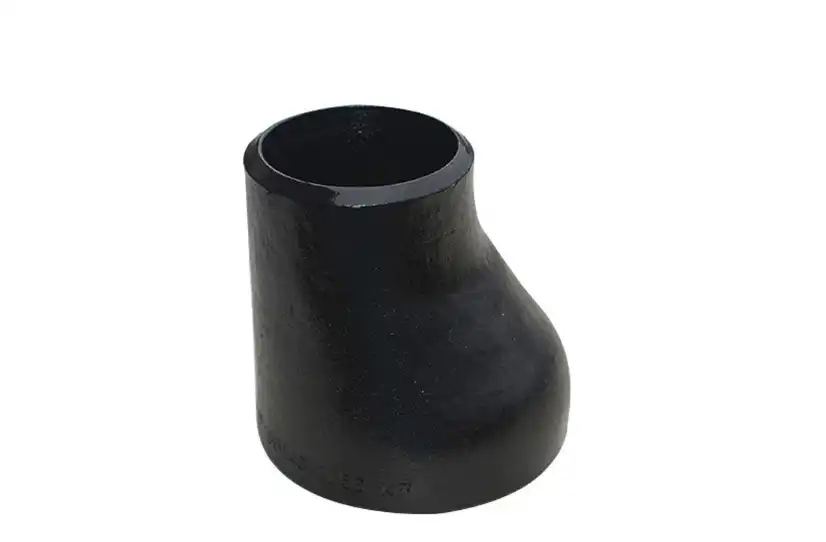
How Does a Concentric Reducer Work?
A steel concentric pipe reducer works by making a smooth, cone-shaped shift between two different pipe sizes while keeping the same centerline all the way through the fitting. This design makes sure that fluids or gases move easily through the narrow path, which lowers the chance of turbulence and pressure loss. The even decrease in width spreads speed changes fairly across the pipe's cross section. This makes it especially useful in systems with vertical pipes where balanced flow dynamics are important. Steel concentric pipe reducers are made from carbon steel, stainless steel, or alloy steel, and they are made to international standards like ASME B16.9. This makes sure that they will work reliably in harsh industrial settings.
Understanding Steel Concentric Pipe Reducers
When working on complicated pipe projects, knowing the basic features of each part is what makes the difference between smooth operation and costly downtime. There is a transition fitting called a "steel concentric pipe reducer" that can join pipes with different sizes while keeping their centerlines straight. This alignment gives it a cone-shaped appearance that makes it different from other types of industrial reducers.
Defining the Concentric Reducer Structure
The structure of this fitting is based on the idea of symmetry. The inlet and exit are on the same line, making the taper uniform all around. This shape lets the speed of the fluid slowly go up or down as the pipe width changes. This keeps shock waves and turbulence to a minimum, which can damage pipe systems or make them less efficient. In contrast to eccentric reducers, which have an off-center shape with one flat side, steel concentric pipe reducers keep their spherical symmetry throughout the transition zone.
During the production process, the steel is usually shaped into the right cylindrical shape by hot forming or pressing. Most of the time, the wall thickness matches the schedule of the bigger pipe. However, in some high-pressure situations, the smaller end may need a tapered bore to match the specs of the pipes further downstream.
Working Principle and Flow Dynamics
The way these fittings work depends on the laws of fluid physics. The flow speed goes up as liquid or gas enters the bigger end of the reducer because the width slowly gets smaller. This is what the continuity equation says should happen. The symmetrical design makes sure that this change in speed happens evenly across the cross-section of the pipe. This stops low-pressure zones or recirculation patterns from forming, which could trap air or particles.
Because they keep the flow even, Steel Concentric Pipe Reducers are perfect for setups that go up and down, especially in pump discharge lines where keeping the pressure even stops cavitation damage. The centerline alignment also makes it easier to build the support structure because the center of gravity of the pipe system stays the same during the shift. This lowers stress concentrations and vibration problems.
Material Specifications and Standards Compliance
To make these parts, you need to pay strict attention to material specs and tolerances for dimensions. For regular commercial use, carbon steel grades like ASTM A234 WPB are a cost-effective choice. Stainless steel grades like ASTM A403 WP304 or WP316, on the other hand, are better at resisting corrosion in chemical processing settings. Different types of alloy steel are used in power plants and industrial plants for high-temperature tasks.
Every part of production is regulated by international standards, from the chemicals used to the sizes of the parts that are made. Face-to-face lengths are set by ASME B16.9 based on the largest outside width, while DIN, JIS, and BS offer different specs for various regional markets. All of Oudi's reducers are made to meet these strict standards. Our quality control systems are backed up by ISO 9001:2000 certification and special equipment production licenses.
Key Dimensions and Installation Guidelines
How you size and install a system directly affects its performance and life. Common problems like leaks, misalignment, and early failure can be avoided by knowing the necessary measurements and using tried-and-true installation methods.
Standard Dimensions and Sizing Charts
Face-to-face time is the most important factor for designing a method. According to ASME B16.9, this measurement is based on the nominal diameter of the larger pipe and is the same for all makers, allowing interchangeable use. Size ranges from 1/2 inch to 48 inches, and wall thicknesses are offered in plans from SCH 10 to SCH 160 and in XXS configurations.
There is a range of 30 to 45 degrees for the cone angle, but the angle depends on the difference in size between the entry and exit. Larger decreases might need longer face-to-face lengths to keep cone angles that don't cause too much commotion. It's important to know how much something weighs when designing a support structure, since a steel concentric pipe reducer made of carbon steel weighs a lot less than those made of stainless steel that are the same size.
Installation Procedures and Best Practices
Preparation is the first step to a successful operation. Pipe ends must be cut straight and curved at a standard angle of 37.5° ± 2.5° for walls that are less than 22 mm thick. For deep penetration welding to work on thicker walls, complex bevels may be needed. To get rid of mill scale, oil, and other contaminants that could hurt the quality of the weld, clean all areas very well.
During fit-up, alignment is critical. To ensure the path stays straight through the reducer, especially in vertical setups, use laser alignment tools or regular plumb lines. Put the part in place with a tack weld, and then check the position again before making all the weld passes. Procedures for welding should be in line with ASME Section IX, and only qualified welders should be allowed to do the work according to the accepted process standards.
Depending on the type of material, the width of the wall, and the working conditions, a heat treatment may be needed after the weld. Pressure testing makes sure the system is solid, and hydrostatic testing is usually done at 1.5 times the original pressure. Write down all the steps for fitting, how to weld, and test results for quality control and future use.
Maintenance Strategies and Inspection Protocols
Regular checkup plans keep reducers in good shape and stop them from breaking down without warning. Visual checks should be done every three months to look for surface rust, coating wear, or damage from strikes or too much shaking. Ultrasonic thickness testing finds internal wear or rust, which is very important for systems that deal with acid or abrasive fluids.
Keep an eye out for leaks at the weld joints, which could mean that the material is failing from temperature cycles or that it wasn't installed correctly. Vibration research can show problems with flow-induced resonance that could cause stress cracking. Use non-destructive testing methods like X-rays or magnetic particle inspection during planned repair windows for important uses.
How to stop corrosion depends on the working conditions. External coats keep out rust from the air, and interior linings might be needed for process fluids that are very corrosive. Cathodic protection systems are good for pipes that are underground or underwater. Monitoring the temperature helps find problems with the insulation or changes in the process that could speed up the breakdown.
Comparing Concentric vs. Eccentric Pipe Reducers
Choosing between these two types of reducers has a big effect on how well and how reliably the system works. When engineers know the differences between them, they can make decisions that save money on both capital and running costs.
Structural and Functional Differences
The main difference is in how the centerlines are aligned. A concentric steel pipe reducer keeps the inlet and outlet on the same line, which creates a symmetrical cone shape. One side of an eccentric reducer is moved away from the other side, making a flat edge on either the top (TOP) or bottom (BOP).
This change in structure makes flow patterns that are very different. Steel concentric pipe reducers spread out speed changes evenly, which makes them good for vertical lines where even flow keeps wear from being uneven. Eccentric reducers stop air pockets from forming in horizontal lines. This is especially important in pump pressure applications where trapped air can damage the pump by cavitation.
Application-Specific Selection Criteria
Installing a Steel Concentric Pipe: A reducer in a vertical pump output line is helpful because the uniform design handles pressure rises well and distributes stress evenly. The centerline orientation makes it easier to build pipe supports and lowers the bending moments of equipment that is attached.
When installing eccentric reducers on horizontal pump flow lines, make sure the flat side is facing up. This setup keeps air from building up at the top of the reducer, which gets rid of the risk of cavitation that hurts pump impellers and lowers efficiency. The flat bottom also makes it easier for water to drain completely during repair breaks.
In chemical processing systems, steel reducers with concentric pipes are often used in vertical reactor discharge lines. Keeping the flow symmetrical is important for mixing properly and avoiding dead zones. In horizontal clarifier entry lines, water treatment plants use eccentric reducers to control the release of air and improve settling performance.
Pressure Ratings and Performance Considerations
When made to the same schedule and material specifications, both kinds of reducers have the same pressure values. The choice between them is not based on pressure capacity but on how the placement is oriented and the properties of the fluid. Most industrial uses are covered by class ratings from 150 to 2500. The highest allowed working pressure depends on the wall thickness.
Temperature ranges depend on the type of material. Carbon steel can be used in temperatures up to 650°F, while some types of stainless steel can withstand temperatures over 1500°F. When working with high temperatures, it's important to do thermal expansion estimates because the difference in expansion between the reducer and the pipe next to it can cause stress to build up at the weld joints.
Advantages and Applications of Steel Concentric Pipe Reducers
By combining hydraulic efficiency with structural stability, these fittings provide measured performance gains across a wide range of industries. Knowing their benefits helps buying teams defend choices about specifications and make the best system designs.
Core Performance Benefits
Because of the following benefits, a steel reducer with a concentric pipe design is often the best choice for certain tasks:
Flow Optimization: The symmetrical taper makes slow changes in motion that keep energy losses from turbulence to a minimum. Computational fluid dynamics studies show that sudden changes in width cause 15–25% less pressure drop, which directly leads to pumping systems using less energy. The even flow also stops deterioration in systems that deal with fluids that are full of particles, which makes parts last longer.
Structural Simplicity: Maintaining central alignment through changes in width makes pipe support design easier and lowers the load on equipment that is attached. This alignment stops the eccentric moments that can lead to wear breakdowns at nozzle or flange joints. The known load lines also make stress analysis easier during system design, which saves engineers time and makes calculations simpler.
Installation Flexibility: The ability to use flanged, threaded, and bonded joints gives designers a lot of options. The standard sizes set by ASME B16.9 make sure that parts made by different companies can be used interchangeably. This makes buying parts easier and cuts down on the need for extra stock. Standardization also speeds up installation by getting rid of the need for special manufacturing and fit-up problems.
Material Versatility: It comes in carbon steel, stainless steel, and alloy steel grades, so it can be optimized for different working situations. When used in non-corrosive settings, carbon steel is cheaper, but stainless steel types are better at resisting chemical attack. Alloy steels are strong at high temperatures and are used in industrial and power generation processes. When choosing a material, it's important to think about both cost and function.
Industrial Applications Across Sectors
In vertical well gathering systems, oil and gas facilities depend on steel concentric pipe reducers a lot. Keeping the axis aligned stops flow-induced vibrations that could damage wellhead equipment. Pipeline compressor stations use them in vertical discharge pipes because the controlled flow properties lower noise and shaking caused by turbulence.
In chemical processing companies, these valves are put in vertical reactor feed lines to make sure that the reaction conditions stay the same. The types of corrosion-resistant stainless steel are used in factories that make nitric acid, sulfuric acid, and caustic acid. The right material is chosen based on the temperature and concentration requirements of each process.
At filter plants and distribution pumping stations, vertical pump discharge lines have steel concentric pipe reducers built in as part of water treatment systems. Because the design is symmetrical, there are no uneven flow patterns that could damage the filter media or make short-circuiting tracks through the filter beds. These parts are required by municipal water systems for vertical lift changes in buildings with more than one floor.
In vertical boiler feedwater lines and steam extraction pipes, power plants use concentric reducers made of high-temperature alloy steel. The centerline orientation makes it easier to figure out how much something will expand when it's heated up and lowers stress levels that could lead to creep failures in high-temperature service. In business buildings with HVAC systems, they are used in vertical chilled water risers because of limited room and structural load. The small mounting size is also helpful in these cases.
Case Study: European Chemical Plant Optimization
In Germany, a chemical processing plant had problems with their sulfuric acid transfer system, where pumps kept breaking down. In the first design, eccentric reducers were used in vertical discharge lines. This created uneven flow patterns that sped up the wear of the propeller. The vibration study showed that at certain flow rates, flow-induced resonance was happening, which led to wear cracks in the discharge pipes.
The engineering team rebuilt the system and used Steel Concentric Pipe Reducer units made from ASTM A403 WP316L stainless steel instead of eccentric reducers. The resonance problems were fixed by the uniform flow distribution, which cut shaking levels by 60%. The average time between pump breakdowns went from 18 months to over 48 months, and energy use went down by 12% because the hydraulics were more efficient.
This change only needed a short amount of downtime during a planned repair turnaround. The standard ASME B16.9 dimensions allowed for straight replacement without any changes to the pipes. The project paid for itself in 14 months thanks to lower energy costs and less upkeep. This shows how important it is to choose the right reduction.
Procurement and Supplier Insights for B2B Buyers
Choosing the right manufacturing partner is just as important to the success of a project as specifying the right parts. Understanding the criteria used to evaluate suppliers helps procurement teams build partnerships that provide value beyond the original buy price.
Critical Supplier Evaluation Factors
Quality certificates are the basis for judging a seller. ISO 9001 approval confirms that quality management systems are in place, and special equipment production licenses show that a company follows the rules and has the technical know-how to do so. Third-party inspection certificates from companies like Lloyd's Register, TÜV, or Bureau Veritas give extra proof that a steel concentric pipe reducer is what it says it is.
The dependability of shipping is affected by production capacity, especially for big projects that need thousands of fittings. A production capacity of more than 15,000 tons per year means that the company has been around for a while and is good at managing its supply chain. Lead time promises should include extra time for quality control checks and making sure all the paperwork is ready. This time should usually be between 4 and 8 weeks, but it depends on the material grade and specs.
You can customize more than just basic catalog items. For some jobs, wall thicknesses that aren't normal, special types of materials, or custom shapes are needed. If a supplier has its own engineering team, it can help with the design process by making sure that the standards are the best they can be in terms of balancing performance needs with the ability to make the product and cost concerns.
Material Selection and Cost Considerations
Carbon steel types like ASTM A234 WPB are cost-effective for uses that don't involve corrosion. Standard rates for 2024 prices range from $1,200 to $1,800 per ton. Grades of stainless steel are much more expensive. 304L costs between $3,500 and $4,500 per ton, and 316L costs between $4,800 and $6,200 per ton, based on the market and the price of nickel around the world.
When you order in bulk, you save a lot of money because production costs go down and handling costs go down. Orders over 10 tons usually get 8–15% off, and container-load numbers get rid of the $800–$1,500 charges that come with packages that are less than a container load. Annual blanket purchase orders with planned releases give producers a steady flow of cash, which often leads to better prices and earlier scheduling of production.
Alloy steel types are used in specific high-temperature tasks. ASTM A234 WP11 or WP22 materials cost between $2,400 and $3,600 per ton. Because these materials need more complicated heat treatment steps, wait times are two to three weeks longer than for carbon steel alternatives.
Logistics and International Shipping
Shipments from Chinese makers to U.S. ports across the Atlantic usually take 25 to 35 days by ocean freight. West Coast ports are faster than East Coast or Gulf ports. The size of the order and the measurements of the fittings determine which container is best. 20-foot containers can hold about 18–22 tons, and 40-foot containers can hold 24–28 tons, based on the mix of sizes and the packaging method used.
Commercial invoices, packing lists, certificates of origin, and mill test results that confirm the composition and mechanical qualities of the material are all examples of export paperwork. To avoid delays, projects that need extra paperwork like material tracking reports or special finishing certifications should make that clear when placing the purchase order.
Total landing cost is affected by freight terms in a big way. When goods are priced as FOB (Free on Board), the buyer takes over duty once they are loaded onto the ship. On the other hand, CIF (Cost, Insurance, and Freight) terms include ocean freight and insurance to the target port. When buyers understand these terms, they can more accurately compare prices from different sellers and make budgets for the total costs of buying things.
Building Strategic Supplier Partnerships
Building long-term ties with dependable producers has benefits that go beyond single transactions. Preferred sellers learn about what the buyer wants and what level of quality they expect, which cuts down on contact time and mistakes. When engineers work together during the design process, they can make sure that the specifications are the best they can be in terms of both performance and manufacturing efficiency. This can often cut costs while keeping or improving functionality.
Distributors who sell to end users can brand their products and make their own packages with OEM collaboration features. Some makers offer vendor-managed inventory programs that store frequently used items so they can be shipped quickly. This lowers the buyer's need for working capital while still making sure they have materials for urgent projects.
Conclusion
In the oil and gas, chemical processing, water treatment, and power generation businesses, steel concentric pipe reducer units are important parts of vertical pipe systems. Their symmetrical form gives them real benefits by improving flow dynamics, making structural support easier, and making sure that parts can be swapped out. The right choice between concentric and eccentric configurations relies on how the system is set up and the needs of the application. For example, vertical lines benefit from the balanced flow qualities that concentric reducers offer. To do good procurement, you need to look at providers' certifications, production capacity, ability to customize, and organizational know-how. When choosing a material, you have to weigh the needs for performance against the costs. Different types of carbon steel, stainless steel, and alloy steel all have their own benefits for different working conditions.
FAQ
What is the primary difference between concentric and eccentric reducers?
The main difference is shown by the centerlines. Concentric reducers line up the centers of the inlet and exit, making a cone shape that is symmetrical and perfect for setups that go up and down. These centers are moved apart by eccentric reducers to make a flat side on either the top or bottom. This stops air pockets from forming in horizontal lines, which is especially important in pump suction applications where stored air causes damage called cavitation.
Can concentric reducers be used in high-pressure steam lines?
When made from the right materials, like alloy steel types ASTM A234 WP11 or WP22, they work great in high-pressure steam applications. Pressure spikes are easily handled by the symmetrical design, and stress peaks at weld joints are kept to a minimum by the centerline alignment. Power plants can run safely and reliably if the right materials are chosen based on temperature and pressure factors.
How do I select the correct material grade for my application?
Think about three things: the need for corrosion protection, the working temperature, and the cost limitations. Carbon steel is a good choice for environments below 650°F that don't corrode. 304L or 316L types of stainless steel can handle high temperatures and chemicals that break down metal. Alloy steels, such as WP11 or WP22, are used in power generation for high-temperature tasks above 800°F. Talking to sellers with a lot of knowledge can help you choose the best materials for the job.
Partner with Oudi for Your Steel Concentric Pipe Reducer Needs
Since 1998, Oudi has been making high-quality pipe fittings for over 300 customers in 40 countries using production systems that are ISO 9001:2000 approved. Our yearly capacity of 16,000 tons provides a steady supply for projects of all sizes. We offer a wide range of materials, such as carbon steel, stainless steel, and alloy steel types that meet ANSI, JIS, DIN, and BS standards. As a provider of steel concentric reducers, we offer full technical support from reviewing specifications to helping with installation. Our services are backed by advanced inspection tools and strict quality control processes that include checking the raw materials and testing the finished product.
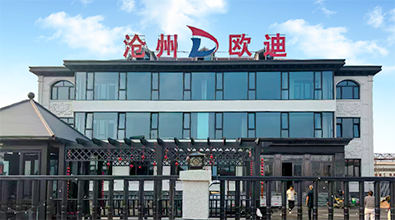
Our Cangzhou plant takes advantage of its central position and years of experience making things, so it can offer cost-effective solutions without sacrificing quality. Whether you need regular catalog items or custom setups for specific uses, our engineering team works with your requirements to make sure of the best performance and ease of production. You can email us directly at oudi-04@oudiguandao.com to talk about your project needs, get full technical data, or get quotes that are made just for you.
References
1. Smith, J. & Anderson, K. (2022). Industrial Piping Systems: Design and Installation Practices. McGraw-Hill Professional Publishing.
2. ASME Standards Committee. (2023). ASME B16.9: Factory-Made Wrought Buttwelding Fittings. American Society of Mechanical Engineers.
3. Chen, L. (2021). "Flow Dynamics in Pipe Reducers: Comparative Analysis of Concentric and Eccentric Configurations." Journal of Fluid Mechanics and Industrial Applications, 45(3), 234-258.
4. Thompson, R. (2023). Materials Selection for Process Industries: Carbon, Stainless, and Alloy Steel Applications. CRC Press.
5. International Organization for Standardization. (2022). ISO 9001:2015 Quality Management Systems - Requirements. ISO Central Secretariat.
6. Williams, D. & Martinez, S. (2024). "Lifecycle Cost Analysis of Piping Components in Chemical Processing Facilities." Chemical Engineering Progress, 120(2), 47-63.

Need help finding the right solution with our experts. Please contact us.
SINCE 1998 Your Reliable Pipeline Manufacturer