How Durable Carbon Steel Elbows Improve Pipeline Performance?
Many industrial processes, from oil factories to water treatment plants, depend on pipeline systems to work. When you're responsible for maintaining these critical infrastructures, every component matters—but few elements face as much stress as the elbows that redirect flow at critical junctures. Durable carbon steel elbows are the workhorses of modern piping systems. They make operations much more efficient by keeping flow rates steady, reducing pressure drops, and handling the mechanical and chemical challenges that come with tough jobs. Because they can handle high pressures and have a high tensile strength, they are essential in industries where dependability affects both safety and profit.
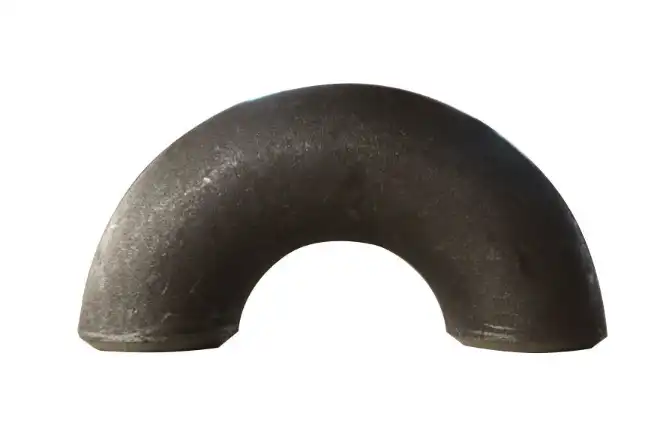
Understanding Durability in Carbon Steel Elbows
Material Properties That Define Longevity
The resilience of durable carbon steel elbows comes from the way they are made. Most industrial-grade parts have carbon content between 0.05% and 0.30%, which has a direct effect on their tensile strength and hardness. Higher amounts of carbon make the material stronger mechanically, so it can handle forces above 3,000 psi in most situations. Carbon steel's crystalline structure makes it very resistant to impact, which is very important when pipes experience temperature expansion or hydraulic shock during changes in operation. Oudi has been making things for decades and has learned that material uniformity is just as important as makeup. Every lot of raw materials is spectroscopically analyzed to make sure that its chemical makeup meets ASTM A234 WPB standards. This makes sure that the products will work reliably at temperatures ranging from -29°C to 400°C. This process of checking gets rid of any weak spots that could cause the pipeline to leak when it's under a lot of stress.
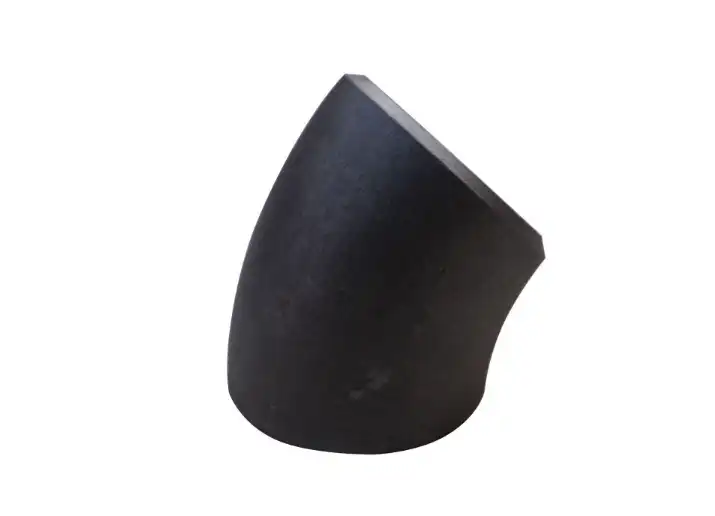
Comparing Carbon Steel to Alternative Materials
Pipe elbows come in a number of different materials, and each has its own pros and cons that affect how well it works in different situations. Knowing these differences helps buying teams make smart choices that meet business needs and stay within their budgets. Since carbon steel elbows are both affordable and good at what they do, they are usually the first choice for most industry uses. Their mechanical qualities don't change much when the temperature does, and they work well in systems that move oil, natural gas, and water when the pressure changes. The material is easy to weld, which makes fitting easier and cuts down on labor costs during building or repair work. Stainless steel options are better at resisting corrosion, which is especially helpful in chemical production areas where aggressive substances are present. This benefit, however, comes at 200–300% more than carbon steel versions. The higher original cost is usually only worth it when working with highly corrosive materials or when the service life is more than twenty years without any upkeep. When you choose a galvanized choice, the zinc layer on the bases of the carbon steel items makes them more resistant to corrosion in outdoor settings. This method works well for water conservation projects and building jobs where chemical protection isn't very important, but regular exposure to water is.
Maintenance Strategies for Extended Service Life
Even the most robust carbon steel elbows benefit from systematic repair plans that prevent premature degradation. For low-risk uses, routine checks should happen every six months for the first two years of operation and then once a year after that. Visual checks are mostly used to find surface discoloration, pitting, or covering wear and tear that shows rusting has started. The first line of defense against external forces is protective coatings. Epoxy-based coatings work well in moderately acidic conditions, while polyurethane-based coatings are better at withstanding chemicals in tougher situations. When you apply a coating, it is very important. It should be done within 48 hours of the final surface preparation to avoid flash rusting, which makes bonding worse. Cleaning methods depend on the media being moved. Cleaning systems that deal with oily substances can benefit from using solvent-based cleaners that get rid of hydrocarbon leftovers without hurting the base material. Mineral deposits can build up in low-flow areas near the insides of elbows, which can slow down flow and create stress concentration spots. These deposits need to be removed from water systems. Using pigging processes for mechanical cleaning gets rid of these buildups well while keeping systems running.
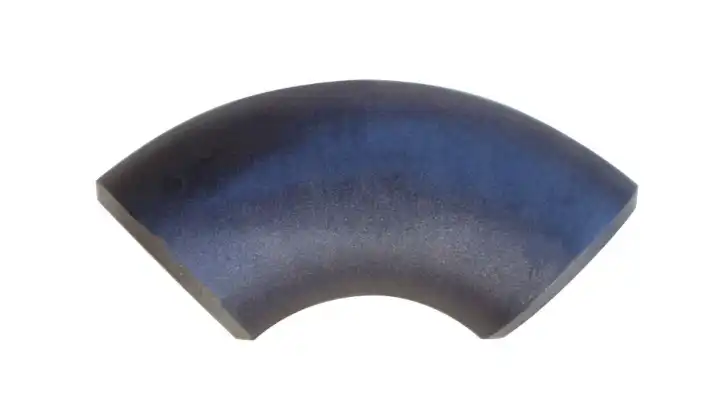
Technical Specifications and Performance Standards of Durable Carbon Steel Elbows
Key Technical Parameters for Procurement
Accuracy in measurements has a direct effect on how well the durable carbon steel elbow is installed and how well it seals in the long run. The center-to-end length of standard radius elbows is 1.5 times the nominal pipe diameter. For setups with limited room, short radius elbows have a length that is only 1 times the nominal pipe diameter. The wall thickness is based on the schedule grade. Schedule 40 is good for most uses, while Schedule 80 and XXS (double extra strong) forms can handle very high pressures. Matching the needs of the application to the approved specs is needed to choose the right material grade. As of now, ASTM A234 WPB is still the standard for moderate-temperature uses because it works reliably in systems that aren't running above 400°F. This grade has a yield strength of 240 MPa and a tensile strength of 415 MPa, which are both enough safety limits for most industrial situations. Ratings for pressure depend on the temperature and the width of the wall. At room temperature, a Schedule 40 elbow with a 2-inch diameter can handle working pressures of 1,480 psi. At 300°F, the pressure drops to 1,100 psi because the material's features change when it is heated. Knowing these derating factors keeps you from over-specifying, which loses money, and makes sure you have enough safety gaps.
Installation and Welding Best Practices
When you fix something the right way, you protect the quality that the maker puts into each fitting. Cutting the ends of pipes at a 37.5-degree angle makes the best weld joint shape, which lets the weld go all the way through without using too much filling material. To make sure the root pass forms correctly during welding, there should be a 1/16-inch gap between the joint and the joining pipe. Preheating needs vary depending on the thickness of the cloth and the temperature and humidity of the area. Before welding, carbon steel elbows with walls thicker than 1 inch should be heated to 200°F. This lowers the risk of hydrogen-induced cracks in the heat-affected zone. This step is especially important for systems that will be used in cold weather, where differences in temperature cause thermal stress. Normalizing the microstructure around the weld zones is done by post-weld heat treatment. This makes the material tough again and lowers any leftover loads that could cause cracks during service. This process isn't always necessary for regular carbon steel grades, but it does add a level of stability to important uses in oil refining or chemical processing, where failure would have very bad results.
Quality Verification Through Testing Protocols
Hydrostatic testing is still the best way to make sure that pressure control works before it is put into service. The test pressure is usually 1.5 times the design working pressure, and it stays there for at least 30 minutes while inspectors check all the joints for leaks. This damaging testing method finds flaws in the manufacturing process or mistakes in the installation process before they put operational safety at risk. When using water could lead to pollution or freezing risks, pneumatic tests can be used instead. Liquid media can be replaced with compressed air or nitrogen, but safety rules have to be stricter because of the risks of stored energy. To avoid the dangers that come with quick pressure loss, test pressure limits are usually capped at 1.25 times the design pressure. Nondestructive examination methods are used in addition to pressure testing to find flaws inside that can't be seen from the outside. The ultrasonic test finds laminations or gaps in the base material, and the X-ray check makes sure the weld quality is good in key places. Our Oudi site keeps up-to-date advanced detection equipment that does these checks on a regular basis, finding problems with goods before they get to customers. Buyers who care about quality want to be able to track down products that have been certified. ISO 9001 certification shows that quality management is done in a planned way, and material test results make sure that the chemical make-up and mechanical properties of the material meet the standards. In some places, special equipment manufacturing licenses are needed to prove that production sites meet the rules for pressure-retaining parts.
Comparative Analysis for Informed Decision Making
Seamless vs. Welded Construction Methods
The method used for manufacturing has a big effect on how well durable carbon steel elbows work. Seamless elbows start as solid billets that are heated and shaped in a way that creates a uniform grain structure without any lengthwise gaps. This way of building gets rid of the weak spots that can happen in welded joints. This makes seamless versions better for uses with pressures above 2,000 psi or services that have repeated pressure changes that could wear out welded seams. Elbows that are welded are made from plate or coil stock that is rolled into shape and then joined along a long seam. With today's submerged arc welding methods, the joints get close to the strength of the base material. This means that these fittings are perfectly fine for moderate-pressure services. Welded construction is a good choice when the application doesn't need a high price because it saves 15 to 25 percent compared to smooth alternatives. Production ability is another thing that goes into the choice. When making things that are seamless, you need special tools that can only work with a small range of sizes. With welded production, on the other hand, it's easier to make things that are bigger. When the width is 24 inches or more, projects usually use welded construction because smooth choices are too expensive or not available.
Material Grade Selection Strategies
To find the best balance between performance and price, you need to know how different types of steel react to working stresses. Standard types of carbon steel, such as A234 WPB, work very well in mildly acidic and non-corrosive settings. Because they are easy to find and don't cost too much, they are the standard choice for water systems, steam distribution networks, and oil transport uses that work within their design limits. Different types of alloy steel use metals like chrome, molybdenum, or nickel to make certain qualities better. Chrome-moly types don't creep at high temperatures, which makes them last longer in power generation uses where steam temperatures get close to 1,000°F. These special types cost 50–100% more than regular carbon steel, but they save money by keeping things from breaking down or needing to be replaced too soon. Increasing corrosion resistance doesn't always need rare metals. Surface treatments, such as coatings or cathodic protection systems, make carbon steel last longer in fairly corrosive settings for a lot less money than stainless steel. When you look at the total costs over a product's lifetime instead of just the purchase price, you can often see that carbon steel with safety measures is a better deal over a number of years.
Supplier Evaluation Criteria
To find trusted manufacturers, you need to look at more than just price. You also need to look at their capabilities to make sure they give great products every time. Verification of production ability makes sure that providers can meet volume needs without spreading their resources too thin. Our plant can produce 16,000 tons of steel each year, which gives project managers the stability they need when they are planning big projects with tight deadlines. The validity of a certification should be carefully checked. By asking for real ISO 9001 certificates and checking registrar records against each other, you can be sure that the quality systems you say exist and are up to date. Special equipment production licenses show that you follow the rules for making pressure vessel parts, which is something that some regional standards demand. A technical capability review checks to see if sellers keep up with the maintenance of the tools needed for good production. Modern production needs CNC bending tools to make sure the dimensions are correct, heat treatment ovens to keep an eye on the material's properties, and full testing facilities to make sure everything is correct. When possible, site visits show practical truths that aren't always clear from polished marketing materials. If you have exported before, it means you know about foreign standards and the paperwork that is needed. Suppliers who work with customers in Asia, Europe, and the Americas know how to use different stipulation systems like ANSI, DIN, JIS, and BS, and they can offer certification packages that meet the needs of customs and engineering review processes. In our 26 years of history, we've shipped to more than 40 countries, giving us the experience that makes foreign transactions easier for customers who want to buy things without a lot of trouble.
Procurement Best Practices for Durable Carbon Steel Elbows
Navigating Bulk Purchasing Dynamics
Unit economics are affected by volume issues in a big way for durable carbon steel elbow procurement. For standard specs, the minimum order quantity is usually one ton, which is about 100 to 150 pieces, based on the size and schedule. By combining needs from different projects into one, you can get a better price and lower shipping costs per unit, which can add 10 to 15 percent to the total cost of a small order. With custom sizes, wait times get longer, which planning teams have to account for. Standard sizes can be shipped from stock within two weeks, but non-standard sizes need four to six weeks to plan production, get materials, and make the product. These lead times don't become key path limits when custom needs are planned early in the project timeline. To negotiate prices well, you need to know what causes costs. Costs of raw materials make up 60–70% of the costs of finished goods, so changes in market prices are a big factor. If a supplier is ready to lock in a price for three to six months, it gives you budget security, but it may cost a little more than spot pricing. When you agree to a certain amount of goods, you can usually get prices that go up in steps of 5% for every 10 tons, 8% for every 25 tons, and 12% for every 50 tons.
Evaluating Total Cost of Ownership
The price you pay for something is only one part of how much it really costs. The cost of installation depends on how the connections are made. For example, threaded elbows need less skilled work than welded ones, but they can't handle as much pressure. The amount of maintenance has a big effect on the lifetime costs, with higher grades needing fewer repairs over the same service times. Dependable delivery stops costly project delays. Suppliers who have been exporting for a while know the paperwork and customs processes that can slow down packages if they are not followed correctly. By working with freight forwarders who have experience moving industrial equipment, our team makes sure that the right paperwork is filled out and packages are properly packed so that the time it takes to cross the border is kept to a minimum. Support after the sale is what sets great providers apart from average ones. Help with technical issues during installation, a desire to quickly send new parts when something goes wrong, and good communication all help to keep operations running smoothly. When problems do come up, having ties with suppliers who see deals as long-term partnerships rather than one-time sales will pay off.
Case Studies and Real-World Applications
Oil and Gas Sector Performance Improvements
A Texas intermediate oil company had problems with a crude oil gathering system that kept breaking down when the direction of a pipeline changed. The original elbows, which were bought from a wholesaler whose production sources were not clear, developed through-wall corrosion 18 months after they were installed, even though they were working within the limits of their design. Failure research showed that there wasn't enough carbon content and that the wall thickness wasn't constant, which led to stress concentrations in certain areas. After replacing them with certified A234 WPB elbows, there were no more problems during the next five years of tracking. The system's uptime went up by 4.2%, which added 180,000 barrels of flow every year. The economic effect was more than $1.8 million in recovered income, and the costs of cleaning up the surroundings caused by product releases were avoided.
Chemical Processing Reliability Enhancement
A Louisiana company that made unique chemicals had a hard time with the cost of maintaining its process water system. Mildly acidic compounds quickly broke down galvanized pipe elbows, which meant they had to be replaced every 14 to 16 months for $3,200 per site across 47 change-of-direction points in the building. By switching to carbon steel elbows with an epoxy finish, service times were increased to 5 years or more, and maintenance work was cut by 68%. Previous installations had been damaged by chemical attacks, but this one didn't. It also had better mechanical qualities, so it could handle pressure spikes during pump start-ups without breaking. The higher-quality fittings took 11 months to pay for themselves, and after that, the continued savings went straight to the operations margin.
Water Treatment System Optimization
Due to sediment-filled intake water, the inside of the elbows at a local water treatment plant in the Midwest wore away too quickly. Within three years, the original Schedule 40 carbon steel elbows started to pit, which made the insides rough. This caused more friction loss and a 9% drop in pumping efficiency. By switching to Schedule 80 elbows with thicker walls, erosion problems were fixed while the cost benefits of carbon steel over exotic metals were kept. The service life was extended to 12 years or more because the thicker walls added more material that erosion ate away before it compromised the structure's strength. The system's main pumping stations saved $14,600 a year on power costs thanks to improvements in hydraulic efficiency. These examples all show the same thing: buying high-quality, durable carbon steel elbows upfront pays off in the long run by making the system more reliable, lowering the number of times it needs to be serviced, and making it work better overall. When companies see fittings as important parts instead of just buying them, they always have better business results.
Conclusion
The performance of the pipeline depends on the quality of the parts at every link point. Durable carbon steel elbows are strong, don't break easily under pressure, and are cheap, all of which are important in industrial settings. Carefully matching the material's properties to the service conditions, production precision that ensures consistent dimensions, and supplier capabilities that guarantee quality are all things that help make setups that work reliably for a long time. The comparison shows that different types of carbon steel have clear benefits in a wide range of situations when they are properly chosen and bought from approved makers. When procurement teams focus on technology verification, seller credentials, and total lifetime costs, they set their companies up for operating success and make the best use of their budgets. Real-world uses show that investing strategically in high-quality fittings stops expensive fails and raises the system's availability.
FAQ
How can I tell if carbon steel elbows are really going to last?
An evaluation of durability starts with a study of the material's approval for durable carbon steel elbows. Check that the goods meet the requirements of ASTM A234 WPB by looking at mill test records that list the chemicals used and their mechanical properties. Check for signs of good production quality, such as walls that are all the same thickness, smooth inside surfaces, and the right sizes that meet standard radius requirements. Request proof of the quality management system's licenses and the results of any pressure tests that show the system's stability under stress. Manufacturers with a good reputation make it easy to track down where their raw materials come from and connect finished products to those sources.
What kinds of care can really make parts last longer?
Systematic inspection plans find new problems early on, before they become major problems. Visual inspections every six months show any damage to the covering or surface rust that needs fixing. Protective coatings need to be reapplied every 5 to 7 years to keep their shield properties against external factors. When you clean inside, you get rid of deposits that speed up rust or block flow. When they are used, cathodic protection devices stop electrochemical corrosion in sites that are underground or underwater. By keeping records of repair tasks, you can use them as starting points for analyzing trends.
Are carbon steel elbows good for places with a lot of pressure and corrosion?
When used correctly, carbon steel joints can handle high-pressure situations well. Schedule 80 and XXS wall thicknesses can handle working pressures of more than 3,000 psi at room temperature. When working in places that are corrosive, you need to be extra careful. Mild to moderate rust can be fixed with protective coats or cathodic protection systems, which make carbon steel last longer. In highly acidic situations with concentrated acids or alkaline solutions, alloy steel upgrades or other materials may be needed. However, carbon steel with strong coating systems works well in many chemical processing situations.
Partner with Oudi for Superior Carbon Steel Elbow Solutions
Choosing parts for a pipeline that are reliable starts with finding makers who know how important quality is to operating success. For 26 years, Oudi has worked hard to perfect the making of long-lasting, durable carbon steel elbows that meet the strict requirements of the oil, chemical, natural gas, and water treatment industries around the world. Our factory in Cangzhou is ISO 9001-certified and uses cutting-edge production tools and strict quality control procedures to make 16,000 tons of elbows, flanges, and fittings every year that meet ANSI, JIS, DIN, and BS standards.
No matter if you need normal radius setups or custom specifications, our engineering team can help you find the right goods for your needs. We keep a large collection so that orders can be filled quickly, and our prices are competitive so that customers who commit to buying in bulk get discounts. As a reliable company that makes durable carbon steel elbows for over 300 customers in over 40 countries, we know how foreign purchasing works and have streamlined the paperwork so that transfers go smoothly.
Email our team at oudi-04@oudiguandao.com to talk about the details of your project, get technical data sheets, or get a full quote that is based on your volume and shipping needs. Experience the quality and service that have made Oudi the world's most popular provider for tough industrial uses.
References
1. American Society of Mechanical Engineers. (2019). ASME B16.9: Factory-Made Wrought Buttwelding Fittings. New York: ASME Press.
2. Davis, J.R. (2006). Corrosion of Weldments. Materials Park, OH: ASM International.
3. Mohitpour, M., Golshan, H., & Murray, A. (2007). Pipeline Design and Construction: A Practical Approach, Third Edition. New York: ASME Press.
4. Revie, R.W., & Uhlig, H.H. (2008). Corrosion and Corrosion Control: An Introduction to Corrosion Science and Engineering, Fourth Edition. Hoboken, NJ: John Wiley & Sons.
5. Singh, R. (2017). Applied Welding Engineering: Processes, Codes, and Standards, Second Edition. Oxford: Butterworth-Heinemann.
6. Thompson, S.W., & Howell, P.R. (1992). Factors Influencing Ferrite/Pearlite Banding and Origin of Large Pearlite Nodules in a Hypoeutectoid Plate Steel. Materials Science and Technology, 8(9), 777-784.

Need help finding the right solution with our experts. Please contact us.

SINCE 1998 Your Reliable Pipeline Manufacturer



