Pipe elbow: a comprehensive analysis from material design to system performance
In industrial piping systems, pipe elbows represent far more than simple directional changes—they serve as critical junctions where engineering precision meets operational reliability. When these parts are put in high-pressure steam lines or networks that move toxic chemicals, they are put through tough conditions that test the strength of their materials and designs. For example, a Power plant pipe elbow has to be able to handle temperatures above 600°C, pressure spikes above 2500 PSI, and constant thermal cycles that would break down less durable parts in months. When purchasing, workers have to balance budget constraints with safety standards in mission-critical applications; they need to know how the choice of materials, manufacturing methods, and design specifications all affect how well the system works.
Understanding Power Plant Pipe Elbows: Types, Materials, and Standards
What Defines a Buttweld Seamless Steel Pipe Elbow?
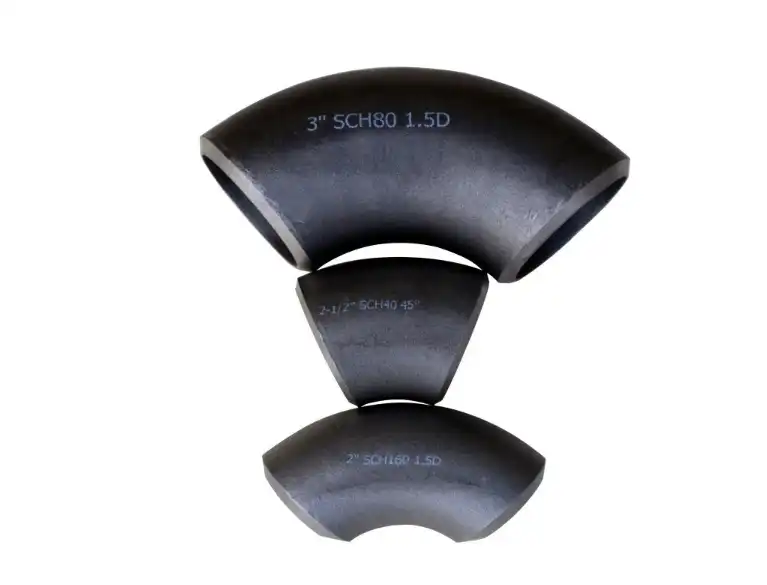
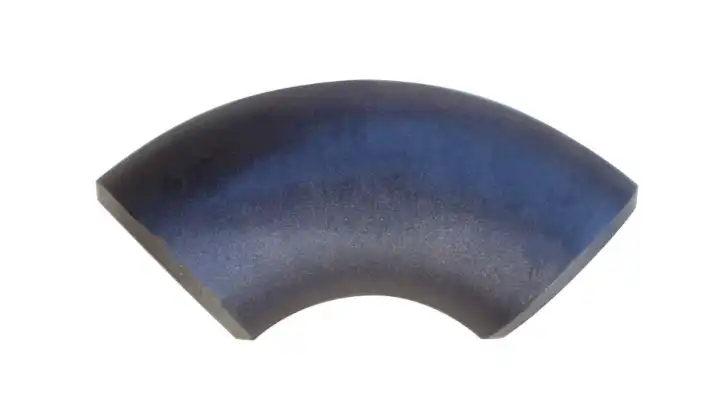
A butt-weld seamless steel pipe elbow is the standard for changing the direction of high-integrity pipes. These fittings are made from mother pipes that are seamless and are bent using hot pressing or mandrel bending. They don't have a longitudinal weld joint, which is weak in systems under pressure. The buttweld design has ends that are beveled and set at 37.5° angles according to ASME B16.25 standards. This design allows for full-penetration welds that make links that won't leak. This smooth construction provides the hoop strength the same across the whole part, stopping weak spots that are common in high-pressure steam or volatile gas lines and lead to catastrophic failures.
Seamless Versus Welded Construction: Performance Implications
An elbow's working powers are largely determined by how it was made. Seamless elbows have uniform walls, so they better resist heat stress and internal pressure. These are made in factories using hot extrusion methods that keep the grain structure of the parent material. This makes them more resistant to wear under cyclic loads. Welded elbows, which are made by shaping and joining flat plate pieces, have heat-affected areas that change the qualities of the material. Even though improvements in technology have made welded fittings better, seamless versions are still the best choice for high-stakes situations where failure would have serious effects.
Material Selection for Extreme Service Conditions
Power generation heavily relies on carbon steel types due to their strength-to-price ratio and excellent heat transfer capabilities. ASTM A234 WPB carbon steel elbows work well in feedwater and drainage systems that aren't above 400°C. They have a tensile strength of over 60,000 PSI and aren't too expensive to buy. Even though they cost 300–400% more, stainless steel types made from 304L or 316L alloys are needed when dealing with acidic substances or temperatures close to 650°C. For superheated steam uses, alloy steels with chromium-molybdenum formulas (P11, P22, and P91) are the best choice because they offer high-temperature strength while still being affordable.
International Standards Governing Design and Dimensions
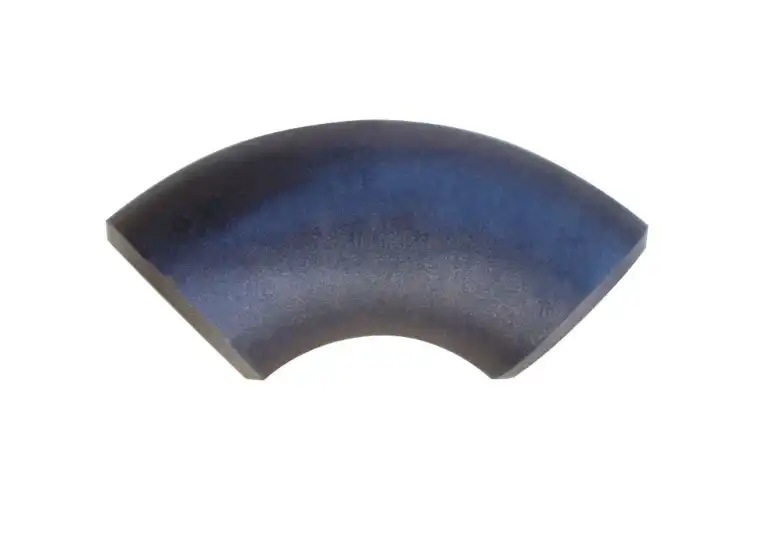
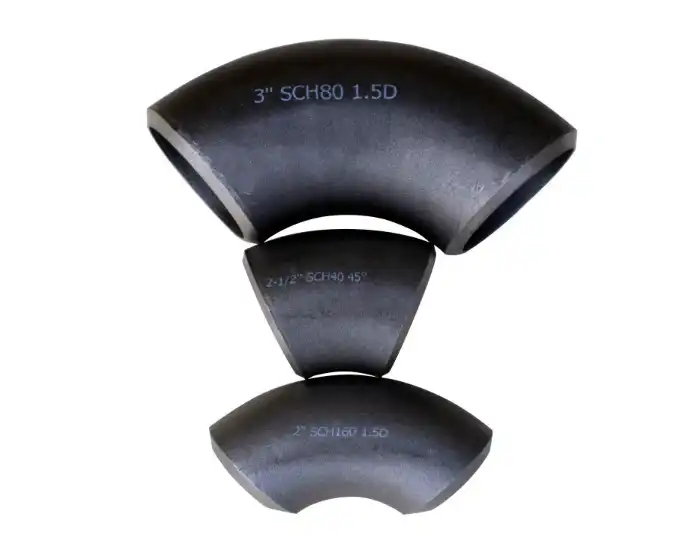
Following set standards makes sure that all parts of the global supply chain work together and are safe. ASME B16.9 sets the size limits for factory-made metal fittings. It lists important details like center-to-face lengths, wall thickness schedules, and radius requirements. Long radius elbows with 1.5D bends minimize noise and erosion, while short radius 1.0D versions are suitable for installations with limited space. ASTM standards control the make-up of materials and their mechanical qualities, while ISO standards make it easier to buy things from other countries by making testing requirements more consistent. Dimensional accuracy has a direct effect on the cost of installation work and the integrity of the system. For example, a power plant pipe elbow that wasn't made correctly and needs to be modified in the field can delay project completion by days and create possible leak paths.
Manufacturing Process and Quality Control of Power Plant Pipe Elbows
Hot Forming and Heat Treatment Fundamentals
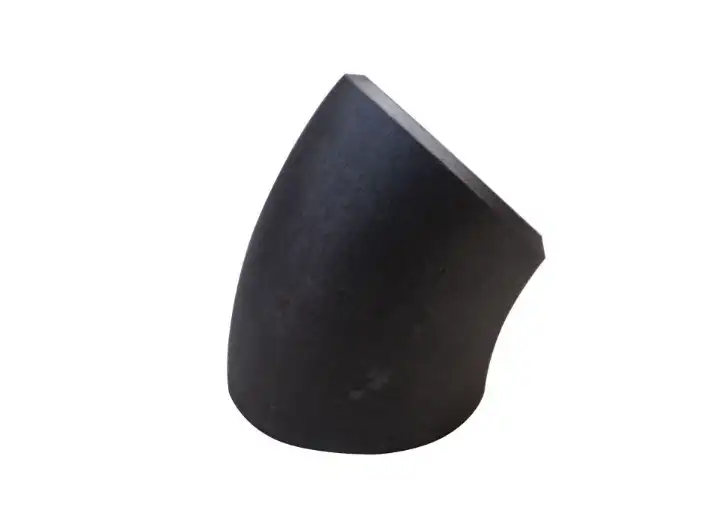
To start the production process, seamless pipe billets are heated to forging temperatures of 950 to 1200°C. This softens the steel so it can be reshaped. Hydraulic pushing machines move the hot pipe over precise mandrels, slowly shaping it into the desired angle while keeping the wall width the same. The grain structure is fine-tuned during this hot-working process, which makes the mechanical qualities better than those of the parent material. Normalizing, cooling, and tempering are the next steps in heat treatment that make the microstructure best for working conditions. Normalizing gets rid of any leftover stresses that could cause cracks. During tempering, controlled cooling rates keep hardness and stiffness in balance, which stops brittle failure when hit firmly
Quality Control Protocols Throughout Production
When raw materials are received, they are inspected carefully. Chemical makeup analysis and mechanical property tests are done to make sure mill certificates are correct. Multiple dimensional checks at different steps of production keep combined tolerances from going over the limits. Ultrasonic gauges are used to measure the thickness of walls to ensure that no weak spots affect the pressure ratings. Surface quality checks find flaws like laps, splits, or laminations that might get worse when the product is stressed. Heat treatment proof through hardness tests and microstructure analysis confirms the right metallurgical qualities. We have ISO 9001:2000 approval and special equipment manufacturing licenses from the government, demonstrating our commitment to organized quality management.
Non-Destructive Testing for Structural Integrity
For important uses, proof needs to go beyond eye inspection. Ultrasonic testing looks at sound wave echoes to detect internal breaks. It can find flaws as small as 2 mm in diameter at depths greater than 50 mm. Using an X-ray or gamma radiation to look at welded types makes pictures that show porosity, inclusions, or incomplete fusion. Liquid penetrant testing shows cracks in the surface that can't be seen with the human eye. Testing the structure's strength under realistic service loads with hydrostatic pressure at 1.5 times the design pressure is necessary to make sure it's solid. When these routines are followed by certified workers using calibrated equipment, they provide concrete proof that parts meet safety standards. Insurance companies and regulatory agencies are asking for this proof more and more.
Seamless Versus Welded Elbows: Manufacturing Trade-offs
When choosing a manufacturing method, you have to weigh the technical needs against the costs. To make seamless joints, you need special hot-forming tools and more energy, which drives up the cost of production by 20 to 35 percent. However, their regular microstructure gets rid of the problems that come with inspecting weld quality, which could lower the cost of quality control. When it comes to bigger diameters, where seamless pipe is harder to find, welded elbows are cheaper, but they need more thorough non-destructive testing. Production wait times are unique. Seamless versions usually ship within 4 to 6 weeks of order confirmation, while welded versions may take 10 to 12 weeks, depending on the complexity of the specifications for a pipe elbow used in power plants.
Selecting the Right Power Plant Pipe Elbow: Materials, Performance & Cost Considerations
Carbon Steel Advantages in High-Temperature Applications
In places where thermal power is generated, carbon steel joints are a significant deal. The ASTM A234 WPB grade has a tensile strength of 60 to 85 ksi and is very easy to weld, which makes it easy to place in the field at a range of system pressures. Because the material is thermally conductive, it keeps steam systems from getting hot spots that speed up rusting. A carbon percentage of about 0.25 to 0.30% gives the material enough strength without making it less flexible. This lets the pipe elbow in the power plant absorb stresses from vibration and heat expansion. According to cost analyses, carbon steel solutions are one-third the price of austenitic stainless steel alternatives when priced per kilogram. This makes them a beneficial choice for large piping networks with thousands of fittings that add up to a lot of capital costs.
Stainless Steel Performance in Corrosive Environments
Stainless steel is needed when process fluids contain chlorides or sulfur compounds or when they undergo wet-dry cycles. Type 316L with 2% to 4% molybdenum doesn't rust or pit in places where carbon steel breaks down quickly. This makes it last longer, from 5 to 8 years in normal situations to 20 years or more in tough ones. When it gets broken, the chromium oxide inactive layer keeps growing back, protecting against corrosion on its own. For austenitic grades, the temperature can go up to 650°C, but because their thermal expansion rates are 50% higher than carbon steel's, they need to be carefully analyzed for stress during system design. Taking replacement costs into account makes the higher price of the material more reasonable. For example, if an elbow fails too soon in a chemical processing unit, the unit could shut down and lose more than $500,000. This represents a significant amount of potential production revenue.
Lifecycle Cost Analysis for Procurement Decisions
Smart buyers look at the total costs of ownership instead of just the purchase price. When you add up the costs of installation work, system downtime, and removal, a $150 carbon steel elbow that needs to be replaced every 7 years because of erosion and rust ends up costing more than a $600 stainless fitting that lasts 25 years. Alloy steel grades like P91, which are priced between carbon and stainless steel, often save money over time in high-temperature steam applications because they resist bending and changing shape better. Using annual deals with approved sellers to buy in bulk can cut unit costs by 15 to 25 percent while still ensuring consistent quality and speedy delivery during busy building times.
Certification and Quality Assurance in Supplier Selection
Third-party licenses are an objective way to prove that a company can make something. ISO 9001 certification demonstrates the organization's commitment to quality management, but site checks are necessary to verify its actual implementation. Special equipment manufacturing permits from the government prove that safety rules for pressure-bearing parts are being followed. Mill test reports that list the chemical make-up and mechanical qualities of each output lot make it possible to find problems in the field. Our factory keeps detailed records that meet international standards. These records give purchasing teams the proof they need to get engineering approvals and meet insurance requirements that look more closely at supply chain quality.
Installation, Maintenance, and Performance Optimization in Power Plant Systems
Stress Analysis and Pressure Rating Verification
The right way to put something together starts long before the welding starts. Using software like CAESAR II for piping stress analysis checks how thermal expansion, weight bending, and pressure forces affect bends during operation. With these figures, you can find out if normal wall thickness is enough or if you need to use Schedule 80 or Type 160. When checking a pressure rating, it's important to look at both the design pressure and the temperature de-rating. For example, a fitting that's rated for 2500 PSI at 100°C might only be able to handle 1800 PSI at 450°C because the material's strength drops at higher temperatures. If you don't do these calculations, bad things will happen; many catastrophic failures of a power plant's pipe elbow can be traced back to choosing the wrong parts during the planning process.
Welding Techniques for Leak-Proof Joints
The correct execution of the welding process ensures the strength of the buttweld link. To keep the microstructures from becoming rigid in the heat-affected zone, qualified welders who follow written welding procedure specifications must keep the heat input exact. To stop hydrogen from causing cracks in carbon steel, it needs to be heated up to 150 to 250°C before it can be used. This depends on the thickness of the wall and the carbon equivalent. Post-weld heat treatment lowers the risk of stress corrosion cracks in thick-walled components by releasing residual stresses. Before filler passes begin, a root pass check with a borescope makes sure that the whole root is penetrated. Our technical team gives contractors specific welding instructions along with the parts they supply. This helps them get quality work the first time it passes a radiographic inspection without having to do expensive rework.
Flow Dynamics and Energy Efficiency Optimization
The shape of the elbow has a big effect on how well the hydraulic system works. Long radius designs with 1.5D curves lower pressure drop by about 60% compared to short radius designs that do the same thing. This saves a lot of energy in high-flow situations. A steam line with a diameter of 300 mm that runs for 8,000 hours a year with a 0.5 PSI pressure drop, thanks to better elbow selection, saves about 15,000 kWh in pumping energy, which is worth $1,800 a year at industrial electricity rates. The smooth inner radius of seamless elbows reduces the turbulence that speeds up erosion in services that are heavy in slurry or particles. Using computational fluid dynamics analysis during the planning process helps identify places where flow can separate and where erosion-resistant materials or changes to the shape can stop wear from happening too soon.
Predictive Maintenance for Extended Service Life
Condition tracking is more important than time-based replacement in modern maintenance methods. Testing the thickness of walls with ultrasonic waves at set times lets you see how much they're losing strength, so you can replace them before the failure risk becomes too high. Vibration analysis finds oscillations caused by flow that weaken connections, so they can be fixed before cracks spread. Infrared thermography finds hot spots that mean there is internal fouling or external insulation decay, which speeds up rusting. These technologies assist maintenance teams in distinguishing between elbows that require immediate attention and those that can continue to operate safely. This helps them keep more extra parts on hand and avoid shutting down machines that don't need to be. When structures get the right care, well-maintained pipe systems often last 30 to 40 years, which is a lot longer than what was expected at the start.
Procurement Guide: How to Buy Power Plant Pipe Elbows with Confidence?
Evaluating Suppliers Beyond Price Quotations
To find trustworthy partners, you need to look at their skills beyond stated price lists. The manufacturing capacity of a provider decides whether they can meet large orders without delaying deliveries. Our 16,000-ton annual production capacity guarantees consistent availability even when demand rises in the industry. Quick technical support, demonstrating technical knowledge, clarifies any questions about specifications before finalizing orders, thereby avoiding costly misunderstandings. Serving more than 300 customers from over 40 countries as an exporter shows that you can react to different paperwork needs, shipping logistics, and quality standards across borders. Suppliers whose financial stability can be checked through business credit records lower the risk of supply interruptions in the middle of a project, which happens a lot to makers who don't have enough money for a power plant pipe elbow.
Understanding Lead Times and Order Quantities
The facts of production plans affect how purchases are planned. Standard orders in popular sizes usually ship within 4 to 6 weeks. Custom configurations that need special tools or materials that aren't in stock, on the other hand, take 10 to 14 weeks. Usually, the minimum order quantity is based on the economic production runs. This is because small lots have setup costs that make each unit more expensive by 25–40%. Strategic buys organize the needs of multiple projects to reach numbers that allow better prices while keeping inventory costs low. Optimizing container loads lowers the cost of ocean freight. Depending on the proper measurements, a 20-foot container can hold between 18 and 22 tons, and a 40-foot container can hold between 25 and 28 tons. These technical issues have a big effect on the delivered costs of foreign purchases.
Certification Documentation for Compliance Verification
Shipments from quality-focused providers come with full paperwork packages. Material test records list the chemical makeup and mechanical qualities of each production heat. This makes it possible to find problems in the field. Inspection reports that check the dimensions make sure they match the ordered specs, which lowers the risk of problems during field fit-up. Ultrasonic or radiography exam results are recorded on non-destructive testing papers. Certificate of Conformance statements officially say that the standards of the purchase order have been met. Our quality management systems make these papers automatically, giving procurement professionals the proof they need to get engineering approvals, meet insurance requirements, and pass governmental inspections that are becoming more and more strict on supply chain quality across all industries.
Negotiation Strategies for Value Optimization
Negotiating well means more than just lowering the price; it also means increasing the overall value. When you commit to a certain amount of work across multiple projects, you can afford to buy tools that lower unit costs and make sure you have enough capacity during times of high demand. Pricing concessions may be possible if delivery schedules are flexible enough to suit how efficiently goods are made. This will also make sure that materials are available on time when installation teams need them. Payment terms that balance the buyer's financial policies with the supplier's cash flow needs will help you build relationships that put your orders first when capacity is limited. Working together as a team to find value engineering options, like using P22 metal instead of P91 when service conditions allow, can save a lot of money without lowering performance.
Conclusion
The choice of pipe elbows is a big decision that involves material science, production quality, and cost. It affects how reliable the system will be in the long run. This study shows that informed buying is more than just comparing price quotes. It also includes a full analysis of the properties of the materials, the manufacturing methods, the certifications, and the performance effects over their entire lives. If procurement workers know the basics of technology, they can make choices that save money on both short-term project budgets and long-term operating costs. This is true whether they are choosing carbon steel for general use because it is cheap or investing in premium alloy grades for tough jobs. When you choose the right materials, have them made well, and work with key suppliers, you can make piping systems that last for decades and work reliably in the harsh conditions of modern industrial processes with a power plant pipe elbow.
FAQ
What distinguishes seamless from welded pipe elbows in critical applications?
When hot forming is used to make seamless elbows, the wall thickness and grain structure are the same all the way through. This is because there is no longitudinal weld seam, which could become weak under internal pressure and temperature cycles. When you shape and join plate pieces to make a welded version, you get heat-affected zones where the material properties are different from the base metal. Modern welding technology has made welded fittings much more reliable, but seamless construction is still the best choice for high-pressure steam service, handling acidic media, and other situations where the 20–35% extra cost is worth it for a power plant pipe elbow.
How do international standards impact procurement decisions?
ASME B16.9 dimensional standards make sure that parts from different makers can work together. This keeps expensive changes from having to be made in the field during installation. The ASTM material standards spell out the required chemical makeup and mechanical properties that show how much warmth and pressure the material can handle. ISO certifications give people faith in quality control methods for the industry. When buying things from around the world, making sure that sellers follow these well-known standards instead of their own specific requirements can help keep parts compatible and make sure that they meet engineering design assumptions, insurance requirements, and legal compliance responsibilities.
What factors determine the best choice of elbow radius?
Long radius elbows with 1.5D curves reduce pressure drop and erosion, which makes them perfect for high-velocity uses that need to save energy and have room for them. Short radius 1.0D versions work well in setups with limited room, but they cause about 60% more pressure loss and put more stress on the bend's tip. The choice is based on how well the hydraulics work, the amount of space available for installation, the cost of materials (long radius fittings use more material), and the seriousness of the service. Erosive slurries always require long-radius setups, even if there isn't much room.
Partner with Oudi for Reliable Power Plant Pipe Elbow Solutions
Choose the right power plant pipe elbow supplier, and the project will be successful in the long run, even if the costs are higher at first. Oudi has been making parts since 1998 and has 26 years of experience. Our parts can handle the tough conditions of thermal power generation, chemical processing, and heavy industry uses. Our ISO 9001:2000-certified factory makes 16,000 tons of steel every year using cutting-edge hot-forming tools and thorough non-destructive testing methods that make sure every fitting meets ASME, ASTM, and foreign standards. Our expert team is available to help with any questions you have about specifications before your order is finalized. This is true whether you need carbon steel elbows for general service that doesn't cost much or specialty metal configurations for use in high temperatures. We've built partnerships with more than 300 customers in more than 40 countries by providing consistent quality, dependable shipping schedules, and thorough documentation that meets the strictest compliance requirements. You can email our team at oudi-04@oudiguandao.com to talk about your specific needs, get technical specs, or set up facility checks that show how committed we are to making every fitting we make better.
References
1. American Society of Mechanical Engineers. (2018). ASME B16.9: Factory-Made Wrought Buttwelding Fittings. New York: ASME Press.
2. ASTM International. (2020). ASTM A234/A234M-20: Standard Specification for Piping Fittings of Wrought Carbon Steel and Alloy Steel for Moderate and High-Temperature Service. West Conshohocken: ASTM International.
3. Nayyar, M. L. (2019). Piping Handbook (8th ed.). New York: McGraw-Hill Education.
4. Becht, C., & Sims, J. R. (2017). An Introduction to Piping Stress Analysis and Design. Houston: Becht Engineering Company.
5. Mohitpour, M., Golshan, H., & Murray, A. (2007). Pipeline Design and Construction: A Practical Approach (3rd ed.). New York: American Society of Civil Engineers Press.
6. Singh, R. K., & Verma, A. (2016). Materials and Corrosion Performance in Power Generation Systems. Materials Science Forum, 867, 112-128.

Need help finding the right solution with our experts. Please contact us.
SINCE 1998 Your Reliable Pipeline Manufacturer