How to Calculate Pipe Reducer Dimensions for Your Project
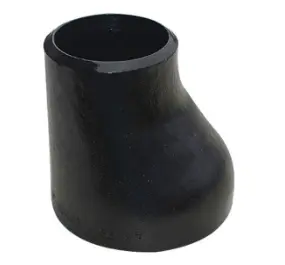
In industrial settings, it's important to get the pipe reducer measurements right in order to keep flow rates at their best and systems functioning properly. A pipe reducer is a transition fitting that lets pipes of different sizes join with little to no pressure loss and smooth fluid flow. To do the calculations, you need to find the input and exit diameters, the transition length, and the angle of reduction. These should be based on the needs of your project, the flow conditions, and any industry standards that apply, like ASME B16.9 or ISO 3419.
Understanding Pipe Reducers and Their Key Dimensions
Pipe reducers are important parts that make it easier for pipe systems in many industries to change diameters. These parts make sure that pipes of different sizes can join without any problems, keeping the structure strong and the flow going smoothly.
Types of Pipe Reducers and Their Applications
In industrial settings, there are two main kinds of reducers that are used, and each one meets different working needs. Concentric reducers have the shape of a uniform cone, which means that the centerlines of both pipes line up exactly. When keeping the flow going in the right way is important, like in vertical installations and pump release situations, these fittings work great. The uniform decrease shape keeps the pressure distribution stable during the shift and reduces turbulence to a minimum.
Eccentric reducers have an off-set form and one flat side, which makes the layout not symmetrical. For horizontal pipe runs, this arrangement is very useful, especially in chemical processes and water treatment plants. The flat side lets all the liquid drain away and keeps it from building up, which is important for keeping the system clean and stopping rust in sensitive uses.
Critical Dimensions for Proper Sizing
Knowing about important physical factors makes sure that specifications are correct and that performance is at its best. The bigger pipe link is shown by the inlet diameter, and the smaller pipe size is shown by the exit diameter. The length of the transition sets the profile of gradual decrease and has a direct effect on the flow features and the estimates of the pressure drop.
Different pressure levels, temperature conditions, and material specs affect how thick a wall should be. Most carbon steel reducers are made to meet ASME standards. Depending on the area, stainless steel versions may be made to meet DIN or JIS standards. The reduction angle and the amount of room needed for installation are both affected by the diameter ratio between the inlet and exit sizes.
Step-by-Step Method to Calculate Pipe Reducer Dimensions
To get accurate measurement calculations, you need to first carefully look over the job and gather all the necessary data. This methodical approach makes sure that all important factors are taken into account before the final specifications are made.
Project Requirements Assessment
Start by writing down all of the system's details, such as the working pressure, temperature range, and fluid properties. The best pipe sizes and reduction ratios are found by calculating the flow rate. When setting dimensional standards, think about plans for future growth and repair access.
The choice of material affects the limits for dimensions and the methods used for manufacturing. For normal uses, carbon steel reducers are very strong and don't cost much. Stainless steel choices, on the other hand, are better at resisting corrosion in harsh settings. Different types of alloy steel work better in situations of high temperature and pressure.
Dimensional Calculation Procedures
The methods used to figure out the reduction length are based on business norms. When it comes to concentric reducers, the length is twice the difference between the radii of the input and exit. When using eccentric reducers, you need to think about where to put the flat side and how to remove it.
When you figure out the wall thickness, you use safety factors and pressure tank design rules. The minimum thickness needs to be able to handle the highest working pressure while also allowing for corrosion and concentrating mechanical stress at the transition zones.
Standard Compliance and Verification
All calculations involving dimensions must be in line with foreign norms. ASME B16.9 has a lot of information about factory-made wrought steel parts, like how to test them and what the limits for sizes should be. ISO 3419 gives different rules for steel pipe parts that are used in the natural gas and oil businesses.
For quality proof, precise measuring tools are used to check the dimensions. Some important measurements are the diameters of the inlets and outlets, the overall length, the regularity of the wall thickness, and the quality of the surface finish. For tracking reasons, the paperwork should have material certificates and dimensional inspection records.
Comparison of Pipe Reducer Dimensioning Approaches and Tools
Using standard formulas and reference lists to do calculations by hand is what traditional methods do. These methods help us understand the basics, but they aren't always accurate or quick enough for big jobs that involve many different types and sizes of reducers.
Manual Calculation Limitations
When working with non-standard sizes or materials, it's easy for mistakes to happen when you do calculations by hand using standard tools. When working on big projects that need a lot of reduction specs, the process takes a long time. Also, manual ways might not take into account all the factors that affect speed and compatibility.
Reference charts and nomographs are good for getting rough ideas, but they can't be changed to fit the needs of a particular project. Most of the time, these tools are made to work in standard conditions, which means they might not show real working conditions or differences in materials that affect the end dimensions.
Advanced Software Solutions
Modern engineering software has big benefits when it comes to accuracy, speed, and the ability to record. These tools use several standards at the same time and can improve measurements based on certain performance standards. Integrating with CAD tools speeds up the planning process and lowers the chance of making mistakes.
Software options let you use parametric modeling, which updates the whole pipe system immediately when the dimensions change. This feature is very helpful when making changes to the design and makes sure that all project paperwork is consistent. More advanced tools do stress analysis and flow calculations to make sure that the choices made about dimensions are correct.
Cost-Benefit Analysis
Buying professional calculators usually pays for itself because they cut down on mistakes, speed up project finish, and make calculations more accurate. A big petrochemical plant said that using automatic dimensioning software for their growth project saved them 30% of the time and 15% of the money they had spent. The higher accuracy got rid of the need for changes in the field and cut down on installation delays.
Best Practices for Optimizing Pipe Reducer Selection and Procurement
To choose the right reducer, you need to balance scientific needs with practical ones like cost, supply, and the supplier's skills. This all-encompassing method guarantees the best performance while staying within the project's budget and time frame.
Technical Specification Alignment
Make sure that the reducer's specs exactly match the system's needs, such as the maximum pressure, temperature, and compatibility of materials. Think about the whole working envelope, which includes starting, regular operation, and emergency situations. Oversizing gives you extra safety, but it also costs more and makes fitting more difficult.
Flow analysis figures out the best shift lengths and decrease ratios. Gradual reductions keep pressure losses and turbulence to a minimum, while steep drops may need to be conditioned further downstream. Computer-based fluid dynamics research helps find the best reducer shape for each job.
Supplier Evaluation and Quality Assurance
Reliable providers show steady quality by having quality control systems in place and getting the right certifications. Specialized certificates, such as PED or ASME stamps, make sure that pressure equipment rules are followed. ISO 9001 certification shows that quality control processes are organized.
Suppliers are chosen based on their manufacturing skills, such as their production capacity, testing facilities, and expert support. Suppliers with advanced testing tools and skilled engineering teams can handle complicated needs and offer technical support throughout the entire project lifecycle.
Strategic Procurement Approaches
Strategies for buying in bulk can cut unit costs by a lot while keeping the supply chain consistent. When you work with the same source for a long time, you can often get better prices and faster service during times of high demand. But weigh the cost saves against the risks of going out of style and the cost of keeping supplies.
Material test records, dimensional inspection certificates, and hydrostatic test results are all examples of quality paperwork that must be kept. Detailed documentation helps with planning the installation, organizing upkeep, and following the rules throughout the whole lifecycle of the equipment.
About Oudi and Our Advanced Pipe Reducer Solutions
Cangzhou Oudi Pipe Manufacture Co., Ltd. has been in business since 1998 and has built a reputation as a reliable pipe reducer maker with experience in a wide range of uses. Our building is 66,600 square meters and is in Mengcun Hui Autonomous County. It is in a great spot for easy access to major transportation networks and ports.
Comprehensive Product Range and Manufacturing Excellence
Standard pipe reducers in carbon steel, stainless steel, and alloy steel can be made to meet American, Japanese, German, and British standards. The ability to produce 16,000 tons per year guarantees a steady supply for projects of all sizes. Accurate measurements and solid materials are guaranteed by high-tech production tools and strict quality control procedures.
Our dedication to excellence is shown by our ISO 9001:2000 quality management system approval and People's Republic of China special equipment production license. To make sure they meet foreign standards, all of our products are put through a lot of tests, such as non-destructive testing and checking the dimensions.
Global Service and Technical Support
Over 300 customers in more than 40 countries and areas, such as Europe, the Americas, Africa, Southeast Asia, and the Middle East, have been happy with our service. With this much knowledge, they have a deep understanding of a wide range of regulatory standards and application-specific needs.
In addition to selling products, we also offer application engineering, help with installation, and ongoing upkeep support as part of our expert support. This all-encompassing method guarantees top performance and helps clients reach their project goals quickly and cheaply.
Conclusion
For industrial plumbing projects to go well, they need to start with accurate pipe reducer size calculations. By knowing the important dimensional factors, calculation methods, and selection criteria, you can make smart choices that improve performance while keeping prices low. Whether to use a concentric or an eccentric reducer relies on the flow direction, drainage needs, and fitting limitations of the application. Modern software and tools for calculations are much better than the old ways of doing things by hand because they are more accurate, faster, and better at keeping records. To do shopping right, you need to carefully evaluate suppliers, check the quality of the goods they offer, and use smart buying methods that balance technical needs with business needs.
FAQ
How do I determine the correct length for a pipe reducer?
The length of the reducer relies on the difference in width and the type chosen. The method for calculating the length of a concentrator is Length = 2 × (D1 - D2), where D1 is the bigger diameter and D2 is the smaller diameter. Because they are skewed, eccentric reducers may need longer lengths to make sure they drain properly.
What factors influence pipe reducer dimensions beyond basic sizing?
Dimensioning is affected by many important factors, such as working pressure, temperature, flow speed, and the choice of material. The required wall thickness goes up as the pressure number goes up, and longer transition lengths may be needed because of heat expansion. The end sizes are also affected by corrosion limits and mechanical stress concentrations.
Which industry standards should I follow for pipe reducer specifications?
ASME B16.9 gives detailed instructions on how to use worked steel parts in North American settings. In Europe, projects usually use DIN or EN standards, while in other countries, projects might use ISO 3419. Before finalizing details, you should always check with the project's unique needs and local laws.
How do concentric and eccentric reducers differ in dimensional calculations?
Concentric reducers keep the shape symmetrical, and it's easy to figure out the length of them. When placing the flat side of an eccentric reducer, there are some extra things that need to be thought about, and you may need to do some special math to figure out the drainage angles and clearance needs. Installation room and support needs are changed by the offset form.
What tolerances are acceptable for pipe reducer dimensions?
Tolerances are set by standards like ASME B16.9, which says that the outside width should be within ±1.6 mm and the theoretical wall thickness should be within ±12.5%. For less important services, wider ranges may be fine, but for more important ones, tighter limits may be needed. In procurement papers, you should always be very clear about the tolerance standards.
Partner with Oudi for Your Pipe Reducer Requirements
Oudi's decades of experience making things and thorough quality systems make sure that their pipe reducer options will work in even the toughest situations. Our engineering team can help you figure out the best sizes and specs for your needs by giving you expert advice. As a top provider of pipe reducers, we offer reasonable prices, on-time delivery, and advanced manufacturing capabilities. Email our technical experts at oudi-04@oudiguandao.com to talk about the needs of your project and get personalized advice. We understand your specific problems and can come up with answers that go above and beyond what you expect because we've worked with over 300 people around the world.
References
1. American Society of Mechanical Engineers. "ASME B16.9-2018: Factory-Made Wrought Buttwelding Fittings." ASME International, 2018.
2. International Organization for Standardization. "ISO 3419:1994 Non-alloy and alloy steel butt-welding fittings for the petroleum and natural gas industries." ISO Publications, 1994.
3. Smith, Robert J. "Pipe Fitting Engineering Design and Installation Practices." Industrial Press, 2019.
4. Chemical Engineering Magazine. "Piping Design Guidelines for Process Plants: Reducer Selection and Sizing." McGraw-Hill Professional, 2020.
5. Petroleum Equipment Institute. "Standards for Steel Pipe Fittings in Oil and Gas Applications." PEI Technical Publications, 2021.
6. Williams, Sarah M. "Advanced Piping Systems: Design, Analysis, and Optimization Techniques." CRC Press, 2022.

Need help finding the right solution with our experts. Please contact us.

SINCE 1998 Your Reliable Pipeline Manufacturer



