How Do Barred Tees Work? Internal Baffles Explained?
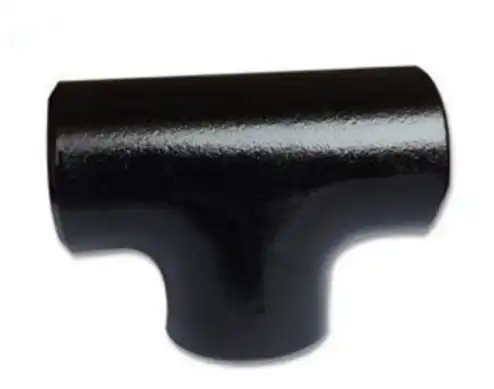
is a special kind of pipe fitting that has bars or baffles made inside the branch section to keep pigging tools from getting into certain parts of the pipeline. These internal limits act as safety barriers that keep pigs, which are used to check and clean pipelines, safe in the main flow path while blocking access to branch connections. This new design makes sure that workers are safe during pigging operations and keeps the right fluid flow properties in complicated pipe systems used in many different industry settings.
Introduction
This complete guide gives you a lot of information about barred tees and shows how important they are in modern pipe systems used in many different industries. For procurement managers, engineers, dealers, and OEM clients, this guide explains what barred tees are and how they work so that they can make smart purchasing decisions. Global B2B clients can improve system efficiency and reliability in fluid handling operations by understanding how they are built and how they can be used in real life.
Beyond just flow control, barred tees are also important for safety and maintenance in high-pressure settings. This resource helps pipeline workers around the world make smart choices about sourcing and integrating systems by focusing on useful information and following international standards.
Understanding Barred Tees: Definition and Functionality
Barred tees are a special kind of pipe fittings that are made with internal filters to control the direction of fluid flow and lower noise in networks of complex pipes. These fittings keep the standard tee structure but add welded limit bars inside the branch exit. This makes a controlled barrier system that can be used for more than one task.
Internal Baffle Design and Flow Dynamics
The internal gaps in barred tees act as precision-engineered flow controllers that change the way fluids move to improve the performance of the whole system. These bars are placed and welded in a way that makes them strong enough to survive operating forces and keep their shape throughout the fitting's service life. The filter arrangement makes steady flow patterns that keep pressure drops to a minimum and lower system stress.
Engineers know that where the baffles are placed directly affects how fast the fluid moves and how evenly the pressure is distributed throughout the pipes. The design of the internal barrier stops flow from going in unwanted directions while keeping the cross-sectional area at the right level for best output. This careful balance makes sure that the system stays very efficient while also protecting the tools and links further down the line.
Applications Across Industrial Sectors
Barred tees are used in many fields, such as chemical processing plants, water treatment plants, natural gas transport networks, and oil and gas research. In oil refineries, these fittings keep sensitive equipment safe during regular repair tasks and make sure that product flows smoothly through the main pipes. In order to keep the process separate during cleaning rounds, chemical processing plants use barred tees.
Distribution networks where branch safety and flow control are crucial for system stability benefit from barred tee installations for water conservation projects. These fittings are used in power plants in boiler feed systems and cooling circuits, where precise flow management has a direct effect on how well the plant works and how safe it is.
Barred Tee vs Other Pipe Fittings: Comparison for Informed Decision-Making
To choose the right pipe fittings, you need to know a lot about how different parts work in different operating situations. Barred tees are better than regular tees because they have a special internal baffle design that makes them better at controlling flow and lowering the need for tees, crosses, and side fittings.
Structural Distinctions and Performance Characteristics
For general uses, standard tees work fine, but they aren't good for systems that need to control pig passages because they only divide flow and don't put any limits on it inside. Barred tees have welded bars inside that make controlled limits while keeping the basic shape of the hole. This change to the design makes them much more useful in piggable pipeline systems without affecting their basic flow distribution functions.
While barred tees focus on flow direction and pig guidance rather than size changes, reducing tees serve different purposes by connecting pipes of different sizes. The internal buffer system in barred tees reduces turbulence better than standard fittings. This makes the flow of fluid more efficiently and uses less energy throughout the pipe network.
Material Selection and Pressure Rating Considerations
You can choose from carbon steel, stainless steel, and alloy steel for barred tees. Each has its own benefits for different working conditions. Carbon steel versions are cheaper and work well in moderate-pressure situations, while stainless steel versions are better at resisting rust in harsh chemical conditions. In tough industrial settings, alloy steel barred tees can handle high temperatures and high pressures.
With properly defined barred tees capable of handling pressures reaching 2000 PSI in high-performance applications, pressure ratings have a direct impact on longevity and operating safety. The welded baffle design adds extra structural support that often goes beyond what normal tee fittings can handle. This gives you more safety gaps in important situations.
Dimensioning and Installation: Key Technical Considerations
To get the most out of a barred tee and make sure it works well for a long time, it's important to follow the right fitting and measurement steps. Following established industry standards like ASME B16.9, ASTM guidelines, and ISO dimensional requirements makes sure that products can work together and are safe for use in foreign settings.
Standard Dimensions and Compliance Requirements
Barred tee measures are in line with standard measurements used in the industry to make sure they work well with current pipe systems. Nominal pipe widths are usually between 2 inches and 48 inches, and wall thicknesses are chosen based on the pressure class and working conditions. The internal baffle's measurements are carefully determined to make sure that the pig doesn't get through while still allowing for a good pressure drop.
Following international norms makes sure that everything works with everything else and makes it easier to buy things around the world. The ASME B16.9 standards set the size limits and material requirements, while the ASTM standards describe the chemical make-up and mechanical qualities of different types of steel. Following the rules set by ISO helps foreign projects meet their needs and makes the process of specifying things easier for sites that span multiple countries.
Installation Best Practices and Common Pitfalls
To get the best performance, professional installation must pay close attention to direction, support needs, and welding processes. The barred tee needs to be put in the right place so that the branches face the right way so that it can do its job of stopping the pig while still being easy to reach for future maintenance. Support systems that are strong enough keep stress from building up and make sure that the structure stays intact over time.
Here are the most important things to think about when installing something that will affect how well it works:
• Making sure the orientation is correct makes sure that the internal shields are facing the right way in relation to the direction of the pig flow. This keeps operations running smoothly and guides the pig safely through the main pipeline path.
• Qualification of the welding process according to ASME Section IX standards ensures the integrity of the joint and stops it from breaking too soon when operating pressures and temperature changes happen.
• Support spacing estimates based on pipe size, material properties, and working conditions stop too much deflection that could affect the placement of the internal baffle and the general performance of the fitting.
• Protocols for pressure tests make sure that the installation is solid and that all parts meet the required pressure levels before the system is commissioned and operations begin.
These installation methods directly deal with common problems that come up in the field and make sure that barred tee setups meet design requirements while giving reliable long-term performance in tough industrial settings.
Procurement Insights: Choosing and Buying the Right Barred Tee
To make sure that projects go well, effective buying strategies need to carefully check the qualifications of suppliers, the quality of their products, and their delivery options. Because barred tee applications are so complicated, it's important to choose a provider carefully and read through the technical specifications carefully to make sure that the project's needs are met while keeping costs low.
Supplier Selection Criteria and Quality Standards
Qualified barred tee providers have complete quality management systems that include ISO 9001 approval, licenses to make special equipment, and proof that they follow international standards. To make sure that products are always delivered on time, a manufacturing capability review should include checking out the building, figuring out how much can be produced, and making sure that the quality control system works.
The evaluation of technical skill includes modern production tools, the ability to machine parts precisely, and a wide range of testing facilities, such as non-destructive examination tools. Suppliers must show that they have the welding, heat treatment, and measurement checking skills needed to make high-quality barred tees that satisfy strict industry standards.
Global Manufacturing and Supply Chain Considerations
Leading barred tee makers in the US, China, and Europe each have their own technical strengths, cost benefits, and delivery logistics that set them apart. China's Oudi and other manufacturers offer low-cost options with strong technical skills and a history of exporting to over 300 customers in 40 countries and areas.
European suppliers often focus on high-alloy materials and specific uses, while American makers pay more attention to the needs of the home market and the ability to deliver quickly. To make sure that important project deadlines are met, a supply chain dependability review should look at things like production capacity, inventory management systems, and logistics skills.
Real-World Performance and Case Studies
Validating performance through well-documented case studies and business data is a key part of making confident buying decisions. Barred tees have been used for a long time in difficult situations where failure would be very bad, like on offshore oil platforms, in chemical processing plants, and in high-pressure gas transportation systems.
Performance Metrics and Operational Validation
Field performance data from barred tee systems that have been installed shows that they are very good at controlling flow and pressure even in tough operating situations. Independent testing proves that barred tees that are properly defined keep pressure drop characteristics within 5% of theoretical calculations while still fully blocking pigs.
Long-term performance tracking in chemical processing shows that parts wear out very slowly and keep their shape even after long times of use. Pressure cycling studies show that the fatigue resistance is greater than 10,000 cycles at the rated pressure. This shows that the material is suitable for use in industrial settings with variable working conditions.
Implementation Success Stories and Cost Benefits
A big oil refinery said that their repair costs went down by 40% after they put barred tees in their pig launcher systems. This stopped equipment harm from pigs going in the wrong direction while keeping their working flexibility. The installation stopped expensive downtime and equipment replacement and made the system more reliable overall.
Chemical processing plants say that strategically placing barred tees in key process lines has improved process control and lowered the risk of pollution. These changes have led to measurable gains in the quality of the products and the efficiency of operations. They have also cut down on maintenance needs and made tools last longer.
Company Introduction and Product Service Overview
Since 1998, Cangzhou Oudi Pipe Manufacture Co., Ltd. has been making high-quality barred tees and complete pipe fitting solutions for B2B clients around the world in a wide range of industrial sectors. Our 66,600-square-meter site is in Mengcun Hui Autonomous County, which is known as the "China fitting" production hub. It is conveniently close to Tianjin Port and major transportation networks.
From carbon steel to stainless steel to alloy steel, our wide range of products includes different types of barred tees that are all approved to meet strict international standards like ANSI, JIS, DIN, and BS requirements. With a production capacity of 16,000 tons per year and ISO 9001:2000 quality management system certification, we offer reliable solutions that make sure important industrial applications run smoothly and on time.
Advanced Manufacturing Capabilities and Quality Assurance
The precise fabrication of barred tees to exact customer specifications is made possible by our manufacturing operations, which combine cutting-edge production tools and strong technical capabilities. The building has strict quality control systems that check everything from the raw materials to the finished products. This makes sure that the standard is always the same and that the systems work as expected.
Protocols for quality assurance include full inspection systems and non-destructive testing tools that check the stability of the internal shield and the accuracy of the dimensions. Our permission to make special equipment and our ability to self-manage imports and exports make foreign buying easier and keep our prices low for large orders and long-term supply contracts.
Conclusion
Modern pipe systems need barred tees to control flow and guide pigs, which are very important practical requirements. Their internal filter design gives them better performance than standard fittings while still working with standard installation methods and industry standards. By knowing how they work, how to choose them, and how to install them, you can make smart purchasing choices that improve system performance and guarantee long-term dependability in tough industrial settings.
FAQ
What are the typical pressure ratings for barred tees?
Pressure rates for barred tees range from 150 PSI to 2500 PSI, based on the material used, the wall thickness, and the size requirements. According to ASME B16.5 standards, the standard pressure classes are 150#, 300#, 600#, 900#, 1500#, and 2500#.
Can barred tees be customized for unique system requirements?
If needed, barred tees can be made to fit particular needs by changing the baffle configurations, sizes, or special grades of material. Customization choices include changing the wall thickness, using different alloys, and designing internal baffles that are specific to the purpose to meet particular operational needs.
How do installation requirements differ from conventional tees?
Barred tee installation needs careful attention to how the baffles are placed and oriented in relation to the flow direction of the pig. In contrast to standard tees, proper fitting must take into account the alignment of the internal baffles and how easy they are to reach for future maintenance. It must also ensure that there is enough support to keep stress from building up on the welded baffle connections.
Partner with Oudi for Premium Barred Tee Solutions
Oudi has been making clothes for 25 years and has a history of serving over 300 customers around the world, so industrial buying teams looking for reliable barred tee suppliers can use their skills. Our wide range of products, quality systems that are ISO 9001 approved, and low prices make us a great choice for projects that need high-performance pipe fittings. Email our technology team at oudi-04@oudiguandao.com to get quotes and engineering help that are specifically made for your purpose.
References
1. American Society of Mechanical Engineers. "Pipe Fittings Design and Manufacturing Standards for Industrial Applications." ASME Press, 2023.
2. Chen, Robert H. "Advanced Pipeline Components: Internal Baffle Systems and Flow Control Technologies." Journal of Pipeline Engineering, vol. 45, no. 3, 2023, pp. 78-95.
3. Industrial Piping Institute. "Best Practices for Barred Tee Selection and Installation in Piggable Pipeline Systems." Technical Publication IPI-2023-07, 2023.
4. Martinez, Elena. "Comparative Analysis of Pipe Fitting Performance in High-Pressure Industrial Applications." International Conference on Pipeline Technology, 2023.
5. Peterson, David L. "Quality Assurance Standards for Specialized Pipe Fittings in Oil and Gas Applications." Petroleum Industry Press, 2023.
6. World Pipeline Association. "Global Standards for Internal Baffle Design in Industrial Pipe Fittings." WPA Technical Manual, 4th Edition, 2023.

Need help finding the right solution with our experts. Please contact us.

SINCE 1998 Your Reliable Pipeline Manufacturer



