How to Check the Pressure Rating of a Carbon Steel Elbow?
When engineers and purchasing teams check the pressure rating of a piping component, the first step is not to look for a single pressure number printed on a product page. For carbon steel elbows, the applicable pressure-temperature capability depends on the fitting standard, material, nominal pipe size, connecting wall thickness, design temperature, and the piping code used for the project. ASME B16.9 specifically associates the pressure rating of a factory-made wrought buttwelding fitting with the wall thickness of an equivalent pipe of the same size and material. This distinction matters because an elbow is part of a piping system rather than an isolated pressure vessel. A carbon steel elbow may be manufactured to a recognized fitting standard such as ASME B16.9 and a material specification such as ASTM A234/A234M, but those references alone do not provide one universal allowable pressure for every operating condition. ASTM A234/A234M covers wrought carbon and alloy steel fittings for pressure piping and pressure vessel applications at moderate and elevated temperatures, including both seamless and welded construction. A practical pressure-rating check therefore starts with the complete identification of the fitting and then connects that information to the design conditions of the piping system.
Start With the Elbow Standard and Product Identification
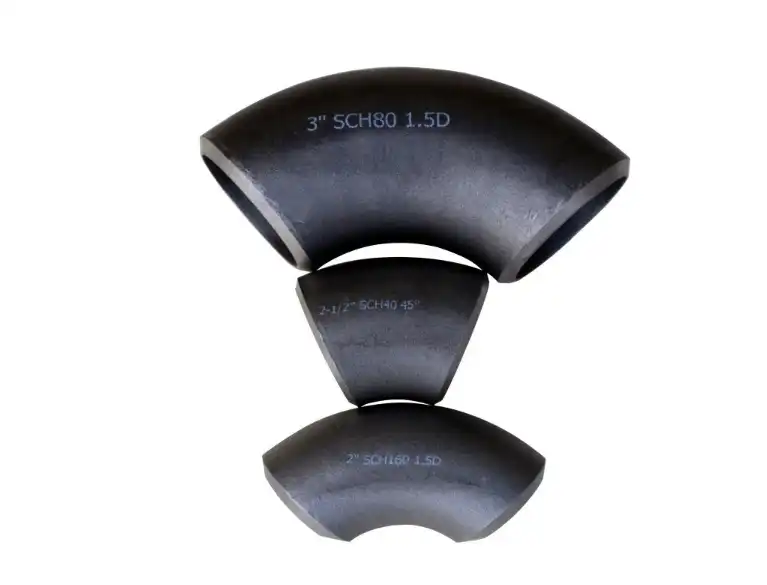
Before calculating or confirming a pressure rating, identify exactly what type of elbow is being considered. The first details to verify are the elbow angle, nominal pipe size, connection type, dimensional standard, material specification, grade, and wall thickness or schedule.
For a typical butt-welding elbow, ASME B16.9 is an important reference because it covers factory-made wrought butt-welding fittings and specifies dimensions, tolerances, ratings, testing, and marking requirements. The 2024 edition covers sizes from NPS 1/2 through NPS 48.
The product marking should therefore be compared with the purchase specification and material documentation. If an elbow is identified as ASTM A234 WPB, for example, that material designation should be supported by the relevant material certificate rather than treated as a pressure rating by itself. ASTM A234/A234M defines requirements for wrought carbon and alloy steel fittings, while the actual pressure capability must be established using the applicable design rules and service conditions.
This step also prevents a common purchasing mistake: comparing two elbows only by nominal diameter. Two elbows may have the same NPS while having different wall thicknesses, materials, or design conditions, so their allowable pressure may not be the same.

Match the Elbow With the Connecting Pipe
For ASME B16.9 fittings, the connecting pipe is central to the pressure-rating determination. The standard states that fitting pressure rating is associated with the wall thickness of pipe of equivalent size and material, and its pressure-rating basis allows the fitting to be evaluated using the applicable rules for equivalent straight seamless pipe.
This means that an engineer should not treat “carbon steel elbows” as a sufficient description. The NPS and wall thickness need to be identified together with the carbon steel elbows. In many projects, the schedule designation provides a convenient way to identify the pipe wall, but the actual specification and design code still need to be checked.
For example, an elbow installed in a heavier-wall piping system cannot automatically be assigned the same allowable pressure as an elbow installed in a lighter-wall system simply because both are nominally the same size. The pressure calculation must use the applicable wall thickness and material information for the fitting and its connecting pipe.
The relationship between the elbow and pipe is especially important when replacing an existing fitting. A replacement elbow should match the original piping requirements rather than being selected only because its outside diameter and angle appear correct.
Verify the Material Grade and Mechanical Properties
Material identification is another essential part of the pressure-rating check. Carbon steel fittings can be supplied under different material specifications and grades, and those specifications establish chemical, mechanical, manufacturing, and inspection requirements.
ASTM A234/A234M is one relevant specification for wrought carbon and alloy steel fittings used in pressure piping and pressure vessel fabrication at moderate and elevated temperatures. The specification covers seamless and welded fittings and includes requirements related to material properties and testing.
The grade should therefore be verified through the material certificate rather than inferred from the appearance of the elbow. Mechanical properties such as tensile strength and yield strength are relevant to the allowable stress used in engineering calculations, but the final allowable pressure still depends on the applicable code, temperature, geometry, and wall thickness.
For procurement purposes, the material test certificate should correspond to the actual heat and product being supplied. This provides a traceable connection between the specified material grade and the physical fitting delivered to the project.
Check Wall Thickness, Schedule, and Elbow Geometry
Wall thickness is one of the most important variables in pressure containment. A larger nominal size does not automatically mean a higher pressure capability, because the pressure-bearing capacity also depends on the thickness available to resist the internal load.
For a standard elbow, the geometry is also important because bending changes the stress distribution compared with a straight pipe. ASME B16.9 establishes dimensional requirements for factory-made wrought buttwelding fittings, while the applicable piping design code provides the engineering framework for determining whether the fitting is suitable for the intended service.
When checking a product, compare the actual fitting dimensions with the specified standard. The outside diameter, wall thickness, center-to-end dimensions, elbow radius, and end preparation should correspond to the project requirements.
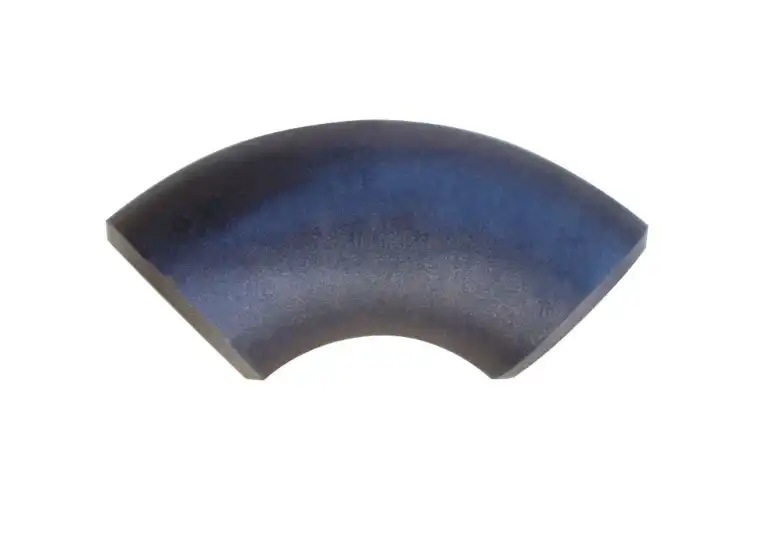
This is particularly useful when reviewing carbon steel elbows from different manufacturers. Two products may both be described as a 90-degree carbon steel elbow, yet their material specifications or wall thicknesses may differ. The correct comparison is therefore based on the complete technical designation rather than the product name alone.
Consider Design Temperature and Allowable Pressure
Pressure and temperature should always be considered together. A pressure value without a corresponding temperature can give an incomplete picture of the fitting's allowable operating conditions.
As temperature increases, the allowable stress of many engineering materials can decrease, which can reduce the allowable pressure of the piping component. The applicable piping code and material standard should therefore be used to determine the allowable stress or pressure at the actual design temperature rather than relying on a room-temperature value.
The same principle applies to low-temperature service. ASME B16.9 notes that fittings used under the jurisdiction of the ASME Boiler and Pressure Vessel Code, ASME piping codes, or governmental regulations are subject to applicable limitations, including restrictions associated with maximum temperature and low-temperature material use.
Consequently, a supplier's general statement such as “high-pressure carbon steel elbow” is not enough for engineering approval. The buyer should compare the stated material, size, wall thickness, temperature range, and applicable standard against the project's design conditions.
Use the Applicable Piping Code for the Calculation
The pressure rating of a fitting should ultimately be considered within the piping code governing the installation. ASME B16.9 provides the fitting standard, but it does not replace the design requirements of the applicable piping code.
For example, a project may be designed under a particular section of ASME B31, depending on the type of piping system. The pressure calculation therefore needs to use the appropriate code rules together with the fitting's material, dimensions, and service conditions. ASME B16.9 states that allowable pressure ratings for fittings designed to its requirements may be calculated as for straight seamless pipe of equivalent material under the applicable ASME B31 rules, using equivalent pipe size, wall thickness, and material data.
This is a more reliable approach than assigning a universal “maximum pressure” to every carbon steel elbow. It also explains why a product specification should identify the relevant standard and material instead of giving only a single pressure number without context.
Distinguish Pressure Rating From Pressure Testing
Pressure testing is useful, but it should not be confused with the calculation of the allowable operating pressure. A hydrostatic test subjects the component or system to a specified test condition so that conformity with the applicable testing requirement can be evaluated. Passing that test does not mean that the test pressure becomes the continuous operating pressure of the elbow.
For this reason, the testing documentation should be reviewed alongside the material certificate and dimensional information. ASTM A234/A234M includes hydrostatic testing among its requirements for covered fittings, while additional inspection or testing requirements may be specified for a particular order.
Pneumatic testing requires additional consideration because compressed gas stores significantly more energy than water under comparable pressure conditions. Where pneumatic testing is specified, the project procedure, applicable code, exclusion zones, and safety controls should be followed rather than treating it as a simple alternative to hydrostatic testing.
The practical purpose of testing carbon steel elbows is therefore to verify compliance under the specified test conditions, while the allowable operating pressure is determined through the applicable design basis.
Review Manufacturing and Inspection Records
Manufacturing quality is another part of the pressure-rating verification process. Forming, heat treatment, welding where applicable, dimensional control, and inspection all contribute to whether a fitting conforms to its specified material and manufacturing standard.
ASTM A234/A234M allows several forming methods and establishes requirements intended to prevent harmful imperfections. The specification also includes mechanical testing and hydrostatic testing requirements for covered fittings.
For procurement, this means that documentation is not merely administrative. The material test certificate, inspection records, dimensional inspection results, and applicable test reports allow the buyer to connect the physical product with the specified engineering requirements.
Non-destructive examination may also be required depending on the purchase specification, service conditions, applicable code, or supplementary requirements. It should not, however, be presented as a universal method for calculating pressure rating. NDT is an inspection tool; the pressure-rating determination still depends on the engineering design basis.
Check the Actual Service Conditions
The final pressure check should reflect the conditions in which the elbow will operate. Design pressure and design temperature are obvious starting points, but the engineer may also need to consider fluid characteristics, corrosion allowance, cyclic loading, thermal expansion, vibration, external loads, and the consequences of a fitting failure.
A corrosive service, for example, may require an allowance for material loss over the design life. In cyclic service, repeated pressure or temperature changes can introduce fatigue considerations that are not captured by a simple static pressure comparison.
This is why the pressure rating printed on a supplier document should not be treated as an independent approval for every installation. The fitting must satisfy the complete design basis of the piping system, including the governing code and service conditions.
For demanding applications, the purchasing specification should also state the required material grade, fitting standard, dimensions, inspection requirements, documentation, and testing requirements before the order is placed. That gives the supplier a clear technical basis and makes the delivered product easier to verify.
Keep Traceable Documentation for Every Elbow
A pressure-rating review becomes much more useful when the supporting documents can be traced back to the actual product. The fitting marking, material certificate, purchase order, dimensional inspection record, and applicable test documentation should identify the same material and product information.
This traceability is particularly valuable when a piping system contains many elbows from different production batches. If a question arises during installation, inspection, or maintenance, engineers can determine which material heat, specification, size, and manufacturing documentation belong to the fitting in question.
For buyers of carbon steel elbows, requesting complete technical documentation before shipment can also reduce misunderstandings about pressure requirements. The supplier should be able to confirm the applicable fitting standard, material grade, dimensions, manufacturing requirements, and inspection documentation rather than providing only a general statement about pressure capacity.
Conclusion
Checking the pressure rating of a carbon steel elbow requires more than finding a maximum pressure value in a product catalogue. The correct approach is to identify the fitting standard and material, confirm the nominal size and connecting wall thickness, establish the design temperature and pressure, and then apply the relevant piping code and engineering rules. For ASME B16.9 fittings, the pressure-rating basis is connected to an equivalent pipe of the same size, material, and wall thickness, so the elbow should be evaluated as part of the complete piping design rather than as an isolated component.
Material certificates, dimensional records, inspection reports, and applicable pressure-test documentation provide additional evidence that the supplied fitting conforms to the specified requirements. ASTM A234/A234M is one important material specification for wrought carbon and alloy steel fittings used in pressure piping, but the material grade itself should not be treated as a standalone pressure rating.
For projects requiring dependable documentation and consistent manufacturing, Cangzhou Oudi Pipe Manufacture Co., Ltd. can support buyers with carbon steel pipe fittings manufactured for industrial piping applications. When selecting carbon steel elbows, engineers and purchasing teams should provide the complete technical specification and verify the relevant documentation before approving the fitting for service. This approach makes the pressure-rating check more traceable, technically consistent, and aligned with the actual requirements of the piping system. For more information or inquiries, please contact us at oudi-04@oudiguandao.com.
FAQ
1. What is the typical pressure rating range for carbon steel elbows?
The pressure rating of carbon steel elbows can vary widely depending on factors such as size, schedule, and grade, but typically ranges from 150 psi to 6000 psi or higher.
2. How does temperature affect the pressure rating of carbon steel elbows?
As temperature increases, the allowable working pressure of carbon steel elbows generally decreases due to reduced material strength at elevated temperatures.
3. Are seamless carbon steel elbows better than welded ones for high-pressure applications?
Seamless carbon steel elbows often have higher pressure ratings than welded ones due to the absence of weld joints, making them preferable for high-pressure applications.
4. How often should pressure tests be conducted on carbon steel elbows?
The frequency of pressure tests depends on the application, industry standards, and local regulations. Critical systems may require more frequent testing than standard applications.
References
1. ASME B16.9-2018: Factory-Made Wrought Buttwelding Fittings. American Society of Mechanical Engineers.
2. Nayyar, M. L. (2000). Piping Handbook (7th ed.). McGraw-Hill Education.
3. Smith, P., & Zappe, R. W. (2004). Valve Selection Handbook: Engineering Fundamentals for Selecting the Right Valve Design for Every Industrial Flow Application (5th ed.). Gulf Professional Publishing.
4. ASTM A234/A234M-19: Standard Specification for Piping Fittings of Wrought Carbon Steel and Alloy Steel for Moderate and High Temperature Service. ASTM International.
5. Mohitpour, M., Golshan, H., & Murray, A. (2007). Pipeline Design & Construction: A Practical Approach (3rd ed.). ASME Press.
6. Antaki, G. A. (2003). Piping and Pipeline Engineering: Design, Construction, Maintenance, Integrity, and Repair. CRC Press.

Need help finding the right solution with our experts. Please contact us.

SINCE 1998 Your Reliable Pipeline Manufacturer