The Role of Carbon Steel Elbows in LNG Pipeline Projects
LNG infrastructure includes liquefaction plants, storage facilities, loading systems, regasification terminals, and the natural gas pipelines connected to them. Within these facilities, elbows are essential because piping rarely follows a perfectly straight route. They redirect the flow, accommodate changes in layout, and connect different sections of a piping system. However, material selection becomes especially important when the service involves liquefied natural gas because LNG is maintained at approximately −162°C. At this temperature, ordinary assumptions about carbon steel performance cannot simply be applied to cryogenic service. This distinction is important when discussing carbon steel elbows in LNG projects. Carbon steel is often used for industrial pipelines owing to its strength, availability, weldability, and reasonable cost; however, selection depends upon the actual design temperature and service circumstances. Some non-cryogenic or gas-service elements of an LNG plant could be acceptable in carbon steel elbows, but pipe that is carrying LNG at cryogenic temperatures must be built of materials that are specifically suitable for that environment. For example, NFPA 59A specifies austenitic stainless steel for pipe and tubing in the covered LNG service at temperatures below −20°F (−29°C). Therefore, it is not enough to list the general qualities of carbon steel elbows to explain the location of carbon steel elbows in an LNG project. The engineer and procurement team should consider the pipe service, design temperature, pressure, material grade, connection method, dimensional standard, fabrication quality, and related legislation when specifying an elbow.
How Elbows Support LNG Facility Piping Layouts?
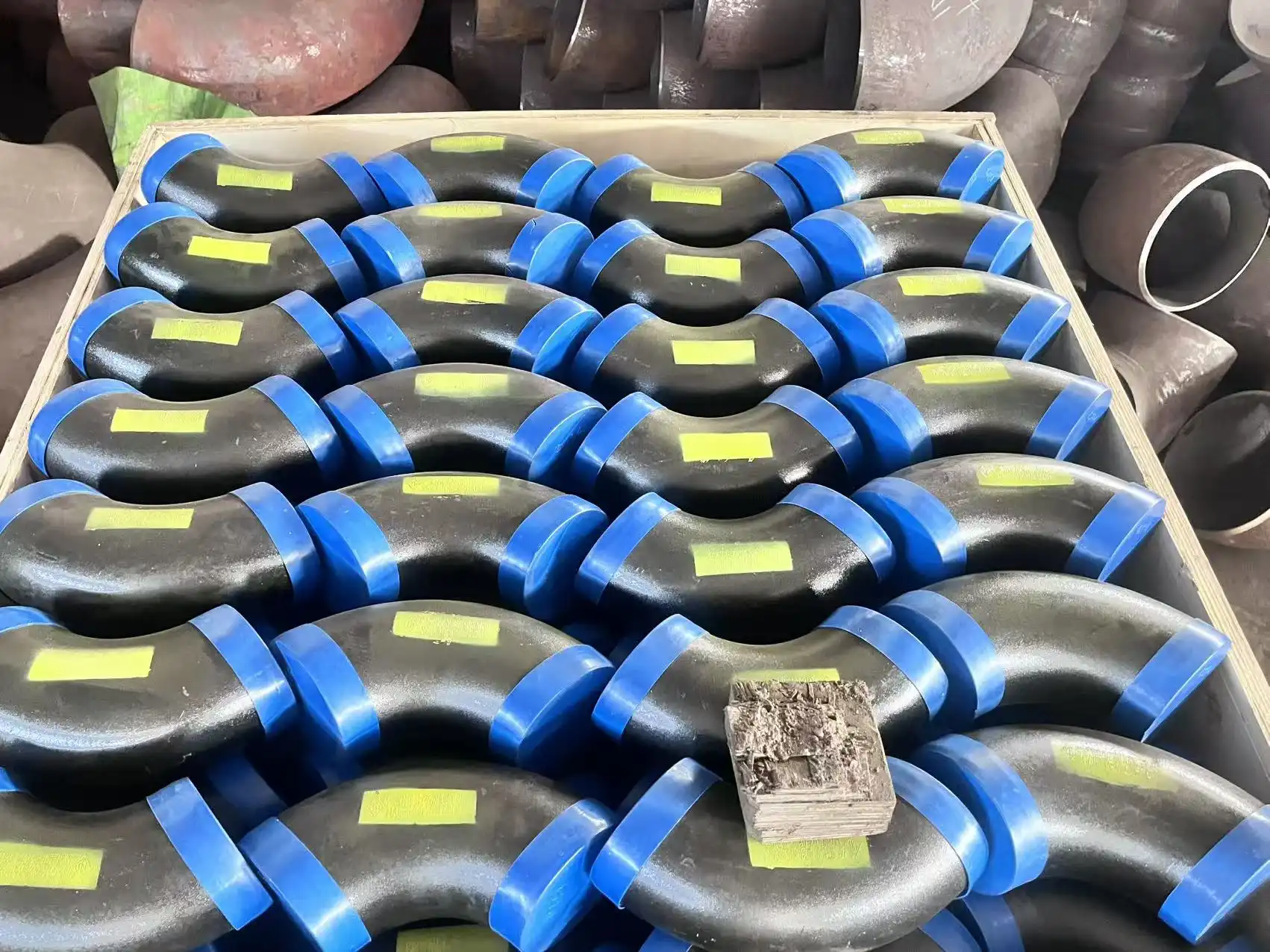
An elbow is just a directional fitting. It permits a pipeline to reverse direction without the need for several straight portions joined by makeshift structures. In a big LNG plant, pipe may need to go around equipment, structural supports, vessels, access spaces, pumps, compressors, and other process systems. By choosing the right elbow, engineers may implement these changes in direction so that the plumbing stays regulated and predictable.
The most typical designs are 45-degree and 90-degree elbows; however, various angles may be fabricated to suit the needs of a particular project. Long-radius elbows are commonly considered when designers seek a smoother change of direction and less local flow disruption than a sharper curve would give. Proper layout is dependent upon pipe size, process conditions, available space, and project parameters.
Therefore, the use of carbon steel elbows must be seen as part of the whole pipe layout, not as a separate portion. Elbows should conform to the dimensions, wall thickness, connection requirements, pressure design, and material specification of the neighbouring pipes.
Material Selection Must Reflect Cryogenic Conditions
Temperature is the most critical concern in an LNG application. LNG is a cryogenic fluid, and the material of the pipe components must have sufficient mechanical qualities at the minimum design temperature. Carbon steel satisfactory for typical ambient temperature usage cannot be considered to be satisfactory for service at cryogenic temperatures.
One of the primary limitations is the description of carbon steel elbows as a universal LNG pipe solution. The appropriateness of a carbon steel grade is governed by the stated temperature range and requirements of the relevant design code and project specification. Engineers may specify materials that have the proper low-temperature toughness (e.g., austenitic stainless steels) instead of ordinary carbon steel in areas that will transport LNG at cryogenic temperatures.
A good illustration of this idea is NFPA 59A, which requires austenitic stainless steel for pipes and tubing in specified services below -20°F (-29°C). The actual selection of material for every individual project remains governed by the applicable code, process circumstances, equipment layout, and owner needs.
So procurement teams shouldn’t be selecting an elbow only by asking whether it’s carbon steel. They should first determine the design temperature, operating temperature, minimum design metal temperature, pressure rating, fluid condition, and appropriate material specification.
Where Carbon Steel Elbows Can Be Practical?
Material selection in cryogenic LNG service is subject to severe restrictions, while carbon steel still has relevance for a number of industrial pipe uses in LNG plants. Not all lines in an LNG plant are liquid methane at cryogenic temperature. Facilities have varied pipe systems such as gas-service lines, utility systems, drainage arrangements, firewater systems, and other process or auxiliary services with varying operating conditions.
Carbon steel elbows might be a realistic choice if the design circumstances are within the approved service range of the chosen carbon steel grade. Carbon steel is common, well known to fabricators, and has established production and welding techniques. If the material is technically suitable for the service, these properties may make sourcing and production easier.
The conclusion is that cost and availability should come after technical appropriateness, not replace it. If the material does not meet the low-temperature performance necessary, then a cheaper initial material cost does not make a carbon steel elbow suitable for a cryogenic line.
Managing Changes in Piping Direction
One of the most obvious uses for elbows is that of pipeline routing. LNG facilities include dense process areas with piping that must link equipment and provide access for inspection, operation, and maintenance. Directional fittings allow you to route pipe around these limits without making the assembly overly difficult.
The geometry of the pipe system is also influenced by the specified elbow angle. If you’re making a sharp turn, a 90-degree elbow could work, but a 45-degree layout creates a less severe turn. Longer radius designs may also be utilised if the project demands a smoother direction of flow or more flexibility in planning.
But directional variations should be analysed using pipe supports and stress analysis. An elbow is a change in the geometry of the pipe run, and it may affect the manner in which thermal expansion, weight, pressure thrust, and other stresses are transmitted through the system. Hence, choosing an elbow with the right nominal diameter is not sufficient. The whole mechanical design must take the fitment into account.
Pressure Loss and Flow Considerations
Every elbow introduces a local change in flow direction, which can create additional pressure loss. The magnitude depends on factors such as elbow geometry, radius, pipe diameter, flow velocity, surface condition, and the properties of the fluid. For large LNG and natural gas facilities, these local losses may be considered alongside the pressure losses of straight pipe, valves, reducers, tees, and other fittings.
A properly selected elbow can help designers maintain a predictable piping geometry and avoid unnecessary restrictions. This does not mean that an elbow inherently reduces pressure loss. Instead, the objective is to select an appropriate geometry so that the directional change produces an acceptable hydraulic effect within the overall system.
For high-flow applications, engineers may therefore compare different carbon steel elbows configurations during hydraulic design. Long-radius elbows can be considered when the project requires a smoother directional transition, while the final selection should be based on the project's flow calculations and applicable specifications rather than a general assumption that one configuration is always superior.
Thermal Movement Requires System-Level Design
Temperature changes can cause piping materials to expand or contract. LNG facilities can experience significant temperature differences between startup, normal operation, shutdown, maintenance, and other operating conditions. These movements need to be considered during piping layout and stress analysis.
An elbow can contribute to the flexibility of a piping system because changes in direction can provide geometric flexibility. Engineers may use bends as part of a planned flexible arrangement, but the elbow itself should not be described as a standalone solution for thermal expansion.
The complete system needs to account for pipe length, material properties, support locations, anchors, guides, operating temperatures, and other loads. In cryogenic systems, insulation and thermal management are also important parts of the design. The objective is to control movement and stresses throughout the piping network rather than expecting an individual elbow to absorb all thermal displacement.
This distinction is particularly important when comparing ordinary industrial piping with cryogenic LNG piping. The material, insulation system, supports, and stress analysis must work together.
Fabrication and Welding Quality Matter
The performance of an elbow depends not only on the material selected but also on how the fitting is manufactured, formed, welded, inspected, and connected to the rest of the pipeline. Poor dimensional control can make installation more difficult, while unsuitable welding practices can compromise the integrity of a piping assembly.
For project procurement, dimensional conformity should therefore be checked alongside material requirements. Depending on the project specification, documentation may include material certificates, dimensional inspection records, heat numbers, test reports, and other quality records. Welding procedures and welder qualifications may also be subject to the governing code.
This is where a professional supplier can add practical value. Instead of treating an elbow as a simple shaped piece of steel, a project supplier should be able to identify the applicable material standard, dimensional requirements, wall thickness, end preparation, manufacturing route, inspection requirements, and traceability expectations.
For LNG projects in particular, these details help procurement teams distinguish between a general-purpose fitting and a component that has been selected and documented for a specific engineering application.
What Buyers Should Confirm Before Ordering?
Before purchasing carbon steel elbows for an LNG-related project, buyers should provide the supplier with the relevant engineering information rather than relying only on nominal pipe size. Pipe diameter, wall thickness or schedule, elbow angle, radius, material grade, pressure class where applicable, connection type, design temperature, operating temperature, and applicable standards all influence the correct product selection.
The intended service is equally important. An elbow installed in a non-cryogenic gas line should not automatically be treated as equivalent to an elbow installed in a line carrying LNG at cryogenic temperature. The two applications can have very different material requirements.
Buyers should also verify whether the project requires specific inspection or documentation. Depending on the owner and applicable specifications, this can include chemical composition, mechanical properties, heat treatment records, dimensional inspection, non-destructive examination, and material traceability.
This approach improves both technical accuracy and purchasing efficiency. It also reduces the possibility of ordering a fitting that matches the nominal dimensions but does not satisfy the actual service requirements.
Balancing Cost With Engineering Requirements
Carbon steel is often attractive because of its established supply chain, fabrication familiarity, and comparatively accessible material cost. These advantages can be meaningful when the selected grade is suitable for the intended service. However, material cost should be evaluated together with fabrication, inspection, installation, maintenance, and project-specific compliance requirements.
For an LNG facility, the cheapest elbow is not necessarily the most economical component if it requires additional engineering controls or cannot meet the specified temperature conditions. Conversely, using a more specialized material where it is not technically necessary may also increase project costs without providing a corresponding benefit.
A better purchasing approach is to divide the project into its different piping services and determine the appropriate material for each one. This allows carbon steel to be used where it is qualified and practical while reserving cryogenic-grade materials for services that require them.
Conclusion
The role of carbon steel elbows in LNG projects is more specific than simply serving as a low-cost, high-strength alternative to other fittings. Their suitability depends on where they are installed, what fluid they carry, and the temperature and pressure conditions under which they operate. Carbon steel can remain practical for appropriate non-cryogenic piping and related services, but direct LNG service at cryogenic temperatures requires careful material selection and compliance with applicable engineering requirements.
For engineers and buyers, the most important step is therefore to evaluate the elbow as part of the complete piping system. Direction, pressure loss, thermal movement, material properties, fabrication quality, inspection, and documentation all contribute to the final selection. By matching the elbow material and design with the actual service conditions, LNG project teams can build piping systems that are technically appropriate, maintainable, and consistent with the requirements of the facility.
For more information about our high-quality carbon steel elbows and other pipeline components, please contact us at oudi-04@oudiguandao.com. Since 1998, Cangzhou Oudi Pipe Manufacture Co., Ltd. has been a leading manufacturer of carbon steel pipe fittings, valves, and flanges in China, serving over 300 customers from 40 countries. Our commitment to quality and innovation ensures that we remain at the forefront of the industry, providing reliable solutions for LNG pipeline projects and various other applications in the energy sector.
FAQ
1. What are the main advantages of using carbon steel elbows in LNG pipelines?
Carbon steel elbows offer strength, durability, excellent thermal conductivity, and cost-effectiveness, making them ideal for LNG pipeline projects.
2. How do carbon steel elbows accommodate thermal expansion in LNG pipelines?
Carbon steel elbows are designed with sufficient flexibility to absorb thermal movements, reducing stress on the pipeline and preventing potential leaks or ruptures.
3. What role do carbon steel elbows play in optimizing LNG flow?
Carbon steel elbows minimize turbulence and pressure drops, allowing for smooth and efficient gas flow, which is critical for maintaining consistent flow rates and pressures in LNG pipelines.
4. Are carbon steel elbows suitable for high-pressure LNG applications?
Yes, carbon steel elbows are engineered to withstand high pressures and extreme temperatures associated with LNG transportation, making them suitable for high-pressure applications.
References
1. Smith, J. R., & Johnson, A. L. (2019). Advanced Materials in LNG Pipeline Construction. Journal of Energy Infrastructure, 42(3), 215-230.
2. Brown, M. K. (2020). Thermal Management in LNG Transportation Systems. International Journal of Gas Engineering, 15(2), 78-95.
3. Taylor, R. D., & Davis, S. E. (2018). Cost-Benefit Analysis of Carbon Steel Components in Natural Gas Pipelines. Energy Economics Review, 29(4), 412-428.
4. Wilson, P. H., et al. (2021). Flow Optimization Techniques in LNG Pipeline Design. Journal of Fluid Dynamics and Applications, 56(1), 33-50.
5. Anderson, L. M., & Roberts, K. J. (2017). Durability and Longevity of Carbon Steel Fittings in Extreme Environments. Materials Science and Engineering, 38(5), 601-618.
6. Lee, S. H., & Chang, W. T. (2022). Innovations in Carbon Steel Elbow Manufacturing for High-Pressure Gas Applications. Advanced Materials Processing, 47(2), 189-205.

Need help finding the right solution with our experts. Please contact us.

SINCE 1998 Your Reliable Pipeline Manufacturer



