How to Choose Between Carbon Steel and Stainless Steel Elbows?
Choosing between carbon steel and stainless steel elbows is not simply a matter of comparing material prices. The better choice depends on the operating temperature, pressure, fluid, corrosion conditions, fabrication requirements, service life, and total project budget. A fitting that performs well in one piping system may be unnecessary or unsuitable in another. For this reason, engineers and purchasing teams should evaluate the complete operating environment before selecting the elbow material. For many industrial piping systems, carbon steel elbows provide a practical combination of mechanical strength, availability, weldability, and cost. They are often utilised for process pipes, power generation, oil and gas facilities, and other applications where the process conditions are suitable for carbon steel. Stainless steel elbows are more desirable when corrosion resistance, cleanliness or resistance to certain process media is a primary design consideration. The secret is that one material is not necessarily superior. The material must be chosen according to the actual service circumstances and the appropriate pipe requirements.
Start With the Operating Conditions
The first step in picking an elbow is to find out what the fitting will be subjected to during service. Temperature and pressure are crucial, but they are just part of the decision process. Water, hydrocarbons, acids, chlorides, gases, and other media interact differently with pipe materials,s and the process fluid might have an equally substantial affect.
Carbon steel is typically useful in those systems where corrosion is controlled and the process conditions are within the relevant design limitations of the material. Stainless steel is a superior choice if the pipe system needs more resistance to contamination or corrosion. But the actual quality of stainless steel is also important. For example, austenitic grades such as 304 and 316 do not have equal resistance to all environments; therefore, “stainless steel” is not a sufficient specification.
Temperature should also be considered in conjunction with pressure. The mechanical characteristics and permissible stresses of metallic materials may alter with an increase in the operating temperature. Therefore, it is not technically correct to choose an elbow only on the basis of a general description of the material that it can withstand a specific temperature. The design temperature, pressure, material grade, wall thickness, and relevant code should be evaluated prior to approval.
This is especially true for high-temperature plumbing. ASTM A234/A234M covers wrought carbon steel and alloy steel fittings for moderate and increased temperature duty, although this standard does not imply that each A234 fitting has one universal maximum working temperature. The actual service limitations are to be determined from the relevant design regulations and the material data.
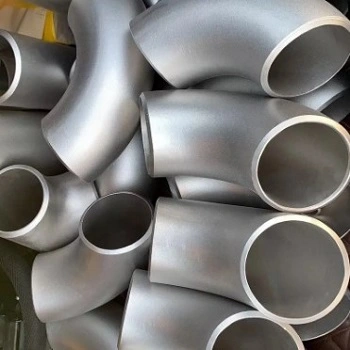
When Carbon Steel Elbows Make Sense?
Carbon steel is extensively used due to its favourable balance between mechanical qualities and project expense. Where corrosion is not the dominating factor, carbon steel may offer the necessary strength for pressure-containing pipework without the additional material expense of many grades of stainless steel.
Another benefit is the wide availability of carbon steel fittings. Standard elbows are available in a wide range of nominal diameters, wall thicknesses, pressure classes, and combinations. This makes carbon steel a viable option for projects requiring a high number of fittings or replacement parts over a long period of operation.
Many industrial locations also have fabrication and maintenance teams that are experienced with carbon steel elbows and other carbon steel components. Welding techniques, fitting practices, inspection methods, and maintenance operations are well defined for typical carbon steel pipe systems. The material is well supported by standard manufacturing processes, while the actual welding procedure still has to fit the material, thickness, joint design, service requirements,s and relevant code.
Another aspect is cost. Alloying elements such as chromium and, depending on grade, nickel and molybdenum, are present in stainless steel. They contribute certain performance qualities. Also, these things add to the cost of the material. If the process circumstances do not need such properties, carbon steel might provide a cheaper option.
Understanding ASTM A234 WPB Elbows
ASTM A234 WPB is an essential standard for buyers and engineers to know when assessing carbon steel butt-welding elbows. ASTM A234/A234M covers seamless and welded wrought carbon steel and alloy steel fittings of seamless and welded construction for pressure pipe and pressure vessel use at moderate and increased temperatures. It also includes testing and production standards for the covered fittings.
WPB is one of the most typically specified grades covered by this standard. Typical minimum mechanical requirements for WPB are a tensile strength of 60 ksi or about 415 MPa, and a yield strength of 35 ksi or about 240 MPa. These figures are beneficial for the evaluation of material documentation but should not be considered as constant strength values at all working temperatures.
A material specification is not a dimensional standard, and it is vital to differentiate between the two for reasons of procurement. ASTM A234 covers specifications for fitting material and manufacture. Standards such as ASME B16.9 include dimensions and tolerances for several butt-welding fittings. ASTM itself refers to A234 fittings in terms of the appropriate ASME and MSS standards for fittings.
A sound buy specification should thus include the material grade needed, the relevant dimensional standard, the nominal size, the wall thickness or schedule, the angle of the elbow, the manufacturing requirements, the testing requirements, and the paperwork. This technique provides both the customer and the manufacturer a better base for scrutiny.
Where Do Stainless Steel Elbows Have an Advantage?
Corrosion resistance is a vital need; stainless steel is the most important. Stainless steel is an alloy that contains chromium and forms a passive surface layer that resists corrosion in many situations, unlike conventional carbon steel. The degree of corrosion resistance is very much dependent upon the grade of stainless steel and the particular service circumstances.
Thus, for pipe systems subject to moisture, corrosive process fluids, or where the environment requires a minimum of surface contamination, stainless steel may provide benefits that carbon steel cannot give cheaply by material selection alone.
The process fluid should be thoroughly looked at and corrosion resistance should not be a simple yes or no criterion. Some stainless steels are subjected to very severe conditions in chloride-containing environments, for example, although various chemical environments may have different alloy choices. The broad designation “stainless” should therefore be dictated by the actual chemical and temperature conditions, not by whether it is 304, 316, duplex stainless steel, or another alloy.
If hygiene and looks are crucial, you may also use stainless steel instead of carbon steel elbows. Stainless steel is desirable for specific needs in food processing, pharmaceutical manufacturing, chemical processing, and certain water-related applications. In these circumstances, the choice of material is driven not only by pressure and temperature, but also by surface condition, cleaning methods, concerns about process contamination, and relevant industry regulations.
Compare Corrosion Conditions Before Comparing Price
One of the easiest mistakes in material selection is to compare the purchase prices of carbon steel and stainless steel without considering the environment in which the elbow will operate.
Suppose a carbon steel elbow has a lower initial purchase price but requires extensive corrosion protection in a particular service environment. The project cost may then include coatings, inspection, maintenance, repairs, and eventual replacement. Under such conditions, the initial price difference does not necessarily represent the total economic difference between the two materials.
The opposite can also happen. If a process line operates in a relatively controlled environment where carbon steel provides sufficient corrosion resistance, selecting stainless steel may increase the material budget without delivering a corresponding operational benefit.
This is why material selection should consider lifecycle requirements rather than only the quotation price. A suitable carbon steel elbow can be a sensible choice when its material properties match the process conditions, while stainless steel can justify its higher material cost when corrosion resistance or other material characteristics are genuinely required.
Consider Heat, Pressure, and Thermal Cycling Together
High-temperature service deserves particular attention because temperature affects material strength, dimensional stability, and design limits. Carbon steel elbows can be used in many elevated-temperature applications, but their suitability cannot be established by quoting a single temperature number.
The operating temperature should be compared with the allowable stress values specified by the relevant design code. Engineers should also consider whether the system experiences frequent heating and cooling cycles. Repeated thermal expansion and contraction can introduce additional stresses, particularly where the piping layout restricts movement.
Carbon steel and stainless steel also have different thermal expansion characteristics. That does not automatically make one material better than the other, because the entire piping arrangement determines how thermal movement is managed. Expansion loops, supports, anchors, guides, equipment connections, and flexibility analysis can all influence the final design.
For this reason, the elbow should be considered as part of the piping system rather than as an isolated component. A technically suitable fitting still needs to work with the pipe, welds, supports, valves, flanges, and connected equipment.
Evaluate Welding and Fabrication Requirements
Welding is another practical factor when comparing the two materials. Carbon steel is widely used in welded piping systems, and common fabrication operations are familiar to many industrial contractors. ASTM A234 fittings are specifically covered for use in pressure piping and related applications, with manufacturing and testing requirements established by the specification.
Stainless steel can also be welded successfully, but fabrication requires appropriate control of procedures and contamination. The selected stainless grade, joint configuration, filler material, heat input, surface preparation, and post-weld requirements can all affect the finished joint.
For a project with a large number of carbon steel elbows, these fabrication considerations can become significant. The engineering team should evaluate not only the fitting itself but also the available welding procedures, qualified personnel, inspection requirements, and fabrication environment.
This is particularly important when carbon steel and stainless steel are being considered within the same project. Different materials may require different fabrication controls, and mixing materials in the same piping system can create additional considerations around welding, galvanic interaction, isolation, and maintenance.
Look at Size, Schedule, and Connection Requirements
Material grade is only one part of an elbow specification. The fitting must also match the pipe dimensions and connection requirements of the system.
For butt-welding elbows, nominal pipe size, wall thickness or schedule, elbow radius, angle, and dimensional standard should be confirmed before purchasing. A fitting that has the correct material grade but the wrong wall thickness or dimensions cannot simply be treated as interchangeable.
The project specification should also identify whether the elbow is seamless or welded when that distinction is relevant to the application. Inspection and testing requirements should be established according to the applicable standards and project requirements.
For procurement teams, this is where a detailed technical specification becomes especially useful. Instead of requesting a generic “carbon steel elbow,” a purchase inquiry can identify the required standard, grade, size, schedule, configuration, quantity, testing, marking, and documentation. This reduces ambiguity between the buyer and supplier and makes quotations easier to compare.
Build the Decision Around the Entire Project
The choice between carbon steel and stainless steel should ultimately reflect the complete operating and commercial requirements of the piping system.
Carbon steel is often attractive where mechanical strength, availability, weldability, and cost are important and where the process environment does not require the corrosion resistance of stainless steel. ASTM A234 WPB is a commonly specified carbon steel fitting grade, and the ASTM A234/A234M specification is specifically intended for wrought carbon and alloy steel fittings used in moderate and elevated temperature service.
Stainless steel becomes more relevant when corrosion resistance, cleanliness, or specific process requirements justify the additional material cost. The correct stainless grade still needs to be selected according to the actual environment, because stainless steel is not a single material with identical performance across all service conditions.
For both materials, the most important step is to connect the material choice to measurable project requirements. Temperature, pressure, fluid composition, corrosion conditions, pipe dimensions, welding procedures, applicable standards, inspection requirements, expected service period, and procurement cost should all be reviewed before the final specification is issued.
Conclusion
Choosing between carbon steel and stainless steel elbows is not a simple price comparison between materials, or even a general perception of strength and temperature resistance. The choice relies on the operating environment, process fluid, pressure, temperature, corrosion conditions, fabrication requirements, and appropriate pipe standards.
Carbon steel elbows provide a convenient balance of mechanical performance, availability, weldability and cost for many industrial systems. If the grade and service conditions fulfil the project requirements, ASTM A234 WPB is a suitable material standard for carbon steel fittings. Stainless steels may provide substantial benefits at the same time in applications where both resistance to corrosion and cleanliness or other features particular to alloys are of prime importance.
Hence, a good purchase selection should start with the piping circumstances and relevant standards rather than the price of the material alone. When the specification, dimensions, material grade, testing requirements,s and service conditions are fully stated, engineers and buyers may pick an elbow that satisfies both the technical requirements and the long-term demands of the project.
For more information on high-quality carbon steel elbows and other pipe fittings, please contact Cangzhou Oudi Pipe Manufacture Co., Ltd. at oudi-04@oudiguandao.com. Since 1998, we have been a leading manufacturer of carbon steel pipe fittings, valves, and flanges in China, serving over 300 customers from 40 countries worldwide.
FAQ
1. What is the maximum temperature that carbon steel elbows can withstand?
Carbon steel elbows can typically withstand temperatures up to 1,000°F (538°C) without significant loss of strength or structural integrity.
2. How does the cost of carbon steel elbows compare to stainless steel elbows?
Generally, carbon steel elbows have a lower initial cost compared to stainless steel alternatives, making them more cost-effective for many applications.
3. What is ASTM A234 WPB, and why is it important for carbon steel elbows?
ASTM A234 WPB is a specification for carbon steel fittings used in high-temperature and high-pressure applications. It ensures that the elbows meet specific quality standards for strength and durability.
4. Are carbon steel elbows easy to weld?
Yes, carbon steel elbows, especially those conforming to ASTM A234 WPB, have excellent weldability and can be easily integrated into piping systems using various welding techniques.
References
1. American Society for Testing and Materials. (2019). ASTM A234 / A234M - 19 Standard Specification for Piping Fittings of Wrought Carbon Steel and Alloy Steel for Moderate and High Temperature Service.
2. Smith, J. R. (2018). Handbook of Steel Pipe and Fittings for High-Temperature Applications. CRC Press.
3. Johnson, M. E. (2020). Comparative Analysis of Carbon Steel and Stainless Steel Piping Components in Industrial Applications. Journal of Materials Engineering and Performance, 29(4), 2345-2358.
4. Williams, P. L. (2017). Cost-Effectiveness of Carbon Steel vs. Stainless Steel in Industrial Piping Systems. Industrial Engineering & Management, 6(3), 1-8.
5. Brown, R. K., & Davis, S. T. (2019). Thermal Properties and Heat Transfer Characteristics of Carbon Steel Piping Components. International Journal of Thermal Sciences, 145, 106-118.
6. Thompson, A. W. (2021). Welding Techniques for Carbon Steel Fittings in High-Temperature Pipelines. Welding Journal, 100(5), 145-152.

Need help finding the right solution with our experts. Please contact us.

SINCE 1998 Your Reliable Pipeline Manufacturer



