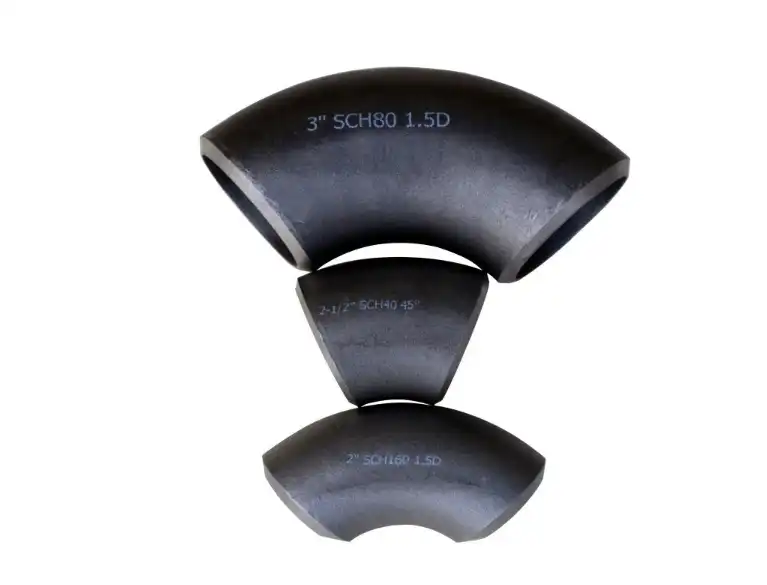
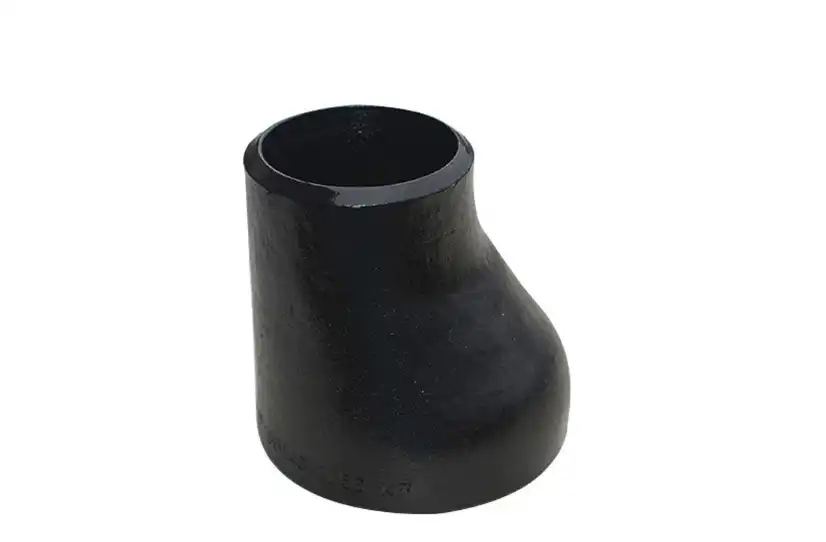
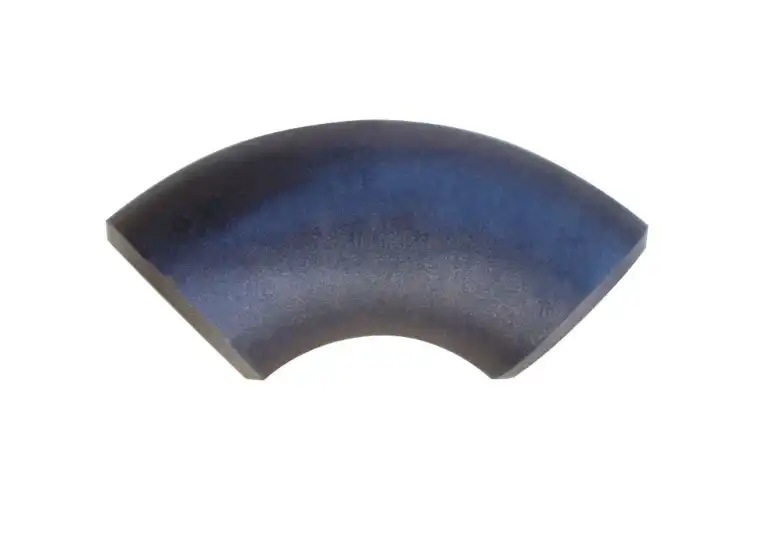
The Importance of NACE Compliance in Carbon Steel Elbows
In oil and gas piping systems, material selection cannot be separated from the environment in which a component will operate. Carbon steel elbows are widely used to change the direction of pipelines, but their suitability depends on more than dimensions and pressure ratings when the service contains hydrogen sulfide (H2S). H2S-containing environments can create conditions in which certain metallic materials become susceptible to cracking, including sulfide stress cracking (SSC) and other hydrogen-related damage mechanisms. For this reason, project engineers and purchasing teams often refer to ANSI/NACE MR0175/ISO 15156 when selecting materials for applicable oil and gas production service. The standard provides requirements and recommendations for selecting and qualifying materials for H2S-containing environments, while the final material choice still needs to consider the actual service conditions and applicable design requirements. NACE International is now part of the Association for Materials Protection and Performance (AMPP), while ANSI/NACE MR0175 is used together with ISO 15156 for materials intended for applicable H2S-containing oil and gas production environments. AMPP continues to identify ANSI/NACE MR0175/ISO 15156 as a key standard for the oil and gas industry. Understanding what this standard actually covers is important because NACE compliance should not be treated as a generic product label. For a carbon steel elbow, compliance is connected to the material grade, metallurgical condition, manufacturing route, heat treatment, hardness, environmental limits, and supporting quality documentation required by the project.
Why NACE Requirements Matter for Carbon Steel Elbows in Sour Service?
Understanding the Purpose of MR0175/ISO 15156
The history of NACE MR0175 is closely related to failures of metallic oil and gas equipment exposed to H2S-containing production fluids. The standard was developed to provide requirements and recommendations for selecting and qualifying materials that can be used in these environments while addressing cracking mechanisms associated with H2S. ISO 15156 explains that the standard covers several forms of H2S-related cracking, including sulfide stress cracking, hydrogen-induced cracking, stress-oriented hydrogen-induced cracking, and other related mechanisms.
For carbon steel elbows, this matters because an elbow is not simply a change in pipeline direction. It is a pressure-containing component that has experienced forming and heat treatment during manufacturing, and its final metallurgical condition can affect how it behaves in service. A suitable material specification therefore needs to consider more than the nominal chemical composition. The condition of the material after forming and heat treatment, together with the intended service environment, must also be considered.
The currently published ISO 15156 series dates from 2020, while a fifth edition is under development in 2026. The draft fifth edition reorganizes the series into material and processing requirements, service-environment assessment and material selection, and verification, qualification and balloting requirements. This distinction is useful when preparing technical content because the draft should not be presented as though it were already the current published edition.
NACE Compliance Depends on the Actual Service Environment
One of the most important points for buyers is that a carbon steel elbow cannot be judged as suitable for sour service simply because it is made from carbon steel. The operating environment has to be evaluated together with the material. Factors such as H2S conditions, temperature, pressure, acidity or pH, and other characteristics of the production fluid can affect the selection process.
This is why a statement such as “NACE-compliant for all H2S service” is too broad. ISO 15156 establishes material requirements and environmental limitations, but the standard does not mean that a material is immune to cracking under every possible condition. The ISO documentation specifically places responsibility on the equipment user to ensure that the selected material is suitable for the intended service in accordance with the applicable material-selection requirements.
For a purchaser, this means the supplier should receive enough project information before confirming conformity. The specification may need to identify the fluid, operating temperature, pressure, H2S conditions, material grade, dimensional standard, and any additional project requirements. Once these conditions are known, the manufacturer can determine which material and processing requirements apply to the carbon steel elbows rather than treating NACE compliance as a universal property of every product.
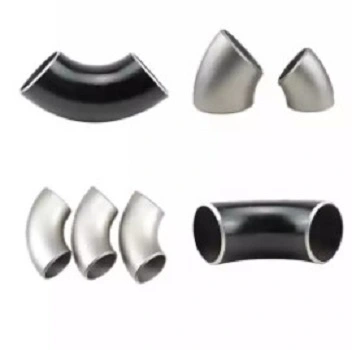
Material and Manufacturing Factors That Influence Sour-Service Performance
Material Grade and Metallurgical Condition
The behaviour of carbon steel in sour service is greatly dependent on its metallurgical state. Chemical composition is significant, yet it is just one aspect of the material specification. The resistance of a material to cracking in a given service situation may be affected by heat treatment, hardness, microstructure, and fabrication history.
Therefore, the material of carbon steel elbows should be traceable to the material certificate and manufacturing record. The customer may demand authentication of the steel grade, heat number, chemical composition, and mechanical properties in relation to the relevant product specification. If the project is NACE MR0175/ISO 15156 compliant, the material condition should be assessed against the applicable specifications and not only the steel grade designation.
This difference is particularly essential since the manufacturing history of two components with comparable nominal grades may be quite different. The final microstructure and hardness may be affected by the temperature of forming, heat-treatment technique, and cooling circumstances. A technically responsible supplier must thus monitor these parameters and keep records so that they may be able to verify that the completed fitting was manufactured according to the requested specifications.
Why Heat Treatment and Hardness Need Attention?
One of the areas in which manufacturing practice and sour-service standards overlap is that of heat treatment. The forming technique used to make an elbow may modify the condition of the material, and additional heat treatment may be necessary based on the product specification, material grade, and relevant NACE regulations. The purpose is not to make the component stronger. The metallurgical state should be appropriate for the planned service and in accordance with the relevant material specifications.
Hardness is another key quality attribute in many sour-service material standards. Under certain climatic and stress circumstances, excessive hardness may be related to an increased vulnerability to specific cracking processes. Hardness testing may be part of the quality control process if required by the appropriate standard.
But it is critical to not make hardness a sole criterion for NACE compliance. A hardness reading does not alone demonstrate that an elbow is acceptable for all H2S-containing environments. In conjunction with the material selection and processing, the environmental constraints and other criteria must be addressed. This is why professional purchase orders should specify the particular standard and service circumstances, and not just ask for a “NACE elbow.”
Manufacturing Controls for Formed Elbows
Elbows are of special interest for manufacturing consistency since the product is formed, changing the geometry from a straight segment to a curved fitting. This may include heating, bending, forming, sizing, and further heat treatment depending on the manner by which they are made. Each step must be managed so that the completed fitting has the necessary dimensions and condition of the material.
A manufacturer supplying carbon steel elbows for sour-service applications should therefore have a quality system capable of controlling production parameters and maintaining material traceability. The specific controls will depend on the applicable product standard and project specification, but purchasers commonly need evidence showing how the material was identified, processed, and inspected.
It is also useful to distinguish product standards from NACE requirements. A dimensional and manufacturing standard may define the geometry, dimensions, tolerances, and other requirements for the elbow, while NACE MR0175/ISO 15156 addresses material suitability for specified H2S-containing service. These standards can work together rather than replacing one another. A project specification may therefore require compliance with a fitting standard as well as applicable sour-service material requirements.
Testing and Documentation Provide Practical Evidence of Conformity
What Buyers Should Review Before Approval?
The value of NACE compliance to a buying department is ultimately found in the paperwork that links the delivered component back to the project requirements. Buyers should not accept a broad assertion of an elbow being “NACE certified” but rather check what standard and edition is being used and what documentation is available for the provided material.
Depending upon the project requirements, relevant documentation might include material test certificates, heat-treatment records, hardness data, inspection reports, and product traceability information. The paperwork needed will be project-specific, and the producer should not imply that one identical test package applies to all carbon steel elbows. A better strategy is to define the documentation necessary throughout the quote and technical-review phases.
This also helps prevent a frequent procurement issue when a fitting is bought initially, and the sour-service documentation is needed later. If the project needs special material conditions or quality records, they must be specified in the purchase order before manufacturing. This provides the producer with a defined foundation for production and inspection and offers the customer a more reliable means of confirming conformance.
Testing Should Match the Applicable Requirements
Testing is another place where technical papers can become overly generic. Hardness testing, metallurgical inspection and other types of verification may be useful, but the precise testing program will rely upon the applicable standard, material and service requirements. NACE TM0177 and NACE TM0284 are laboratory procedures linked to assessment of materials for certain H2S-related cracking processes. They should not be characterised as obligatory tests for all carbon steel elbows.
The current ISO 15156 framework differentiates between material selection and material qualification. ISO 15156-1 specifies broad principles for materials and processes while ISO 15156-2 specifies carbon and low alloy steels and material selection for H2S-containing environments. The fifth version (coming soon) takes verification and qualifying criteria further into Part 3.
The practical lesson for purchasers is simple. Testing should be tied to the relevant specification, not bolted on as a set of general tests to make a product description seem more technical. Stronger proof of conformance is a clear relationship between service conditions, material specification, manufacturing process, and inspection records.
Conclusion
NACE compliance is an important consideration when carbon steel elbows are intended for applicable H2S-containing oil and gas service, but it should be understood as part of a broader material-selection and quality-control process. ANSI/NACE MR0175/ISO 15156 provides requirements and recommendations for materials used in relevant H2S environments, while the actual suitability of an elbow depends on its material, metallurgical condition, manufacturing process, service environment, and applicable project specifications.
For purchasers and engineers, the most useful approach is to define the service conditions first, identify the applicable product and sour-service standards, and then verify the material and manufacturing documentation supplied with the fitting. This approach provides a clearer technical basis for selecting carbon steel elbows and avoids treating NACE compliance as a simple label that guarantees suitability under every operating condition.
FAQ
1. What is NACE compliance, and why is it important for carbon steel elbows?
NACE compliance refers to adherence to standards set by NACE International for materials used in corrosive environments. It's important for carbon steel elbows to ensure resistance to sulfide stress cracking and overall durability in harsh conditions.
2. How does NACE compliance affect the cost of carbon steel elbows?
While NACE-compliant carbon steel elbows may have a higher initial cost, they offer long-term cost benefits through increased durability, reduced maintenance, and prevention of costly failures.
3. What testing is required for NACE-compliant carbon steel elbows?
NACE-compliant carbon steel elbows undergo rigorous testing, including hardness testing, microstructural analysis, and sometimes simulated service testing to ensure they meet the required standards.
4. Can NACE-compliant carbon steel elbows be used in all H2S environments?
While NACE-compliant elbows are designed for H2S environments, the specific grade and treatment may vary depending on factors like H2S concentration, temperature, and pressure. Always consult the standards for your specific application.
Reliable Carbon Steel Pipe Fittings and Flanges from Cangzhou Oudi
Since 1998, Cangzhou Oudi Pipe Manufacture Co., Ltd. has focused on the production of carbon steel pipe fittings, valves, and flanges. The company is located in Mengcun Hui Autonomous County, an established pipe-fitting manufacturing area in China, and operates a production facility covering approximately 66,600 square meters. Its product range includes carbon steel, stainless steel, and alloy steel components manufactured according to applicable American, Japanese, German, and British standards.
For projects involving sour-service piping, the supplier selection process should begin with the engineering specification rather than a generic product description. Cangzhou Oudi can discuss the required material grade, dimensions, applicable manufacturing standard, and project documentation with customers before production, allowing the technical requirements for carbon steel elbows to be established at the quotation stage.
Quality control is an important part of this process because the finished fitting needs to be traceable to the material and manufacturing requirements specified by the customer. Cangzhou Oudi states that it operates under an ISO9001:2000 quality management system and uses production and inspection procedures for its pipe fittings, valves, and flanges. For projects requiring specific sour-service documentation, customers should confirm the applicable NACE/ISO requirements and required quality records with the supplier before placing an order. For more information or inquiries, please contact us at oudi-04@oudiguandao.com.
References
1. NACE International. (2015). NACE MR0175/ISO 15156: Petroleum and natural gas industries - Materials for use in H2S-containing environments in oil and gas production.
2. Craig, B. D., & Smith, L. (2011). Corrosion Resistant Alloys in Oil and Gas Production: Guidance on General Requirements and Test Methods for H2S Service (2nd ed.). NACE International.
3. Papavinasam, S. (2013). Corrosion Control in the Oil and Gas Industry. Gulf Professional Publishing.
4. Revie, R. W. (Ed.). (2015). Oil and Gas Pipelines: Integrity and Safety Handbook. John Wiley & Sons.
5. Kane, R. D., & Cayard, M. S. (1998). Roles of H2S in the behavior of engineering alloys: A review of literature and experience. NACE International.
6. Beidokhti, B., Dolati, A., & Koukabi, A. H. (2009). Effects of alloying elements and microstructure on the susceptibility of the welded HSLA steel to hydrogen-induced cracking and sulfide stress cracking. Materials Science and Engineering: A, 507(1-2), 167-173.

Need help finding the right solution with our experts. Please contact us.

SINCE 1998 Your Reliable Pipeline Manufacturer