How to Choose Between Carbon Steel and Stainless Steel Pipe Caps
Selecting the right pipe cap material can influence more than the purchase price of a piping component. The material affects corrosion resistance, fabrication requirements, inspection needs, service life, and how well the finished fitting matches the rest of the piping system. For many industrial applications, the decision eventually comes down to carbon steel or a stainless steel pipe cap. Neither material is always the best for every job. Carbon steel is a mechanically sound and cost-effective choice when the working environment is under control and a suitable coating or corrosion-control plan can be implemented. Stainless steel is better for ideal use when corrosion resistance, cleanliness, or resistance to regular washing is necessary. The correct choice relies on the actual fluid, temperature, pressure, installation environment, needed service life, relevant standards, and total cost of ownership. Engineers and procurement teams should therefore try to match the pipe cap material to the service circumstances instead of picking stainless steel because it seems more robust. This strategy may assist in saving excess material expenditures as well as reduce the chances of early corrosion or maintenance issues.
Start With the Service Conditions, Not the Material Price
Identify What the Pipe Cap Will Actually Face
The first inquiry should be, “What is the pipe cap going to be facing under normal operation and maintenance?” The material requirements for a fitting on a dry indoor utility line will be quite different from one exposed to saltwater, chemical cleaning agents, acidic industrial fluids, or humid outdoor circumstances.
Carbon steel may be relied on for dependable service in many noncorrosive or regulated situations. It is commonly used in industrial plumbing since it is strong, available, weldable, and relatively inexpensive as a material. Carbon steel may be an economical choice if the atmosphere around the structure is not too corrosive and an appropriate coating system can be maintained.
A stainless steel pipe cap is better looking when the piping system is subject to moisture or corrosive media and where it would be impossible to preserve the surface with paint or any other treatment. The stainless steel has a passive oxide coating on the surface, which is formed by the chromium. This film resists well various types of atmospheric and chemical corrosion, although its efficiency relies on the grade and the service environment.
The crucial thing is that “stainless” does not indicate “corrosion-proof.” Chlorides, acids, high temperatures, fissures, deposits, and other circumstances are still capable of causing localized corrosion or stress-related damage. Thus, the selection of materials should be based on the real surroundings rather than only the name of the material.
Consider the Piping System as a Whole
A pipe cap should not be picked separately from the pipe, elbows, tees, reducers, flanges, and other fittings attached to it. The materials should be compatible with the pipe system and its welding, fabrication, inspection, and operating requirements.
For example, a stainless cap for a system usually using carbon steel might place extra manufacturing and material control requirements. The project may need to control welding of dissimilar materials, avoid contamination during fabrication, and ensure the filler metal and welding process employed are adequate.
Therefore, the engineers should assess the material specification for the pipe system and decide whether the cap should be of the same or compatible material grade. This is especially crucial in process plants, where traceability and material segregation are part of the quality-control process.
Understand How Carbon Steel and Stainless Steel Behave in Service?
Where Carbon Steel Makes Practical Sense?
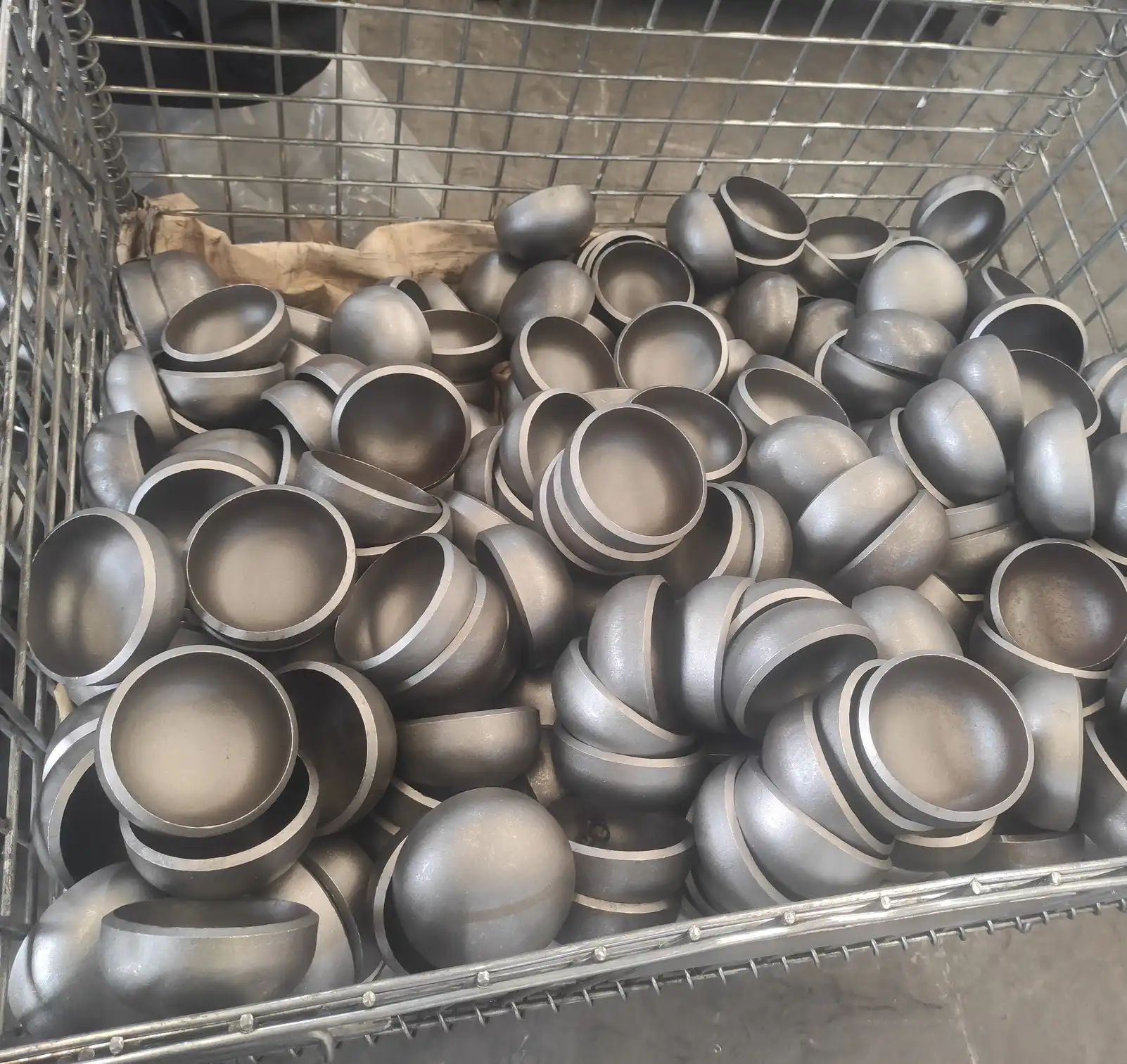
Carbon steel is a suitable choice for many industrial applications since it offers a fair balance between mechanical performance and cost. For example, ASTM A234 WPB is typically required for wrought carbon and alloy steel fittings in pressure piping applications. However, a stainless steel pipe cap may be preferred when higher corrosion resistance is needed. Carbon steel caps may fulfil demanding mechanical and pressure requirements if the quality, size, manufacturing process and design factors are right.
The biggest limitation is corrosion. Unprotected carbon steel will oxidise in the presence of water and oxygen. The more unfavourable the environment, the more quickly the material is lost. This is not to preclude carbon steel for outdoor or industrial usage, but rather to emphasise that the corrosion-control strategy must be considered as part of the design.
The service life of carbon steel components may be altered by coatings, painting, insulation systems, corrosion inhibitors, controlled production conditions and inspection procedures. If the plant already has these restrictions, then carbon steel may be the most practicable alternative.
When Stainless Steel Provides a Stronger Advantage?
In general, stainless steel is the preferred material when corrosion resistance is a major design requirement or when the surface must remain clean and easy to maintain. Common grades for pipe fittings include 304, 304L, 316 and 316L. All of them are common austenitic grades, although the grade employed will vary on the purpose.
The difference between these grades is essential. Additions of molybdenum to 316 and 316L often improve resistance to certain chloride environments over 304 and 304L. The “L” grades also minimise the carbon content, which might be an advantage for welded construction because they are designed to lower the threat of sensitisation which occurs with welding in suitable conditions.
It should not be assumed, however, that 316L is the suitable answer for any marine, chemical or chloride service. Concentration, temperature, period of exposure, crevice conditions and mechanical stresses may all affect corrosion behaviour. The specification of the material should be based on genuine process data.
Compare Corrosion Risk Before Comparing Purchase Prices
Moisture and Outdoor Exposure Can Change the Decision
One of the most visible differences between the two materials is in conditions when moisture is hard to control. Carbon steel used outside typically needs a corrosion protection system, the condition of which must be evaluated over the service life of the equipment.
Stainless fittings do not need the same kind of outside coating for normal atmospheric corrosion protection, but they still need proper manufacture, cleaning and inspection. Faulty production or unsuitable cleaning techniques, or surface contamination by particles of carbon steel, may affect the performance of stainless steel.
Special care must be paid to airborne salt and chlorides in enterprises situated near the coast. In certain climates the time between maintenance with stainless steel might be greater than with exposed carbon steel, although the grade is still critical. Even the most popular stainless grades may require special technical restrictions in very harsh seawater conditions.
Process Chemicals Require More Than a Generic “Stainless Is Better” Rule
Chemical compatibility is another area in which superficial material comparisons might be misleading. Some combinations of temperature and concentration may cause rapid attack. Some stainless steels are good in some acids, alkaline solutions and process fluids.
It is termed a 'chemical plant'. So the engineers should examine the true chemical composition of the process medium rather than merely choosing a pipe cap. Quite different corrosion processes may be initiated by chlorides, reducing acids, oxidising conditions, sulphur-containing compounds and severe temperatures.
Corrosion data, guidelines for the selection of materials, advice from the supplier and previous experience of operation should be taken into account before the specification of a stainless steel pipe cap is finalised in cases where there are significant risks of failure of the material.
Match the Material to Temperature and Pressure Requirements
Avoid Using a Single Temperature Limit for Every Grade
The temperature option is not a broad comparison between carbon steel vs. stainless steel but a specific material grade and design code. All these qualities may be affected by an increase in temperature: mechanical strength, allowable stress, oxidation behaviour, thermal expansion and corrosion processes.
Stainless steel may preserve useful mechanical properties at temperatures at which the usefulness of carbon steel is progressively restricted. This does not imply that all stainless steel grades are suitable for usage at very high temperatures. Similarly, assuming design conditions are within the allowable limitations of the specified material and code, carbon steel may be fairly suitable for many high-temperature systems.
The safest way is to verify the actual design temperature and pressure with the allowable conditions for the selected material grade. This is especially important for steam, refinery, petrochemical and power-producing systems where temperature and pressure may fluctuate widely during start-up, shutdown and abnormal operating scenarios.
Pipe Size, Wall Thickness, and Schedule Still Matter
More than only materials, the specification of the pipe cap. The cap must also fulfil the nominal pipe size, wall thickness or schedule, end preparation and dimensional requirements.
‘The improper size fitting with the right material is not the right alternative. Pipe caps for butt welding are generally sized to ASME B16.9, and material requirements may be found in ASTM A234 for carbon steel or ASTM A403 for austenitic stainless steel.
Procurement teams should not only ask a supplier for "carbon steel pipe caps" or "stainless steel pipe caps". Of course the full inquiry should cover size, schedule, grade of material, standard, amount and any inspection or certification documents required.
Evaluate Total Cost Over the Expected Service Life
The Lowest Purchase Price Is Not Always the Lowest Cost
The initial material cost for carbon steel is typically a positive, especially for big projects that may include hundreds or thousands of fittings. This price differential may explain the use of carbon steel for cost-sensitive applications with relatively mild operating conditions.
If corrosion prevention needs frequent maintenance, the computation is different. Lifecycle cost includes painting, coating repair, rust removal, inspection, shutdown work and final replacement. If the pipe system is not accessible or in continuous operation, these indirect costs might much outweigh the initial price to buy.
The initial material cost of a stainless steel pipe cap is often greater due to the alloy content and production requirements. The added initial cost may be worth it, however, if the corrosion resistance means no external protection or early replacement is required.
So the appropriate comparison is not only "carbon steel is cheaper" or "stainless steel lasts longer". The more practical issue is whether the extra expenditure in stainless steel provides a meaningful advantage under the actual operational circumstances of the project.
Maintenance Conditions Should Be Part of the Calculation
Assuming you have two systems with equivalent pipe diameters and pressure needs. If you can put carbon steel within a controlled structure and examine and refinish it readily, it may still be cost-effective. The other may be in a humid, hard-to-reach region where coating maintenance is labour-intensive and downtime severe. In such a case, stainless may have a better life-cycle cost justification.
The difference is especially essential for offshore facilities, food processing plants, pharmaceutical facilities and other types of facilities where maintenance choices are influenced by issues such as access, cleanliness or production continuity.
Select the Grade According to the Application
304 and 304L for General Stainless Applications
304 and 304L are two of the most widely used austenitic stainless grades regarded for general industrial application. They are suitable when strong corrosion resistance and manufacturing performance are needed but the environment does not impose especially harsh chloride or chemical exposure.
Fabrication and welding needs should be considered as well when choosing between 304 and 304L. The lower-carbon 304L grade may be preferable for welded pipe systems under requirements intended to address weld-related corrosion risks.
316 and 316L for More Demanding Environments
The molybdenum in 316 and 316L typically provides better resistance to localised corrosion in many chloride-containing situations than the 304-series grades. This is one reason why they are often considered for maritime, chemical, food-processing and other applications where exposure conditions are more demanding.
However, the use of 316L does not ensure corrosion resistance. Severe chloride exposure, high temperature, stagnant conditions, cracks and other things might still cause difficulties. When the implications of failure are substantial, the grade should be decided based on defined process circumstances rather than on an industry stereotype.
Consider Industry Requirements Before Finalising the Cap
Oil and Gas Systems Need Service-Specific Material Selection
Oil and gas facilities can use both carbon steel and stainless steel pipe caps depending on pressure, temperature, fluid composition, corrosion conditions, and project specifications. Carbon steel is widely used for many hydrocarbon piping systems because of its mechanical performance and cost advantages.
Stainless steel may be selected in areas where corrosion resistance or fluid compatibility makes it advantageous. Sour-service applications require additional care because hydrogen sulphide exposure can affect material selection and mechanical integrity. In such cases, the applicable sour-service requirements and project specifications should be checked rather than assuming that any stainless grade is automatically suitable.
Chemical, Food, and Pharmaceutical Facilities Have Different Priorities
Chemical processing places greater emphasis on compatibility with the process medium, while food and pharmaceutical facilities often place greater emphasis on cleanability, surface condition, hygiene, and resistance to repeated cleaning processes.
A stainless cap can be particularly useful where smooth, corrosion-resistant surfaces are important. However, the cap still needs to be manufactured, finished, welded, cleaned, and inspected in a way that meets the requirements of the facility.
For water treatment and marine applications, water chemistry is equally important. Fresh water, brackish water, seawater, disinfectants, and treatment chemicals can create very different corrosion conditions. Choosing 316L simply because the application involves water is not enough to establish suitability.
Conclusion
Which stainless steel pipe cap to use—carbon steel or stainless steel? It depends on how resistant they are to rust, what they will be used for, how much maintenance they will need, and the cost of the job. For many high-pressure and low-cost uses, carbon steel is still a good choice. However, stainless steel lasts longer, doesn't rust, and costs less to keep over its lifetime. People who work with chemicals, make food, work on ships, or make medicines often find that a stainless steel pipe cap lasts longer and is more valuable. By looking at the environment, service needs, and industry norms, engineers and buying teams can find the best pipe cap material to make the system safer, more reliable, and more efficient.
For more data on high-quality pipe caps and fittings, it would be ideal if you could contact Cangzhou Oudi Pipe Make Co., Ltd at oudi-04@oudiguandao.com. Since 1998, Oudi has been supplying carbon steel pipe fittings, valves, and spools to clients in over 40 nations. Their items are of amazing quality.
FAQ
1. What is the main difference between carbon steel and stainless steel pipe caps?
The main difference is in their composition. Carbon steel contains mainly iron and carbon, while stainless steel contains at least 10.5% chromium, providing better corrosion resistance.
2. Which material is more corrosion-resistant?
Stainless steel pipe caps are generally more corrosion-resistant due to the protective chromium oxide layer that forms on their surface.
3. Are carbon steel pipe caps stronger than stainless steel?
Carbon steel pipe caps typically have higher tensile strength and hardness compared to stainless steel, making them suitable for high-pressure applications.
4. Which material is better for high-temperature applications?
While both materials can handle high temperatures, stainless steel pipe caps generally maintain their properties at higher temperatures (up to 1500°F or 816°C) compared to carbon steel.
References
1. Smith, J. (2019). "Corrosion Resistance of Carbon Steel vs. Stainless Steel in Industrial Applications." Journal of Materials Engineering, 45(3), 112-128.
2. Johnson, R. & Williams, T. (2020). "Comparative Analysis of Pipe Cap Materials for High-Pressure Systems." Industrial Piping Quarterly, 62(2), 78-95.
3. Chen, L. et al. (2018). "Long-term Performance of Stainless Steel Pipe Caps in Aggressive Environments." Corrosion Science and Technology, 53(4), 501-515.
4. Brown, A. (2021). "Cost-Benefit Analysis of Carbon Steel and Stainless Steel Pipe Fittings in Chemical Processing." Chemical Engineering Progress, 117(8), 45-58.
5. Garcia, M. & Thompson, K. (2017). "Material Selection Criteria for Pipe Caps in Oil and Gas Applications." Petroleum Technology Review, 39(5), 210-225.
6. Wilson, E. (2022). "Advances in Pipe Cap Design and Materials for Extreme Operating Conditions." Journal of Pressure Vessel Technology, 144(1), 011301.

Need help finding the right solution with our experts. Please contact us.

SINCE 1998 Your Reliable Pipeline Manufacturer