Understanding Pipe Cap Dimensions and Schedules
Selecting a pipe cap is not simply a matter of matching the nominal size of a pipe. In an industrial piping system, the correct pipe cap dimensions need to correspond with the pipe’s nominal pipe size, outside diameter, wall thickness, connection method, material grade, and applicable manufacturing standard. These details become especially important in oil and gas facilities, chemical processing plants, refineries, power generation systems, water treatment installations, and other applications where a poorly matched end closure can create installation problems or compromise system integrity. For engineers and procurement teams, the practical objective is to make sure the selected cap fits the pipe correctly and is suitable for the actual service conditions. A cap that appears correct by NPS alone may still have an incompatible wall thickness, connection geometry, material specification, or dimensional tolerance. Understanding how these variables work together makes it easier to prepare accurate purchase specifications and avoid costly corrections after delivery.
What Determines Pipe Cap Dimensions?
NPS Is the Starting Point, Not the Complete Specification
Nominal Pipe Size, or NPS, is normally the first reference used when identifying a pipe cap. However, NPS is a standardized designation rather than a direct measurement of the pipe's outside diameter. For example, a 2-inch NPS pipe does not have an outside diameter of exactly 2 inches. Its actual outside diameter is established by the relevant dimensional standard.
This distinction matters when selecting a cap because the connection has to match the physical geometry of the pipe. For a butt-weld cap, the outside diameter and wall thickness at the pipe end affect how the cap and pipe are prepared for welding. Therefore, procurement documents should normally identify the NPS together with the applicable schedule or wall thickness instead of specifying only a nominal size.
For projects using standardized wrought butt-welding fittings, ASME B16.9 is an important dimensional reference. The purchaser should still confirm the exact product specification because the applicable requirements can vary according to material, design code, and project documentation.
Wall Thickness Changes the Physical Fit
Wall thickness is another key factor when reviewing pipe cap dimensions. A pipe with the same NPS can be manufactured with different wall thicknesses, and that difference needs to be considered when selecting a compatible fitting.
For a butt-weld connection, the end preparation and wall thickness of the cap need to be suitable for the pipe being joined. If the two components have substantially different wall thicknesses, the welding procedure and end preparation may require additional engineering consideration rather than simply treating them as interchangeable parts.
This is one reason why a purchasing request that states only “2-inch pipe cap” is incomplete for many industrial applications. A more useful specification identifies the NPS, schedule or wall thickness, material grade, connection type, applicable standard, and any project-specific requirements.
Cap Height and Overall Geometry Matter During Installation
The height of a pipe cap is not normally the first dimension considered during purchasing, but it can become important when installation space is restricted. A cap extends the piping assembly beyond the pipe end, and its overall geometry can affect clearance around supports, equipment, valves, insulation, and adjacent piping.
For maintenance or plant modification work, the available space should therefore be considered before selecting a replacement cap. This is particularly relevant when an existing system uses a cap with a specific dimensional configuration and the replacement must fit within an established layout.
For engineered projects, dimensional drawings or certified product data are more useful than relying on a generic catalogue description. If the installation has tight spatial constraints, buyers should request the manufacturer's dimensional information before approving the order.
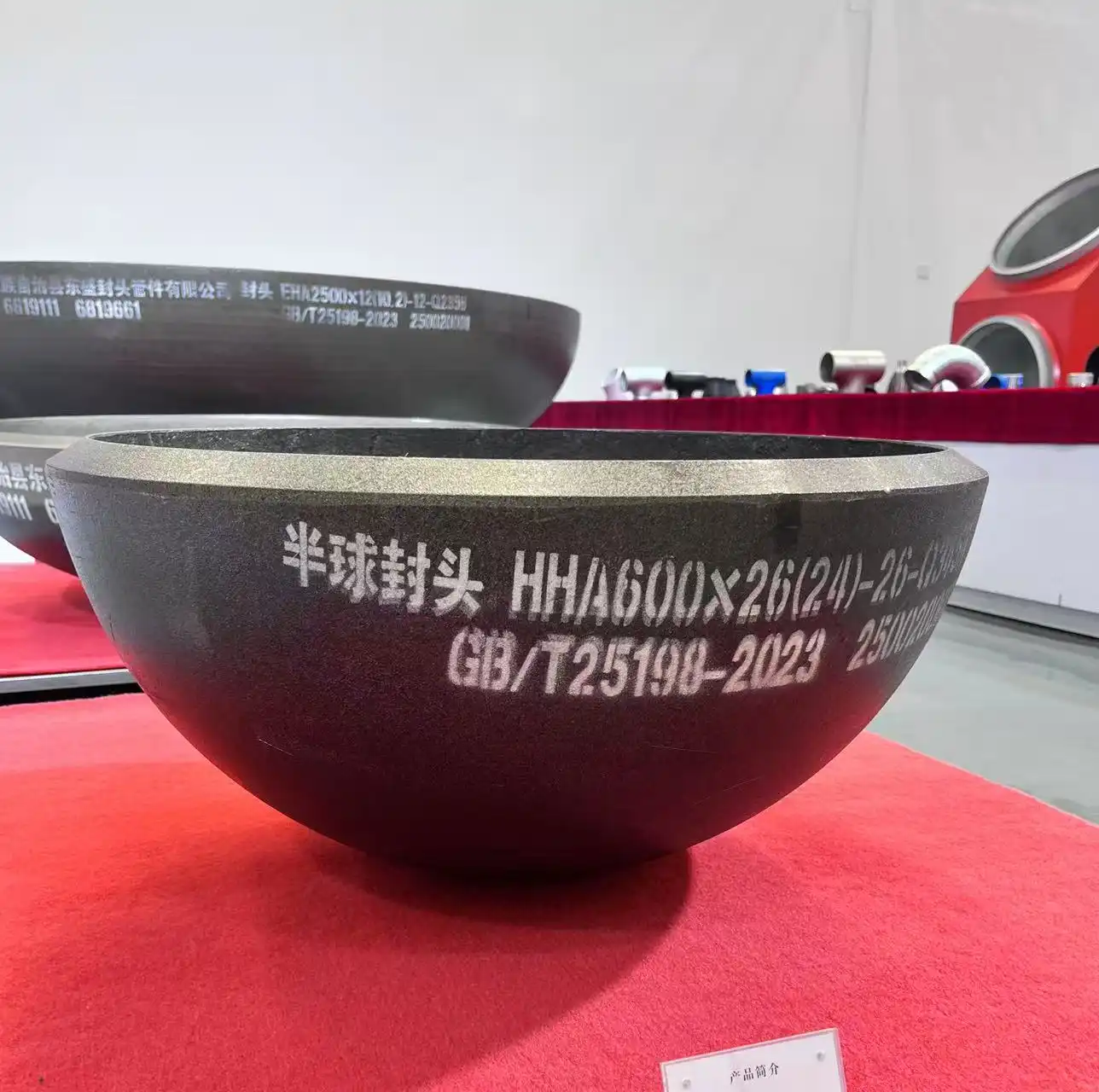
How Pipe Schedules Affect Cap Selection?
Schedule Indicates Wall Thickness
Pipe schedules are commonly used to identify standardized wall thicknesses for a given nominal pipe size, which is also important when determining pipe cap dimensions. Depending on the NPS, commonly encountered schedules may include Schedule 10, Schedule 20, Schedule 40, Schedule 80, and Schedule 160.
As the schedule designation increases within a given sizing system, the corresponding pipe wall is generally thicker. However, a schedule should not be treated as a standalone pressure rating. The pressure capability of a piping component depends on factors such as material strength, operating temperature, component geometry, corrosion allowance, manufacturing standard, and the design code used for the system.
This distinction is important because describing Schedule 80 simply as a “high-pressure cap” can give buyers a misleading impression. A cap should be selected against the actual engineering requirements rather than against a schedule number alone.
The Same NPS Does Not Mean the Same Cap Specification
Two pipe caps can have the same NPS while having different wall thicknesses, weights, and dimensional configurations. A Schedule 40 application and a Schedule 80 application may therefore require different cap specifications even though both are nominally identified by the same pipe size.
The correct approach is to compare the cap with the pipe end that it will actually connect to. For a butt-weld installation, this means reviewing the applicable outside diameter, wall thickness, end preparation, and dimensional tolerances. For other connection types, the relevant mating dimensions need to be checked instead.
This is particularly important when replacing an existing cap. The old component should not be identified solely from its nominal size if its original specification is available. Reviewing the marking, material documentation, dimensional drawing, and piping specification can provide a much more reliable basis for replacement.
Pressure and Temperature Must Be Evaluated Together
Pressure requirements should be reviewed together with operating temperature and material selection. Increasing wall thickness can provide additional structural capacity in some applications, but it does not automatically make every cap suitable for a higher-pressure or higher-temperature service.
For example, a carbon steel cap and an alloy steel cap may have similar nominal dimensions while having different material properties and service limitations. Likewise, a component suitable at ambient temperature may require a different material or design consideration when exposed to elevated or very low temperatures.
For this reason, engineers should use the applicable piping design code and fitting standard when determining whether a selected cap is suitable. The supplier can provide dimensional and material information, but the final pressure design should be based on the project's engineering requirements rather than on schedule terminology alone.
Matching the Connection Type With the Piping System
Butt-Weld Caps Require Careful End Matching
Butt-weld pipe caps are widely used in industrial piping because they provide a permanent welded connection and are well suited to systems where leakage control and structural continuity are important.
When selecting this type of cap, the purchaser should verify NPS, outside diameter, wall thickness or schedule, material grade, end preparation, and applicable fitting standard. The welding requirements also need to be compatible with the piping material and the project's qualified welding procedures.
ASME B16.9 is commonly referenced for factory-made wrought butt-welding fittings, and pipe cap dimensions should be considered alongside the material specification and project design requirements rather than being treated as the only requirement governing the finished component.
Socket-Weld and Threaded Caps Follow Different Requirements
Socket-weld caps and threaded caps should not be evaluated using exactly the same dimensional criteria as butt-weld caps. Their connection geometry and mating requirements are different, so the applicable standard and purchasing specification must reflect the connection method.
Threaded caps require particular attention because the thread system must match the mating component. NPT, BSPT, and BSPP are not interchangeable thread designations. A nominally similar thread size does not guarantee that two components will assemble correctly or provide the intended sealing performance.
For a threaded application, the procurement specification should therefore identify the thread standard as well as the nominal size. Where sealing depends on a specific thread or gasket arrangement, that requirement should also be stated clearly.
What Engineers Should Check Before Ordering?
Confirm the Pipe Data First
The most reliable way to determine the appropriate pipe cap dimensions is to start with the actual piping specification rather than selecting a cap from a generic size list.
The purchasing information should normally establish the NPS, outside diameter where relevant, schedule or wall thickness, material grade, connection type, applicable standard, design pressure, design temperature, and service medium. Additional requirements such as corrosion allowance, sour-service compliance, impact testing, or third-party inspection may also apply depending on the project.
This approach reduces the risk of ordering a component that is dimensionally close but technically unsuitable.
Check Material Compatibility
Dimensional compatibility alone does not make a pipe cap suitable for service. Carbon steel, stainless steel, low-temperature carbon steel, and alloy steel caps have different material requirements and are used under different service conditions.
For example, ASTM A234 covers wrought carbon steel and alloy steel fittings for pressure and high-temperature service, while ASTM A403 covers wrought austenitic stainless steel piping fittings. ASTM A420 addresses wrought carbon steel and alloy steel fittings for low-temperature service. These material specifications should be considered together with the relevant dimensional and design requirements.
Material certificates and heat numbers are particularly valuable for industrial procurement because they provide traceability between the supplied component and its material documentation.
Review Tolerances Instead of Looking Only at Nominal Size
A component can have the correct nominal designation and still require dimensional verification. Manufacturing tolerances apply to fitting dimensions, and these tolerances can matter when components are being welded into an existing system or installed in a tightly controlled assembly.
For critical projects, buyers may request a dimensional inspection report covering relevant pipe cap dimensions, such as outside diameter, wall thickness, overall height, and end preparation. The exact inspection scope should reflect the project specification and applicable standard.
This is especially useful when the order includes large-diameter caps, custom dimensions, unusual wall thicknesses, or components that must interface with existing equipment.
Standards That Support Reliable Pipe Cap Selection
Use Dimensional and Material Standards Together
Recognized standards provide a common technical basis for manufacturing and purchasing, but each standard has a defined scope. ASME B16.9 is particularly relevant to factory-made wrought butt-welding fittings and provides dimensional requirements for applicable fittings. Material standards such as ASTM A234, ASTM A403, and ASTM A420 address different material and service categories.
MSS SP-75 may also be relevant to high-strength wrought butt-welding fittings where its scope matches the project requirements. It should not, however, be presented as a universal pipe cap dimensional standard.
The key point for procurement teams is that a standard number should always be associated with what it actually controls. A purchase specification that combines the correct dimensional standard, material specification, and project design requirements is much more useful than simply listing several standards without defining their roles.
Project Specifications Can Add Requirements
Industrial projects frequently impose requirements beyond the basic product standard. Depending on the application, these can include supplementary inspection, nondestructive examination, impact testing, heat treatment, marking, traceability, surface condition, certification, or third-party inspection.
Oil and gas, petrochemical, and power projects may also have owner-specific specifications that need to be followed in addition to the base standard.
For this reason, engineers should compare the supplier's technical offer against the project's piping class or purchase specification before approving the component. This step can prevent an otherwise standard product from being used where additional requirements apply.
A Practical Approach to Specifying Pipe Cap Dimensions
A well-prepared purchasing description should make it possible for the manufacturer to understand exactly what component is required without relying on assumptions. Instead of requesting a “large carbon steel pipe cap,” for example, the specification should identify the nominal pipe size, schedule or wall thickness, material grade, connection type, applicable standard, quantity, and any special inspection or certification requirements.
The project should then verify whether the selected dimensions correspond to the existing or planned piping. If the cap will be welded directly to pipe, the end dimensions and preparation deserve particular attention. If it will be threaded, the thread standard must match the mating component. If the service involves high pressure, high temperature, corrosive media, low temperatures, or cyclic loading, those operating conditions should be communicated to the supplier as part of the technical inquiry.
For replacement projects, photographs and dimensional measurements can be helpful, but they should not replace the original engineering specification when that documentation is available. A manufacturer's marking or previous material certificate can often provide information that is difficult to establish from physical measurements alone.
Conclusion
Choosing the right pipe cap dimensions requires more than matching a nominal pipe size. NPS, outside diameter, wall thickness, schedule, cap geometry, connection type, material grade, and applicable standards all need to be considered together. Pipe schedule is useful for identifying wall thickness, but it should not be treated as an independent pressure rating because actual pressure and temperature suitability depend on the material, design conditions, component standard, and applicable engineering code.
For industrial procurement, the safest approach is to begin with the actual piping specification and then verify the cap against the pipe end, service conditions, connection method, and required documentation. Standards such as ASME B16.9 and relevant ASTM material specifications provide an important technical framework, but project-specific requirements may impose additional inspection, testing, or traceability obligations.
A capable pipe cap manufacturer should be able to review these requirements, confirm the proposed dimensions, identify material and connection requirements, and provide supporting quality documentation before shipment. For standard and custom pipe caps alike, this level of technical coordination helps reduce installation problems, avoid specification mismatches, and give engineering and procurement teams greater confidence that the selected component is appropriate for its intended piping system.
For master help and high-quality pipe fittings, counting pipe caps, contact Cangzhou Oudi Pipe Make Co., Ltd. at oudi-04@oudiguandao.com. Our group is committed to giving top-notch items and administrations to meet your channeling needs.
FAQ
1. What is the difference between NPS and OD in pipe cap dimensions?
NPS (Nominal Pipe Size) is a standard sizing system, while OD (Outside Diameter) is the actual measured diameter of the pipe's exterior. NPS doesn't always directly correspond to the actual dimensions.
2. How do pipe schedules affect cap selection?
Pipe schedules determine wall thickness, which affects the inner diameter of the pipe. Caps must be chosen to match both the NPS and schedule of the pipe for a proper fit.
3. Why is it important to consider operating conditions when choosing pipe caps?
Operating conditions such as pressure, temperature, and fluid type influence the required cap size, material, and pressure rating to ensure safe and reliable performance.
4. Can I use a cap with a different schedule than my pipe?
It's generally not recommended, as different schedules have different wall thicknesses, which can lead to improper fit and potential leaks.
References
1. ASME B16.9: Factory-Made Wrought Buttwelding Fittings
2. ASME B31.3: Process Piping
3. Nayyar, M. L. (2000). Piping Handbook (7th ed.). McGraw-Hill Education.
4. Smith, P. (2005). Piping Materials Guide: Selection and Applications. Elsevier Science.
5. Antaki, G. A. (2003). Piping and Pipeline Engineering: Design, Construction, Maintenance, Integrity, and Repair. CRC Press.
6. ASTM A234: Standard Specification for Piping Fittings of Wrought Carbon Steel and Alloy Steel for Moderate and High Temperature Service

Need help finding the right solution with our experts. Please contact us.

SINCE 1998 Your Reliable Pipeline Manufacturer



