How to Choose the Right ASTM A234 WPB Elbow for Your Pipe?
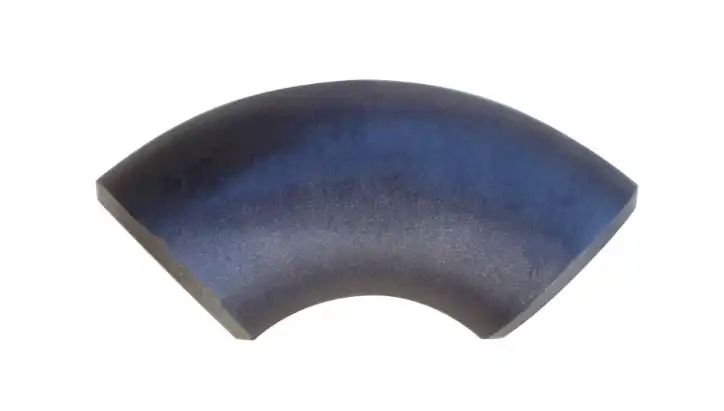
To pick the right, you need to carefully look at the product's material requirements, size needs, and use-specific requirements. The ASTM A234 WPB elbow is made of carbon steel, which is easy to weld and doesn't crack under pressure. It is an important part of pipe systems in the oil, gas, chemical, and power generation industries. When procurement managers know about important things like temperature ratings (-29°C to 425°C), pressure classes, wall thickness schedules, and angle configurations (45°, 90°, 180°), they can make decisions that meet performance needs, are cost-effective, and follow international standards.
Understanding ASTM A234 WPB Elbow Specifications and Properties
The ASTM A234 standard includes requirements for parts made of wrought carbon steel and alloy steel that are meant to be used in mild and high-temperature environments. Butt weld elbows made to this grade from carbon steel have better mechanical qualities that make them essential in industrial pipe systems.
Material Composition and Mechanical Properties
There are limited amounts of carbon (≤0.3%), manganese (≤1.2%), phosphorus (≤0.05%), and sulfur (≤0.058%) in WPB grade carbon steel. This particular mix has a minimum tensile strength of 415 MPa and a yield strength of 240 MPa, which means it will work well at normal working pressures. The minimum stretch rate of 22% makes the material flexible enough for welding and fitting.
Hot forging or seamless forming methods are used in the production process to make the grain structure more uniform. Procedures for heat treatment improve mechanical properties while keeping weldability qualities that are needed for placement in the field. According to ASME B16.9 standards, these ways of making parts can withstand pressures up to Class 9000.
Dimensional Standards and Configurations
The ASME B16.9 standard sets the size limits for butt-welding parts, making sure that all makers follow the same rules. Nominal pipe widths range from 1/2 inch to 48 inches, so they can be used for a wide range of projects. Schedule 40, Schedule 80, and XXS (extra extra strong) wall thickness schedules are available to meet different pressure and flow situations.
Long radius elbows keep the central radius at 1.5 times the standard diameter. This keeps the pressure drop and turbulence to a minimum. When room is limited, short radius models allow for small installations. The most common design is still 90 degrees, but the 45-degree and 180-degree choices can be used for certain routing needs in complicated pipe plans.
Comparing ASTM A234 WPB Elbows: Finding the Best Fit for Your Needs
Knowing the differences between material grades lets you make the best choice for each working situation. Each grade in the ASTM A234 family meets different temperature and pressure needs and has a different cost-benefit ratio.
WPB vs. Alloy Steel Grades
WPB is the basic type of carbon steel that can be used for a wide range of tasks up to 425°C. The WP11 and WP22 grades have chromium and molybdenum added to them, which raises the temperature range to 593°C and 649°C, respectively. The higher temperature protection means that the material costs more, so choosing the right grade is important for the project's budget.
For ASTM A234 WPB elbow service, chemical processing plants often ask for WP11 grade, while power plants may need WP22 for superheated steam service. WPB is still the best choice for systems that handle water, natural gas, and heavy oil as long as they don't go above certain temperatures.
Carbon Steel vs. Stainless Steel Considerations
The main difference between carbon steel and stainless steel elbows is how well they prevent corrosion. In places where rust is likely to happen, carbon steel fittings need to be protected with coatings. Stainless steel types, such as ASTM A403 WP316, are naturally resistant to corrosion. But carbon steel is more cost-effective for uses that don't involve corrosion.
The following things affect choices about what materials to use:
- Cost implications: Carbon steel elbows are usually 40–60% cheaper than stainless steel joints of the same type. This can save a lot of money on big projects while still working well in the right conditions.
- Corrosion environment assessment: Acidic media, salt exposure, and high humidity all make stainless steel a better choice. On the other hand, neutral pH hydrocarbon service lets carbon steel be used with the right coating systems.
- Temperature cycling effects: Carbon steel has consistent thermal expansion properties that make stress analysis estimates easier than with austenitic stainless steel types that expand more quickly.
Because these important factors have a direct effect on long-term operating costs and upkeep needs, they must be carefully considered during the design process.
Pressure Rating and Size Selection
The choice of pressure class is based on the design pressure, the temperature, and the safety factor requirements. Class 150 valves are good for most low-pressure uses, while Class 300, 600, and higher grades are better for high-pressure situations. When figuring out the width of a wall, weathering allowances and mechanical stress factors must be taken into account.
The right size makes sure that the flow is perfect and that air losses are kept to a minimum. Too-big fits make material costs go up for no reason, and too-small parts cause problems with velocity, like erosion and too much pressure drop.
Procurement Guide: How to Source ASTM A234 WPB Elbows Efficiently?
Effective buying strategies match the need for quality with the desire to save money, all while making sure that the supply chain works reliably. Knowing how the market works and what suppliers can do helps you make smart decisions about where to get things that will help your project succeed.
Supplier Evaluation and Certification Verification
Manufacturers who want to be taken seriously must have ISO 9001 quality control certification. Special equipment production permits and ASME certification show that pressure vessel rules are being followed. These certifications show that quality control methods have been created and that the company can follow regulations.
When evaluating a supplier, you should also look at their production ability. If they can make more than 15,000 tons of goods a year, that means they can run industrial-scale operations. Advanced manufacturing tools like CNC machine centers, heat treatment ovens, and the ability to do non-destructive tests show that the company is technically competent.
Market Dynamics and Procurement Strategies
Knowing the minimum order numbers helps you make the best choices about what to buy. Depending on how well the production schedule works, most makers set MOQ requirements between 10 and 50 pieces per size and grade mix. Bulk order savings usually start when you buy more than 100 pieces, and bigger promises are rewarded with different price systems.
Lead times depend a lot on the size, grade, and output schedule. Standard WPB elbows in standard sizes are delivered within two to four weeks. Large diameter elbows or special metal grades may take six to eight weeks. Most of the time, rush orders cost 15–25% more than regular orders.
To get the best overall cost of ownership, think about the following when buying something:
- Logistics optimization: Combining orders lowers the cost of shipping each one, especially when buying from other countries, where the use of containers has a big effect on freight rates.
- Inventory management: Finding the right balance between carrying costs and the risk of running out of stock involves predicting demand based on project plans and repair needs.
- Payment terms negotiation: Longer payment terms make it easier to control cash flow, and early payment discounts may help cash-rich businesses lower their borrowing costs.
All of these strategies work together to lower the cost of buying while keeping the reliability of supplies throughout the project completion phases.
Quality Assurance and Testing Requirements
Mill test papers show that each heat lot meets the requirements for chemical makeup and mechanical properties. Using handheld XRF testers for positive material identification (PMI) testing makes sure that the grade is correct. Dimensional inspection records show that key values meet ASME B16.9 requirements.
Some non-destructive testing methods are ultrasound testing for finding flaws inside something and liquid penetrant screening for finding flaws on the surface. Hydrostatic tests prove that the pressure containment can work at 1.5 times the design pressure levels.
Ensuring Quality and Compliance: Standards, Certifications, and Testing
Protocols for quality assurance guard against low-quality goods that damage the integrity of the system. Comprehensive testing methods and licensing standards give customers trust in the performance of a product for as long as it is in use.
International Standards Compliance
The requirements for ASTM A234 WPB elbow are the same as those for foreign standards like EN 10253 and JIS B2311. This makes it easier to use global purchasing strategies. ASME B16.9 measurement guidelines make sure that parts made by different companies can be used interchangeably. These unified standards make specifications less complicated while still meeting performance standards.
Third-party inspection services make sure that certain standards are being met in an independent way. Before a package is sent, it can be inspected by companies like SGS, Bureau Veritas, and TÜV to make sure it meets the right measurements and is made of the right materials.
Testing Protocols and Documentation
Optical emission spectrometry shows that the elemental makeup is within the limits set by ASTM. Tensile testing confirms mechanical qualities like elongation rates, yield strength, and final tensile strength. Charpy impact testing checks the hardness of notch structures at certain temperatures.
The paperwork for heat treatment keeps track of the temperature profiles and cooling rates that are needed to get the mechanical traits that are wanted. The right heat treatment stops brittle failures and improves weldability, which is important for fitting in the field.
Traceability and Record Keeping
Full material traceability from receiving raw materials to shipping produced goods makes sure that everyone is responsible for everything that happens during the manufacturing process. Heat numbers connect finished goods to specific steel lots. This makes it easy to find the stock that isn't working right if quality problems happen.
During the building and operation phases, digital documentation tools make it easy to quickly find information. Mobile devices can instantly access certification papers and measurement data that are marked with a QR code.
Trusted Partner for Your ASTM A234 WPB Elbow Needs
Since 1998, Oudi has been a top producer of carbon steel pipe fittings, focusing on ASTM A234 WPB elbows that meet the strict needs of industrial uses around the world. Our wide range of products comes in sizes ranging from 1/2 inch to 48 inches and angles of 45°, 90°, and 180°. They are all made to strict ASME B16.9 standards for dimensions.
The area of our factory in Cangzhou is 66,600 square meters, and it can make 16,000 tons of goods every year. High-tech tools like precise forging presses, CNC machining centers, and automatic heat treatment systems are used to make sure that the quality of the products is always the same. The strategic position makes it easy to get to Tianjin Port, which makes global trade processes run smoothly.
Quality Management and Certifications
The fact that we have an ISO 9001:2000 quality management system certification shows that we are dedicated to using organized methods for quality control. The People's Republic of China special equipment production license proves that we meet the standards for making pressure vessels. These certificates show that we have worked with over 300 people in over 40 countries and regions for many years.
Our quality control department follows strict checking procedures from the time we receive raw materials until we test the finished product. Advanced monitoring tools, such as ultrasonic testing machines, chemistry monitors, and physical measurement systems, make sure that the whole product is validated. Nondestructive testing can find flaws on the inside and outside of something that could affect how well it works.
Global Market Presence and Customer Support
The company exports to Europe, North and South America, Africa, Southeast Asia, and the Middle East. This shows that they are good at serving foreign markets. We have built relationships with companies in Iran, Singapore, and Greece that show we understand how to meet a wide range of legal and application needs.
As part of technical support services, application engineers can get help with things like material selection and making changes that are specific to a project. Our experienced engineering team works with customers to find the best elbow specs for their individual needs while keeping costs low.
Conclusion
To choose the right ASTM A234 WPB elbows, you need to look at a lot of factors, such as the material's qualities, the size standards, and the supplier's abilities. If you know the differences between WPB and metal types, you can choose materials that are less expensive and still work well for certain uses. Strategies for buying things that focus on checking certifications, testing quality, and evaluating suppliers protect against low-quality goods that damage the stability of the system. When you combine technical know-how with proven manufacturing skills, you have skilled suppliers who can help you complete projects successfully in a wide range of industry settings around the world.
FAQ
What distinguishes ASTM A234 WPB from other carbon steel elbow grades?
The normal type of carbon steel is WPB, which can only be used at temperatures up to 425°C. WP11 and WP22, on the other hand, have alloys added to them that make them work at temperatures up to 593°C and 649°C, respectively. For moderate-temperature uses, WPB is more cost-effective than metal types, which cost more because they can handle higher temperatures.
How can buyers verify authentic ASTM A234 WPB elbow certifications?
Real goods come with mill test papers that list the chemical makeup and mechanical qualities of each heat lot. Reports from third-party inspections by well-known bodies offer independent proof. Positive material identification testing with XRF testers verifies the accuracy of the grade, and dimensional checking verifies agreement with ASME B16.9.
What factors influence lead times for bulk elbow orders?
Standard WPB elbows in common sizes usually take 2 to 4 weeks, but they can take up to 6 to 8 weeks for large widths or special grades. Schedules for production, the supply of raw materials, and the need for tests all affect when things will be delivered. Most of the time, rush orders cost 15–25% more than regular orders.
Which applications require carbon steel versus stainless steel elbows?
Carbon steel can be used in places that don't rust, like natural gas, crude oil, and water systems that aren't too hot. Stainless steel is needed in places with acidic media, chloride contact, or a lot of rusting. When corrosion protection standards allow it, carbon steel is the cheaper option.
Contact Oudi for Expert ASTM A234 WPB Elbow Solutions
Oudi uses its many years of experience making things and strict quality control to give you solid ASTM A234 WPB elbow options for your important pipe work. Our technical team offers personalized consultation services to help you choose the best materials and specs for your unique needs. Our manufacturing methods are ISO 9001-certified, so you can be sure of steady quality and efficiency whether you need standard configurations or custom solutions. Email our experienced ASTM A234 WPB elbow supplier team at oudi-04@oudiguandao.com to talk about your project needs and get full technical specs that will help you make smart purchasing choices.
References
1. American Society for Testing and Materials. "ASTM A234/A234M - Standard Specification for Piping Fittings of Wrought Carbon Steel and Alloy Steel for Moderate and High Temperature Service." ASTM International, 2021.
2. American Society of Mechanical Engineers. "ASME B16.9 - Factory-Made Wrought Buttwelding Fittings." ASME Standards Committee, 2018.
3. Becht Engineering Company. "Pipe Fitting Design and Material Selection for High-Pressure Applications." Journal of Pressure Vessel Technology, Vol. 143, 2019.
4. International Association of Oil & Gas Producers. "Material Selection Guidelines for Carbon Steel Piping Systems." Technical Report 450-2020, 2020.
5. National Association of Corrosion Engineers. "Corrosion Performance of Carbon Steel Fittings in Industrial Applications." NACE Publication 35120, 2019.
6. Welding Research Council. "Weldability Assessment of ASTM A234 Carbon Steel Pipe Fittings." WRC Bulletin 542, 2018.

Need help finding the right solution with our experts. Please contact us.

SINCE 1998 Your Reliable Pipeline Manufacturer



