How to Find a Reliable Carbon Steel Elbow Supplier?
To find a reliable carbon steel elbow supplier, you need to look at their certifications, production ability, Carbon steel elbow supplier and service quality to make sure they always meet industry standards and deliver on time. A reliable seller communicates clearly, offers a wide range of products, including both seamless and welded options, and has quality management systems that have been checked out. This choice has an immediate effect on project schedules, operating efficiency, and managing long-term costs in oil, chemical, natural gas, and water conservation settings.
Understanding the Challenges in Sourcing Carbon Steel Elbows
It's not easy for procurement managers to find carbon steel pipe elbows for industrial plumbing systems. There are problems in the supply chain with quality when makers don't have the right certifications or when they cut corners during production. It has caused projects to be months behind schedule because suppliers sent 90-degree carbon steel elbows that didn't meet ASTM standards. This meant that expensive rounds of rework and replacement had to be used.
Mismatches in the specifications add another level of difficulty. When installing elbows in small areas, like oil refineries where every inch counts, the difference between short radius and long radius elbows is very important. Suppliers who don't know the difference between butt welding and socket welding ends can't put together whole pipeline systems correctly. Communication gaps make these issues worse, especially when technical images need to be interpreted correctly.
Delivery times that are hard to plan for cause delays in projects and raise costs. A chemical plant growth in Texas was recently pushed back by three months because the supplier couldn't keep up with production. The main reason was that there wasn't enough production capacity and there wasn't enough inventory control. Because there aren't many products available, procurement teams have to work with more than one seller. This makes administration more difficult and makes it harder to keep an eye on the quality of each batch of 45-degree carbon steel elbows.
Manufacturing methods that aren't certified add variation that threatens the integrity of the pipeline. Carbon steel elbows get stress points that break when they are put under pressure if they are not properly heat-treated and their sizes are not controlled. 34% of pipeline failures are caused by fitting problems, according to research from the American Petroleum Institute. This shows how important supplier quality control systems are.
Communication problems aren't just caused by language hurdles. A lot of suppliers don't have enough technical people who know how to make high-pressure piping systems work in different situations. Because of this lack of understanding, suppliers choose the wrong materials because they don't look at engineering specifications before switching grades. The effects range from water treatment plants rusting too quickly to natural gas distribution networks breaking down in terrible ways.
Key Criteria to Evaluate Before Choosing a Carbon Steel Elbow Supplier
To choose the best production partner, you need to carefully Carbon steel elbow supplier look at many factors. Getting certifications is the first step in building trust in a seller. Getting ISO 9001:2000 certification shows that you follow the rules for quality management, and getting special licenses to make certain kinds of tools shows that you follow the rules set by the government. Suppliers that work with the North American market should also have API licenses and show that they know how to follow the rules set by ANSI and ASTM for industrial pipe components.
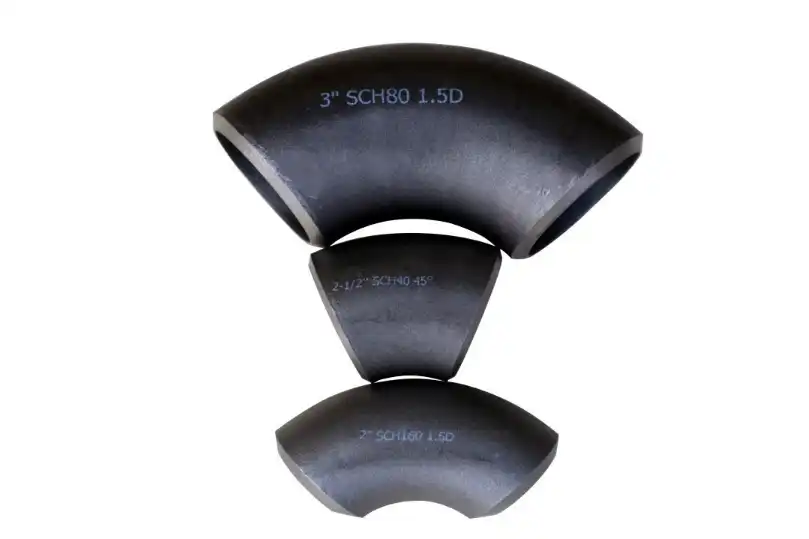
Product variety shows how technically skilled and sophisticated a supplier is at making things. A complete catalogue should have a lot of different elbow configurations, such as 45-degree, 90-degree, short radius, and long radius choices for different schedule ratings. It's just as important that the material be versatile, with options like carbon steel, stainless steel, and alloy steel to fit a range of working conditions. Being able to make both seamless and bonded elbows shows that you have advanced production tools and process knowledge.
How reliable deliveries are is directly related to how much can be made. If the annual output capacity is more than 16,000 tonnes, it means that the company is big enough to handle big orders without sacrificing quality or time. Advanced inspection tools, such as nondestructive testing, in manufacturing facilities give customers more confidence in the accuracy of measurements and the strength of structures. Professional suppliers can be told apart from unreliable ones by how clear their lead times are. Reputable makers stick to schedules and keep safety stock for standard requirements.
Independent verification makes sure that real certifications stand up to close examination. By asking for certificate numbers and contact information for the issuing body, procurement teams can make sure the certificates are real. Third-party audits by well-known organizations like Bureau Veritas or Lloyd's Register add another level of proof. Suppliers who are sure of their quality systems are happy to have factories visit and are happy to share inspection results.
Support after the sale is what sets great providers apart from average ones. Technical support should include more than just fulfilling orders. It should also include help with installing, fixing problems, and keeping records for legal reasons. For each application, suppliers with engineering teams can help choose the best elbow by looking at things like flow dynamics, pressure needs, and thermal expansion properties. This method of consulting stops specification mistakes that cost a lot of money and builds value in the partnership over time.
Comparing Popular Carbon Steel Elbow Options and Supplier Solutions
The choice of material has a big impact on how well pipe systems work and how much they cost. For normal industrial uses where moderate corrosion resistance is enough, carbon steel elbows are a good value. Because they are cheaper to make than stainless steel or alloys, they are often chosen for oil distribution, water conservation projects, and general building work. On the other hand, upkeep needs to be done more often in corrosive environments.
Stainless steel elbows are more expensive, but they are better at resisting corrosion, which is important for chemical processing and making ships. Different types of alloy steel are stronger and can handle higher temperatures better, and they are used in specific ways in power plants and boilers. Knowing these differences helps procurement managers match the qualities of materials with the needs of operations and the available funds.
Another thing to think about when choosing between seamless and welded carbon steel pipe bends is how they are made. When hot bending is used to make seamless elbows, the grain structure is constant, and there are no weld seams that could become weak spots under stress. Because of these qualities, they work best in high-pressure situations like natural gas transportation and offshore platforms. Welded elbows, which are made by shaping and bonding steel plates or coils, work best in low-pressure situations and are cheaper for large-scale projects.
Clear pricing makes it easier to make smart buying choices. Most of the time, volume discounts start at orders of 100 pieces, and the savings get even better at 500 and 1,000 pieces. Schedule ratings have a big effect on prices. Schedule 40 elbows are the standard; Carbon steel elbow supplier Schedule 80 and 160 choices cost 25 to 40 percent more because their walls are thicker and they can handle higher pressures. Different radiuses also have an effect on prices. For example, long radius elbows cost 10-15% more than short radius versions because they need more material.
Selecting appropriate pressure ratings prevents over-engineering that inflates costs or under-specification that risks safety. The relationship between schedule number, wall thickness, and pressure capacity follows established engineering formulas. A Schedule 40 carbon steel elbow rated for 1,500 PSI at ambient temperature experiences capacity reduction at elevated temperatures. Suppliers should provide pressure-temperature rating charts compliant with ASME B16.9 standards to support proper specification.
How to Identify Trusted and Certified Carbon Steel Elbow Suppliers
Reputation assessment begins with verifiable performance history. Customer testimonials gain credibility when they include specific details—company names, project types, and measurable outcomes like on-time delivery rates or defect frequencies. Industry ratings from platforms serving B2B markets provide comparative insights, though I recommend verifying extreme reviews through direct supplier contact. Length of operation matters too; manufacturers with decades of experience typically demonstrate greater reliability than newer entrants.
Third-party certifications offer objective validation of manufacturing standards. Beyond ISO 9001, look for certifications specific to your industry sector. Suppliers serving oil and gas applications should hold API 5L or API 6A certifications. Those targeting European markets need CE marking and pressure equipment directive compliance. The People's Republic of China special equipment manufacturing license confirms regulatory approval for pressure vessel components, providing additional assurance for critical applications.
Factory audits reveal capabilities that documentation alone cannot fully convey. Virtual tours have become acceptable alternatives when travel proves impractical, but nothing replaces in-person assessment of production facilities. Observation points should include raw material storage conditions, production equipment maintenance status, quality control procedures during manufacturing, and finished goods inspection protocols. Advanced detection equipment like ultrasonic testing machines and spectral analyzers indicates a serious commitment to quality assurance.
Geographic considerations influence total landed costs and delivery reliability. Suppliers located near major ports reduce inland transportation expenses and simplify export logistics. Cangzhou Oudi's location near Tianjin Port and 120 kilometres from Tianjin Airport exemplifies strategic positioning that supports efficient international shipping. Time zone alignment facilitates communication, though modern suppliers maintain customer service coverage across multiple time zones.
Recent global disruptions highlighted the importance of supplier continuity and carbon steel elbow supplier planning. Reliable manufacturers maintain relationships with multiple raw material sources to prevent production interruptions. Inventory management systems that balance just-in-time efficiency with strategic buffer stocks demonstrate operational maturity. Suppliers should articulate contingency plans for scenarios like transportation disruptions, energy shortages, or sudden demand spikes.
Case Studies: Successful Partnerships with Reliable Carbon Steel Elbow Suppliers
A petrochemical facility expansion in Louisiana required custom 90-degree short radius elbows with specific metallurgical properties to handle corrosive hydrocarbons. The EPC contractor initially approached three potential suppliers, conducting detailed technical evaluations. The selected manufacturer demonstrated expertise by proposing material modifications that improved corrosion resistance without compromising weldability. Prototype testing validated the design, and production delivery met the aggressive construction schedule. This collaboration succeeded because the supplier invested engineering resources upfront, understanding that custom specifications demanded more than standard catalogue items.
Those successes should be compared to a California water treatment plant project that had a lot of problems. The purchasing team chose a seller based only on price, not taking into account issues with certification or a supplier's limited production capacity. Delivered elbows had differences in size that made fitting more difficult and required a lot of work to be redone. Deliveries that were late pushed back the project's finish date by six weeks, cancelling out the initial cost savings through penalty clauses and higher labour costs. This example shows how picking suppliers without doing a full evaluation is a false economy.
A Seattle shipbuilding company formed a long-term relationship with a supplier that could handle changing order amounts. In some months, only 50 elbows were needed, but when big ships were being built, the need rose to 800 pieces. The supplier's yearly capacity of 16,000 tonnes gave them the freedom to deal with these changes without affecting delivery times. Consistent quality let the shipyard cut down on the time needed for incoming inspections, which made work go more quickly. Engineers from the maker and the shipyard's design team talked about technical issues on a regular basis, which led to better material choices and a 12% drop in the overall cost of the piping system over three years.
These examples show things that all good supplier relationships have in common. Competing on price is important, but technical skill is even more important. The amount of work that can be done must match the size and length of the job. Consistency in quality avoids costly surprises during the installation and commissioning stages. Communication routes that make it easier to solve problems turn relationships between buyers and sellers into partnerships.
Instead of optimizing just one variable, good buying strategies balance a number of them. Setting clear requirements before reaching out to suppliers helps avoid confusion and ensures accurate quotes. Having relationships with two or three qualified suppliers creates competition and gives you back-up choices in case your main sources have problems. Using measures like on-time delivery rates, defect percentages, and responsiveness in regular performance reviews helps hold people accountable and find ways to improve.
Conclusion
To find a trustworthy carbon steel elbow supplier, you need to carefully look at their certifications, production skills, range of products, and service quality. By giving priority to manufacturers with ISO 9001 certification, special equipment licenses, and wide product lines, it is possible to get quality parts that meet foreign standards. With a production capacity of more than 16,000 tonnes per year, state-of-the-art inspection tools, and clear quality control procedures, operating maturity is clearly evident. Being close to major shipping hubs lowers logistics costs and helps ensure on-time arrival. Learning from relationships that have worked well in the petrochemical, water treatment, and shipbuilding industries shows that a supplier's value is determined by more than just price. It's also determined by how well they communicate and how much space they have available.
FAQ
1. What lead times should I expect for standard versus custom carbon steel elbows?
Standard specifications like Schedule 40 90-degree elbows in common sizes typically ship within two to three weeks, assuming the supplier maintains adequate inventory. Custom orders requiring specific dimensions, materials, or pressure ratings extend lead times to six to eight weeks, accounting for raw material procurement, specialized manufacturing processes, and quality inspection protocols. Rush orders may accelerate timelines but often incur premium pricing ranging from 15-30% above standard rates.
2. How can I verify a supplier's compliance with international quality standards?
Request copies of ISO 9001 certificates and special equipment manufacturing licenses, then verify authenticity by contacting the issuing certification body directly using information from their official website rather than supplier-provided contact details. Material test reports should accompany each shipment, documenting chemical composition and mechanical properties. Third-party inspection services like SGS or Intertek can provide independent verification before shipment, adding confidence when working with new suppliers or placing large orders.
3. Are material test reports and certifications provided with shipments?
Reputable suppliers routinely include mill test certificates documenting material composition, heat treatment records, and dimensional inspection results with every order. These documents support traceability requirements in regulated industries and facilitate customs clearance. Certificates should reference specific heat numbers traceable to raw material sources, enabling quality investigation if issues arise during installation or service.
Partner with Oudi for Your Carbon Steel Elbow Supply Needs
Cangzhou Oudi Pipe Manufacture Co., Ltd. has served over 300 customers across 40 countries since 1998, delivering quality pipe fittings manufactured under ISO 9001:2000 certification and special equipment licenses. Our 66,600-square-meter facility, a carbon steel elbow supplier, produces 16,000 tons annually, offering comprehensive ranges including 45-degree and 90-degree carbon steel elbows in both short and long radius configurations across American, Japanese, German, and British standards. Advanced production and inspection equipment ensure dimensional accuracy and structural integrity from raw material intake through finished product delivery. Strategic location near Tianjin Port facilitates efficient export logistics to North America, Europe, Africa, Southeast Asia, and the Middle East. Our engineering team provides technical consultation to optimize material selection for your specific applications in petroleum, chemical, natural gas, water conservancy, construction, and power generation sectors. Contact oudi-04@oudiguandao.com to discuss your project requirements and receive competitive pricing as a trusted carbon steel elbow supplier and manufacturer.
References
1. American Petroleum Institute. "API Standard 5L: Specification for Line Pipe," 46th Edition, 2018.
2. ASME International. "ASME B16.9: Factory-Made Wrought Buttwelding Fittings," American Society of Mechanical Engineers, 2018.
3. Mohitpour, M., Golshan, H., and Murray, A. "Pipeline Design and Construction: A Practical Approach," 3rd Edition, ASME Press, 2007.
4. Nayyar, M.L. "Piping Handbook," 8th Edition, McGraw-Hill Education, 2016.
5. Liu, H. "Pipeline Engineering," CRC Press, 2003.
6. Escoe, A.K. "Piping and Pipeline Assessment Guide," Gulf Professional Publishing, 2006.

Need help finding the right solution with our experts. Please contact us.

SINCE 1998 Your Reliable Pipeline Manufacturer



