How to Select ASME B16.9 Pipe Cap for Pressure Systems?
To pick the right ASME B16.9 Pipe Cap for your pressure system, you need to know a lot about maths and have bought things before. Choosing the right cap is important for keeping the system safe because it stops leaks, can handle design pressures, and can handle acidic conditions. You can pick parts that meet ASME standards and your needs if you know about the types of materials used, the quality of the making, and whether the parts meet approval requirements. This book tells you how to compare products, pick the best ones, and buy them in a way that makes oil, chemical, natural gas, and industry settings safer and more productive.
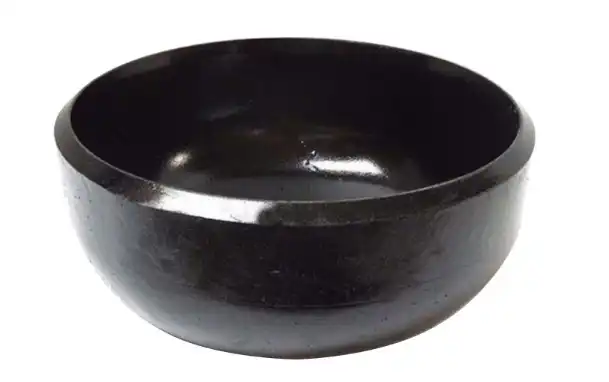
Understanding ASME B16.9 Pipe Caps and Their Specifications
When it comes to pressure piping systems, ASME B16.9 Pipe Caps are very important because they seal the ends of the pipes to keep the pressure inside and keep outside contaminants out. The ASME B16.9 standard says that wrought buttwelding parts made in a factory, like caps, must have exact measurements and tolerances that allow them to work with ASME B36.10M and B36.19M lines without any issues. Buttweld caps don't have a specific pressure class number like 150# or 300#. They can instead hold the same amount of pressure as a straight pipe with the same diameter, wall thickness (schedule), and grade of material. In other words, they are just as strong and effective when they burst.
The material a cap is made of makes a big difference in how well it works in different situations. ASTM A234 WPB is often used to make carbon steel caps. These caps have a high tensile strength (at least 60,000 psi) and are very flexible, which makes them great for many uses in the oil and gas industry, chemical processing, and water conservation. The ASTM A403 WP304 and WP316 steel types are better at not rusting in harsh chemical environments and high temperatures. ASTM A234 WP5 and WP9 steels are better at stopping creep, making them better for use in power plants and boilers. When steel is worked, the grains are lined up, which makes it stronger and more durable than steel that is cast.
Dimensional Consistency and Bevel Configuration
Every cap has the same center-to-face measurements and tolerances because they are made with great care. This means that they can be used in any job in the world. ASME B16.25 rules are usually used for end preparations. These rules include 37.5° bevels (±2.5°) that make full penetration welding easy and make links that won't leak. It is easier to line up the pipes during installation when the walls are the same diameter and concentric. This also lowers the chance of flow turbulence and ensures that the hydraulic performance stays the same over the life of the system.
Manufacturing Processes and Quality Control
You can either weld or make pipe caps that are seamless. Each is good in its own way. Seamless caps are made from solid billets that don't have any welds running through them. Since they are under a lot of pressure, this makes their body the best they can be. Because they are made from rolled and welded plates, welded caps come in more sizes and cost less for that reason. Controlled forming processes may change the thickness of the material during production. The material at the inner curve (intrados) gets thicker while the material at the outer curve (extrados) gets thinner. Good builders, on the other hand, make sure that the wall thickness never drops below 87.5% of the standard. Comprehensive quality control checks that something meets ASME standards by looking at its chemical makeup, testing its mechanical properties, making sure it's the right size, and testing it without damaging it.
Key Factors to Consider When Selecting ASME B16.9 Pipe Caps
Before you pick out an ASME B16.9 Pipe Cap, you should carefully read over the details of your pressure system. You need to make sure that the caps can handle the design pressures or go above them. They also need to have enough safety gaps to account for pressure spikes, changes in temperature, and repeated loading conditions. By checking the MAWP of the system against the material grade and wall schedule of the cap, you can be sure that the structure is strong enough and will last a long time.
Material Compatibility and Environmental Considerations
How well the material fits affects both how long the cap lasts and how safe the system is. This is especially true in places where there are harsh chemicals or high temperatures. Carbon steel caps work best in normal conditions, but they may need coats to keep them safe in places where they will rust. Stainless steel grades don't rust or react with chemicals, so they last longer in places like food processing, pharmaceuticals, and offshore industries. Steels made of alloys can work in both hot and cold places, like factories and power plants. To pick the right material and keep it from breaking down too quickly, you should think about the type of fluid, the temperature range, and any possible harmful agents.
Fit and Installation Precision
It is important to get the measurements right so that the welding goes smoothly and there are no leak paths that could weaken the system. For the bevels to work right and the weld to go through, the caps must perfectly line up with the outside sizes and wall thicknesses of the pipes. While standard ASME measurements make this connection easier, it's still a good idea to check the manufacturer's limits and do test fits before buying. This will help with fitting and reduce the need for rework in the field.
Seamless Versus Welded Caps
What you pick between seamless and welded caps depends on how important the job is, how much money you have, and the sizes that are available. Seamless caps are the best choice when there is no way to damage the structure's integrity, like when there is high pressure, high temperature, or cyclic loading. Because they are cheaper and come in more sizes, welded caps are better for uses that don't take a lot of stress. You can make smart decisions about what to buy for a project if you know the trade-offs between availability, efficiency, and cost-effectiveness.
Compliance and Certification Documentation
When buying from another business in another country, you have to follow the rules. It is important to make sure that caps are of good quality and meet industry standards like ASME B31.3 for process pipes by making sure they have the right ASME certifications, material test reports (MTRs), and production licenses. If a supplier has ISO 9001 certification and special equipment manufacturing licenses, it means they are committed to quality management that is systematic, traceable, and promotes constant improvement. To avoid being sued, keep your paperwork clear so that the government and the project can check it.
Comparing ASME B16.9 Pipe Caps to Other Pipe Cap Standards and Types
You can see when to use ASME B16.9 Pipe Caps better if you know how they stack up against other standards. It is possible to make socket welding and threaded connections with ASME B16.11 fittings. Small bore pipe systems (up to 4 inches) that need to be easy to put together and take apart work best with them. MSS SP-43 covers fittings made of wrought stainless steel, but because the sizes can change, it might be hard to switch them out. ASME B16.9 Pipe Caps make connections that are strong and last a long time. They can handle higher pressures and larger diameters that are common in oil, gas, and chemical processing.
Carbon Steel Versus Stainless Steel Caps
Steel caps are strong and don't cost a lot. They work well in mild temperatures and places where they won't rust. They are good for big projects with little money because they cost less at first. Metal caps made of stainless steel cost more, but they last longer and need less maintenance in acidic places, so the overall cost of ownership is lower. The choice of material is based on how much it will cost and how long it will last in use. This is done by weighing the costs up front against the performance over the lifecycle.
Seamless Versus Welded Reliability
With seamless caps, there is no longer a lengthwise weld seam. This means that there are fewer places where something could go wrong, and it is more reliable when it comes to repeated loads and heat expansion. There are many times when welded caps work well, and they are cheaper when they are made to strict standards and go through full X-ray testing. To pick the best parts, procurement teams have to figure out how important each application is and balance the need to guarantee performance with the need to stick to a budget.
Practical Procurement Guidance for ASME B16.9 Pipe Caps
To get pipe caps that you can trust, you should look for companies that have quality control methods that have been shown to work and certifications that you can check. Oudi has been making things since 1998. They have helped more than 300 people in over 40 countries and regions, including those in Europe, the Americas, Africa, Southeast Asia, and the Middle East. Our factory is 66,600 square meters and is in Cangzhou, Hebei Province. It has high-tech tools that can make 16,000 tons of goods every year. We are allowed to make special tools and have ISO 9001:2000 certification. This means that from checking the raw materials to sending out the finished product, we make sure that every ASME B16.9 Pipe Cap meets strict international standards.
When you buy from a plant directly, you cut out the middleman and can get expert help and make changes right away. Making sure the rules are followed and the quality of the product is checked is helped by having clear paperwork, such as material test results, measurement inspection records, and heat treatment certificates. Oudi has very strict rules in place for quality control. There are full checks and non-destructive tests done during production to make sure the structure is strong and the sizes are correct.
Ordering Considerations and Customization Options
The minimum order quantity (MOQ) for each manufacturer is different, but you can get better terms if you know how much you need for your project. Some of the things that can be changed are the material types (carbon steel WPB, stainless steel 304/316, and alloy steel WP5/WP9), the size needs, the heat treatments, and the protection coatings that are made to fit the working conditions. Lead times are usually between four and eight weeks, but can be longer or shorter depending on how complicated the order is, how quickly materials can be sourced, and how busy the factory is. You can meet the needs of manufacturing, shipping, and checking without delaying project goals if you plan purchase timelines with buffer times.
Pricing Trends and Cost Optimization
Prices for ASME B16.9 Pipe Caps change based on the cost of the metal, the cost of the raw materials, how hard they are to make, and how many are ordered. There are times when buying in bulk can save you money per unit, but you should be careful not to keep too much money on hand. Vertical integration, economies of scale, and efficient ways of making things all help keep prices low without lowering quality. It is smart to put Oudi near Tianjin Port and only 120 kilometers from Tianjin Airport. The value of the business goes up because this makes operations easier and cuts the cost of shipping for customers from other countries.
Global Shipping and After-Sales Support
Goods get to their destination on time and safely thanks to clear shipping terms (FOB, CIF, DDP) and dependable logistics partners. Full after-sales support, such as expert advice, help with installation, and guarantee services, helps customers stay happy and quickly fixes any issues that come up after the sale. Oudi cares about their customers more than just sending them products; they also offer ongoing technical support to make systems work better and be safer.
Installation and Maintenance Best Practices
The place needs to be carefully set up before the work can begin. This includes checking the quality of the bevel and comparing the cap's measurements to those of the pipe. Alignment tools make sure that the fit is concentric. This stops the imbalance that can cause stress clusters and holes in the weld. In order to follow ASME Section IX, welding processes must be done by experienced welders using the correct filler materials that are made from the same metal as the base metal. Keeping the preheat and interpass temperatures at the right levels will keep the metal from cracking. Post-weld heat treatment (PWHT) might be needed if the material is thick enough and the pipeline codes, like ASME B31.3, say so. This lowers any pressure that might still be in the field weld that joins the cap to the pipe.
Pressure Testing and Non-Destructive Testing
As soon as the system is set up, it is checked for soundness using either hydrostatic or pneumatic pressure, and any possible leak tracks are found. Most of the time, test pressures are a bit higher than design pressures. This makes sure the caps and welds can handle what they need to do. Some types of testing, like X-rays, ultrasonics, magnetic particles, and liquid penetrant, can find flaws below and on top of the surface that you can't see with the naked eye. These methods make sure that the weld meets the code's standards for quality and provide written proof for project approval and following the rules.
Maintenance Protocols and Preventive Measures
Every so often, the cap is checked to see if there are any early signs of rust, erosion, or mechanical damage. Buried or underwater installations don't rust from the outside because they have protective layers and cathodic protection systems in place. Over time, thermal cycling and changes in pressure can wear down parts, so the system's integrity needs to be checked often. Making repair plans based on how often the system is used and how it is exposed to the environment helps parts last longer, avoids unplanned downtime, and keeps the system working well.
Conclusion
When picking the best ASME B16.9 Pipe Cap for pressure systems, you need to look at its technical details, whether it is made of compatible materials, how well it was made, and whether it meets the approval needs. When engineers and procurement managers know about material qualities, pressure limits, and size standards, they can make choices that are safer and better for performance. To make sure that the parts meet the needs of the project and government rules, it is important to compare options such as seamless vs. welded, carbon steel vs. stainless steel grades, and suppliers' credentials. When you install and maintain the cap the right way, it lasts longer and protects the system better. It also lowers operational risks and lifecycle costs.
FAQ
1. How is the pressure rating of an ASME B16.9 Pipe Cap determined?
You can't set the pressure class for ASME B16.9 Pipe Caps and other parts to 150# or 300#. According to ASME guidelines, they can hold the same amount of pressure as a straight pipe of the same width, wall thickness, and material grade.
2. Can ASME B16.9 Pipe Caps be used with ASME B16.5 flanges?
Yes, ASME B16.9 Pipe Caps and ASME B16.5 flanges work great together. It is common to weld them right to the flange's weld neck to make sure they are the right size, and that pressure system connections don't leak.
3. Is post-weld heat treatment required for installed caps?
The pipe code (like ASME B31.3) and the wall width determine how much PWHT is needed. When the cap is made, it is heat-treated. However, the field weld that joins the cap to the pipe may need to be stress relieved based on how it will be used and what the material needs.
4. What is the difference between seamless and welded pipe caps?
Seamless caps are formed from solid billets without longitudinal welds, offering maximum structural integrity for critical applications. Welded caps, constructed from rolled and welded plates, provide cost-effectiveness and availability across broader size ranges, suitable for less demanding conditions when manufactured to rigorous standards.
Partner with Oudi for Reliable ASME B16.9 Pipe Cap Solutions
Since 1998, Oudi has been a trustworthy company that makes ASME B16.9 Pipe Caps. They have sent certified, top-notch pipe fittings to over 300 customers in 40 different countries. Carbon steel, stainless steel, and alloy steel caps are just a few of the many things we make. The people who make all of these have ISO 9001 certification and licenses to use certain equipment. We use high-tech testing tools, a production capacity of 16,000 tons per year, and strict quality control from the time we get the raw materials until the parts are shipped to make sure that every part we send you meets international standards and the needs of your project.
Our skilled engineers can answer any technical questions you have and make solutions that are unique to your needs, whether you need standard sizes or designs that are made just for you with a small order quantity. We're close to Tianjin Port, which makes it easy for you to buy from us. Our low prices, fast shipping around the world, and full after-sales support can also help you save time. Get in touch with Oudi right away at oudi-04@oudiguandao.com to get a detailed price quote or technical help. With our reliable ASME B16.9 Pipe Caps, your pressure systems will keep running well, and everyone will be safe.
References
1. American Society of Mechanical Engineers. ASME B16.9: Factory-Made Wrought Buttwelding Fittings. New York: ASME Press, 2018.
2. American Society of Mechanical Engineers. ASME B31.3: Process Piping Code. New York: ASME Press, 2020.
3. ASTM International. ASTM A234: Standard Specification for Pipe Fittings of Wrought Carbon Steel and Alloy Steel for Moderate and High Temperature Service. West Conshohocken: ASTM, 2019.
4. ASTM International. ASTM A403: Standard Specification for Wrought Austenitic Stainless Steel Piping Fittings. West Conshohocken: ASTM, 2017.
5. Nayyar, Mohinder L. Piping Handbook. 8th ed. New York: McGraw-Hill Education, 2016.
6. Singh, Keshavan. Pipeline Integrity Handbook: Risk Management and Evaluation. Houston: Gulf Professional Publishing, 2014.

Need help finding the right solution with our experts. Please contact us.

SINCE 1998 Your Reliable Pipeline Manufacturer



