How to select the right pipe elbow for a ship's engine room?
To choose the correct shipbuilding pipe elbow, you need to carefully consider the type of material used, the pressure grade, the angle requirements, and the fact that it meets naval certification standards. Marine engine rooms are very harsh, with high temperatures, toxic fluids, and constant shaking. This makes it critical that elbows are durable and compatible. Usually, seamless elbows made of carbon steel or stainless steel with butt-weld ends that meet ANSI B16.9 or DIN standards are better because they don't have weak lengthwise gaps and make sure that pressure is spread evenly throughout the pipe network.
Understanding Shipbuilding Pipe Elbows: Specifications and Types
Marine pipe systems require specially designed components to withstand harsh conditions. When you put a shipbuilding pipe elbow between two pipe sections, it changes the direction of the fluid flow without affecting the structure of the system. These fittings are essential in the engine room, where space limitations and complicated routes make straight-line pipes problematic.
Common Elbow Types Used in Marine Applications
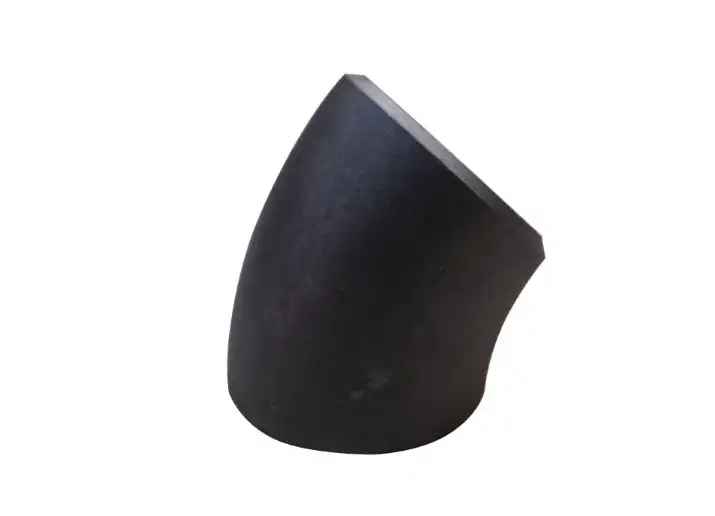
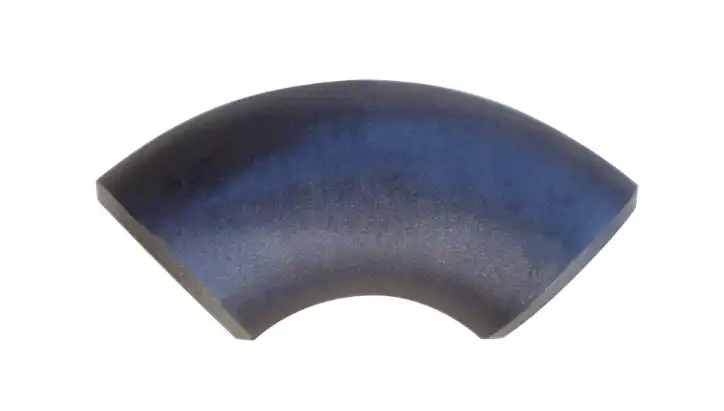
The 90-degree elbow is the most common design used in construction because it allows for perpendicular changes in direction, which are required for going from vertical to horizontal routing. The 45-degree version redirects flow more gradually, lowering turbulence and pressure drops in systems where introducing changes to the flow direction more gradually improves efficiency. Even though they are not very common, 22.5-degree elbows are useful for specific routing problems in engine rooms that aren't massive and need to make accurate angular changes. Flow features and the required space significantly depend on radius specifications. Long radius elbows have a diameter that is 1.5 times the standard pipe diameter. They make changes in flow smoother, which cuts down on erosion and pressure loss. When the assembly room is limited, and flow optimization is not a priority, short radius elbows with a radius of one time the diameter can be used. When keeping the pressure steady is important, marine engineers usually choose long-radius designs for fuel and lubricant systems.
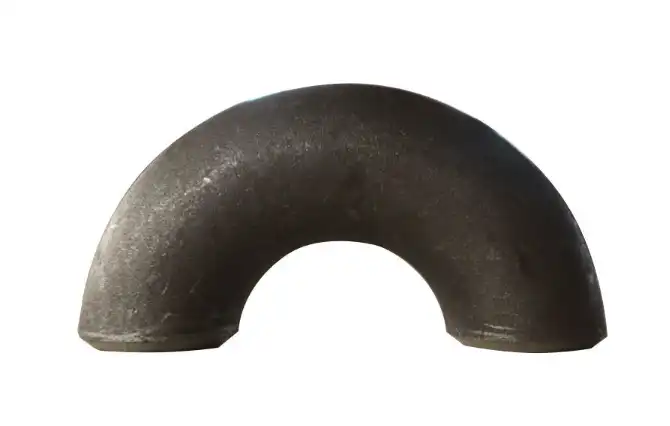
Seamless Versus Welded Construction
The way something is made has a big impact on its strength and ability to handle pressure. When solid pipe billets are hot pushed or bent around a mandrel, seamless elbows are made with walls that are all the same thickness and no longitudinal weld gaps. This design gets rid of the weakest structural parts in welded options, which makes seamless options perfect for high-pressure steam lines and important fluid movement tasks. Welded elbows are made by putting pieces of formed plate together. This saves money in bigger diameter situations where making smooth elbows would be hard to do. Modern welding makes durable joints, but they must be inspected for flaws and complete penetration. Marine classification groups set testing standards that welded parts must meet before they can be installed.
Material Selection for Corrosive Marine Environments
Carbon steel elbows are cheap, strong, and can be welded normally, so they are common in construction. These fittings work well in cooling systems that use fresh water and in lines that carry compressed air, where the chance of rusting is low. In slightly corrosive settings, surface treatments like galvanization or epoxy coatings make things last longer. Stainless steel grades, especially 316L and duplex types, are excellent at resisting rust, which is important for systems that cool seawater and handle waste gases. Nickel and molybdenum in these alloys make inactive oxide layers that stop pitting and fissure corrosion caused by chloride. Even though they cost more at first than carbon steel alternatives, they are worth the money in important marine uses because they need less upkeep and last longer between replacements.
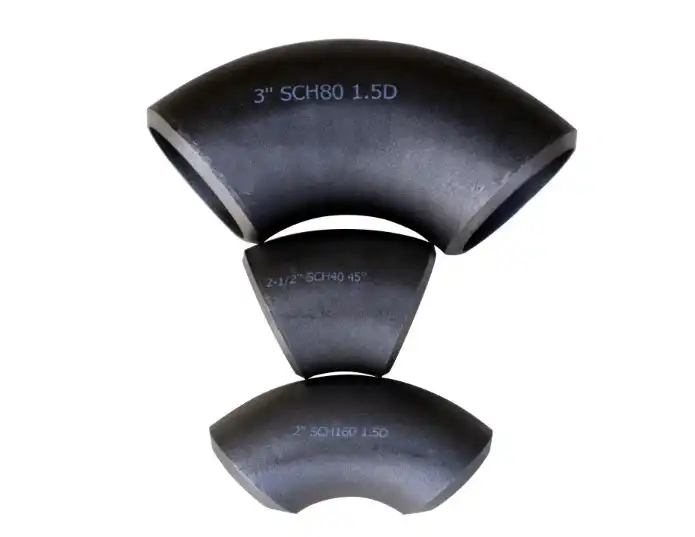
International Standards Governing Marine Pipe Fittings
To ensure consistent dimensions and performance checks, it is essential to adhere to established standards. For wrought butt-welding parts sold in North America, ANSI B16.9 sets the rules for wall thickness standards, dimensional limits, and marking requirements. The European standards DIN 2605 and DIN 2615 set the rules for bends and elbows in steel pipes. Asian ports frequently utilize the Japanese standards JIS B2313. Marine classification groups, such as ABS, DNV, Lloyd's Register, and Bureau Veritas, have rules that go beyond what is required by industry standards. These groups make sure that the products, ways of production, and testing procedures meet the needs of marine service. For parts put on secret ships, records of where the materials came from, how they were heated, and the results of non-destructive tests must be kept.
Criteria for Selecting the Right Pipe Elbow for Ship Engine Rooms
Before making a purchase choice, you need to carefully look at the operating factors, material properties, and installation issues. Understanding the unique needs of your piping system will help you choose a shipbuilding pipe elbow that meets both efficiency and cost concerns.
Operating Environment Assessment
Because engine rooms have wide temperature ranges, they need materials that can keep their mechanical features over a wide range of temperatures. Temps in exhaust gas systems can reach over 400°C, so alloy steel joints that can handle high temperatures are needed. Cooling water circuits work at temperatures close to room temperature, but they are put under stress when equipment starts and stops, which is why thermal expansion compatibility is so important. Pressure numbers must include enough safety margins above the highest possible working conditions. In general, marine pipe systems work at pressures between 10 and 40 bar, but in some cases, they can reach much higher amounts. The Schedule 40 and Schedule 80 wall thickness labels show how much pressure the structure can handle. Thick walls are stronger, but they weigh more and cost more to make. Fluid properties affect how well materials work together and what the design needs to be. The salt in seawater speeds up the rusting of carbon steel, so stainless steel or steel with a special coating is needed instead. The thickness of the fuel oil changes the flow resistance when the flow direction changes. This phenomenon is why choosing the right radius is important for keeping the circulation going right. To keep them from breaking down, refrigerant systems need materials that work with certain chemical mixtures.
Material Performance Comparison
Depending on the grade, carbon steel elbows have tensile strengths between 415 and 550 MPa, which is enough for most general service uses. Because they are flexible, they can handle the vibrations and shocks that are common in marine settings. It is easier to put things together and take them apart when they can be machined and welded. This saves money on labor costs during building and upkeep. Different types of stainless steel have tensile strengths between 520 and 750 MPa and are very resistant to rust. The 316L grade that is usually used in naval settings has 2 to 3 percent molybdenum in it, which makes it more resistant to stress corrosion cracks caused by chloride. Duplex stainless steels have microstructures that are both austenitic and ferritic. They are forceful (approximately 650 MPa) and don't rust or crack in harsh seawater conditions.
Seamless Versus Welded Selection Logic
When the trustworthiness of the system can't withstand possible weld flaws or when pressure cycles could cause fatigue cracks to appear at weld heat-affected areas, seamless construction is required. Because the grain structure is the same throughout seamless elbows, the mechanical features are always the same, so you don't have to worry about weld quality variations. Seamless parts are usually needed for important systems like high-pressure hydraulic systems and main engine fuel lines. As long as you follow the correct procedures for their creation and inspection, welded bends perform effectively in lower-pressure auxiliary systems. Ballast and bilge systems require larger sizes than uniform production can provide. When budgets are tight, and working conditions permit their use without compromising safety, welded options become more cost-effective.
Dimensional Compatibility Verification
Connection methods must work with the way pipelines are set up now. Butt-weld ends need to be beveled at certain angles, usually 37.5 degrees, so that full-penetration welds can be made that make lasting joints that won't leak. Socket-weld connections are useful for pipes with a width of less than 2 inches, since it's not possible to machine butt-weld preparations. Threaded connections are mostly used in equipment and sampling lines, where the ability to take things apart is more important than joint strength. To keep the right flow properties, the nominal pipe size description must match across all connected parts. When reducing elbows change from one width to another, they can do away with the need for separate reducer fittings. This makes setups easier in places with limited room. The total pipe routing shape is changed by the centerline-to-end lengths, so it's important to make sure that the elbows chosen fit within the fitting envelopes that are available.
Manufacturing Process and Quality Standards of Shipbuilding Pipe Elbows
The way parts are made has a direct effect on how reliable they are and how long they last in service. Knowing how a shipbuilding pipe elbow is made helps people who work in procurement assess the skills and quality assurance methods of suppliers.
Hot Forming Production Techniques
Cutting the right lengths from a seamless mother pipe that has the right diameter and wall thickness is the first step in making a seamless elbow. The blank is heated to temperatures between 900°C and 1200°C, which is the range of distortion for the material. When hot pushing machines use axial compression to move heated billets over mandrels, they gradually bend the metal to the desired angle. This process keeps the wall thicknesses evenly spread out and makes the inside areas smooth, which reduces flow turbulence. As an alternative to hot bending, you can heat straight pieces of pipe and shape them over radius dies. Induction heating exactly controls the temperature at the bending zone, which lets the curve form gradually without the extrados or intrados becoming too thin or thick. Throughout the entire process, computer-controlled bending tools monitor the radius conformance to ensure that the dimensions remain within a specific range.
Welded Elbow Fabrication Methods
Welded elbows are made by cutting plate material into shaped pieces and putting them together using proper welding techniques. With the gore method, elbows are made by welding together several pie-shaped pieces and spreading the weld lines out around the outside. Mitered elbows join straight pieces of pipe that have been cut at exact angles, but this design puts most of the stress on a smaller number of longer weld lines. Welding methods must follow certain rules that say how much heat to use, which electrodes to use, how hot to prepare the metal, and how to treat it after the welding process is done. Automated welding equipment makes sure that the spark properties and trip speeds are always the same. This results in even join penetration and low defect rates. Post-weld heat treatment gets rid of any remaining stresses that could cause service cracks, especially in parts with thicker walls.
Marine Certification Requirements
ISO 9001:2015 approval for a quality management system shows that companies follow written processes to keep an eye on every part of the production process, from receiving raw materials to checking the finished product. This approval doesn't ensure that the product is safe for marine use by itself, but it does set basic quality standards. Marine-specific certifications from classification groups show that requirements for the marine business go beyond general manufacturing standards. ABS, DNV, and Lloyd's Register all do site audits that check the qualifications of staff, production tools, and quality control processes. Approved manufacturers can mark parts with society stamps to show compliance. Certified parts come with material traceability paperwork that shows the chemicals they are made of, their mechanical properties, and that the production process obeyed the rules.
Testing and Inspection Protocols
When elbows are finished, they are inspected to make sure they meet certain standards for angles, centerline-to-end lengths, wall thickness, and end beveling. Coordinate measuring tools and visual comparators give accurate readings that are written down in inspection reports. Checking the wall thickness all the way through the part makes sure that it is strong enough everywhere, especially at the extrados, where the shrinking that happens during shaping has to stay within accepted limits. In hydrostatic pressure testing, each elbow is put under pressures that are higher than the usual working levels. Usually, these pressures are 1.5 times the design pressure. This makes sure that the joints are leak-proof. Radiographic, ultrasound, and magnetic particle inspection are all non-destructive ways to look at something that can find flaws, weld breaks, and surface cracks that you can't see with the naked eye. Corrosion resistance testing puts samples through fast-paced settings that are like years of naval service. This makes sure that the material is suitable for its intended use.
Comparing Pipe Elbow Options: Making Informed Decisions
Systematic comparison across multiple factors lets you make an informed choice that meets the needs of your individual application. When you use constant criteria to evaluate choices, you can find the best solutions that balance performance, cost, and availability.
Material Comparison Framework
Usually, carbon steel elbows are 40–60% less expensive than stainless steel equivalents. This can save a lot of money for big installs. This difference in cost needs to be weighed against how often the item will need to be replaced and how much it will cost to maintain. When used in safe places with little rust, carbon steel lasts for decades and is therefore the most cost-effective option. Aggressive conditions speed up wear and tear, meaning that it might need to be replaced in 5–10 years instead of the 20–30 years that stainless steel lasts. Because of how they handle wear, different materials have different levels of durability under cyclic loads. For carbon steel, there are clear limits to how many cycles it can go through before it breaks. Stainless steels, on the other hand, lose strength gradually as the number of cycles goes up. Marine engines vibrate millions of times over the course of a ship's life. Wear resistance is a crucial selection factor for parts that undergo constant loading and unloading. Weight affects both the amount of structural support needed and the amount of work required for fitting. Stainless steel and carbon steel have similar densities, so parts of the same size weigh about the same. Some types of alloy steel that contain chromium and molybdenum may have slightly different densities, but rarely enough to change design decisions based on weight alone.
Seamless Versus Welded Application Guidelines
When high-pressure steam systems work at pressures above 20 bar, they always use smooth joints to avoid the risks of longitudinal weld seams. Because the structure is the same throughout smooth components, you can be sure that no manufacturing flaws will affect the pressure control. Critical fuel transfer lines that feed the main engines also need to be built without any gaps, because if the fuel supply goes out, the ship can't move. Lower-pressure systems like ballast, bilge, and draining networks work well with welded elbows that have been properly inspected to make sure the weld quality is excellent. These uses can handle some repair or part replacements every so often without affecting operations, so they're willing to deal with slightly higher failure rates in exchange for lower costs. Welded parts also find suitable applications in ventilation and low-pressure air systems.
Angle Selection for Specific Routing Needs
The 90-degree elbow is used when the pipe needs to go from one deck to another or around a wall without changing directions. In engine room plans, vertical risers often need to connect to horizontal distribution heads, which means that right-angle fittings are necessary. Two 45-degree elbows connected in series make flow changes smoother than a single 90-degree component. This lower pressure declines by about 30% but takes up more room during installation. The 45-degree elbow works great in situations where changing the direction slowly improves system performance. Pump suction lines benefit from fewer sharp turns that reduce the noise that could cause cavitation. Exhaust gas routing uses 45-degree curves to keep flow speed steady while going around structural hurdles. This keeps back pressure from getting too high, which lowers engine efficiency.
Pressure Rating Evaluation
Schedule numbers show how thick the walls are in relation to the width of the pipe. Higher schedule numbers mean the walls are larger and can handle more pressure. Schedule 40 is the normal weight that can be used in moderate pressure situations up to about 20 bar, based on the diameter and temperature. Schedule 80 has extra-thick walls that can handle pressures of up to 50 bar in smaller sizes. ANSI pressure class grades and flange specs match up, making the whole system work together. Class 150 grades are good for low-pressure uses below 20 bar at room temperature. Class 300 parts can handle pressures up to 50 bar, and Class 600 and higher parts are used for specific high-pressure tasks. Temperature derating factors reduce the allowable pressures as working temperatures increase. This means that the total pressure and temperature exposure needs to be carefully looked at.
Procurement Tips: How to Buy Shipbuilding Pipe Elbows Effectively?
Strategic buying maximizes value while ensuring the dependability of parts and the continuation of the supply chain. Procurement workers with a lot of experience choose providers and negotiate terms in a methodical way. Checking a possible supplier's manufacturing skills, quality system maturity, and experience in the marine business are all important parts of the evaluation process. Facilities that produce 16,000 tons per year show that they have the established production ability to meet the needs of big projects. Companies with ISO 9001 approval and licenses to make certain kinds of tools can prove that their quality systems are up to par.
For marine uses, where classification society approval rests on proven material sources, material tracking is a must. For each production lot, suppliers must give mill test reports that prove the chemical makeup and mechanical qualities. Heat number traceability lets you connect fixed parts to source material records, which meets auditor standards during vessel checks.
Custom specifications for shipbuilding pipe elbows solve fitting problems that can't be solved with standard stock items. Specialized angles other than 45 and 90 degrees can be used to fit different route shapes. Non-standard radius standards balance the need to optimize flow with the need to save room. Custom wall thicknesses give accurate pressure ratings that match the design factors of the system without wasting extra material.
Strategies for buying things are affected by minimum order amounts, especially when it comes to rare or specific materials or sizes. For popular types of carbon steel elbows, the minimum order quantity is usually low, and orders for just one piece are sometimes accepted. For stainless steel and metal types, you might need 10 to 50 pieces, which is a good reason to keep a collection on hand to get good prices. Lead time factors balance the costs of having goods against the benefits of speeding up the production process.
For normal carbon steel elbows made from store billets, the production schedule adds 4 to 8 weeks. Getting stainless steel parts that need special materials can take 8 to 12 weeks. Custom specs make lead times even longer, up to 12 to 16 weeks if engineering reviews and first article checks happen before production starts. When making purchases, these deadlines must be taken into account, and orders must be placed early enough not to affect the project schedule.
Manufacturers that have been around for a while and have exported before know what paperwork is needed for foreign packages and marine use. Because they know how the classification society works, they can speed up the approval process and avoid delays caused by incomplete or wrong submissions. Long-term operating records show steadiness and a strong dedication to quality, which lowers the risks of supply failures or quality decline.
Support after the sale is what sets top sellers apart from commodity vendors. Technical help during installation fixing keeps delays from happening that cost a lot of money when unexpected compatibility problems show up. If something breaks too soon, you can get your money back through warranty terms that cover manufacturing flaws. Long-term maintainability depends on having access to replacement parts. This is especially important for ships that work far from major ports and find it hard to find unusual fittings.
Conclusion
To choose the right shipbuilding pipe elbow for ship engine rooms, you have to balance technical specs, material qualities, and how easy it is to get them. Adhering to international standards and classification society requirements guarantees legal compliance, and seamless building with the right material grades ensures dependability in harsh marine environments. The best way to choose components is to carefully look at the working conditions, pressure needs, and rust exposure. When you work with experienced manufacturers who have the right certifications, you can be sure of the quality of the products and the security of the supply chain. This helps keep ships safe and running smoothly for longer.
FAQ
In marine settings, what makes seamless pipe elbows different from welded pipe elbows?
Seamless elbows are made from solid pipe billets that don't have lengthwise weld gaps. This makes the walls uniformly thick and improves how well they handle pressure. Welded elbows connect formed pieces. They are cheaper for bigger sizes but need to be carefully inspected during the welding process. Marine important systems like continuous construction because it is more reliable, but secondary systems can use welded parts as long as they are checked for quality first.
How do I choose between carbon steel and stainless steel for pipes in the engine room?
Carbon steel works well in freshwater systems and compressed air uses where rust isn't a problem, and it's also cost-effective. Stainless steel is needed when exposed to seawater and acidic exhaust gases because it lasts longer even though it costs more at first. The choice of material is based on the properties of the fluid, the temperature it will be exposed to, and a life-cycle cost study that weighs the original investment against the costs of repairs and replacements.
What approvals should I look for in marine pipe elbows?
Make sure that you have at least an ISO 9001 quality management approval and a license to make special tools. Depending on the flag state of the vessel, marine applications need approval from ABS, DNV, Lloyd's Register, or Bureau Veritas. Ask for paperwork that shows where the material came from, such as mill test papers that show the chemical makeup and mechanical qualities meet certain standards.
Partner with Oudi for Reliable Shipbuilding Pipe Elbow Solutions
Since 1998, Oudi has been making high-quality pipe parts out of carbon steel, stainless steel, and alloy steel for over 300 users in 40 countries. Our ISO 9001-certified factory makes 16,000 tons of goods every year and controls quality all the way through the final review. We keep permits to make special equipment and provide full material tracking paperwork that meets the needs of the classification society. We can make shipbuilding pipe elbow solutions that are seamless or welded, and we can do this in all common angles or to your unique requirements. Email our engineering team at oudi-04@oudiguandao.com to talk about your project needs and get full technical specs along with cheap quotes that will help you meet your marine building deadlines.
References
1. American Society of Mechanical Engineers. (2020). "ASME B16.9: Factory-Made Wrought Buttwelding Fittings." ASME International Standards Publication.
2. Det Norske Veritas. (2019). "Rules for Classification of Ships: Part 4 Chapter 3 - Piping Systems." DNV GL Maritime Standards.
3. Lloyd's Register. (2021). "Rules and Regulations for the Classification of Ships: Part 5 - Main and Auxiliary Machinery." Lloyd's Register Group Limited.
4. Deutsches Institut für Normung. (2018). "DIN 2605: Steel Pipe Bends for Welding - Technical Delivery Conditions." DIN Standards Committee.
5. International Organization for Standardization. (2017). "ISO 15590: Petroleum and Natural Gas Industries—Induction Bends, Fittings, and Flanges for Pipeline Transportation Systems." ISO Technical Committee.
6. American Bureau of Shipping. (2022). "Guide for Building and Classing Marine Vessels: Part 4 - Vessel Systems and Machinery." ABS Marine Standards Publication.

Need help finding the right solution with our experts. Please contact us.

SINCE 1998 Your Reliable Pipeline Manufacturer



