How to Select the Right Precision-machined Elbow Supplier
Finding a Precision-machined elbow for demanding industrial applications is a high-stakes endeavor. A single-dimensional inaccuracy or material discrepancy may lead to expensive shutdowns in oil refineries, chemical facilities, or subsea pipelines. A suitable supplier supplies components machined to tolerances of ±0.01mm with complete material traceability and approved quality processes. This book takes procurement managers, engineers, and EPC contractors through each of the important assessment steps, from technical specs to logistical dependability, so that you can make a sourcing selection with confidence and without risk.
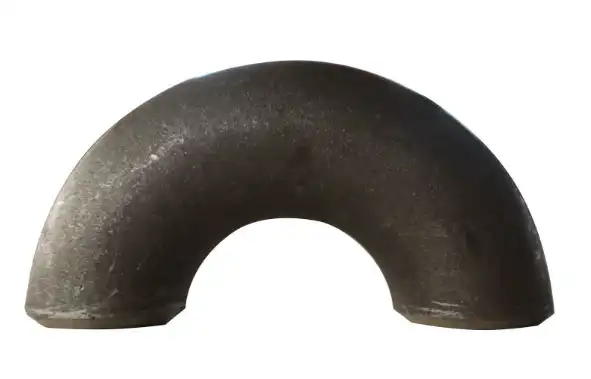
What Exactly Is a Precision-Machined Elbow — and Why Does It Matter?
A precision-machined elbow is a high-performance fluid-handling part that is made by subtractive CNC techniques (milling, turning, and boring) to change the flow direction with micron-level precision. Machined elbows do not have the interior surface flaws that are common to normal cast or forged fittings and that create turbulence, erosion, and bacterial build-up in high-purity systems.
The physical benchmarks that distinguish a precision-machined elbow from a standard fitting are measurable and non-negotiable. Here are the core performance parameters that reputable suppliers should consistently deliver:
- Dimensional Tolerance: Held within ±0.01mm to guarantee hermetic sealing across flanged or threaded joints.
- Internal Surface Roughness (Ra): As low as 0.4μm or better, often electropolished, to optimize laminar flow and prevent corrosive media accumulation.
- Pressure Rating: Engineered to exceed ASME B16.9 standards, routinely rated above 10,000 PSI in high-integrity applications.
- Material Integrity: Available in 316L stainless steel, Titanium Grade 5, and Inconel — maintaining structural homogeneity unlike cast alternatives with porous microstructures.
- Fatigue Resistance: Superior grain structure orientation through precision billet machining, providing exceptional resistance to thermal cycling and mechanical stress.
These parameters directly determine system reliability in sectors like petrochemicals, deep-sea oil and gas, and semiconductor manufacturing, where component failure is not an option.
Core Criteria to Evaluate When Selecting a Precision-Machined Elbow Supplier
Does the Supplier Hold Verifiable Certifications?
Certifications are more than paper. They represent the rigor that goes into every single part that leaves the floor of the plant. Any reliable supplier should have ISO 9001:2000 quality management system certification and, if required, a special equipment manufacturing license. These credentials demonstrate that the supplier is operating a systematic quality assurance system comprising raw material input, in-process control, and finished-product inspection.
Our firm has acquired ISO 9001:2000 and has the People’s Republic of China Special Equipment Manufacturing License at Oudi. Every batch of products is subjected to full-system inspection, including nondestructive fault detection, before leaving the Cangzhou factory; thus, we are able to supply zero-defect products to customers in over 40 countries.
What Quality Control Protocols Are in Place?
Precision components demand layered inspection, not spot-checking. When evaluating a supplier, confirm they deploy the following protocols as standard practice:
- CMM Dimensional Analysis: Full 3D coordinate mapping verifies angular precision and wall thickness uniformity across every batch.
- Positive Material Identification (PMI): XRF or OES testing confirms alloy chemistry matches the Mill Test Report (MTR).
- NDT Testing: Dye Penetrant Inspection (DPI) or Ultrasonic Testing (UT) detects subsurface micro-fissures invisible to the naked eye.
- Pressure/Leak Testing: Hydrostatic or helium mass spectrometry leak detection at 1.5× design pressure confirms zero-leakage performance.
- Surface Profilometry: Quantitative measurement of internal bore smoothness to prevent flow resistance and contamination.
These protocols collectively ensure that every precision-machined elbow leaving the production line meets or exceeds the specification it was ordered to fulfill.
Comparing Elbow Manufacturing Methods: Which Is Right for Your Application?
Not every elbow is made the same way. Understanding manufacturing trade-offs helps you match the right solution to your project environment.
| Criterion | Precision-Machined | Forged | Cast |
|---|---|---|---|
| Dimensional Tolerance | ±0.01mm | ±0.5mm | ±1.0mm+ |
| Internal Surface Finish | Ra ≤ 0.4μm | Moderate | Rough |
| Custom Geometry | Any angle (e.g., 22.5°, 60°) | Limited | Limited |
| Pressure Suitability | 10,000 PSI+ | High | Moderate |
| Material Traceability | Full MTR (EN 10204 3.1/3.2) | Partial | Variable |
| Ideal Application | High-purity, high-pressure | Structural pipework | Low-pressure general use |
This comparison makes clear that precision-machined solutions carry a cost premium but deliver decisive performance advantages in critical service environments. For standard structural pipework, forged or cast alternatives remain cost-effective. For oil and gas, chemical processing, or semiconductor systems, the machined route removes uncertainty.
Procurement Factors: Pricing, Ordering, and Logistics
The amount you pay a supplier is seldom an accurate reflection of the total cost of ownership. Transparent pricing must reflect the quality of raw material used, the difficulty of machining, any certifications necessary, packaging, and foreign freight. Ask for a detailed quote instead of a flat fee.
The volume flexibility is another issue. We have reliable suppliers that will handle small-volume bespoke orders and big blanket orders without penalty to lead times for precision-machined elbows. Oudi produces 16,000 tons a year and can meet high-volume needs for distributors or EPC contractors, yet still be flexible enough to meet unique demands.
Logistics dependability directly safeguards product integrity in transportation. Make sure the provider utilizes export-quality packaging, offers appropriate shipping documents, and has freight channels established to your location. Oudi’s goods are shipped across Europe, North and South America, Africa, Southeast Asia, and the Middle East with a proven record of timely and undamaged delivery to over 300 customers worldwide.
Building Trust: How to Identify a Supplier Worth Partnering With
Marketing rhetoric doesn’t inspire confidence in a precision components provider. Verifiable proof does. Ask for documented case studies, reference customers in your business sector, and third-party audit reports before agreeing to a relationship.
Quality of direct communication is another key factor. A supplier that provides technical accuracy, offers engineering options, and has prompt after-sales assistance suggests long-term relationship value. Since 1998, Oudi has lived up to its basic premise of “quality for survival, credibility for development”, winning ongoing confidence from customers in Iran, Singapore, Greece, and other countries.
If you are a procurement team looking for a reliable manufacturer of precision-machined elbows, Oudi’s certified quality systems, annual output of 16,000 tons, comprehensive product range covering carbon steel, stainless steel, and alloy steel fittings, and proven global export experience make us a dependable long-term supply partner.
Conclusion
When selecting a Precision-machined elbow provider, look at certifications, the scope of their quality control, what they can manufacture, how they track materials, and their logistics, all as a package. A vendor that covers all of these points decreases your project risk significantly. Since 1998, Oudi has supplied industrial customers in more than 40 countries with certified high-tolerance pipe fittings at affordable prices, with consistent production. Whether you are in oil and gas, chemical processing, or water conservancy infrastructure, your best sourcing selection begins with a supplier whose quality record speaks volumes.
FAQ
Q1: Why choose a precision-machined elbow over a standard forged elbow?
Machined elbows hold tolerances within ±0.01mm and deliver internal surface finishes as smooth as Ra 0.4μm — performance levels that standard forgings cannot match. They are essential where high-vacuum or ultra-high-pressure sealing integrity is non-negotiable.
Q2: Can custom angles like 22.5° or 60° be produced?
CNC machining allows any custom geometry or compound angle that traditional bending, casting, or forging cannot produce. Lead times for custom configurations typically run 2–4 weeks depending on material availability.
Q3: Are Material Test Reports (MTRs) provided?
All precision-machined elbows should ship with EN 10204 3.1 or 3.2 certification for full alloy chemistry traceability from mill to delivery.
Q4: How do you verify a supplier's quality certifications?
Request the original ISO 9001 certificate, special equipment manufacturing license, and audit reports. Cross-reference certificate numbers with the issuing body's registry for independent verification.
Q5: What protects joints from corrosion in aggressive media?
Precision-cut chamfers enable full-penetration orbital welding, while face-seal groove options — such as VCR or SAE configurations — create joints as corrosion-resistant as the parent pipe material itself.
Partner with Oudi — Your Trusted Precision-Machined Elbow Supplier
Oudi has manufactured certified carbon steel, stainless steel, and alloy steel pipe fittings since 1998, serving 300+ clients across 40+ countries. Our 16,000-ton annual capacity, ISO 9001-certified quality system, and full inspection protocols make us a dependable precision-machined elbow supplier for oil, gas, chemical, and infrastructure projects worldwide. Reach out directly to discuss specifications, request a competitive quote, or review our full product range.
Email: oudi-04@oudiguandao.com
References
1. ASME International. ASME B16.9: Factory-Made Wrought Butt-Welding Fittings. American Society of Mechanical Engineers, 2018.
2. British Standards Institution. BS EN 10204: Metallic Products — Types of Inspection Documents. BSI, 2004.
3. American Petroleum Institute. API 6A: Specification for Wellhead and Tree Equipment. API Publishing Services, 2018.
4. International Organization for Standardization. ISO 9001:2015 Quality Management Systems — Requirements. ISO, 2015.
5. Nayyar, Mohinder L. Piping Handbook, 7th Edition. McGraw-Hill, 2000.
6. Bansal, R.K. A Textbook of Fluid Mechanics and Hydraulic Machines. Laxmi Publications, 2010.

Need help finding the right solution with our experts. Please contact us.

SINCE 1998 Your Reliable Pipeline Manufacturer



