High-temperature carbon steel elbow: Which Grade Fits Your System?
If your pipe system is at continuously high temperatures, the choice of elbow might be the difference between keeping your business online and incurring the expense of a shutdown. To withstand thermal stress, high pressure, and corrosive media in harsh industrial situations, a high-temperature carbon steel elbow is particularly designed. Grades such as ASTM A234 WPB and A234 WP11 have their own working windows. Picking the incorrect one may lead to weld failures, thermal fatigue, and regulatory non-compliance. Use this guide to match your system’s pressure class, temperature range, fluid composition and budget to the right grade so every curve in your pipeline functions as it should.
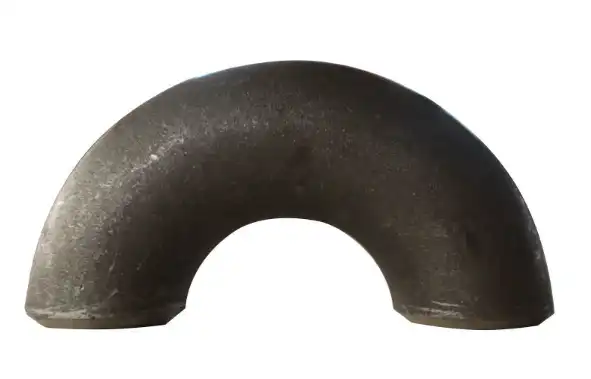
Understanding High-Temperature Carbon Steel Elbows: Properties and Applications
A carbon steel pipe elbow changes the direction of fluid flow at 45°, 90°, or 180°. Low carbon grades in normal condition lose tensile strength fast with increasing temperature over 400°F (204°C) in the working environment. High-temperature carbon steel elbow versions do include certain alloying elements - chromium, molybdenum - that help in stabilizing the microstructure of the steel under prolonged heat. This thermal resilience provides resistance to creep deformation and maintains mechanical integrity over thousands of temperature cycles.
Buyers depend on key performance features such as:
- Temperature Rating: ASTM A234 WPB can be used in service up to 800°F (427°C); A234 WP9 may be used in service up to 1,100°F (593°C) in sulfur-heavy conditions.
- Mechanical strength: Minimum tensile strength of 60,000 psi (WPB grade) provides structural durability under working pressure.
- Corrosion resistance: Alloyed grades resist the oxidation scaling of ordinary carbon steel at temperatures over 650°F (343°C).
- Thermal cycling durability: The seamless structure removes stress concentrations at weld seams, resulting in reduced fatigue fracture initiation during repeated heat cycles.
These elbows play a crucial role in power generation, oil and gas transfer, chemical processing, and boiler production when pipe systems are working regularly under harsh circumstances. Standard dimensions comply with ASME B16.9 for nominal pipe diameters from ½” to 48”. Long radius (1.5D) and short radius (1D) variants are available to meet spatial and flow requirements.
Comparing High-Temperature Carbon Steel Elbows With Other Materials
Carbon Steel vs. Stainless Steel vs. Alloy Steel: Which Wins for Your Budget and Environment?
The materials you pick will directly affect your total cost of ownership. The table below compares the three most prevalent elbow materials across important procurement criteria:
| Criterion | Carbon Steel (WPB/WP11) | Stainless Steel (304/316) | Alloy Steel (WP9/WP91) |
|---|---|---|---|
| Max Service Temp | 800°F–1,000°F | 1,500°F | 1,100°F–1,200°F |
| Corrosion Resistance | Moderate | Excellent | Good |
| Tensile Strength (min) | 60,000–75,000 psi | 75,000 psi | 90,000 psi |
| Cost Index | Low–Medium | High | Medium–High |
| Best Application | Oil, gas, steam | Acids, chlorides | High-temp steam, boilers |
Carbon steel elbows provide a reasonable compromise. They are economical for most oil, gas, and steam applications where temperatures are less than 1,000°F and chlorides are not a big concern.
Seamless vs. Welded: Which Construction Method Fits High-Temperature Service?
Seamless elbows have no weld seam; thus, stresses are evenly distributed across the bent wall. This homogeneous structure significantly decreases the possibility of leaks during fast pressure surges or temperature cycling, as is typical in power plant steam lines. Welded Elbows: These are used in low-pressure and low-temperature situations where cost reduction is important. The industry-preferred option, supported by ASME B31.3 process piping standards, is seamless construction for high-temperature carbon steel elbow service above 600°F.
How to Choose the Right Grade of High-Temperature Carbon Steel Elbow for Your System
The operating environment is your first filter. Map these four factors for your system before looking at specifications:
- Range of operating temperature and peak excursions
- Design pressure rating (ANSI 150# to 2500#)
- Fluid composition – hydrocarbons, steam, acids, sulfur compounds
- Compatibility with pipe materials and flange specifications of connected piping
Once you know what those characteristics are, it is easy to choose the grade. ASTM A234 WPB is suitable for common oil, gas, and water service up to 800 F at moderate pressures. A234 WP11 (1.25% Cr, 0.5% Mo) is used for steam and hydrogen service in the 850°F-1,000°F range. A234 WP9 (9% Cr, 1% Mo) is used for sulfur-carrying high-temperature refinery and petrochemical streams. WP91 with 9% chromium and vanadium additions is the acknowledged standard for ultra-supercritical power production over 1,000°F.
The grade definition itself is important, but so is the Certified Material Documentation. Mill Test Reports (MTR), Positive Material Identification (PMI), and conformance to ASTM, ANSI, DIN, JIS, or BS standards are required for the certification of the EPC Contractor and insurance compliance. If the supplier has a special equipment manufacturing license and is ISO 9001 certified, verification risk is eliminated at the procurement stage.
Procurement Guide: Sourcing High-Temperature Carbon Steel Elbows
Since 1998, Oudi has been supplying approved, confirmed pipe fittings to over 300 clients in 40+ countries. Our plant in Cangzhou, China, is located in the famous “China Fitting” industrial zone. It has a total area of 66,600 square meters and a production capacity of 16,000 tons a year. Each manufacturing process is under our ISO 9001:2000 quality management system and the People's Republic of China Special Equipment Manufacturing License. Our whole inspection system with non-destructive fault detection techniques ensures zero compromise on dimensional correctness or mechanical performance from raw material input to completed product shipment. Verify the following credentials before choosing a high-temperature carbon steel elbow provider:
- ISO 9001 certified with verified certificate numbers and validity dates
- Manufacturing license of special equipment, if relevant to pressure systems
- Demonstrated export experience to regulated markets - Europe, North America, Middle East OEM and bespoke production capacity for non-standard dimensions or specific alloy grades
- Published lead dates and verified stock availability to meet your project timeline
Bulk buying from one recognized supplier minimizes unit cost, streamlines logistics and consolidates quality data. Oudi offers a one-stop shop for American standard (ANSI), Japanese standard (JIS), German standard (DIN), and British standard (BS) fittings, making us the ideal partner for multi-standard projects.
Maintenance and Performance Optimization for High-Temperature Carbon Steel Elbows
How Do You Extend Service Life Past the Design Cycle?
How can you prolong service life beyond the design cycle?
Proactive inspection will avoid the three most typical failure types in high-temperature elbow service: thermal fatigue cracking at the intrados, mechanical erosion from high-velocity particle flow, and corrosion under insulation (CUI) from moisture penetration under lagging.
These areas are covered by an organized approach to maintenance:
- Routine examination intervals: Ultrasonic thickness measurement at 6- to 12-month intervals at the elbow intrados, where wall weakening from erosion is initially concentrated.
- CUI monitoring: Infrared thermography finds moisture pockets under insulation before exterior pitting develops into through-wall penetration.
- Protective coatings: External surfaces are coated with high-temperature epoxy phenolic or ceramic-filled coatings that resist oxidation at 400°F and increase insulation service life.
- Thermal Fatigue Mitigation: The controlled ramp-up and cool-down methods during system start-up and shut-down minimize the stress due to delta-T across the elbow wall, therefore increasing the fatigue life by a quantifiable amount.
New nanocomposite coatings and diffusion aluminide treatments are being used in refinery and power plant retrofits to improve oxidation resistance without the need for elbow replacement. Keeping track of these developments will allow you to keep your maintenance plan current with changing operating requirements.
Conclusion
Choosing the right grade for a high-temperature carbon steel elbow is a technical choice with immediate ramifications for safety and finances. WPB can cheaply manage most industrial service situations. Chromium-molybdenum grades are used when the temperature, pressure, or corrosive environments surpass the capabilities of carbon steel. With certified procurement from a manufacturer with established quality processes such as Oudi’s ISO 9001-accredited plant, you can eliminate sourcing uncertainty and safeguard project timeframes. Choose the correct grade for a disciplined inspection routine, and your pipe system will provide dependable service throughout its design life.
FAQ
What is the maximum temperature rating for a carbon steel elbow in industrial service?
ASTM A234 WPB grade handles continuous service up to approximately 800°F (427°C). Above that threshold, chromium-molybdenum alloy grades such as WP11 or WP9 are required to prevent creep deformation and oxidation scaling.
When should I choose a seamless elbow over a welded one?
Seamless construction is the appropriate choice for high-temperature, high-pressure service — particularly in steam, hydrogen, or refinery applications. The absence of a weld seam eliminates a potential initiation site for fatigue cracking under thermal cycling. Welded elbows suit lower-pressure, lower-temperature applications where cost is the primary driver.
Can I order custom dimensions or non-standard grades?
Yes. Oudi manufactures elbows to ANSI, DIN, JIS, and BS standards and accommodates OEM requests for non-standard bore sizes, wall thicknesses, and alloy specifications. Contact our technical team to discuss project-specific requirements.
What certifications should a supplier provide with high-temperature elbows?
At minimum, require ISO 9001 certification, mill test reports (MTRs), and positive material identification (PMI) documentation. For pressure-bearing applications, a special equipment manufacturing license adds a critical layer of regulatory assurance.
Get the Right Elbow Grade — Connect With Oudi Today
Oudi has delivered certified, precision-manufactured pipe fittings to industrial clients across 40+ countries since 1998. As a trusted high-temperature carbon steel elbow manufacturer, we offer a complete range of grades — WPB through WP91 — backed by ISO 9001 quality systems, 16,000-ton annual capacity, and full documentation support. Send your specifications directly to oudi-04@oudiguandao.com and receive a competitive quote within 24 hours. Your system reliability starts with the right sourcing partner.
References
1. ASME International. ASME B16.9: Factory-Made Wrought Butt-Welding Fittings. 2018.
2. ASTM International. ASTM A234/A234M: Standard Specification for Piping Fittings of Wrought Carbon Steel and Alloy Steel for Moderate and High Temperature Service. 2021.
3. ASME International. ASME B31.3: Process Piping Code. 2022.
4. Metals Handbook Editorial Board. ASM Handbook, Volume 11: Failure Analysis and Prevention. ASM International, 2019.
5. Antaki, G. A. Piping and Pipeline Engineering: Design, Construction, Maintenance, Integrity, and Repair. Marcel Dekker, 2003.
6. NACE International. SP0198: Control of Corrosion Under Thermal Insulation and Fireproofing Materials. 2017.

Need help finding the right solution with our experts. Please contact us.

SINCE 1998 Your Reliable Pipeline Manufacturer



