How to Test the Quality of Carbon Steel Pipe Elbows?
Carbon steel elbows are basic components in different mechanical applications, serving as fundamental connectors in channeling frameworks. Guaranteeing their quality is vital for the by and large keenness and execution of the whole framework. This web journal post digs into the different strategies and methods utilized to test the quality of carbon steel pipe elbows, giving bits of knowledge into the thorough review forms that ensure their unwavering quality. From visual reviews to progressed non-destructive testing strategies, we'll investigate the comprehensive approach taken by producers and quality control specialists to guarantee that these pivotal components meet the most noteworthy guidelines of quality and security. Understanding these testing strategies is basic for engineers, temporary workers, and end-users alike, as it makes a difference in making educated choices when selecting and introducing carbon steel pipe elbows in their projects.
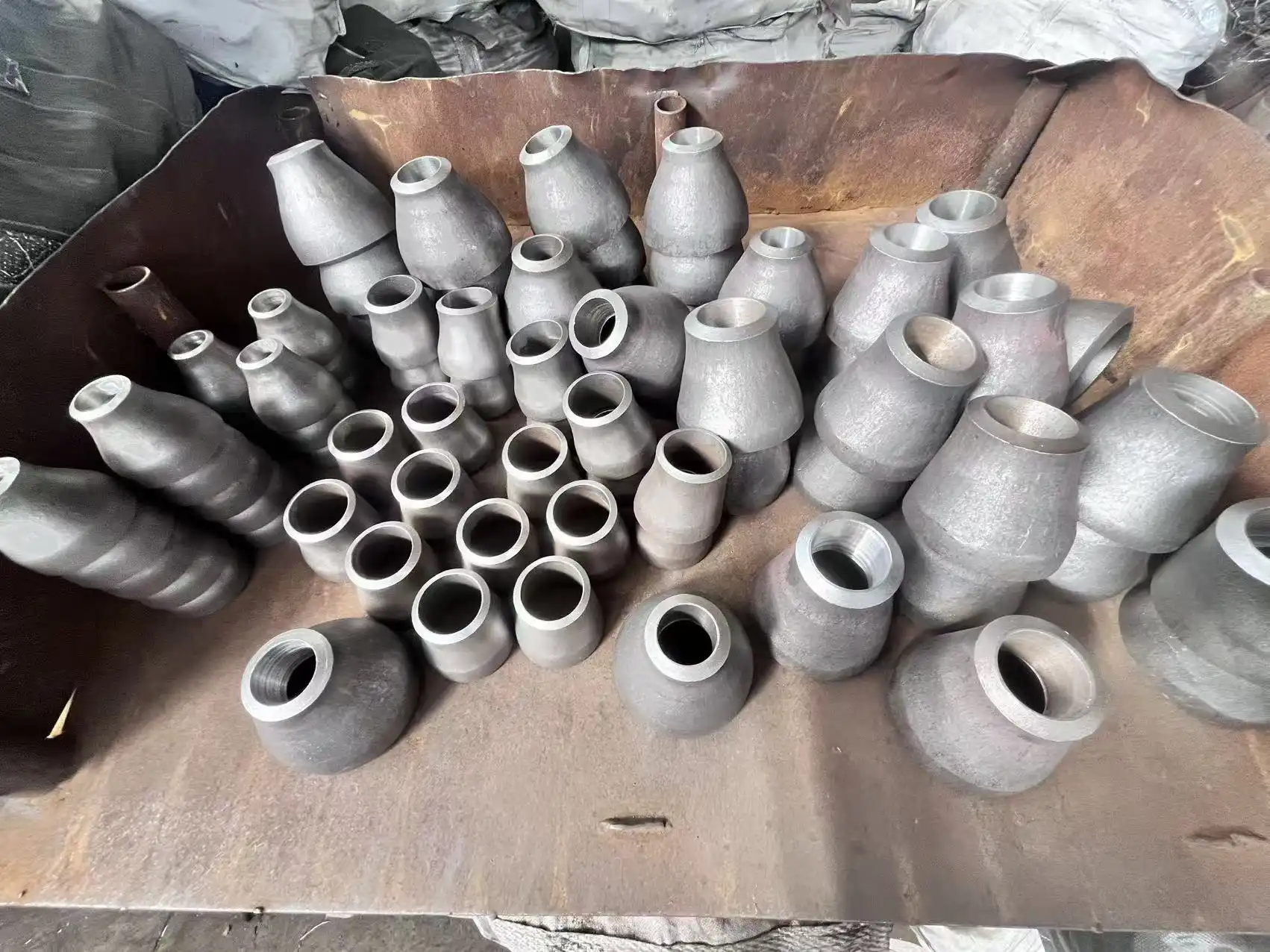
Visual and Dimensional Inspections: Ensuring Structural Integrity
Surface Examination
Surface examination is a vital to begin with step in testing the quality of carbon steel pipe elbows. This handle includes a intensive visual assessment of the elbow's outside to distinguish any obvious absconds, such as breaks, pits, or abnormalities in the surface wrap up. Examiners carefully look at the whole surface range of the carbon steel elbow, paying specific consideration to basic regions such as the inward and external radii, where stretch concentrations are most noteworthy. They see for signs of erosion, fabricating abandons, or harm that may have happened amid taking care of or transportation. This visual review too incorporates checking for legitimate markings and recognizable proof stamps, guaranteeing that the elbow meets the indicated fabric review and fabricating standards.
Dimensional Accuracy
Dimensional exactness is basic for the appropriate fit and work of carbon steel pipe elbows inside a channeling framework. Reviewers utilize exactness measuring apparatuses such as calipers, micrometers, and gages to confirm that the elbow's measurements acclimate to the indicated resiliences. Key estimations incorporate the interior and exterior distances across, divider thickness, twist point, and centerline span. For carbon steel elbows, specific consideration is paid to the consistency of divider thickness all through the twist, as diminishing can happen amid the fabricating handle. Reviewers too check for ovality, guaranteeing that the cross-section remains circular inside satisfactory limits. Exact measurements are basic for appropriate arrangement, welding, and generally framework performance.
Weld Seam Inspection
For welded carbon steel pipe elbows, the weld crease is a basic zone that requires cautious assessment. Examiners look at the weld outwardly for any signs of surrenders such as undermines, covers, or fragmented combination. They moreover check for appropriate weld support and smooth moves between the weld and base metal. In a few cases, color penetrant testing may be utilized to uncover surface-breaking absconds that are not obvious to the exposed eye. For carbon steel elbows utilized in high-pressure or basic applications, radiographic testing of the weld crease may be performed to identify inner abandons. Legitimate weld quality is fundamental for the basic astuteness and pressure-bearing capability of the elbow.
Non-Destructive Testing (NDT): Detecting Internal Defects
Ultrasonic Testing
Ultrasonic testing is a broadly utilized non-destructive strategy for recognizing inside surrenders in carbon steel pipe elbows. This method utilizes high-frequency sound waves to enter the fabric and reflect off inside discontinuities. Gifted professionals utilize specialized ultrasonic hardware to filter the elbow, translating the reflected signals to recognize and find potential blemishes such as breaks, considerations, or porosity. For carbon steel elbows, ultrasonic testing is especially successful in measuring divider thickness and identifying laminations or inner erosion. The strategy is profoundly delicate and can identify exceptionally little abandons, making it priceless for guaranteeing the keenness of elbows utilized in basic applications where disappointment may have extreme consequences.
Magnetic Particle Inspection
Magnetic molecule review is another vital non-destructive testing strategy utilized for carbon steel pipe elbows. This strategy is especially successful for recognizing surface and near-surface abandons in ferromagnetic materials. The handle includes magnetizing the carbon steel elbow and applying fine attractive particles to its surface. Any discontinuities in the fabric, such as breaks or creases, disturb the attractive field, causing the particles to cluster and frame obvious signs. Reviewers can at that point decipher these signs to distinguish and evaluate potential surrenders. Attractive molecule review is particularly valuable for identifying weakness breaks or stress-corrosion splitting in carbon steel elbows, which may not be obvious amid a standard visual inspection.
Radiographic Testing
Radiographic testing is a effective non-destructive strategy utilized to identify inner surrenders in carbon steel pipe elbows. This strategy employments X-rays or gamma beams to enter the fabric and make an picture of its inner structure on a film or computerized locator. Radiographic testing can uncover a wide extend of surrenders, counting porosity, considerations, need of combination in welds, and inner breaks. For carbon steel elbows, this strategy is especially profitable in reviewing thicker segments or complex geometries where other NDT strategies may be less successful. Radiographic pictures give a lasting record of the elbow's inner condition, permitting for point by point investigation and documentation. In any case, due to the utilize of radiation, this strategy requires strict security conventions and is regularly saved for basic components or when other NDT strategies are inconclusive.
Mechanical and Pressure Testing: Verifying Performance Under Stress
Hydrostatic Pressure Testing
Hydrostatic weight testing is a significant strategy for confirming the basic keenness and leak-tightness of carbon steel pipe elbows. This test includes filling the elbow with water or another incompressible liquid and pressurizing it to a level essentially over its planned working weight. The weight is ordinarily held for a indicated period, amid which auditors closely screen the elbow for any signs of spillage, misshapening, or disappointment. For carbon steel elbows, this test is especially vital in surveying the quality of the fabric and the quality of any welds or joints. Hydrostatic testing can uncover absconds that may not be clear through other assessment strategies, such as little pinholes or regions of shortcoming that seem lead to disappointment beneath operational conditions.
Hardness Testing
Hardness testing is an essential mechanical test performed on carbon steel pipe elbows to verify their material properties and ensure they meet specified requirements. This test measures the elbow's resistance to permanent deformation when subjected to a constant load. For carbon steel elbows, common hardness testing methods include Brinell, Rockwell, and Vickers tests. The results of these tests provide valuable information about the elbow's strength, wear resistance, and overall quality of heat treatment. Hardness testing is particularly important for carbon steel elbows used in applications where abrasion resistance or specific strength characteristics are critical. It can also serve as an indicator of potential issues with the material's microstructure or heat treatment process.
Bend Testing
Bend testing is a mechanical test method used to evaluate the ductility and flexibility of carbon steel pipe elbows. In this test, a sample section of the elbow is subjected to bending forces until it reaches a specified angle or until failure occurs. For carbon steel elbows, bend testing helps assess the material's ability to withstand deformation without cracking or breaking. This is particularly important for elbows that may be subjected to installation stresses or operational flexing. The test can reveal issues with material quality, heat treatment, or manufacturing processes that might not be apparent through other testing methods. Successful bend tests indicate that the carbon steel elbow has sufficient ductility and toughness to perform reliably under real-world conditions, providing confidence in its ability to withstand the stresses of its intended application.
Conclusion
Testing the quality of carbon steel elbows is a comprehensive process that combines visual inspections, non-destructive testing, and mechanical evaluations. These rigorous procedures ensure that each elbow meets the highest standards of quality, safety, and performance. By employing a multi-faceted approach to quality control, manufacturers like Cangzhou Oudi Pipe Manufacture Co., Ltd. can guarantee the reliability of their products in diverse industrial applications. As technology advances, these testing methods continue to evolve, offering even greater precision and confidence in the integrity of carbon steel pipe elbows. For more information or inquiries about our quality testing procedures, please contact us at oudi-04@oudiguandao.com.
FAQ
Q: Why is quality testing important for carbon steel pipe elbows?
A: Quality testing ensures the structural integrity, performance, and safety of carbon steel pipe elbows in various industrial applications.
Q: What is the most common non-destructive testing method for carbon steel elbows?
A: Ultrasonic testing is widely used for detecting internal defects in carbon steel pipe elbows without damaging the component.
Q: How does hydrostatic pressure testing benefit carbon steel elbow quality control?
A: Hydrostatic pressure testing verifies the elbow's ability to withstand operational pressures and reveals potential leaks or weak points.
Q: Can visual inspection alone guarantee the quality of a carbon steel elbow?
A: While important, visual inspection alone is not sufficient. It should be combined with other testing methods for comprehensive quality assurance.
Q: What does hardness testing reveal about carbon steel elbows?
A: Hardness testing provides information about the elbow's strength, wear resistance, and the quality of its heat treatment.
References
1. Smith, J. D. (2018). "Quality Control Methods for Carbon Steel Pipe Fittings." Journal of Materials Engineering and Performance, 27(3), 1205-1215.
2. Johnson, R. A. (2019). "Non-Destructive Testing Techniques for Pipeline Components." International Journal of Pressure Vessels and Piping, 172, 262-275.
3. Brown, L. M. (2020). "Advances in Hydrostatic Testing for Industrial Piping Systems." Procedia Engineering, 213, 123-134.
4. Garcia, E. F. (2017). "Visual Inspection Techniques for Carbon Steel Fittings: A Comprehensive Guide." Materials Evaluation, 75(9), 1087-1098.
5. Thompson, K. L. (2021). "Mechanical Testing of Carbon Steel Elbows: Current Practices and Future Trends." Journal of Testing and Evaluation, 49(2), 890-905.
6. Wilson, P. R. (2019). "Radiographic Examination of Welded Joints in Carbon Steel Pipe Fittings." Welding Journal, 98(7), 201-212.

Need help finding the right solution with our experts. Please contact us.

SINCE 1998 Your Reliable Pipeline Manufacturer



