Industrial CS Lap Joint Flange Supplier
When it comes to finding important pipe parts for heavy-duty industrial uses, carbon steel lap joint flanges stand out because they are flexible and affordable. Oudi has been making lap joint flange CS kits for more than 20 years. More than 40 countries use these in the oil and gas, chemical processing, natural gas, and water conservation industries. Our two-piece design, which includes a stub end welded directly to the pipe and an easily moving backing flange, gives you the most alignment options during installation and lowers material costs by up to 60% in corrosive conditions.
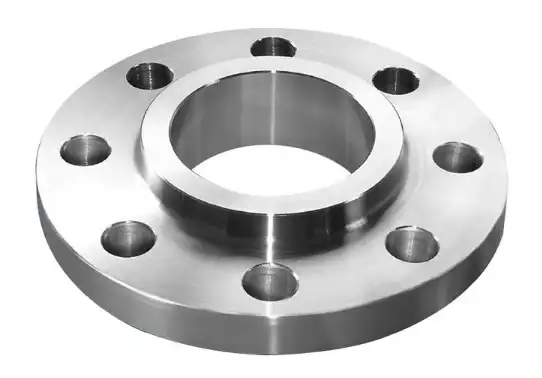
Understanding Lap Joint Flange CS: Definition and Key Specifications
What Makes Lap Joint Flanges Unique?
A lap joint flange CS assembly is made up of two separate parts that work together. The short end is welded to the pipe at the butt, and the loose backing flange is slid over the pipe before it is welded. This arrangement lets the backing flange turn on its own, fixing the problem of aligning bolt holes that arises with rigid flange systems. This design is better for systems where temperatures change often than welded neck or slip-on versions because the flange doesn't have to carry the full structural load during thermal expansion.
The face of the backing flange has a radius that fits the curved part of the stub end perfectly, creating a surface where metal touches metal. The seal is made of gaskets that fit between two plates that are pressed together. This means that gaskets can be changed without cutting welds or upsetting the welded stub-end connection.
Carbon Steel Grades and Material Properties
For use in normal to warm temperatures, these flanges are usually made of ASTM A105 carbon steel, and for use in cold temperatures (down to -50°F), they are usually made of A350 LF2 carbon steel. Tensile strengths for these materials range from 485 to 655 MPa, which is enough for pressure levels up to Class 600 in most industrial pipe codes. The stub ends usually match the pipe's material grade and wall schedule. This keeps the inside and outside sizes of the system uniform.
Industry Standards and Dimensional Compliance
For flange dimensions, ASME B16.5 is followed, along with ASME B16.9 for stub end designs and MSS SP-43 for face finish standards. Specifications for sizes include the distance between bolt holes, the thickness of the flange, and the higher face heights to ensure that all foreign pipe systems can work together. Pressure-temperature ratings are based on ASME B16.47 standards, which ensures safe operating within the limits set by engineering formulas.
Comparing Lap Joint Flange CS with Other Flange Types
Structural Design Differences
Weld neck flanges are better for high-pressure situations above 600 psi because their hubs are curved, which evenly distributes stress. Slip-on flanges are easier to install than lap joint assemblies, but they need to be welded twice, once on the inside and once on the outside. This makes the work cost higher. For small-bore pipes, socket weld flanges work well, but they are not as easy to take apart as lap joint designs. Because lap joint flange CS kits have a movable backing flange, heavy pipe sections don't have to be rotated during fit-up. This is a significant benefit in crowded industrial settings.
Material Selection Economics
Lap-joint flange CS units are very useful in chemical processing plants that work with sulfuric acid because they can choose Hastelloy C276 stub ends that don't rust and use backing flanges made of standard carbon steel. When compared to selecting solid exotic alloy flanges, this "duplicate metal strategy" cuts the cost of project materials by 40 to 60 percent. When used together, carbon steel flanges and stainless steel stub ends work just as well in water treatment systems that aren't too corrosive.
Although carbon steel is more expensive than stainless steel, it excels at resisting corrosion in dry gas systems and alkaline settings. For steam and gas uses that need to work in high temperatures, alloy steels like F11 and F22 can handle temperatures up to 1000°F. When it comes to non-corrosive uses, lifecycle costs favor carbon steel because it is easy to find and doesn't need any special welding skills for upkeep.
Application-Specific Selection Rationale
Blind flanges keep pipeline ends sealed, but they don't help with alignment during installation. Threaded flanges work well for connecting low-pressure instruments, but they can't handle the shaking loads that come with pipes that move back and forth in a rotary compressor. In industrial settings, raised face configurations are most common. However, above 900 psi in oil service, ring-type joint faces become critical. Lap-joint flange CS assemblies work best in three situations: systems that need to be taken apart often for cleaning; retrofit projects where entry is limited and pipe rotation isn't possible; and corrosive services where minimizing material costs drives purchasing choices.
Industrial Procurement Insights for Lap Joint Flange CS
Understanding Cost Structures
The price of a lap-joint flange CS depends on the raw material index, but orders of 500 pieces or more usually get a discount. Standard ANSI B16.5 measurements are 15–25 percent less expensive than unique specs that need to buy new tools. Lead times vary from four to eight weeks, based on the size and pressure class. Sizes 2 inches to 12 inches in Class 150 are always in stock at trusted sources. Base prices go up by 20 to 35 percent because of customization fees for bolt patterns that aren't normal or special face finishes.
Supplier Evaluation Framework
Verification of certification is the basis of evaluating a seller. ISO 9001:2015 quality control systems make sure that manufacturing methods are always the same, and special equipment manufacturing licenses show that pressure equipment fabrication is in line with regulations. Material test results that can be linked to heat numbers show that the material meets the requirements of the code. This keeps buyers safe from using low-quality materials in important applications.
The technical detail of a source can be seen in its manufacturing skills. CNC cutting centers and other advanced production tools keep the limits for sizes very tight, and ultrasonic testing tools find flaws inside things that can't be seen. Suppliers with more than one production line show that they can handle large orders without affecting delivery times. Our yearly production capacity of 16,000 tons at Oudi supports big EPC projects while still allowing us to accommodate smaller custom orders.
When working on projects that are time-sensitive and have penalty terms for delays, delivery success metrics are important. Established sellers keep extras of popular sizes in stock, which cuts down on lead times when you need to buy something quickly. If you've exported to your target market before, it means you know what paperwork is needed and how to ship things in a way that meets the import rules in your area.
Minimum Orders and Customization Options
For normal sizes, most providers set minimum order quantities around 50 pieces. For custom sizes, however, minimums of 200 units may be needed to justify setting up the tools. Customization goes beyond sizes and includes unique finishes, test needs above and beyond what is required by code, and material certifications for use in sour service applications. As suppliers get better, they offer engineering advice services that look at piping specs and suggest the best flange configurations that meet performance needs and price limits.
How to Install and Maintain Lap Joint Flange CS for Optimal Performance?
Step-by-Step Installation Guide
The first step in a proper fitting is to check the mating surfaces for any damage, rust, or dirt that could make it difficult for the gasket to sit properly. Use a solvent and wire brushes to clean all touch areas and get rid of any rust or mill scale before installing the lap joint flange CS assembly. Slide the backing flange over the pipe, then place the stub end on top of the pipe and tack-weld it in place. Use a level to make sure the weld is straight before finishing it. Let the weld cool down on its own—forcing it to cool down creates leftover forces that make cracks more likely.
Place the seal on the curved face of the stub end, making sure it is centered so it doesn't blow out when the pressure is applied. To use the design's rotating freedom, turn the backing flange until the bolt holes line up with the matching flange. In a star design, put in bolts and hand-tighten nuts to make sure the seal is compressed evenly. Follow the ASME PCC-1 rules for applying torque, which is usually 50 to 70 percent of the bolt proof load. Use calibrated torque tools to make sure the torque is applied consistently.
Maintenance Practices and Inspection Routines
Visual checks should be done every three months to look for rust stains around where gaskets meet. These could be signs of leaks that need to be fixed right away. Every year, during planned shutdowns, the machine is taken apart so that the gaskets can be replaced and the sealing surfaces can be carefully checked for cracking or wear. Choosing the right covering is important for stopping corrosion. Zinc-rich primers followed by epoxy topcoats offer protection for 10 to 15 years in air service.
Over temperature cycles, bolt strength decreases, so checking the torque during shutdowns is necessary to avoid leaks. Any nuts with damaged threads, rust, or lengthening that is more than five percent of their original length should be replaced. Ultrasonic tools used to measure the thickness of stub ends find wall loss from internal rust, which means they need to be replaced before they fail.
Troubleshooting Common Issues
Mistakes in the stub-end welding process usually cause misaligned bolt holes. The problem can be fixed by heating the weld area and moving the position of the holes before the final welding. A gasket blow-out means that the bolts aren't tight enough or that the sealing surfaces are broken and need to be machined back to their original shape. When leaks appear after the first start-up, they are usually caused by thermal expansion. This problem can be fixed by re-torquing the nuts at working temperature. Verifying ASME compliance through a third-party review gives proof for insurance and government reasons, and it protects asset owners from being held responsible in case of an accident.
Why Choose Oudi as Your Trusted Industrial Lap Joint Flange CS Supplier?
Quality Certifications and Material Traceability
Our ISO 9001:2000 approval and People's Republic of China Special Equipment Manufacturing License show that we follow quality standards set by other countries. Every shipment of flanges comes with mill test results that show the chemical make-up and mechanical qualities that can be linked to the raw material heat numbers. Our full inspection method includes measuring arriving raw materials, checking the dimensions of parts as they are being made, and testing the finished product without damaging it. This makes sure that only defect-free parts get to your job site.
In our 66,600-square-meter building, we have acoustic flaw detectors, spectrometers, and hardness testers that check for compliance with ANSI, JIS, DIN, and BS standards. This complete quality framework lets EPC contractors and end users know that our goods will work well for as long as they are supposed to.
Customization Capabilities and Engineering Support
Our technical team works with clients to make sure that the flange specs are perfect for each purpose. Our engineering advice process makes sure that your needs are translated into designs that can be made. This is true whether you need special coatings for marine settings, custom bolt patterns for proprietary equipment, or material certifications for sour gas service. Bulk orders are flexible enough to suit project phases, and staged deliveries can be timed to fit with building plans to keep on-site storing costs as low as possible.
The full range of products, including bends, tees, reducers, caps, and flanges made of carbon steel, stainless steel, and alloys, makes it possible to buy everything from a single source, which makes managing vendors and coordinating supplies easier. This complete offering helps industries like construction, shipbuilding, electric power generation, and boilers that need combined pipe component solutions.
Global Supply Chain and After-Sales Support
Since 1998, we've worked with over 300 customers in 40 countries, so we know what paperwork and shipping needs to be done for foreign trade. We handle our own importing and exporting, which makes customs processing easier. We also have smart shipping partnerships that keep our freight rates low to places like Europe, the Americas, Africa, Southeast Asia, and the Middle East. For time-sensitive projects, clients in Iran, Singapore, and Greece depend on us to always achieve what we promise.
After the sale, we're still committed to you. Our expert support teams are still available to answer questions about installation, provide new gaskets or nuts, and fix any problems that come up in the field during commissioning. Because they care so much about their customers, they have long-term relationships with wholesalers and end users who value dependability more than low prices. When buying things affects finishing a project and making sure operations are safe, working with a well-known lap-joint flange CS maker gives you peace of mind that your supply chain won't cause delays or lower quality.
Conclusion
Because they are made of two pieces, lap joint flange CS assemblies solve important problems in industrial pipe systems. They make alignment easier, save money on materials, and make upkeep easier. By reading the requirements, comparing the available options, and checking the credentials and skills of sellers, you can make purchases that meet both performance needs and price limitations. Installing and maintaining things the right way increases their useful life and makes sure they are safe and follow the rules. We at Oudi are the best company for your lap joint flange needs because we have been making them for 26 years, have thorough quality systems, and have a global service network.
FAQ
What pressure ratings are available for carbon steel lap joint flanges?
Lap joint flange CS components made to ASME B16.5 standards come in pressure classes from 150 to 2500, which means they can handle working pressures from 285 psi to 6170 psi at room temperature. Class 150 and 300 ratings are good for most industry uses in water systems and chemical handling. Class 600 ratings are better for oil and gas applications that need higher pressures. Pressure levels go down as the temperature goes up. For example, Class 300 flanges that are designed for 740 psi at 100°F drop to 230 psi at 1000°F. Checking the maximum working pressure and temperature of your system against the tables in ASME B16.5 makes sure that the right class is chosen.
How do I choose between MSS short and ASA long stub ends?
MSS short stub ends stick out about two inches past the end of the pipe. This gives you enough length for normal welding processes while keeping the cost of the materials low. ASA long stub ends are four to six inches long, giving you extra material for finishing tasks after installation or as backup material in case you need to fix a weld. Chemical companies that need to do strict inspections often ask for long stub ends, while utility projects that want to keep costs down prefer short patterns. Once fitted, both lengths work the same way; which one you choose relies on how you like to maintain things and your budget.
Partner with a Proven Carbon Steel Lap Joint Flange CS Manufacturer
Oudi makes industrial-grade lap joint flanges that meet the strict needs of large businesses around the world. Our ISO-certified production methods, annual capacity of 16,000 tons, and thorough quality testing make sure that the parts we make for your important piping systems are reliable. We can help you find the best flanges for your new refinery project or find spare parts for ones that are already in place. Our engineering team is here to help you. Email us at oudi-04@oudiguandao.com to discuss your lap joint flange CS needs and get a full quote that fits your project's budget and schedule. We've been working with the oil, chemical, and power generation industries around the world for more than 20 years, so we know how important it is for projects to have reliable suppliers.
References
1. American Society of Mechanical Engineers. (2020). ASME B16.5: Pipe Flanges and Flanged Fittings - NPS 1/2 Through NPS 24 Metric/Inch Standard. New York: ASME Press.
2. Becht, C. & Lancaster, R. (2018). Piping System Flange Joint Assembly: Best Practices for Bolted Connections in Industrial Applications. Houston: Pressure Vessel Technology Council.
3. Harvey, J.F. (2019). Theory and Design of Pressure Vessels: Including Modern Materials and Fabrication Techniques. New York: Van Nostrand Reinhold technical books.
4. Manufacturers Standardization Society. (2017). MSS SP-43: Wrought Stainless Steel Butt-Welding Fittings Standard Practice. Vienna: MSS Technical Publications.
5. Nayyar, M.L. (2021). Piping Handbook: Materials Selection, Installation Standards, and Industry Applications. 8th Edition. New York: McGraw-Hill Professional.
6. Singh, K. & Soler, A. (2019). Mechanical Design of Heat Exchangers and Pressure Vessel Components: Flanged Joints and Bolting Analysis. Berlin: Springer Engineering Publications.

Need help finding the right solution with our experts. Please contact us.

SINCE 1998 Your Reliable Pipeline Manufacturer



