Lap Joint Flange CS for Refinery and Chemical Plant Projects
When planning the pipe system for chemical and refining operations, picking the right link method has a direct effect on how long the project takes, how much it costs to maintain, and how safe it is to run. Lap Joint Flange CS systems have become a popular choice for engineers and procurement managers who have to work in places that are toxic and have limited space for installation. This two-part system, which includes a spinning carbon steel backing base and a butt-welded stub end, makes it easier to line things up and lets you choose materials that aren't too expensive. Since 1998, Cangzhou Oudi Pipe Manufacture Co., Ltd. has sold these important parts to more than 300 users in 40 countries, helping with projects ranging from chemical processing plants in North America to factories in the Middle East. Our factory is ISO 9001-certified and makes 16,000 tonnes of carbon steel, stainless steel, and alloy steel pipe fittings every year. These are all made to ASME, DIN, JIS, and BS standards and can be fully tracked and tested without damaging the material.
Understanding Lap Joint Flange CS: Specifications and Applications
What Defines a Lap Joint Flange Assembly
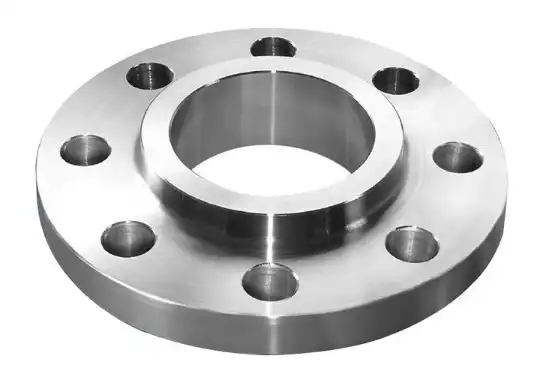
The structural and wetted functions are split into two different parts by a lap joint plate assembly. The carbon steel backing flange slides over the pipe without being welded to it, and the short end is fully penetrated and butt-welded to the pipe. The flange can spin on its own in this setup, which lines up the bolt holes with matching parts without twisting the pipe system. The inner diameter of the flange has a chamfered radius that is designed to clear the weld fillet on the stub end. This makes a lap joint contact where the back face of the stub end fits against the front face of the flange during bolt-up.
Carbon Steel Material Properties and Standards
Manufacturing carbon steel flanges to ASTM A105 standards results in yield strengths greater than 36,000 psi, meeting the structural requirements for pressure classes from 150# to 2500# according to ASME B16.5 (for sizes ½" through 24") and ASME B16.47 (for 26" through 60" diameters). The material's ductility and weldability make it suitable for ambient to moderate temperature services up to 800°F. At Oudi, we buy raw materials after carefully checking their chemical makeup. Before the casting process starts, spectroscopic research confirms the amount of carbon, manganese, and minor elements present.
Core Applications in Process Industries
There are three main situations in which refineries use lap joint flange CS systems. When desalination units deal with acidic brine, they use expensive carbon steel flanges and unusual metal stub ends like Inconel 625. This prevents rust where the fluid meets the stub end and cuts project costs by 40 to 60 percent overall. Rapid removal is helpful for hydrocarbon processing units that need to be inspected often. Technicians can unbolt the lap joint flange CS without cutting welds, check the inside, and reattach the joint in hours instead of days. Retrofitting projects in crowded pipe racks depend on the flange's ability to rotate freely to match bolt patterns in geometrically limited areas where a rigid weld neck flange would need to be rotated or stressed in order to be aligned.
Comparing Lap Joint Flange CS with Other Flange Types
Structural Performance Analysis
When evaluating mechanical strength, lap joint assemblies possess approximately 10% of the fatigue life exhibited by weld neck flanges under cyclic loading conditions. This limitation stems from the absence of a reinforced hub taper that gradually transitions stress from the flange ring to the pipe wall. The flat ring design concentrates bending moments at the flange-bolt interface, making lap joint configurations unsuitable for severe vibration or high-cycle fatigue services. However, for static or low-cycle applications below 600 psi—typical in many chemical plant utility systems—the design provides adequate reliability at a fraction of the cost.
Comparing installation requirements reveals distinct differences. Slip-on flanges require two fillet welds (inside and outside the pipe) and lack rotational adjustment capability once welded. Weld neck flanges demand precise pipe end preparation and skilled welders to execute full-penetration groove welds, increasing labor hours by 30-50% compared to lap joint stub end welds. Socket weld flanges work only with small-bore piping and create crevices that trap corrosive media. The lap joint system's stub end receives a single butt weld identical to standard pipe joining procedures, while the loose flange requires no welding whatsoever, enabling faster field assembly and simplified quality control.
Cost and Maintenance Trade-offs
Material expenditure comparisons favor lap joint assemblies when corrosion resistance dictates exotic alloys. A 6" 316L stainless steel weld neck flange costs approximately $180, while a lap joint combination using a 316L stub end ($95) and carbon steel flange ($45) totals $140—a 22% savings that scales dramatically with larger diameters and more expensive alloys like Hastelloy or titanium. Maintenance accessibility provides additional value; operators can remove and inspect gasket surfaces without disturbing pipe welds, reducing unplanned downtime during turnarounds. However, the assembly introduces an additional sealing interface compared to welded designs, requiring proper torque procedures and gasket selection to prevent leakage.
How to Select and Install Lap Joint Flange CS for Your Projects
Specification and Compliance Requirements
Procurement specifications must address four critical parameters. Pressure class selection depends on maximum allowable working pressure and temperature conditions per ASME B16.5 ratings—150# flanges suit services up to 285 psi at 100°F for carbon steel, while 300# and 600# classes accommodate progressively higher pressures. Facing finish options include serrated, smooth, or raised face configurations on the stub end, with gasket material selection (spiral wound, PTFE, graphite) matched to process chemistry and temperature. Dimensional standards ensure interchangeability; ASME B16.5 governs bolt circle diameter, bolt hole quantity and size, and flange thickness across manufacturers. Oudi's production processes include automated CNC machining that holds lap joint flange CS face flatness within 0.005" across all diameters, verified through coordinate measuring machine inspection before shipment.
Installation Best Practices and Common Errors
Successful lap joint assembly begins with stub end inspection—verify proper weld penetration using radiographic or ultrasonic testing, confirm backing ring removal if applicable, and measure the stub end's extended length to ensure adequate flange clearance. Position the loose flange onto the pipe before welding the stub end; this sequence prevents installation errors that would require cutting and rework. During bolt-up, apply lubricant to threads and washers, then tighten bolts in a star pattern using calibrated torque wrenches. Typical bolt stress values range from 30,000 to 50,000 psi depending on pressure class, translating to specific torque values based on bolt diameter—consult ASME PCC-1 guidelines for precise requirements.
Avoiding premature failure requires attention to hub height specifications. The flange's hub provides bending resistance against bolt loads; insufficient hub thickness causes warping and gasket compression loss. Additionally, never weld the backing flange to the pipe—this eliminates the design's rotational benefit and introduces thermal stress. Maintenance schedules should include periodic bolt retorque after initial startup thermal cycles and annual gasket condition assessment, particularly in services above 400°F where graphite gaskets experience relaxation.
Procurement Insights: Buying Lap Joint Flange CS for Refinery and Chemical Plants
Identifying Qualified Suppliers
Verification of manufacturing credentials forms the foundation of supplier evaluation. ISO 9001 certification demonstrates systematic quality control across production stages, from raw material traceability through final inspection documentation. Special equipment manufacturing licenses issued by regulatory authorities confirm compliance with pressure vessel and piping component standards. At Oudi, our certifications extend beyond basic ISO requirements—we maintain the People's Republic of China Special Equipment Manufacturing License and complete third-party audits annually, providing customers with certified material test reports, dimensional inspection records, and heat treatment charts for every production lot.
Technical capability assessment should examine production equipment sophistication. Advanced forging presses ensure grain structure uniformity in carbon steel flanges, while CNC machining centers maintain dimensional tolerances. Oudi's facility operates hydraulic forging equipment up to 6,000 tons capacity, heat treatment furnaces with programmable temperature profiling, and ultrasonic testing stations that detect subsurface defects down to 1mm diameter. Our laboratory conducts mechanical testing (tensile, impact, hardness), chemical analysis, and pressure testing to API 598 standards, capabilities that many distributors lack.
Pricing Structures and Lead Times
Material grade significantly influences unit costs. ASTM A105 carbon steel flanges represent baseline pricing, while A350 LF2 low-temperature carbon steel adds 15-20% due to enhanced impact toughness requirements. Order quantity affects pricing through production economies—bulk orders exceeding 10 tons qualify for volume discounts up to 12% at Oudi, as setup costs distribute across larger production runs. Custom specifications like non-standard bolt circle diameters or special facing finishes incur engineering charges but enable exact project fit.
Delivery timelines for standard dimension lap joint flange CS typically span 4-6 weeks from order confirmation to container loading at Tianjin Port, located 120 kilometers from our Cangzhou facility. This schedule includes raw material procurement (7-10 days), forging and heat treatment (5-7 days), machining (4-6 days), inspection and documentation (3-5 days), and surface treatment plus packaging (2-3 days). Expedited production can compress lead times to 3 weeks for premium charges. Our export experience serving customers across Europe, North America, Africa, and Southeast Asia has established reliable freight forwarding partnerships and documentation procedures that minimize customs delays for U.S.-bound shipments.
Advantages of Choosing Lap Joint Flange CS for Refinery and Chemical Plant Applications
Carbon steel lap joint flanges deliver measurable operational and financial benefits that resonate with project economics and maintenance planning. The rotational alignment capability reduces installation labor by 30-40% compared to rigid flange systems, particularly valuable in congested retrofit scenarios where pipe movement is restricted. When chemical process conditions require corrosion-resistant wetted surfaces, the hybrid material approach—combining exotic alloy stub ends with carbon steel backing flanges—can slash material procurement costs by 50% or more on large-diameter applications without compromising fluid contact integrity.
Maintenance accessibility translates to reduced downtime expenses. During scheduled turnarounds, inspection teams remove lap joint flange bolts, slide the flange backward along the pipe, and access the gasket and stub end face for cleaning or replacement—all without disrupting adjacent piping or breaking welds. This capability becomes critical in food processing and pharmaceutical applications requiring frequent sanitization, where lap joint assemblies cut maintenance windows from days to hours. The design also accommodates thermal expansion differentials; as piping systems heat and cool through operational cycles, the loose flange absorbs minor axial movement without imposing stress on the stub end weld.
Regulatory compliance benefits project approval timelines. ASME B16.5 dimensional conformance ensures compatibility with global supply chains, while material certifications meeting ASTM specifications satisfy code requirements in ASME B31.3 process piping and ASME Section VIII pressure vessel installations. Oudi's comprehensive quality documentation package—including mill test reports, dimensional inspection sheets, and heat treatment records—streamlines third-party inspector reviews and owner verification processes, accelerating project commissioning schedules.
Conclusion
Lap joint flange CS assemblies serve refinery and chemical plant projects where installation flexibility, material cost optimization, and maintenance efficiency drive component selection. Understanding the design's structural limitations alongside its operational advantages enables informed procurement decisions aligned with specific project demands. Supplier selection based on verifiable certifications, production capabilities, and global logistics experience mitigates quality risks and delivery uncertainties. The strategic material pairing of carbon steel flanges with application-appropriate stub end alloys demonstrates engineering value that resonates across project budgets and lifecycle cost analyses.
FAQ
1. What distinguishes lap joint flanges from slip-on flanges?
Slip-on flanges require double fillet welding directly to the pipe and cannot rotate after installation. Lap joint flanges remain loose, never welded to the pipe, floating behind a butt-welded stub end. This design provides superior bolt hole alignment and simpler maintenance access.
2. Can lap joint assemblies handle high-pressure cyclic services?
These assemblies possess approximately 10% of the fatigue strength exhibited by weld neck flanges due to their flat ring design lacking reinforced hub tapers. They perform best in low-to-moderate pressure applications below 600 psi with minimal vibration, rather than severe cyclic loading conditions.
3. Why specify carbon steel flanges with exotic stub ends?
Chemical plants handling corrosive media require expensive alloys like Hastelloy for fluid contact surfaces. Using alloy stub ends paired with carbon steel flanges achieves necessary corrosion resistance while reducing procurement costs by 40-60% compared to full exotic alloy flange assemblies.
4. What gasket selection suits carbon steel lap joint flanges?
Gasket choice depends on process chemistry and temperature. Spiral wound gaskets with graphite filler suit hydrocarbon services to 800°F. PTFE envelope gaskets handle aggressive acids at moderate temperatures. The stub end provides the sealing face—serrated or smooth finish depending on gasket type.
Partner with Oudi for Reliable Lap Joint Flange CS Solutions
Refineries and chemical processing facilities throughout North America trust Oudi as their lap joint flange CS manufacturer for projects demanding certified quality, dimensional precision, and logistics reliability. Our Cangzhou production facility operates under ISO 9001 quality systems and Special Equipment Manufacturing licensing, delivering carbon steel flanges manufactured to ASME B16.5 and B16.47 standards with complete material traceability. Each flange undergoes spectroscopic analysis, dimensional verification, and nondestructive testing before shipment, backed by comprehensive documentation packages that satisfy third-party inspector requirements. With 26 years of export experience serving customers across 40 countries, we understand the procurement challenges facing EPC contractors and plant operators—from navigating international logistics to meeting aggressive project schedules.
Contact our technical sales team at oudi-04@oudiguandao.com to discuss your specific application requirements. We provide material selection guidance, pressure class recommendations, and delivery timeline commitments tailored to your project scope. Whether you need 150# flanges for utility systems or 600# assemblies for high-pressure process lines, Oudi's 16,000-ton annual capacity and established supplier relationships ensure availability when your construction schedule demands it. Request a quote today and discover why procurement managers choose Oudi for lap joint flange CS supply—where manufacturing expertise, quality assurance, and customer service converge to support your refinery and chemical plant success.
References
1. American Society of Mechanical Engineers. (2021). ASME B16.5: Pipe Flanges and Flanged Fittings NPS 1/2 Through NPS 24 Metric/Inch Standard. New York: ASME Press.
2. Becht, C. (2018). Process Piping: The Complete Guide to ASME B31.3 (4th ed.). New York: ASME Press.
3. Ellenberger, J. P. (2019). Piping and Pipeline Calculations Manual: Construction, Design, Fabrication and Examination (2nd ed.). Oxford: Butterworth-Heinemann.
4. Nayyar, M. L. (2020). Piping Handbook (8th ed.). New York: McGraw-Hill Education.
5. Singh, R. K. (2017). Pipeline Integrity Handbook: Risk Management and Evaluation. Houston: Gulf Professional Publishing.
6. Xuesheng, L., & Chen, W. (2019). Carbon Steel Flanges in Petrochemical Applications: Material Selection and Performance Analysis. Journal of Pressure Vessel Technology, 141(3), 034501-034509.

Need help finding the right solution with our experts. Please contact us.

SINCE 1998 Your Reliable Pipeline Manufacturer



