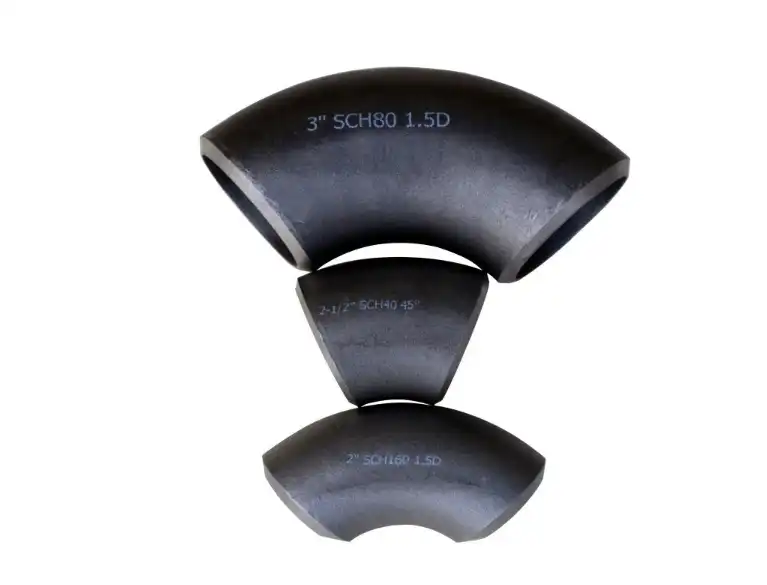
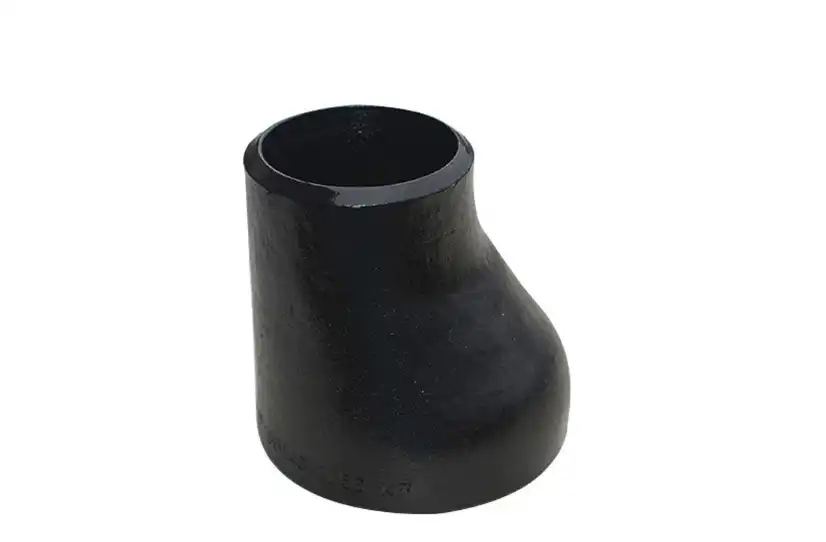
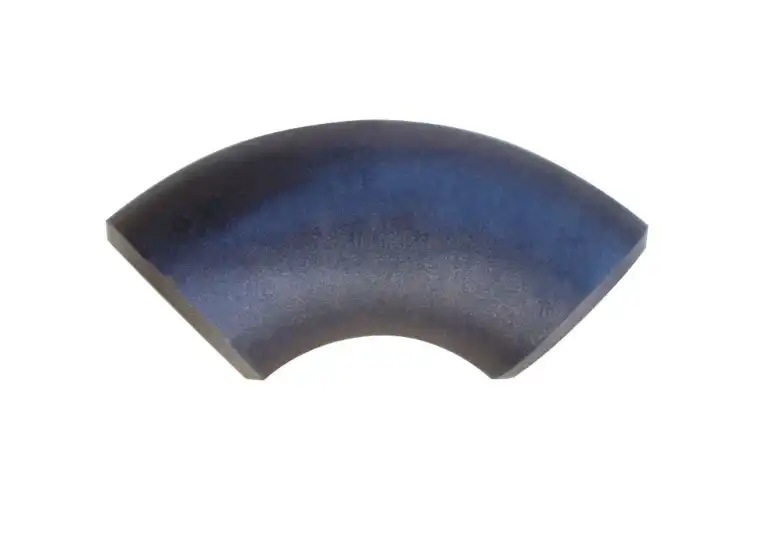
OEM Carbon Steel Elbow Manufacturer for Custom Needs
For oil, gas, and chemical handling projects, the success of the project depends on finding a reliable OEM maker to produce custom carbon steel elbows. Engineers can design pipe systems that work around space limitations while keeping pressure integrity by using custom elbows made of carbon steel, which offer exact angles and dimensions that standard catalog choices cannot match. Since 1998, Oudi has been making custom carbon steel elbow solutions for over 300 clients in more than 40 countries. These clients demand exact specs, certified quality, and reliable delivery schedules that keep expensive infrastructure projects going forward.
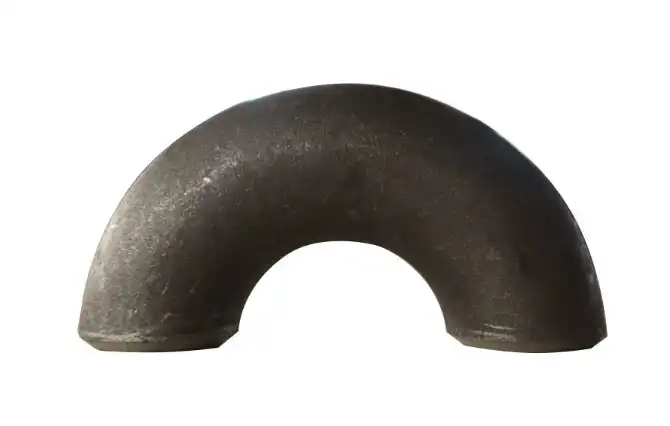
Understanding Custom Carbon Steel Elbows: Materials, Types, and Manufacturing Process
When fluids or gases need to change direction quickly in industrial pipes, custom carbon steel elbow fittings make it possible to do so without affecting the flow or strength of the pipe.
Material Grades That Drive Performance
Custom carbon steel elbows use different types of steel, which they choose for different working situations. As the workhorse of the business, ASTM A234 WPB is strong and can be welded at temperatures up to 400°F. Grade A106 Grade B has better mechanical qualities and can be used for high-pressure gas and steam lines. These requirements make sure that the new pipeline will work with the ones that are already there, and they also meet the internationally known ASME B16.9 dimensions.
Seamless Versus Welded Construction Methods
How the product is manufactured affects its performance qualities. Through hot bending methods, seamless custom carbon steel elbows are made from solid pipe stock. This gets rid of weld gaps that could break under cyclic stress. Welded versions connect plate pieces with longitudinal or spiral edges, which saves money for bigger widths than 24 inches. For high-pressure uses in refineries and offshore platforms, seamless construction is best. For water treatment and general industrial pipes, welded construction is better for mild pressures.
Hot Forming Manufacturing Workflow
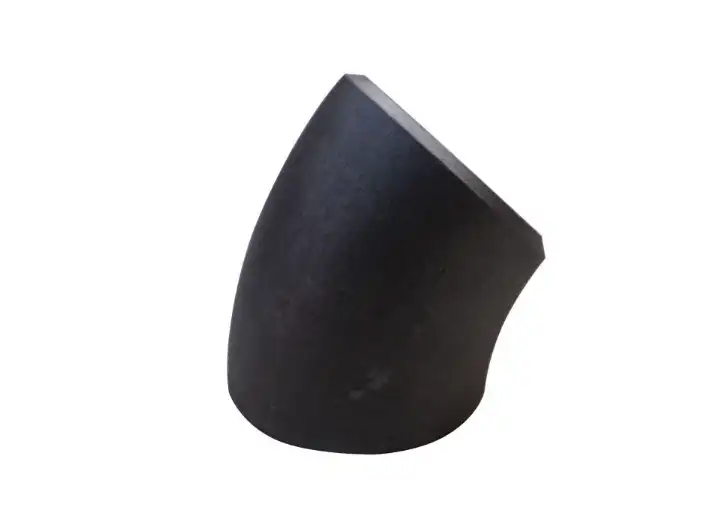
To start the hot forming process, pipe pieces are chosen and cut to the right lengths based on the end custom carbon steel elbow radius needs. When heated in controlled ovens to 1900°F to 2100°F, the metal becomes flexible enough for hydraulic machines to push mandrels through it, making smooth bends without thinning the wall. After forming, heat treatment is used to recover the mechanical qualities that were changed. Before protective coats are put on, each custom carbon steel elbow is checked for dimensions using coordinate measuring tools and nondestructive tests, such as ultrasound or X-rays, to make sure the wall thickness is consistent and find any internal flaws.
Key Technical Specifications and Performance Features of Custom Carbon Steel Elbows
By choosing the right technical parameters, you can be sure that the system will work reliably for decades, even in tough working circumstances.
Pressure Class Ratings and System Design
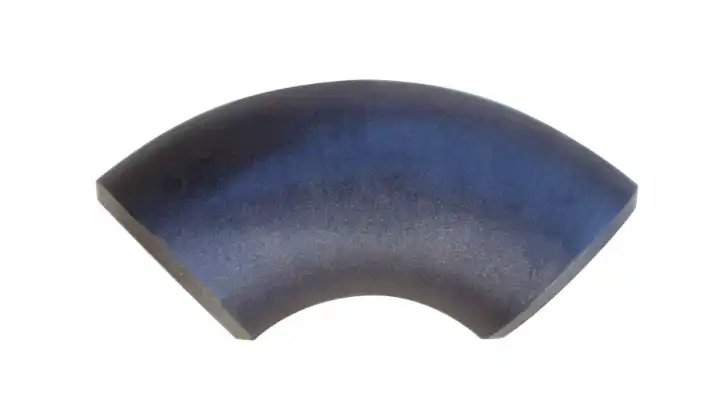
Ratings for pressure set the limits of what can be done. Class 150 Custom carbon steel elbows can handle up to 285 psi of pressure at room temperature and are good for low-pressure delivery networks. Class 300 versions can handle 740 psi, which is typical in chemical plants. Class 600 and higher are used in critical places like catalytic cracking units, where pressures are higher than 1480 psi. The wall thickness goes up in proportion to the pressure class, which changes how weight is calculated for designing structural supports.
Corrosion Protection Strategies
Carbon steel that isn't covered rusts quickly in wet or acidic places. Coating methods make things last a lot longer. Epoxy linings protect the inside of devices that handle drinkable water. External galvanizing adds layers of zinc that are meant to be damaged by the air. Electroplating doesn't get through surface flaws as well as hot-dip galvanizing. Normalizing or annealing with heat removes leftover stresses from forming processes. This makes it less likely that stress corrosion cracking will happen in chloride settings.
Welding Techniques and Quality Assurance
Butt welding joins bends to straight pieces of pipe by using beveled ends that have been prepared to fit into certain slot angles. Socket welding works best for sizes less than 2 inches, where alignment can be hard. Threaded joints can be used in places that need to be taken apart a lot for repair reasons. Specifications for the welding process written in accordance with ASME Section IX control things like the warming temperature, the choice of filler metal, and the heat treatment after the welding process. An X-ray check confirms the quality of the penetration, and a dye penetrant test shows any surface cracks that might get bigger when the material is loaded with stress.
Comparing Carbon Steel Elbows: Making the Right Choice for Your Project
Choosing the right materials and building them in the right way affects both the original cost and the total cost over the life of the building in different working environments.
Carbon Steel Versus Alternative Alloys
Custom carbon steel is very useful in places where the temperature stays below 800°F, and the amount of corrosion is low. It is better for acidic environments to avoid stainless steel types 304 and 316, but they cost three to five times more per part. In power plant boilers, alloy steels with chromium and molybdenum can handle high temperatures of up to 1200°F. Custom carbon steel is good for most oil pipelines, natural gas distribution projects, and city water projects where rust won't damage the structure. Stainless steel options are only cost-effective when the costs of replacement or the risk of contamination are higher than the material's price.
Seamless Versus Welded Performance Trade-offs
Longitudinal welds are the weaker link in seamless Custom carbon steel elbows, so they are better for uses with cyclic pressure where fatigue failure is likely to happen. Offshore platforms and refinery hydrocracker units are worth the extra 20–30% cost that smooth building requires. Welded custom carbon steel elbows work well when pressures stay the same and regular inspections find problems early on before they become too big to fix. For sizes bigger than 16 inches, where seamless making becomes too expensive, construction projects and shipping operations usually call for parts that are welded.
Balancing Cost Against Lead Time Requirements
Catalog Custom carbon steel elbows usually ship within days, but they don't always perfectly match the needs of a unique job. Changes to the field lose skilled labor and add quality factors. For arranging production, getting materials, shaping, and testing, custom carbon steel elbow manufacturing takes 4 to 6 weeks. Rush orders that are processed faster cut wait times in half to two to three weeks, but they cost an extra 25 to 40 percent. Since piping is often on the critical path during building, procurement teams should weigh the costs of early delivery against the risks of being late with the delivery plan.
Procurement Guide: How to Source Custom Carbon Steel Elbows from Trusted OEM Manufacturers?
If you choose the right manufacturing partner, you can keep your project's budget and plan safe from quality problems and delivery delays.
Essential Certifications and Manufacturing Credentials
Getting ISO 9001 approval shows that you handle quality in a planned way, but it doesn't mean that you can actually make things. National regulatory authorities issue special equipment-making licenses that prove legal permission to make pressure-retaining parts. Companies that want to sell their goods in the United States should have ASME certifications for the appropriate parts of the code. Third-party review acceptance from companies like Lloyd's Register or Bureau Veritas shows that you are ready to have your work looked over by a third party. At Oudi, we keep our ISO 9001:2000 certification and People's Republic of China special equipment production licenses up to date. We also follow strict inspection processes from the time we receive raw materials to the time we ship out finished goods.
Evaluating Production Capacity and Quality Control
The manufacturer's annual output potential shows how many projects they can handle without using up too many of their resources. Facilities that make 16,000 tons of goods a year are big enough to handle special orders without stopping regular production. Ultrasonic thickness gauges, spectroscopy for material verification, and hydraulic test equipment are some examples of advanced monitoring equipment that can be used to fully check the quality of a product. Full inspection, instead of sampling, helps manufacturers find flaws before sending their products to customers. This lowers the number of rejected items in the field, which slows down production.
Understanding MOQs, Pricing, and Delivery Logistics
Depending on how complicated the manufacturing setup is, the minimum order quantity is usually between 100 and 500 pieces per standard. Smaller amounts cost more because the prices of tools and inspections are spread out over fewer units. When you arrange bulk sales at the start of a project, you can get better prices and reserve production slots. Customization that changes non-standard sizes or the chemical makeup of materials raises the base price by 15 to 30 percent. It takes 4 to 6 weeks for custom-made carbon steel elbows produced in Asia to reach job sites in the United States by water. This makes landing costs comparable to domestic options, even though freight costs are higher. When project teams arrange orders with different requirements, container optimization lowers the cost of shipping each piece.
Real-World Applications and Case Studies of Custom Carbon Steel Elbows
Customized carbon steel elbow solutions can solve engineering problems in a wide range of industrial areas, as shown by real-life examples.
Industries Relying on Custom Piping Solutions
Pipe networks with thousands of direction changes are used by oil plants to move crude oil through fractional distillation towers and catalytic converters. Custom 90-degree and 45-degree bends work with the space limitations of current equipment while keeping flow rates high enough to keep sediment from building up. Petrochemical companies that handle ethylene and propylene choose a short radius. Custom carbon steel elbows when they can't use long-radius elbows because of room constraints, knowing that the higher pressure drops are an inevitable trade-off. Power plants that use natural gas or coal to make electricity use special custom carbon steel elbows in their steam distribution systems that work at 2400 psi and 1000°F, where regular parts would break in months. Municipal water treatment plants replace old infrastructure with coated custom carbon steel elbows that are resistant to rust and exactly the right size for existing pipeline lengths. This way, the whole system doesn't have to be replaced, which would be expensive.
Solving High-Pressure Pipeline Challenges
In order to expand a petroleum plant on the Gulf Coast, 48-inch diameter Custom carbon steel elbows with 900 psi ratings had to be installed in a hydrocarbon transfer line that went under an interstate highway. The largest diameter and pressure number that came with the brochure was 36 inches. The engineering team asked for a custom-welded structure made of dual-certified materials that could be tracked back to heat numbers. The structure was also subjected to a full radiographic examination and witnessed hydrostatic testing at 1350 psi. To make it, they needed special making tools and four weeks to make it. The custom solution kept 12 miles of pipeline from having to be rerouted. This saved $8.7 million in land acquisition and building costs and helped the project meet its tight 18-month goal. Performance tracking over five years shows that there have been no leaks, and measures of the wall thickness show that there is little corrosion, which proves that the engineering investment was worth it.
Conclusion
Custom carbon steel elbow making fills the gap between catalog restrictions and actual engineering requirements in industrial pipe systems. For decades of reliable service, the materials used, the way they are built, and the technical requirements must all be in line with the working pressures, temperatures, and weather conditions. When you work with experienced original equipment makers (OEMs), you can get access to cutting-edge forming tools, strict quality control, and engineering support that turns project instructions into precise parts. Our 66,600-square-meter plant has been providing custom carbon steel elbow solutions to the water, natural gas, oil, and chemical industries on six continents since 1998. We have built relationships with these industries by consistently delivering high-quality products on time.
FAQ
How Do I Determine the Correct Carbon Steel Elbow Size for My System?
To match custom carbon steel elbow sizes to current pipes, you need to be sure of the outside diameter, wall thickness rate, and type of connection. ASME B36.10M gives standard pipe sizes, where theoretical pipe size refers to the pipe's inside diameter. Using calipers, measure the actual pipe's outside diameter (OD), and then look at the schedule tables to find the wall thickness. Usually, long-radius custom carbon steel elbows with a centerline radius that is 1.5 times the diameter work best. On the other hand, short-radius custom carbon steel elbows with a centerline radius of 1.0 times the diameter work well in tight areas with acceptable pressure drop increases.
What Certifications Should I Expect from Reputable OEM Manufacturers?
Quality providers keep their ISO 9001 quality management certification, which shows that they control processes in a planned way. Pressure equipment instructions or special manufacturing licenses from national governments show that the rules have been followed. Material test results that are approved to EN 10204 3.1 standards show that the chemical makeup and mechanical properties of a product can be traced back to specific production batches. Manufacturers that sell to people in North America should use ASME codes and show proof that they follow the rules.
Can Lead Times Be Expedited for Urgent Project Needs?
Standard production of custom carbon steel elbows takes between 4 and 6 weeks, which includes getting the materials, planning the production schedule, forming the parts, heating them, and inspecting them. Rush processing reduces timelines to 2-3 weeks through priority scheduling and dedicated quality resources, typically adding 25-40% to base pricing. Air freight speeds up delivery even more, but it also makes operations much more expensive. Planning to buy things during the planning stages instead of the last minute during building saves money on expedite fees and makes sure that supply matches installation plans.
Partner with Oudi for Reliable Custom Carbon Steel Elbow Manufacturing
Oudi has manufactured precision pipe fittings since 1998, delivering custom carbon steel elbow solutions to demanding industries worldwide. Our ISO 9001-certified quality systems, 16,000-ton annual production capacity, and full inspection equipment make sure that every part meets your exact requirements. No matter if your project needs to meet ANSI, JIS, DIN, or BS standards, our engineering team is here to help from the first planning phase to the final release. You can email our sales team at oudi-04@oudiguandao.com to talk about your needs for a special custom carbon steel elbow or to get detailed datasheets. As a trusted custom carbon steel elbow supplier, we transform your specifications into components that perform reliably for decades.
References
1. American Society of Mechanical Engineers. (2020). ASME B16.9: Factory-Made Wrought Buttwelding Fittings. New York: ASME Press.
2. Davis, J.R. (2006). Carbon Steel: Properties and Performance in Piping Systems. Materials Park: ASM International.
3. Mohitpour, M., Golshan, H., and Murray, A. (2007). Pipeline Design and Construction: A Practical Approach, Third Edition. New York: ASME Press.
4. Nayyar, M.L. (2019). Piping Handbook, Eighth Edition. New York: McGraw-Hill Education.
5. Peng, L.C. and Peng, T.L. (2009). Pipe Stress Engineering. New York: ASME Press.
6. Xu, H. and Wang, S. (2018). Manufacturing Processes for Carbon Steel Pipe Fittings in Industrial Applications. Journal of Materials Processing Technology, 247, 125-138.

Need help finding the right solution with our experts. Please contact us.
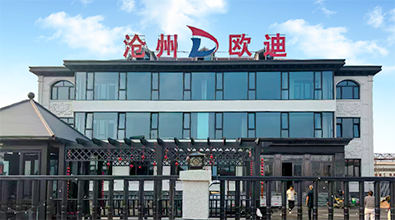
SINCE 1998 Your Reliable Pipeline Manufacturer