Top-Rated Concentric Reducer Carbon Steel Factory Recommendations
Procurement experts have to deal with a lot of problems when they're looking for Concentric Reducer Carbon Steel parts for mission-critical pipe systems. These problems include making sure the parts are of good quality, meeting standards, and finding suppliers they can trust. Since 1998, Cangzhou Oudi Pipe Manufacture Co., Ltd. has supplied ASTM A234 WPB-certified reducers to more than 300 users in over 40 countries. These reducers meet the strict needs of the oil, chemical, natural gas, and water conservation industries. Our ISO 9001:2000-certified factory in Hebei Province makes 16,000 tonnes of steel every year by using advanced metalworking methods and thorough NDT testing routines. This guide solves the main problems U.S. buyers have, like how to understand technical specs and find makers that can handle high-pressure uses. It also gives you practical tips on how to make the best supply chain decisions in 2024.
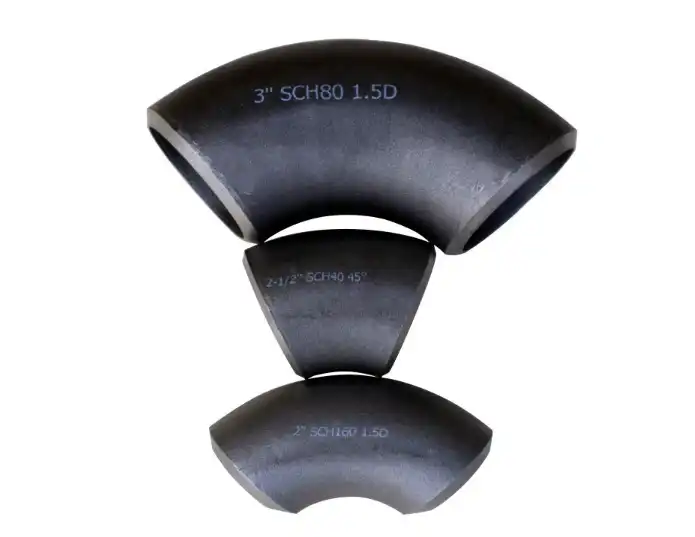
Understanding Carbon Steel Concentric Reducers: Specifications, Functions, and Benefits
Carbon steel concentric reducers function as butt-weld fittings connecting pipes of dissimilar diameters while maintaining axial alignment between inlet and outlet centerlines. The cone-shaped geometry creates a symmetrical transition path that preserves fluid velocity profiles, making these components indispensable for vertical piping arrangements where structural integrity and flow dynamics demand precision.
Core Architectural Features and Operational Principles
The bigger entrance and smaller exit are both connected by a single line, which makes the decrease the same all the way around. Eccentric reducers, on the other hand, move one edge out of the way to make a flat surface, which is very important for keeping air pockets from forming in horizontal pump pressure lines. In vertical steam distribution systems or gas transmission pipes, circular versions lower the coefficient of friction and roughness when the flow changes directions. This keeps equipment further downstream from being damaged by erosion and rust.
At Oudi, we make sure that our production process follows ASME B16.9 measurement guidelines. This makes sure that face-to-face lengths are the same as major outer circle specs. The wall thickness is the same as the larger pipe's plan, but we do offer "Bored to Match" configurations for high-pressure uses that need smaller bores that are tapered. Standard bevels keep angles of 37.5° ±2.5° for walls thinner than 22mm, which makes deep entry welding easier without having to deal with preheating issues.
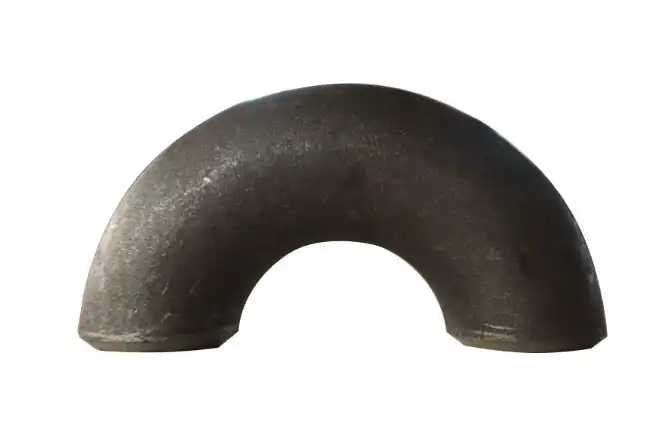
Material Grades and Pressure Rating Standards
ASTM A234 WPB is the standard carbon steel grade for all-purpose reducers. It can handle temperatures up to 400°C and pressures that match ANSI Class 150-2500 values. When it comes to harsh cycle situations, WPC grades offer more power. We can make things that meet ANSI, JIS, DIN, and BS standards, so we can meet the needs of a wide range of projects, from chemical plants in Europe to factories in Southeast Asia.
When you compare lifetime prices, it's clear that Concentric Reducer Carbon Steel is more durable. While the starting cost of the materials is still 40–60% less than those made of stainless steel, WPB fittings that have been properly heat-treated show great resistance to sulphide stress cracking in sour service conditions, as long as the hardness levels stay below 22 HRC in line with NACE MR0175. Our stress-relief methods restore the flexibility of microstructures that were damaged during hot or cold forming processes above 595°C.
Cavitation Mitigation and Hydraulic Stability
When pressure goes up, circular reducers can handle it without making the vapour bubbles that break impellers. This is especially helpful for vertical pump discharge lines. The even contraction stops localised speed spikes that cause cavitation in places where the static pressure drops below the fluid vapour pressure. This hydraulic security makes equipment last longer in power plants and boiler feedwater systems, where unexpected downtime costs more than $50,000 an hour.
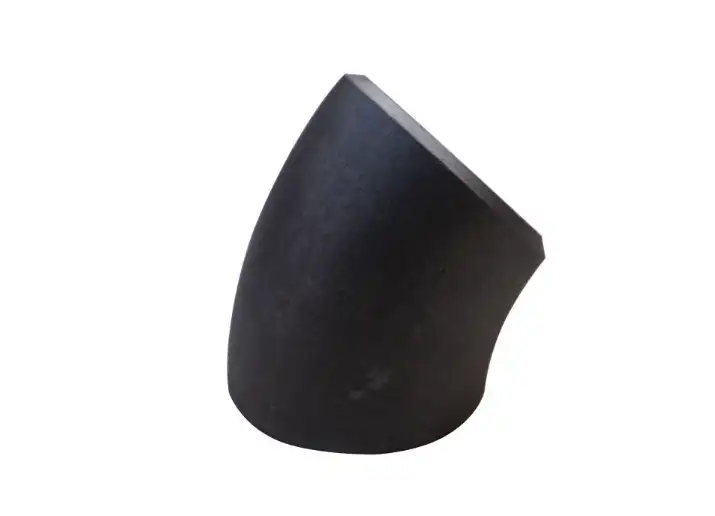
Comparing Carbon Steel Concentric Reducers with Other Materials and Types
Material selection profoundly impacts total ownership costs, with carbon steel offering compelling advantages in specific operational contexts while yielding to alternatives in others.
Carbon Steel Versus Stainless Steel and Alloy Alternatives
Mechanical strength comparisons reveal carbon steel's tensile capabilities (415-550 MPa for WPB) adequately serve most industrial fluid transport needs at significantly lower procurement costs. Stainless steel grades like 304L or 316L become necessary only when corrosive media or hygienic requirements justify their 250-300% price premium. Aluminum alloys, while offering weight reduction benefits in shipbuilding applications, lack the structural rigidity demanded by high-pressure steam systems operating above 10 MPa.
Corrosion resistance represents carbon steel's primary limitation. Aggressive chloride environments or acidic condensates necessitate protective coatings or material upgrades. However, natural gas transmission networks and hydrocarbon processing plants report decades-long service from carbon steel fittings when proper corrosion allowances and cathodic protection measures are implemented. Our technical team assists buyers in conducting corrosion rate assessments to determine whether carbon steel specifications align with site-specific conditions.
Concentric Versus Eccentric Reducer Deployment Scenarios
Functional differentiation between these reducer types hinges on orientation and drainage requirements. Concentric designs excel in vertical runs where centerline alignment simplifies structural support calculations and minimizes vibration-induced stress concentrations. Eccentric variants serve horizontal installations, positioning the flat edge downward to facilitate drainage in liquid service or upward to eliminate air traps in pump suction scenarios.
Misapplication carries significant consequences. Installing Concentric Reducer Carbon Steel on horizontal suction lines creates trapped gas pockets at the apex, starving pumps and triggering cavitation damage within weeks. Conversely, eccentric reducers compromise structural symmetry in vertical supports, complicating stress analysis and potentially violating building code requirements. Our engineering support helps buyers match reducer geometry to piping orientation, preventing costly field modifications.
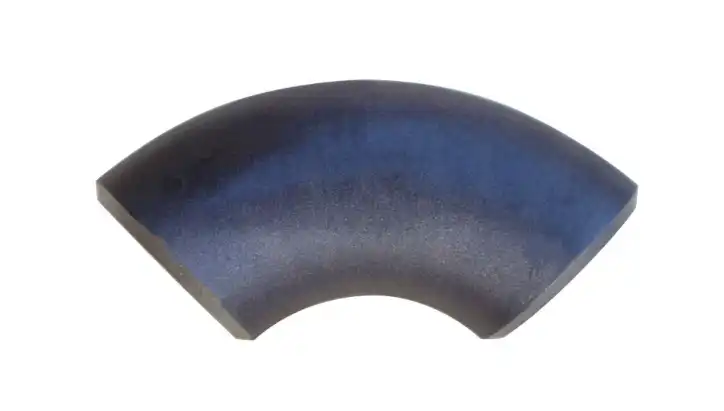
Brand and Grade Comparisons for Value Optimization
Manufacturers differentiate themselves through quality consistency, delivery reliability, and technical support depth rather than fundamental metallurgical capabilities. OEM relationships with established factories like Oudi provide access to lot traceability documentation, mill test certificates, and dimensional inspection reports that third-party distributors cannot guarantee. Bulk customization options—such as beveled ends machined to match specific welding procedures or special packaging for containerized export—add value without proportional cost increases when ordered directly from production sources.
How to Choose the Right Carbon Steel Concentric Reducer for Your Project
Procurement success requires aligning component specifications with operational demands through systematic evaluation frameworks.
Defining Application Requirements and Selection Criteria
Begin by documenting operating parameters: fluid type, temperature range, pressure classification, and flow velocity. These factors dictate minimum wall thickness, schedule compatibility, and heat treatment requirements. Vertical steam headers operating at 600 psi and 350°C demand Schedule 80 reducers with normalizing heat treatment, while ambient-temperature water distribution allows Schedule 40 variants with stress-relief annealing.
Size transitions warrant careful consideration. Abrupt diameter changes exceeding 4:1 ratios generate turbulence intensities that accelerate erosion at the transition slope. Gradual reductions through staged fittings or custom taper angles mitigate this wear mechanism in slurry transport or high-velocity gas service. Our design team provides computational fluid dynamics analysis for critical applications, optimizing reducer geometry to balance hydraulic efficiency against fabrication costs.
Supplier Certification Verification and Factory Profiling
Quality assurance begins with certification validation. ISO 9001 registration confirms documented quality management systems, while special equipment manufacturing licenses issued by provincial authorities verify compliance with pressure vessel regulations. API 5L and PED certifications enable European market access, demonstrating conformance with essential safety requirements.
Physical factory assessments reveal production capabilities that paper credentials cannot capture. Advanced facilities maintain dedicated heat treatment furnaces with computerized thermal profiling, automated ultrasonic testing stations, and coordinate measuring machines for dimensional verification. Oudi's 66,600-square-meter Mengcun facility houses CNC machining centers and spectroscopic analysis equipment, supporting full material traceability from steel mill certifications through finished goods inspection.
Customization Options and Lead Time Considerations
Standard catalog offerings satisfy 80% of piping requirements, but specialized projects demand tailored solutions. Custom sizing, non-standard bevel angles, and exotic material grades extend manufacturing timelines from stock delivery (2-3 weeks) to engineered-to-order cycles (8-12 weeks). Minimum order quantities vary inversely with customization complexity—commodity items ship in single-piece quantities while special forgings require 50-100 unit batches to justify tooling investments.
Lead time management becomes critical for turnaround maintenance windows or construction schedule milestones. Establishing blanket purchase agreements with scheduled releases allows manufacturers to pre-position inventory, compressing delivery cycles to days rather than weeks when urgent needs arise. Our procurement coordination team works directly with project planners to synchronize production schedules with site readiness, minimizing storage costs and expediting fees.
Top-Rated Carbon Steel Concentric Reducer Manufacturers and Suppliers
Distinguishing premier suppliers requires evaluating capabilities beyond basic product conformance, focusing on systemic quality controls and service infrastructure.
Benchmarks for Leading Concentric Reducer Factories
Elite manufacturers implement full traceability systems linking raw material heat numbers through forming operations, heat treatment cycles, and final inspection results to individual fittings. Statistical process control monitors wall thickness uniformity, dimensional tolerances, and surface finish parameters across production runs, triggering corrective actions before non-conforming products reach customers. Oudi's quality management protocols mandate 100% visual inspection plus sampling-based destructive testing at frequencies exceeding ASME B16.9 requirements, with ultrasonic examination detecting laminations or inclusions that conventional methods miss.
Advanced manufacturing processes separate industry leaders from commodity producers. Hot induction bending maintains grain structure integrity better than cold forming, reducing residual stress concentrations. Precision machining of beveled ends ensures consistent root gap dimensions during field welding, minimizing weld defect rates. Our CNC-controlled equipment maintains ±0.5mm tolerances across the full size range from 1/2" through 72" diameters, accommodating tight-fit assemblies without field rework.
After-sales support infrastructure proves particularly valuable when specification questions or installation challenges arise. Technical hotlines staffed by metallurgical engineers provide real-time guidance on welding procedure qualification, PWHT requirements, and corrosion prevention strategies. Warranty programs backed by comprehensive documentation protect buyers against premature failures attributable to material or workmanship defects.
Cangzhou Oudi Pipe Manufacture Co., Ltd.: Your Trusted OEM Partner
Since establishing operations in 1998 within Hebei Province's specialized fitting manufacturing cluster, we've developed deep expertise serving the petroleum, chemical, and power generation sectors. Our strategic location 120 kilometers from Tianjin Port enables efficient containerized export to North American buyers, with established logistics partnerships ensuring damage-free delivery and customs documentation accuracy.
Production capacity scales to meet project demands ranging from small-lot prototyping through large-scale EPC contracts requiring thousands of fittings. The 16,000-ton annual output allocates dedicated capacity for priority customers, preventing the allocation shortages that plague overextended manufacturers during industry boom cycles. Material procurement relationships with major Chinese steel mills secure preferential access to certified plate and forging stock, insulating buyers from commodity market volatility.
Our comprehensive product range extends beyond concentric reducers to encompass the full spectrum of butt-weld fittings, flanges, and specialty components required for complete piping systems. Single-source procurement simplifies quality coordination, reduces administrative overhead, and often unlocks volume discounts unavailable when splitting orders across multiple vendors. Technical consistency across product families ensures compatible metallurgy, heat treatment, and surface preparation—critical factors when welding dissimilar fittings into integrated assemblies.
Quality certifications include ISO 9001:2000 registration and People's Republic of China Special Equipment Manufacturing Licenses, validated through annual surveillance audits. Our testing laboratory holds CNAS accreditation for chemical analysis, mechanical property evaluation, and non-destructive examination, with equipment calibration traceable to national measurement standards. Third-party inspection services from SGS, TÜV, or Bureau Veritas can be arranged at buyer request, providing independent verification for critical applications.
Global Manufacturing Landscape and Regional Supplier Strengths
North American buyers traditionally source from domestic manufacturers to minimize logistics complexity and leverage proximity advantages during specification discussions. U.S. producers excel at specialized alloys and rapid prototype development but face cost competitiveness challenges for commodity carbon steel grades. European suppliers emphasize regulatory compliance documentation and metric sizing standards, serving multinational corporations with pan-European operations. Indian manufacturers offer attractive pricing on standard configurations, though quality consistency and delivery reliability vary significantly across the fragmented supplier base.
Chinese OEM factories like Oudi occupy a strategic middle ground, combining competitive cost structures with quality systems meeting international standards and production volumes supporting both large contracts and smaller replenishment orders. The maturity of China's fitting manufacturing ecosystem provides access to specialized subcontractors for coating application, heat treatment, and testing services, enabling comprehensive capabilities without excessive vertical integration costs.
Verified customer feedback underscores supplier credibility more reliably than marketing claims. Our client portfolio includes major EPC contractors, national oil companies, and multinational industrial corporations across 40+ countries—repeat business driven by on-time delivery performance, technical responsiveness, and zero-defect quality targets. Reference lists and case study documentation are available to qualified procurement professionals evaluating supplier partnerships.
Procuring Carbon Steel Concentric Reducers: Best Practices for B2B Buyers
Strategic procurement practices optimize value delivery while managing risk exposure across global supply chains.
Trusted Sourcing Channels and Platform Selection
Direct manufacturer engagement for Concentric Reducer Carbon Steel eliminates distributor margins while establishing communication channels for technical clarification and customization discussions. Online B2B platforms like Alibaba and Made-in-China aggregate supplier options but require careful vetting of company credentials and transaction histories. Trade shows such as Valve World Americas and International Pipeline Conference facilitate face-to-face meetings that build trust and enable detailed capability assessments.
Email inquiries to oudi-04@oudiguandao.com receive responses within 24 hours, with quotations including detailed specifications, material certifications, and delivery timelines. Our export documentation team prepares commercial invoices, packing lists, and certificates of origin compliant with U.S. Customs requirements, streamlining border clearance and reducing duty assessment disputes.
Price Benchmarking and Negotiation Strategies for Bulk Orders
Carbon steel reducer pricing fluctuates with raw material costs, production utilization rates, and currency exchange movements. Baseline expectations for ASTM A234 WPB reducers range from $15-45 per piece for common sizes (2"-12" diameter) in Schedule 40 wall thickness, with larger diameters and heavier schedules commanding proportional premiums. Stainless steel equivalents cost 2.5-3× carbon steel prices while exotic alloys reach 5-8× multipliers.
Volume commitments unlock tiered discounts—500-piece orders typically achieve 12-18% reductions versus catalog pricing, while annual agreements exceeding 2,000 units negotiate 22-28% savings. Payment term flexibility (letters of credit versus wire transfer deposits) influences pricing by 3-5% based on financing cost differentials. Our sales team structures proposals balancing competitive pricing with sustainable margins that ensure long-term service capability rather than pursuing unsustainable low-ball offers that compromise quality.
Certification Verification and Export Compliance Protocols
Material test reports must accompany each shipment lot, documenting chemical composition analysis and mechanical property testing results. Verify that reported values fall within ASTM specification ranges and that testing frequency meets code requirements (typically one test per heat lot). Certificate authenticity can be validated through mill stamp cross-references and third-party audit trails.
Export compliance documentation includes commercial invoices declaring Harmonized Tariff Schedule classifications (typically 7307.93 for butt-weld reducers), country-of-origin certifications, and any applicable free trade agreement declarations. U.S. importers must file Importer Security Filings 24 hours before vessel loading, requiring advance coordination with freight forwarders. Our logistics partners manage these regulatory requirements, preventing customs holds that delay project schedules.
Logistics Optimization and Lead Time Management
Ocean freight from Tianjin to U.S. West Coast ports requires 14-18 days transit plus 3-5 days customs clearance, while East Coast destinations extend to 28-35 days via Panama Canal routing. Air freight compresses delivery to 5-7 days but carries cost penalties 4-6× higher than ocean rates—economically justified only for emergency shutdowns or critical path schedule recovery.
Container loading optimization reduces per-unit shipping costs. Standard 20-foot containers accommodate approximately 18-22 tons of fittings depending on size distribution, while 40-foot high-cube units handle 25-28 tons. Mixed loading with complementary product lines (flanges, elbows, tees) maximizes container utilization. Our export packing team designs dunnage arrangements preventing in-transit damage while optimizing cube efficiency.
Conclusion
Selecting the right Concentric Reducer Carbon Steel supplier requires balancing technical specifications, quality assurance protocols, and supply chain reliability within project budget constraints. Carbon steel's cost-effectiveness and mechanical properties make it the preferred material for vertical piping systems across oil, chemical, natural gas, and power generation applications—provided manufacturers demonstrate robust certification credentials and consistent production quality. Oudi's 26-year track record serving 300+ customers globally reflects our commitment to manufacturing excellence, responsive technical support, and logistics coordination that simplifies international procurement. By applying the selection frameworks, certification verification methods, and negotiation strategies outlined in this guide, U.S. buyers can confidently source components that meet operational demands while optimizing total cost of ownership.
FAQ
1. What is the primary difference between concentric and eccentric reducers?
The centerlines distinguish these reducer types fundamentally. Concentric reducers align inlet and outlet centers, creating symmetrical cone shapes ideal for vertical piping where structural alignment and uniform flow distribution matter most. Eccentric reducers offset the centerlines, maintaining one flat edge (top or bottom orientation) to prevent air pocket accumulation in horizontal pump suction lines or facilitate drainage in liquid service applications.
2. How can I verify manufacturer certifications for quality assurance?
Request copies of ISO 9001 certificates and special equipment manufacturing licenses, then validate registration numbers through issuing authority databases. Examine material test reports for consistency with ASTM specifications and verify testing frequency meets code requirements. Third-party inspection services provide independent audits of manufacturing processes, dimensional conformance, and mechanical properties—particularly valuable for first-time supplier qualification or high-stakes projects.
3. Can concentric reducers be customized for specific project requirements?
Manufacturers routinely accommodate custom sizing, non-standard wall thickness schedules, special bevel angles, and exotic material grades beyond catalog offerings. Lead times extend from 2-3 weeks for stock items to 8-12 weeks for engineered configurations. Minimum order quantities vary based on customization complexity, with standard modifications often requiring 50-100 unit batches to justify tooling investments. Discuss technical requirements early in the procurement cycle to align manufacturing schedules with project milestones.
Partner with Oudi for Premium Concentric Reducer Carbon Steel Solutions
Oudi delivers more than carbon steel pipe fittings—we provide comprehensive supply chain partnerships built on manufacturing excellence, technical expertise, and customer-focused service. As an ISO 9001-certified Concentric Reducer Carbon Steel manufacturer with 16,000-ton annual capacity and export experience spanning 40+ countries, we understand the critical importance of on-time delivery, zero-defect quality, and responsive communication. Our Mengcun facility combines advanced production equipment with rigorous inspection protocols, ensuring every reducer meets ASTM A234 WPB specifications and your project's exact requirements. Whether you need standard catalog items or custom-engineered solutions, our team stands ready to support your procurement objectives with competitive quotations, flexible order quantities, and logistics coordination that simplifies international sourcing. Contact our export team today at oudi-04@oudiguandao.com to discuss your upcoming projects and discover why industry leaders across petroleum, chemical, and power generation sectors trust Oudi as their preferred Concentric Reducer Carbon Steel supplier. Let us demonstrate how our capabilities elevate your operations through reliable, high-performance piping components.
References
1. American Society of Mechanical Engineers. (2018). ASME B16.9: Factory-Made Wrought Buttwelding Fittings. New York: ASME Press.
2. ASTM International. (2021). ASTM A234/A234M: Standard Specification for Piping Fittings of Wrought Carbon Steel and Alloy Steel for Moderate and High Temperature Service. West Conshohocken: ASTM International.
3. Nayyar, M. L. (2019). Piping Handbook (8th ed.). New York: McGraw-Hill Education.
4. Mohitpour, M., Golshan, H., & Murray, A. (2007). Pipeline Design and Construction: A Practical Approach (3rd ed.). New York: American Society of Mechanical Engineers.
5. Ellenberger, J. P. (2016). Piping and Pipeline Calculations Manual: Construction, Design Fabrication and Examination. Oxford: Butterworth-Heinemann.
6. Peters, M. S., Timmerhaus, K. D., & West, R. E. (2003). Plant Design and Economics for Chemical Engineers (5th ed.). New York: McGraw-Hill Education.

Need help finding the right solution with our experts. Please contact us.

SINCE 1998 Your Reliable Pipeline Manufacturer



