OEM Chemical Industry Carbon Steel Elbow: Custom Specs
The chemical industry carbon steel elbow is one of the most crucial – and frequently overlooked – components when selecting pipe for chemical processing plants. These directional fittings alter the flow direction at exact angles, usually 45° or 90°, in systems that convey corrosive substances, high-pressure streams, and severe temperatures. Carbon steel elbows are available in seamless and welded construction and are manufactured to strict international standards like ASME B16.9, ASTM A234, and DIN 2605 to guarantee operational safety and extended service life. Oudi has been making these critical components since 1998, producing over 16,000 tons per year for more than 300 customers in 40 countries, in industries like petrochemical plants and water conservancy projects where accuracy and dependability are non-negotiable.
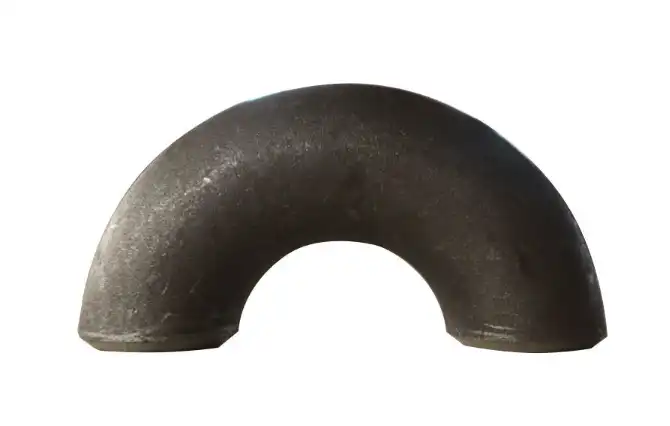
Understanding Carbon Steel Elbows for Chemical Industry Applications
Carbon steel elbows are the critical components that allow for directional adjustments in chemical pipe systems, and knowing their technical parameters will help ensure your operation runs smoothly or suffers expensive downtime.
Material Composition and Grade Selection
The main ingredient of carbon steel pipe elbows is iron, with a carbon concentration of between 0.05% and 0.30%. Carbon steel pipe elbows also include manganese (0.29% - 1.06%), while phosphorus and sulfur are strictly limited to less than 0.035% to avoid brittleness. Common grades include ASTM A234 WPB for normal service and A234 WP11/WP22 for increased temperature applications. The carbon equivalent value is still important for weldability, especially in field installations where post-weld heat treatment may not be possible. Material grades must be selected by the procurement manager for harsh chemical conditions. The tensile ratings range from 48,000 to 80,000 psi, the mechanical strength of the pipe. While carbon steel does not contain chromium like its stainless counterparts, careful selection of grade and protective coatings allows for the dependable use of carbon steel in quite corrosive chemical applications at a fraction of the cost.
Manufacturing Methods: Hot Forming Processes
Pipe elbows are produced by hot forming methods, which have a strong influence on their structural integrity. Hot pushing entails heating carbon steel pipe sections to 900-1050°C, and then pushing them hydraulically through specific dies to form the bend radius. The process creates seamless elbows with homogeneous grain structure and no weld seams, making them suitable for high-pressure chemical duty. Another method is hot bending, where pipe sections are heated and then mechanically bent around mandrels, which is ideal for bigger diameter applications. Both procedures produce long radius (LR) elbows with a centerline radius of 1.5 times the nominal pipe diameter or short radius (SR) variants at 1.0 times the diameter. Long radius topologies reduce pressure drop and turbulence, which are ideal for chemical processes where flow efficiency is important. In our Cangzhou plant, we control the temperature precisely during hot forming to provide constant mechanical qualities from batch to batch.
Pressure and Temperature Specifications
In chemical service, an elbow’s survival or failure depends on operating circumstances. Standard carbon steel elbows are available in pressure classes from 150# to 2500# in accordance with ASME B16.5, with wall thickness schedules from Schedule 40 for moderate pressure to Schedule XXS for harsh circumstances. Temperature ratings are grade-specific. A234 WPB is good for reliable operation from -29°C to 400°C, while WP11 chromium-molybdenum alloy extends service to 595°C for high-temperature chemical reactors. Chemical compatibility tables suggest that carbon steel is suitable for mild acids, alkaline solutions, and most organic solvents if suitably coated. Concentrated acids, chloride-rich conditions, and other aggressive chemicals need updated materials. Every elbow produced on our machine is hydrostatically tested at 1.5 times the design pressure before shipping to assure structural integrity.
Corrosion Resistance Analysis
To fairly evaluate the corrosion behavior of carbon steel in chemical facilities. Unlike stainless steel with passive chromium oxide coatings, the Chemical industry carbon steel elbow will corrode via electrochemical reactions in the presence of moisture and strong chemicals. The rate of corrosion is usually in the range of 0.05 to 0.5 mm per year, depending on the medium composition and temperature. But defensive techniques really lengthen the service life a lot. Corrosion is mitigated via internal coatings such as epoxy phenolic liners, exterior paint systems according to NACE standards, and cathodic protection systems. The cost advantage is significant – carbon steel elbows are 40-60% cheaper than 304 stainless counterparts, while still achieving performance requirements in pH-controlled conditions. But engineers should go beyond the initial purchase price of components and compare lifespan costs, including replacement intervals.
Selecting the Right Carbon Steel Elbow: A Procurement Decision Guide
Critical to making good procurement selections is analyzing a range of technical and commercial aspects that affect plant dependability and your budget.
Seamless Versus Welded Construction
Performance qualities and price are essentially the process of manufacture. Seamless elbows manufactured from solid pipe billets are free of longitudinal welds, which may be a weak spot in high-stress applications. They have homogeneous mechanical characteristics across the cross-section and better withstand cycle pressure variations than welded options. We offer seamless elbows for important chemical applications where the risk of failure makes the 15-25% price premium worthwhile. Butt welding techniques to make welded elbows provide cost benefits for lower pressure applications, but the weld seam must be subjected to radiographic testing to discover porosity or slag inclusions. Socket welding and threaded connection elbows are used for smaller-diameter applications under 2 inches when welding access is difficult. Our technical staff assists customers in matching construction technique to service demands — seamless for high-pressure reactors and welded for common transfer lines where economies matter.
Evaluating OEM Manufacturer Credentials
The selection of suppliers is critical to the receipt of compliant items or rejection during plant inspections. Reputable OEM manufacturers have ISO 9001:2015 quality management certification that demonstrates systematic process control from receipt of raw material through to final inspection. Regulatory agencies give permits for the manufacture of special equipment that serve as confirmation of legal permission to make pressure-retaining items. At Oudi, we already have both certificates and self-managed import-export authorization, which makes international transactions easier for our European, Middle Eastern, and American customers. Check if manufacturers have in-house testing facilities such as spectroscopy for chemical analysis, mechanical testing facilities for tensile and impact characteristics, and non-destructive testing facilities. Every shipment should be accompanied by mill test certificates according to EN 10204 3.1, with traceability to heat numbers and proving conformity with the required requirements. We have 25 years of manufacturing experience supplying the petroleum, chemical, and power generation industries. Procurement managers want product dependability.
Pricing Models and Cost Optimization
If you know how they price their service, you may negotiate better terms and still get the quality you want. Commodity priced with thin margins, elbows of common sizes and grades are all to standard specification; premium rates for exotic materials, unique dimensions, and special coatings represent tooling expenditures. We provide volume savings starting at 500 pieces and bigger discounts for over 2,000 pieces since the setup expenses are spread out across more pieces within a manufacturing run. At Oudi, we provide clear pricing structures: Our conventional ASTM A234 WPB elbows (1-24 inches) are priced competitively, leveraging our 16,000-ton yearly capacity, and special alloy steel configurations are quoted on an individual basis, considering the cost of materials and complexity of processing. Payment arrangements impact the overall cost, with letters of credit entailing banking costs and earlier payment occasionally providing small reductions. Smart purchasing managers will get three bids from approved suppliers. They will compare unit pricing, certification fees, shipping terms, and payment flexibility to discover the real total cost of ownership.
Installation Best Practices and Performance Optimization
Proper installation techniques directly determine whether your elbows reach their design life or fail prematurely, causing production interruptions.
Welding Methods and Standards Compliance
Butt welding is still the preferred connection technique for carbon steel elbows in chemical plants, allowing for full-penetration connections that are as strong as the parent pipe. Welding operations should comply with ASME B31.3 for process pipes, including standards for preheat temperatures, interpass temperatures, and post-weld heat treatment, depending on material thickness and composition. Carbon steel elbows containing more than 0.30% carbon, or having a minimum wall thickness of 19 mm, are usually preheated to 150-200°C to avoid hydrogen cracking. Qualified welders use GTAW root passes and SMAW or FCAW fill passes to produce uniform penetration and mechanical characteristics. We advocate 100% radiographic inspection for critical service and random sampling for general purposes. More elbow failures are caused by improper welding than by faults in the material. Typical mistakes include inadequate preheat generating cold cracking, high heat input creating brittle heat-affected zones, and contamination of the shielding gas causing porosity. To assist installation contractors in avoiding these issues, we have included welding method requirements calibrated to the chemical composition of our elbows in our technical documentation bundle.
Maintenance Strategies for Extended Service Life
Proactive maintenance optimizes your pipe investment. Six-monthly external visual checks reveal coating deterioration prior to corrosion penetration of the substrate. Ultrasonic thickness monitoring at critical spots measures the rates of wall loss and allows predictive replacement before a leak occurs. For chemical facilities in corrosive operation, baseline thickness measurements should be taken at commissioning, and loss rates monitored annually. Internal examination during planned shutdowns shows erosion patterns notably in the extrados of elbows where high-velocity flow impinges. Touch-up treatments help maintain protective coatings, while cathodic protection systems should be maintained within design specifications. Both of these measures will greatly increase the life of the elbow. Temperature cycling produces thermal stress; monitoring the operating conditions ensures that you stay within the material’s rated temperature range. We have seen well-maintained chemical industry carbon steel elbows in chemical operations that have lasted more than 20 years, where the working circumstances are compatible with the design specification...
Quality Verification and Pressure Testing Protocols
Rigorous test processes eliminate installation flaws. Hydrostatic testing involves pressurizing finished pipe sections to 1.5 times design pressure for minimum hold lengths of 10 minutes to assist in leak detection and confirmation of structural suitability. If there is a concern about contamination of water, pneumatic testing with compressed air or nitrogen is used. However, safety measures are more stringent due to the dangers of stored energy. In addition to pressure testing, non-destructive inspection procedures are used. Radiographic testing determines the quality of the weld; magnetic particle inspection finds surface fractures in the ferromagnetic carbon steel, and dye penetrant testing discovers surface-breaking flaws on the ground weld surfaces. All elbows are subject to in-process quality tests such as dimension verification, visual inspection, and material certification before leaving the Oudi plant, but final installed system testing is still necessary. Regulatory inspections are covered by documentation packages comprising test reports and material certifications, and traceability is provided for future maintenance planning.
Customization and OEM Solutions for Chemical Industry Needs
Chemical processing diversity demands flexible manufacturing capabilities that adapt to unique project requirements rather than forcing plants into standard catalog offerings.
Custom Specification Capabilities
Our OEM services meet the demanding technical requirements that are not possible with the standard off-the-shelf components. Non-standard ASME B16.9 sizes, including reducing elbows that transition between pipe sizes in a single fitting, simplify pipeline design and decrease the number of connections, allowing for custom proportions. Special radius designs are used to optimize space-constrained installations or to suit unique flow-modeling needs. We manufacture Chemical industry carbon steel elbows and alloy steel elbows in grades A234 WP5, WP9, WP11, and WP22 for high-temperature applications, as well as bespoke compositions upon request, to meet specific chemical compatibility requirements. Surface treatment requirements range from basic mill finish to polished internals for reduced pressure drop and product build-up in polymer and resin transfer applications. Coatings and linings may include fusion-bonded epoxy, coal tar enamel, and internal rubber linings for particular chemical exposures. Our Cangzhou facility is 66,600 square meters, and we have excellent production equipment to provide inexpensive bespoke manufacturing with a 100-piece minimum order, significantly lower than the industry standard of 500-1,000 pieces.
Lead Times and Supply Chain Reliability
Realistic manufacturing timetables help avoid project delays. Common size standard specification carbon steel elbows are usually available from ready stock for 2-3 week delivery, facilitating fast-track construction timelines. Custom requirements take 6-8 weeks from order confirmation to manufacturing, quality testing, and delivery preparations. Complex multi-material orders or first-time bespoke designs may need 10-12 weeks while engineering teams validate specs and conduct pre-production testing. With a 16,000-ton annual capacity, we give a level of supply assurance that smaller manufacturers just can’t match—we’ve never missed a delivery date on a committed order in our 25-year existence. Open communication throughout the manufacturing cycle keeps the procurement managers updated. We offer production milestone updates when material is received, when forming is complete, when heat treatment is complete, when testing is complete, and when parts are being prepared for shipment. Such insight allows for concerted planning of logistics and no surprises. Being close to Tianjin Port offers logistical benefits for exports, with container shipments aggregated to U.S. Gulf Coast destinations in 30-35 days and European ports in 25-30 days.
Technical Consultation and Project Support
On complex chemical plant projects, collaborative engineering assistance provides value above and beyond the products supplied. Our technical team will evaluate the pipe isometric drawings and look for possibilities to optimize, for example, by replacing several conventional elbows with bespoke reducing elbows, thereby eliminating weld joints. We advise on material selection to balance chemical compatibility, mechanical requirements, and budget limits. We lead customers to cost-efficient alternatives that maintain safety and reduce component prices by 20-30%. Our installation assistance includes advice for welding procedures based on the precise chemical compositions and mechanical qualities of our elbows, so there are no field welding concerns to delay commissioning. 15% installation time saved by a Southeast Asian petrochemical complex, which used our pre-qualified welding techniques rather than creating site-specific ones. Post-delivery support comprises field queries and replacement certifications for plant documentation systems. This collaborative approach creates partnerships, not transactional supplier relationships, which is why more than 300 customers in 40 countries come to Oudi for follow-up projects.
Conclusion
To choose the proper Chemical industry carbon steel elbow for the chemical industry, you will have to analyze the technical requirements, quality standards, and economic factors of your project restrictions. Understanding material grades, how they are manufactured, and the best way to install them may avoid expensive errors and provide consistent performance for years to come. Seamless vs welded construction, the right grade for your chemical environment, and verifying manufacturer credentials all play a role in plant safety and operational continuity. Procurement becomes more than just a transactional buy and moves into strategic alliances with proven OEM suppliers like Oudi, who have rigorous quality systems and offer open technical support, resulting in a lower total cost of ownership while still meeting strict industry compliance.
FAQ
What carbon steel grade works best for moderately corrosive chemical environments?
ASTM A234 WPB grade serves most general chemical applications with pH ranges between 5 and 9, offering reliable performance at an economical cost. This grade contains 0.05-0.30% carbon with balanced manganese content, providing good weldability and adequate corrosion resistance when protected with appropriate coatings. Applications involving weak acids, alkaline solutions, and most organic solvents operate successfully with WPB elbows. More aggressive environments with temperatures exceeding 400°C benefit from upgraded WP11 chromium-molybdenum alloy steel.
How do seamless and welded elbows compare for chemical plant applications?
Seamless elbows manufactured through hot forming without longitudinal welds deliver superior reliability for high-pressure and cyclic service, justifying their 15-25% cost premium over welded alternatives. The absence of weld seams eliminates potential weak points and provides uniform mechanical properties throughout the cross-section. Welded elbows offer economical solutions for moderate-pressure transfer lines and general applications where cost optimization matters. Both types meet ASME standards when properly manufactured and tested, so selection depends on specific service conditions and risk tolerance.
What lead times should procurement teams expect for custom carbon steel elbows?
Standard-specification elbows from our ready stock ship within 2-3 weeks, while custom dimensions, materials, or coatings typically require 6-8 weeks from order confirmation through delivery. Complex first-time designs may extend to 10-12 weeks as engineering validates specifications. Minimum order quantities start at 100 pieces for custom work, significantly lower than industry norms. We recommend that procurement managers engage suppliers during design phases rather than waiting for final specifications, enabling faster delivery when purchase orders are released.
Partner with Oudi for Reliable Chemical Industry Carbon Steel Elbow Solutions
Chemical processing demands reliability that only comes from experienced OEM manufacturers committed to quality and customer success. At Oudi, our quarter-century manufacturing heritage serving the petroleum, chemical, natural gas, and water conservancy sectors demonstrates the expertise your projects deserve. Our ISO 9001:2015 certification and special equipment manufacturing licenses verify systematic quality control from raw material inspection through final hydrostatic testing. With 16,000-ton annual production capacity and a comprehensive inventory of standard specifications, we deliver the supply chain reliability that keeps your projects on schedule. Whether you need standard ASTM A234 WPB elbows for general transfer lines or custom alloy steel configurations for specialized reactors, our technical team provides consultative support that optimizes both performance and cost. Procurement managers and project engineers across 40 countries trust Oudi as their preferred carbon steel pipe elbow supplier because we combine technical expertise with responsive service. Contact our team at oudi-04@oudiguandao.com to discuss your specific requirements, request detailed product catalogs, or obtain competitive quotes for your upcoming projects. We're ready to demonstrate why leading chemical facilities worldwide specify Oudi fittings.
References
1. American Society of Mechanical Engineers (2020). ASME B16.9: Factory-Made Wrought Buttwelding Fittings. New York: ASME Press.
2. ASTM International (2021). ASTM A234/A234M: Standard Specification for Piping Fittings of Wrought Carbon Steel and Alloy Steel for Moderate and High Temperature Service. West Conshohocken: ASTM International.
3. Mohitpour, M., Golshan, H., & Murray, A. (2007). Pipeline Design & Construction: A Practical Approach (3rd ed.). New York: ASME Press.
4. Nayyar, M.L. (2000). Piping Handbook (7th ed.). New York: McGraw-Hill Professional.
5. Singh, R. (2017). Applied Welding Engineering: Processes, Codes, and Standards (2nd ed.). Oxford: Butterworth-Heinemann.
6. Ellenberger, J.P., & Chuse, R. (2004). Pressure Vessels: The ASME Code Simplified (8th ed.). New York: McGraw-Hill Professional.

Need help finding the right solution with our experts. Please contact us.

SINCE 1998 Your Reliable Pipeline Manufacturer



