What Is a Steel Concentric Pipe Reducer? Uses and Benefits in Piping?
Steel Concentric Pipe Reducer A steel concentric pipe reducer is a specific kind of pipe fitting used to join two pipes of various diameters together while preserving a common centerline axis. The cone-shaped symmetrical part of the fitting normally allows seamless fluid passage via bigger to smaller pipe diameters, decreasing turbulence and pressure loss across the system. Steel concentric pipe reducers are produced to enhance the flow dynamics of vertical piping setups, making them a vital component in sectors where pressure control and structural integrity are paramount. They are all designed the same way, ensuring interoperability in different applications, such as oil refineries and power-generating plants, where consistent flow characteristics are important for operational safety and efficiency.
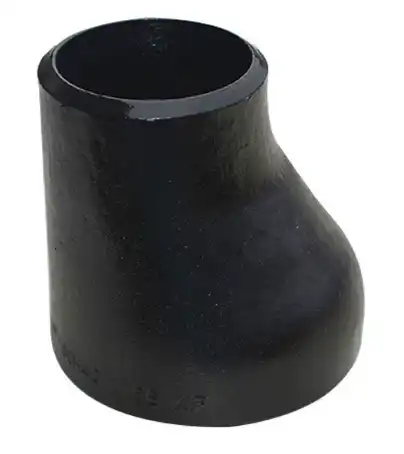
Benefits and Common Uses of Steel Concentric Pipe Reducers
Steel concentric pipe reducers provide technical benefits well beyond just changing diameters. The symmetrical design fundamentally changes flow dynamics in ways that can be measured to provide operational advantages across a wide range of industrial applications.
Performance Advantages in Piping Systems
The great advantage, perhaps the most important, of these fittings is the equalization of pressure. The gradual conical transition lets the fluid velocity gradually adapt to the changing cross-sectional area. This leads to a decrease in the production of turbulent eddies, which dissipate energy and increase erosion. The regulated velocity shift also minimizes pressure loss across the fitting from that of a sudden change in diameter, which increases overall system efficiency and decreases pumping needs. Mechanical strength properties further differentiate these components in demanding applications.
The reducer can handle internal pressure loads without forming stress concentrations due to consistent wall thickness distribution and centered design, which leads to improved hoop strength. This structural advantage is especially beneficial for high-pressure steam systems and hydraulic installations where failure of a component can cause serious safety issues. The symmetrical design offers better maintenance accessibility by facilitating installation alignment and reducing the complexity of field welding. The centered arrangement does not need rotating alignment in installation, lowering labor costs and the danger of incorrect assembly.
This ease of installation translates directly to shorter project schedules and a lower installed cost overall. Leak resistance is a result of the standard beveled end preparation and uniform wall thickness, which provide a constant weld quality all the way around the circle. When correctly installed using approved welding processes, these joints may reach dependability levels of more than 99.9% in well-maintained systems. This unique leak resistance is especially helpful for applications that handle hazardous or precious fluids where even little leakages cause severe environmental or economic implications.
Industry-Specific Applications
These reducers are often used in petroleum refining operations for vertical pump discharge applications where centerline alignment is essential for good mechanical balance and vibration reduction. When designed correctly, concentric reducers will be structurally sound to pressures in excess of 1,500 PSI without catastrophic failure and subsequent plant closure and safety occurrences. We’ve heard from our oil industry customers that fittings tend to last longer when they are correctly certified and fulfill API requirements.
Power-generating plants rely on these components in steam distribution systems where flow management is a critical element for turbine efficiency. The turbulence reduction offered by these reducers is especially useful to superheater circuits operating at high pressure, where flow disturbances encourage erosion-corrosion at high temperatures. Properly selected alloy steel grades are amenable to the dimensional stability required during the repeated heating and cooling cycles that occur during normal plant operation. Steel concentric pipe reducers are utilized in chemical processing plants within reactor feed systems and product transfer lines where predictable flow patterns ensure stable process conditions. Stainless steel variations are corrosion-resistant, survive severe chemical conditions, and preserve dimensional integrity for decades of continuous use.
Experienced suppliers such as Oudi provide material selection guidance to help process engineers specify the right grades that weigh initial cost versus lifecycle performance. Water treatment infrastructure increasingly specifies these fittings in vertical sludge transport applications where the symmetrical cone shape prevents solids accumulation that plagues eccentric designs when improperly oriented. Carbon steel reducers, when appropriately coated, resist corrosion and retain structural strength, with a 50-year design life that benefits municipal projects. Having supplied water conservancy projects in 40 countries, we know the specification needs for the tough installation environment.
Material and Cost Comparison for Steel Concentric Pipe Reducers
The choice of materials is a key factor in the initial cost of purchasing, as well as the total cost of ownership over time. By understanding the performance characteristics and the economic consequences of various steel grades, procurement managers may optimize requirements for the individual application.
Carbon Steel: Cost-Effective Durability
Carbon steel reducers to ASTM A234 WPB specifications are the most affordable choice for situations under 400°C where the danger of corrosion can be managed. The good weldability and the extensive availability of the material help to reduce unit costs and lead times. Wall thicknesses are available from Schedule 40 to XXS, meeting pressures as high as ANSI Class 2500, allowing adaptability to fit a broad range of applications. Life-cycle concerns include corrosion protection needs. External coating solutions add 15-25% to initial material costs but greatly increase service life in corrosive atmospheres. When conveying corrosive fluids, an internal coating or liner is essential. This raises the cost. Carbon steel reducers, when properly maintained and protected, often last 20-30 years in the right settings, providing a great return on investment.
Stainless Steel: Superior Corrosion Resistance
Grades of stainless steel like 304L and 316L are sold at a premium price, often 3-5 times that of a comparable carbon steel, but they remove the problem of corrosion in chemical processing and marine settings. The material does not need coatings because of its natural resistance to oxidation and chemical assault, saving costs of installation and maintenance. Over time, this cost advantage can be significant, especially in applications where corrosion-related failures result in costly replacement costs and lost production. Grade 316L, with its higher molybdenum content, offers better resistance to pitting and crevice corrosion in chlorinated environments and is well worth the 20-30% price premium over 304L in coastal installations and chlorinated water applications. The material has sufficient strength up to 600 deg C, therefore enabling use in intermediate temperature steam systems where carbon steel cannot be used. Procurement managers should specify stainless grades on the basis of whole-life-cycle costs rather than initial material price.
Alloy Steel: High-Temperature Performance
Carbon steel is not strong enough, and creep resistance is important for high-temperature applications, which is why alloy steel reducers are used. ASTM A234 WP11 or WP22 standards. These chrome-moly alloys retain their strength up to 650°C and are required for superheated steam systems and several petrochemical processes. Material prices are often intermediate between carbon and stainless steels, making them economically desirable for use at high temperatures. Requirements for heat treatment add to the complexity of production, but provide the microstructural stability needed for long-term creep resistance. Charpy impact tests at service temperature verify that the alloys possess sufficient toughness across the service temperature range to exclude brittle fracture failures. Alloy steel is a specialist process; therefore, lead times are often 2-4 weeks longer than carbon steel counterparts. Project scheduling has to include this, and prepare for it accordingly.
How to Select and Procure Steel Concentric Pipe Reducers for Your Projects
Effective procurement starts with a well-defined set of technical criteria that link component specifications with real operating circumstances. It systematically reduces expensive specification mistakes and ensures the performance objectives for the supplied components are met.
Technical Specification Development
The correct choice of a Steel Concentric Pipe Reducer depends on the size compatibility. Engineers are required to estimate the requirements for major and minor diameters properly, and these dimensions must correlate to the established pipe nominal sizes. ASME B16.9 sets forth face-to-face proportions based on the bigger pipe diameter to allow one manufacturer’s product to be interchanged with another’s. Matching schedule numbers to the connecting pipe prevents different wall thicknesses that complicate the welding process and can cause stress concentration points. Pressure and temperature ratings should be based on maximum expected conditions of normal operation, upset conditions, and potential emergencies. Design regulations, such as ASME B31.3 for process piping or B31.1 for power piping, give mathematical techniques to determine the needed wall thickness based on internal pressure, allowed stress, and corrosion allowance. Material type selection is closely related to permitted stress levels, making this an iterative specification process that balances performance objectives against economic restrictions.
Supplier Evaluation and Quality Verification
If you work with manufacturers who have the right quality certifications, you know that the items you get will be to spec. An ISO 9001 certification indicates that a supplier has systematic systems in place for managing quality, including design, manufacturing, and inspection operations. Oudi is proud to hold the People’s Republic of China special equipment manufacturing license, demonstrating compliance with the pressure vessel and piping component regulations required for safety-critical applications. A manufacturing capability assessment should include a review of the sophistication of the production equipment, availability of inspection technology, and whole-life-cycle specifications of the technical personnel. Advanced facilities with CNC machining centers may create finer dimensional tolerances than manual processes, which reduce high-temperature elements during installation. In-house NDT capabilities like ultrasonic and radiographic testing reduce reliance on third-party inspection services, boosting quality control responsiveness and lowering lead times.
OEM Customization Capabilities
Standard catalog sizes will handle most plumbing needs, but certain applications are so specific that they need bespoke face-to-face agreements with manufacturers who have technical experience and flexible manufacturing capabilities, which may provide access to customized solutions that maximize system performance. Standard customization demands such as unusual material grades, non-standard size combinations, and bespoke wall thickness variations may be accommodated by skilled manufacturers. Specification help throughout the specification process provides substantial value beyond component supply. Experienced engineering teams can assess the operating circumstances, propose the best grades of material, and anticipate any possible installation problems before the purchase is made. This consultation minimizes the risk of specification mistakes and guarantees smooth integration of the components we offer with your current systems. With decades of expertise in servicing the oil, chemical, natural gas, and water conservancy sectors, Oudi’s technical team offers specification advice that considers the problems of real-world installation.
Leading Manufacturers and Procurement Strategies
There are many providers of pipe reducers in the worldwide market with different capabilities, quality standards, and service levels. Savvy buyers use systematic selection criteria to discover manufacturing partners that can supply consistent quality and dependable service.
Quality Certification and Compliance
The minimum criterion for renowned producers is to comply with international standards. Products made to ASME B16.9 dimensional requirements and ASTM material specifications provide conformity with international design codes. API certifications are a proven way of demonstrating knowledge in the needs of the petroleum sector, where safety and dependability cannot be compromised. Regular audits by independent third parties are necessary to provide an objective verification of the efficacy of the quality systems. Leading manufacturers provide quality control that exceeds minimal standard criteria, beyond baseline certifications. The frequency of dimensional inspections, NDT sample rates, and mechanical testing techniques are what distinguish the market leaders from the mediocre suppliers. Procurement managers have confidence that delivered products will meet performance expectations, as transparent quality documentation proves these enhanced controls. Manufacturing facility audits conducted by qualified personnel uncover significant details about real-life production practices and quality culture. Seeing how equipment is kept and how clean it is, how materials are handled, and how the staff is trained. All of this tells you something that a piece of paper can not. Many smart buyers have approved supplier lists based on successful audit results, not just provided data.
Oudi: Your Trusted Partner Since 1998
For over 20 years, Cangzhou Oudi Pipe Manufacture Co., Ltd. has been serving industries throughout the world and has gained a reputation for quality excellence and customer service that sets us apart from the competitive pipe fitting market. We are strategically situated in the industrial zone of Mengcun Hui Autonomous County, which provides us with superior access to raw materials and transportation infrastructure. We are close to Tianjin Port, enabling efficient international shipping to customers in 40 countries and regions. Our manufacturing capabilities cover the entire range of carbon steel, stainless steel, and alloy steel pipe fittings, including steel concentric pipe reducers, reducers, flanges, elbows, tees, and caps. The wide choice of products allows consumers to consolidate purchasing with a single, trusted source, making supply chain management easier and delivery coordination more efficient. With the capacity to produce 16,000 tons per year and a large inventory, we are able to meet urgent requirements for small lots as well as large-volume project commitments with consistent reliability.
Procurement Best Practices
Competitive bidding from qualified vendors ensures cost transparency while maintaining quality standards. Requests for quote packages should contain detailed technical specifications, quality requirements, delivery timelines, and commercial terms to allow the production of accurate bids. Quotes should not be judged on unit price alone, but rather on total landed cost including shipping, tariffs, and inventory carrying expenses. Building long-term supplier relationships creates value beyond the savings of individual transactions. Preferred suppliers frequently give priority scheduling in capacity-constrained situations, technical help for new applications, and flexible commercial terms that decrease procurement administrative overhead. Annual volume agreements provide access to preferred pricing tiers that enhance project economics. Just-in-time delivery coordination reduces inventory investment while maintaining material availability along with construction timetables. If project timeframes are communicated early in the procurement process, suppliers can schedule production and allocate logistical capacity. Having buffer stocks of important products guards against unforeseen delays without investing too much in inventories.
Conclusion
Steel concentric pipe reducers are a critical part of industrial piping systems, providing a smooth transition in diameter while preserving flow integrity and structural dependability. The choice of material among carbon, stainless, and alloy steel grades must balance initial cost against the lifespan performance needs dictated by the working circumstances. To successfully acquire, you need to have well-defined technical criteria, an evaluation of supplier capabilities, and work with manufacturers who have demonstrated quality certifications and experience. The symmetrical design benefits of concentric reducers maximize performance in vertical configurations in petroleum, chemical, power-generating, and water infrastructure applications. Selecting well-certified components from recognized sources assures system safety, lowers maintenance costs, and maintains long-term operating efficiency.
FAQ
What factors most significantly influence the service life of steel concentric pipe reducers?
Material quality forms the foundation of component longevity, with properly selected grades resisting corrosion, maintaining strength at operating temperatures, and withstanding cyclic loading without fatigue failure. Operating conditions, including pressure, temperature, flow velocity, and fluid chemistry, determine actual service environment severity. Maintenance practices such as regular inspection, protective coating renewal, and prompt repair of minor damage prevent small issues from progressing to major failures. Properly specified and maintained reducers routinely achieve 20- 30-year service lives in suitable applications.
Can steel concentric pipe reducers handle high-temperature steam applications?
Alloy steel grades manufactured to ASTM A234 WP11 or WP22 specifications maintain adequate strength and creep resistance at temperatures approaching 650°C, making them well-suited for superheated steam service. Heat treatment processes, including normalizing and tempering, develop the microstructure necessary for long-term dimensional stability under sustained thermal exposure. Material certification documentation should confirm heat treatment completion and verify Charpy impact toughness at operating temperature to ensure suitability for specific service conditions.
How can I verify that a supplier's quality standards meet project requirements?
Request copies of current ISO 9001 certification and relevant manufacturing licenses demonstrating regulatory compliance. Review sample material test reports, dimensional inspection records, and NDT documentation to assess quality system effectiveness. Conduct facility audits examining production equipment, inspection capabilities, and requests for quality control procedures. Verify that the manufacturer maintains material traceability systems linking finished products to raw material heat numbers. Reputable suppliers like Oudi welcome customer audits and provide transparent access to quality documentation supporting procurement decisions.
Partner with Oudi for Premium Steel Concentric Pipe Reducer Solutions
Sourcing quality pipe fittings demands a supplier combining manufacturing excellence with responsive customer service. Oudi brings over 25 years of specialized experience producing carbon steel, stainless steel, and alloy steel reducers meeting ASME B16.9 and ASTM material standards. Our ISO 99001-certifiedquality management system and special equipment manufacturing license provide assurance that every component leaving our 66,600 square meter facility meets rigorous performance specifications. Whether you need standard catalog items or custom OEM solutions, our engineering team stands ready to support your project requirements with technical expertise and competitive pricing. Contact us today at oudi-04@oudiguandao.com to discuss your pipe reducer requirements and discover why over 300 customers across 40 countries trust Oudi as their preferred pipe fitting manufacturer.
References
1. American Society of Mechanical Engineers. (2018). ASME B16.9: Factory-Made Wrought Buttwelding Fittings. New York: ASME Press.
2. American Society for Testing and Materials. (2021). ASTM A234/A234M: Standard Specification for Piping Fittings of Wrought Carbon Steel and Alloy Steel for Moderate and High Temperature Service. West Conshohocken: ASTM International.
3. Mohitpour, M., Golshan, H., & Murray, A. (2007). Pipeline Design & Construction: A Practical Approach (3rd ed.). New York: ASME Press.
4. Nayyar, M. L. (2000). Piping Handbook (7th ed.). New York: McGraw-Hill Professional.
5. Singh, R. K. (2017). Process Piping Design Handbook: Volume One - The Fundamentals of Piping Design. Houston: Gulf Professional Publishing.
6. Zaidi, A. H. (2012). A Working Guide to Process Equipment (3rd ed.). New York: McGraw-Hill Education.

Need help finding the right solution with our experts. Please contact us.

SINCE 1998 Your Reliable Pipeline Manufacturer



