Pipe Tee Fittings in Petrochemical and Power Plant Applications
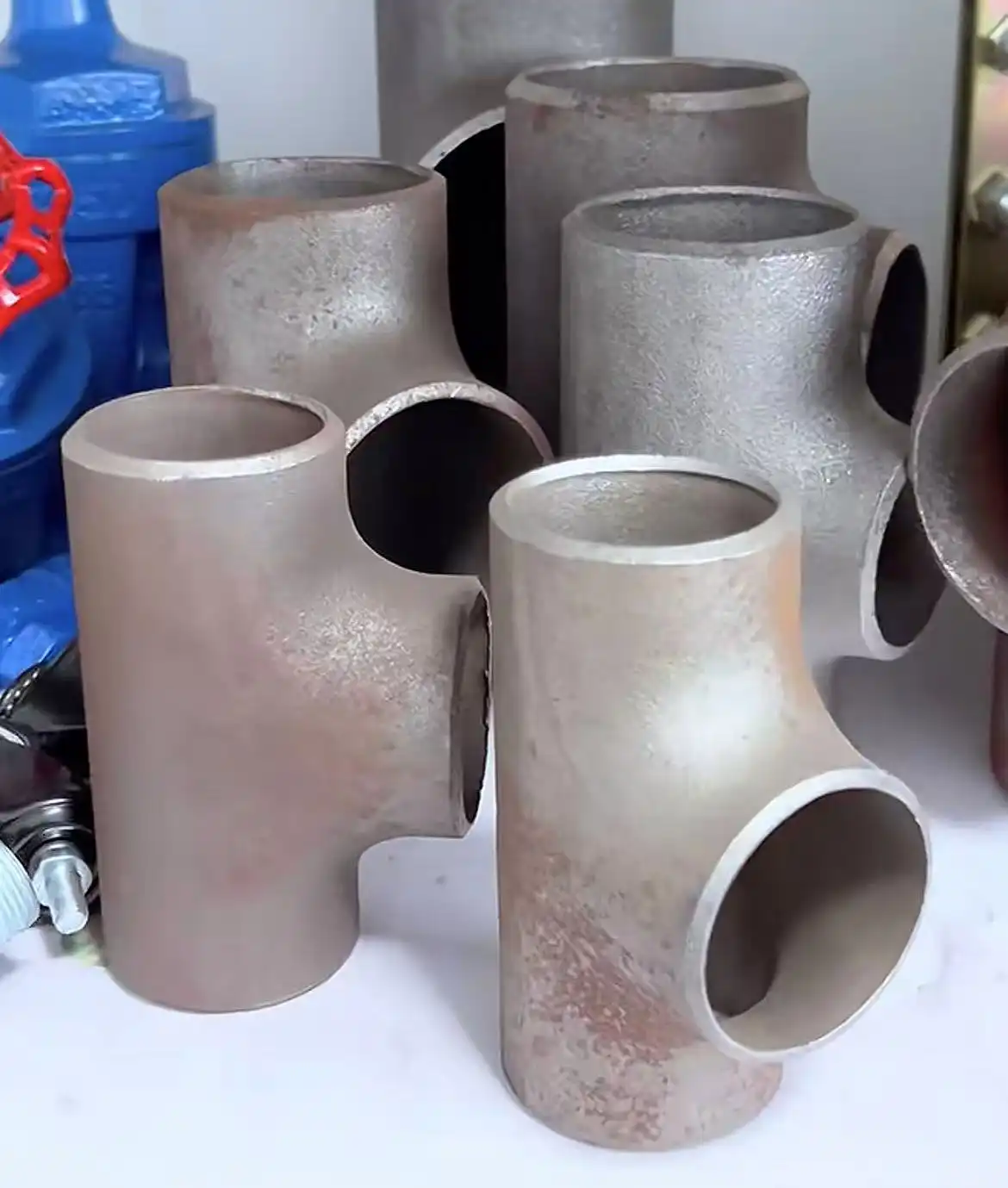
In petrochemical facilities and power plants, piping systems must move liquids, gases, steam, cooling water, and other process media between equipment, headers, and auxiliary systems under demanding operating conditions. A pipe tee provides a practical way to create a branch connection from a main pipeline, allowing the piping layout to divide or combine flow without introducing a separate section of pipe and multiple fittings. Depending on the design, the fitting may be an equal tee, where the branch and run have the same nominal size, or a reducing tee, where the branch is smaller than the main run. For projects that require dependable connections under pressure and temperature, industrial pipe tees must be selected according to more than nominal pipe size alone. Material grade, wall thickness, forming method, end preparation, design temperature, process medium, applicable piping code, inspection requirements, and corrosion conditions all influence whether a tee is suitable for service. Factory-made butt-welding tees are commonly specified for process and power piping because the welded connection can provide a continuous piping system when properly designed, fabricated, welded, and inspected. In petrochemical service, the fitting may be exposed to hydrocarbons, corrosive compounds, elevated temperatures, and cyclic operating conditions. Power plant piping introduces a different combination of requirements, particularly in steam, feedwater, cooling-water, and condensate systems. For this reason, the right tee is not simply the one that matches the pipe diameter. It needs to fit the mechanical, thermal, material, and fabrication requirements of the complete piping system.
How Should Pipe Tees Be Selected for Petrochemical Piping Systems?
Match the Material to the Process Medium and Design Conditions
Material selection should begin with the actual service rather than with a general preference for stainless steel or carbon steel. A tee used on a dry utility line may have very different material requirements from one carrying hot hydrocarbon, sour service fluids, chlorides, or other aggressive media.
Carbon steel is widely used where its mechanical properties, temperature range, and corrosion allowance are appropriate for the service. For higher corrosion resistance, stainless steels or alloy materials may be considered. In particularly demanding environments, nickel alloys and other corrosion-resistant materials can be specified, but the decision should be based on the chemical composition of the medium, operating temperature, pressure, corrosion mechanism, and project specifications rather than on the material name alone.
For example, ASTM A234/A234M covers wrought carbon steel and alloy steel fittings for pressure piping and pressure-vessel applications at moderate and elevated temperatures. The specification addresses both seamless and welded construction and includes requirements associated with manufacturing and testing.
Material compatibility also needs to be considered alongside the pipe, valves, flanges, and welding procedure. A tee with an appropriate nominal grade may still create a project problem if its material, weldability, or mechanical properties are inconsistent with the connected piping components.
Check Pressure, Temperature, and Wall Thickness Together
Pressure and temperature should be evaluated as a combined design condition. A tee that is suitable at ambient temperature may have different allowable conditions at elevated temperatures, and the actual rating cannot be determined from a pressure class label alone.
Engineers normally consider the design pressure, design temperature, pipe schedule or wall thickness, material specification, and applicable piping code when specifying the fitting. The selected tee must also accommodate the mechanical loads transmitted through the piping system, including thermal expansion, vibration, support reactions, and other loads identified during piping design.
Wall thickness deserves particular attention in petrochemical service. Standard schedules such as STD, XS, SCH 40, SCH 80, SCH 160, and XXS may be available depending on the product range and applicable standard, but the required thickness should follow the engineering specification rather than being selected simply because it is commonly stocked. The manufacturer’s product information, for example, lists multiple wall designations and both equal and reducing tee configurations.
Use the correct standard for the fitting and piping system
Standards should be treated as part of the engineering specification, not as a generic quality label. ASME B16.9 is the relevant dimensional and general product standard for factory-made wrought butt-welding fittings, including tees. ASME currently lists B16.9-2024 as the applicable edition.
Material requirements may come from a separate ASTM specification. For carbon and alloy steel fittings used in moderate- and high-temperature service, ASTM A234/A234M is one important example. ASTM also maintains separate specifications for other material groups and service conditions.
The piping design code is another layer. Petrochemical process piping may fall under ASME B31.3, while power piping may be designed under ASME B31.1, depending on the system and project requirements. These codes should not be confused with the product standard for the tee itself.
API standards can also appear in petroleum and gas projects, but their applicability depends on the equipment and service. API Spec 5L, for example, specifies requirements for line pipe rather than serving as a general dimensional standard for butt-welding tees. API published its 47th edition of Spec 5L in June 2026 and continues to identify it as the line pipe specification.
This distinction is important when preparing a purchase specification for industrial pipe tees because a project may require compliance with several standards at the same time, with each standard covering a different aspect of the product or piping system.
Where Are Industrial Pipe Tees Used in Power Plant Piping?
Steam and High-Temperature Piping
Steam systems place demanding requirements on fittings because temperature, pressure, thermal expansion, and cyclic operation can all influence piping integrity. Tees may be installed where a main steam or auxiliary steam line needs to supply another branch, connect to associated equipment, or divide flow between sections of the plant.
In these applications, the tee material and wall thickness need to be compatible with the connected pipe and the design conditions. Welding quality is equally important because the tee becomes part of the pressure boundary after installation. The design should also account for thermal movement and the stresses that can develop around branch connections.
A suitable tee therefore supports the piping arrangement, but its performance depends on the complete system. Supports, anchors, welds, valves, insulation, expansion arrangements, and connected equipment all contribute to the reliability of the finished installation.
Feedwater, Condensate, and Cooling-Water Systems
Not every power plant application involves extreme temperatures. Feedwater, condensate, service water, and cooling-water systems can also require a large number of branch connections, often across extensive pipe networks.
The selection criteria in these systems may place greater emphasis on corrosion resistance, erosion, flow conditions, water chemistry, and maintainability. Cooling-water systems, for example, can experience corrosion or deposits depending on water quality and treatment. A material that is appropriate for dry steam service should not automatically be assumed to be suitable for every water system.
Industrial pipe tees can be used to connect auxiliary equipment, split flow to different branches, or integrate additional sections of piping. When the plant layout is designed with future maintenance and equipment replacement in mind, these connections can also make the overall piping arrangement easier to modify.
Drain, Vent, Sampling, and Auxiliary Branch Connections
Branch connections are common throughout a power plant, but the function of the branch should be clearly defined during design. A tee may provide the basic connection for a drain, vent, instrument line, sampling arrangement, or auxiliary process line, while valves and other components provide the actual isolation or control function.
This distinction matters because a tee itself does not automatically provide inspection or maintenance access. If a branch is intended for sampling or instrumentation, the complete branch assembly must be designed with the appropriate valve, instrument connection, accessibility, and isolation requirements.
This approach is more practical than treating every tee as an “access fitting.” It also helps engineers evaluate the complete assembly rather than judging the fitting independently from the equipment connected to it.
What Design Details Matter When Ordering Industrial Pipe Tees?
Equal Tees and Reducing Tees
One of the first decisions is whether the application requires an equal tee or a reducing tee. An equal tee has the same nominal size on the run and branch, while a reducing tee allows a smaller branch to be connected to a larger main line.
The choice of industrial pipe tees affects the piping layout, flow distribution, welding dimensions, and downstream equipment connection. A reducing tee may be preferable when the branch flow requirement is lower than the main-line flow, while an equal tee may be appropriate when the branch and run have matching nominal sizes.
The supplier should receive clear information about the run size and branch size rather than simply being told the overall pipe diameter. This is particularly important for projects containing multiple tee configurations because visually similar fittings can have significantly different dimensions.
Seamless or Welded Construction
The construction method should be considered in relation to size, material, standard, and project requirements. The available product range may include seamless tees in smaller sizes and welded construction for larger sizes, although the exact manufacturing range depends on the supplier and applicable specification.
The manufacturing route can influence inspection, forming, welding, heat treatment, and documentation requirements. ASTM A234/A234M, for example, covers wrought fittings of seamless and welded construction and includes requirements relating to forming and testing.
For a critical petrochemical or power plant project, the purchase specification should clearly identify whether seamless or welded construction is required and what inspection documentation must accompany the product.
End Preparation and Dimensional Control
Butt-welding tees require proper end preparation so they can be aligned and welded to the connecting pipe. End dimensions, center-to-end dimensions, outside diameter, wall thickness, and tolerances therefore matter during fabrication and installation.
ASME B16.9 provides a recognized framework for factory-made wrought butt-welding fittings. The standard is intended to address dimensions and related product requirements rather than acting as a complete piping design code.
For procurement teams, dimensional documentation is valuable because even a fitting that meets the nominal size designation can create installation problems if dimensions are inconsistent with the project drawings or connected piping.
How Can Quality Control Reduce Risk in Petrochemical and Power Plant Applications?
Material Verification and Traceability
Quality control should start with the material certificate and heat identification. For pressure piping, traceability helps connect the finished fitting with its material source and applicable specification.
Depending on the project requirements, documentation may include the material test certificate, chemical composition, mechanical test results, heat number, manufacturing records, dimensional inspection, and other quality documents. ASTM requirements for wrought steel fittings can include chemical analysis and mechanical testing, while additional inspection may be specified by the purchaser.
This documentation becomes especially important when the piping system is subject to strict inspection or when the plant owner requires full material traceability throughout fabrication and installation.
Testing and Non-Destructive Examination
The required inspection program should be determined by the applicable specification, piping code, purchase order, and project quality plan. Depending on the application, examinations may include visual and dimensional inspection, hardness testing, hydrostatic testing, radiographic examination, ultrasonic testing, or other non-destructive examination methods.
Not every industrial pipe tees requires the same level of examination. A general utility line and a critical high-temperature process line may have very different inspection requirements. A good procurement specification therefore identifies the required testing level instead of using a vague statement such as “high-quality inspection.”
Heat Treatment and Manufacturing Control
Manufacturing processes can affect the mechanical properties and dimensional stability of a fitting. Forming, welding, heat treatment, machining, and cooling procedures need to be controlled according to the applicable material and product requirements.
ASTM A234/A234M specifically addresses manufacturing of wrought carbon and alloy steel fittings and includes requirements related to forming and testing.
For buyers, this means that supplier evaluation should look beyond the final appearance of the tee. Production records, material traceability, test reports, inspection procedures, and the supplier’s ability to manufacture consistently against the specified standard are all relevant when assessing a critical component.
How Should Buyers Specify Industrial Pipe Tees for a Project?
A clear purchase specification reduces clarification cycles between the engineering team and the supplier. Instead of requesting only “carbon steel pipe tees,” the inquiry should identify the information necessary to establish the correct product.
The basic specification normally starts with the tee configuration and size, followed by the material grade, wall thickness or schedule, end connection, applicable product standard, design pressure, design temperature, and service medium. For petrochemical applications, the purchaser may also need to identify corrosion conditions, sour service requirements, impact testing, NDE levels, heat treatment requirements, coating or surface treatment, and documentation requirements.
For power plant projects, the specification may additionally need to reflect the requirements of the applicable power piping code, particularly for steam and high-temperature systems. ASME identifies B31.1-2024 as its power piping code and B31.3-2024 as its process piping code in its current standards listings.
Supplier capability should also be evaluated against the actual project range. A supplier may offer small-diameter seamless tees as well as larger welded tees, but the buyer should confirm the specific size range, material grades, wall thicknesses, manufacturing method, standards, inspection capabilities, and documentation available for the order. The referenced product range, for example, lists pipe tees from 1/2" to 24" in seamless construction and 26" to 110" in welded construction, along with equal and reducing configurations and multiple wall designations.
This level of detail makes the inquiry more useful to both sides. It gives the supplier enough information to quote the correct fitting and gives the buyer a clearer basis for comparing technically equivalent offers.
Conclusion
Industrial pipe tees are relatively compact components, but their selection can influence the integrity and practicality of a much larger piping system. In petrochemical facilities, the focus is often on material compatibility, corrosion conditions, pressure-temperature requirements, and compliance with process piping specifications. In power plants, steam, feedwater, condensate, cooling water, and auxiliary systems can each impose different requirements on the same basic fitting design.
The most reliable approach is to select the tee as part of the complete piping system rather than treating it as an isolated component. Equal or reducing configuration, nominal size, wall thickness, material grade, manufacturing method, end preparation, applicable standards, inspection requirements, and operating conditions should all be considered before an order is placed.
For buyers evaluating industrial pipe tees, the supplier’s ability to provide the required size range, material documentation, dimensional control, testing, traceability, and project-specific compliance can be just as important as the fitting itself. A technically appropriate tee, manufactured and inspected against the correct specifications, provides a sound connection for the branch piping that supports petrochemical and power plant operations over the intended service life.
For more information about our high-quality industrial pipe tees and other piping solutions, please contact us at oudi-04@oudiguandao.com. Since 1998, Cangzhou Oudi Pipe Manufacture Co., Ltd. has been a leading manufacturer of carbon steel pipe fittings, valves, and flanges in China. Our commitment to quality and innovation ensures that we provide the best solutions for your petrochemical and power plant piping needs.
References
1. Smith, J. A., & Johnson, R. B. (2019). Advanced Materials for Pipe Fittings in Petrochemical Applications. Journal of Industrial Engineering, 45(3), 287-302.
2. Brown, L. C., et al. (2020). Computational Fluid Dynamics Analysis of Pipe Tee Designs for Power Plant Systems. Energy Procedia, 78, 1245-1260.
3. Thompson, E. M. (2018). Selection Criteria for Industrial Pipe Fittings in Harsh Environments. Chemical Engineering Progress, 114(9), 52-61.
4. Wilson, K. D., & Davis, S. R. (2021). Smart Monitoring Technologies for Piping Systems in Petrochemical Plants. International Journal of Process Engineering, 33(2), 175-190.
5. Lee, H. S., et al. (2017). Optimization of Pipe Tee Geometries for Improved Flow Characteristics. Applied Thermal Engineering, 112, 1521-1532.
6. Anderson, P. Q. (2020). Advancements in Corrosion-Resistant Coatings for Industrial Pipe Fittings. Materials Performance, 59(6), 30-37.

Need help finding the right solution with our experts. Please contact us.

SINCE 1998 Your Reliable Pipeline Manufacturer



