The Role of Forged Tee Fittings in High-Temperature Environments
High-temperature piping systems place demanding requirements on every component that carries or redirects a process medium. Steam, hot oil, hydrocarbons, and chemical fluids can expose fittings to elevated temperatures, internal pressure, thermal cycling, and corrosive conditions at the same time. In these systems, a tee fitting is more than a simple connection between three pipes. Its geometry affects flow direction, while its material, manufacturing process, wall thickness, and applicable pressure-temperature rating determine whether it can remain suitable for the intended service. This is where forged tee fittings can become an important option for industrial piping. Forging is the process of forming fittings by controlled plastic deformation rather than from the solidification of a molten metal. This production approach may give a good structural condition and constant material characteristics for high-pressure applications. However, the phrase "forged" should not be taken as a guarantee of high-temperature performance in itself. The actual applicability of a fitting relies on material grade, design circumstances, relevant standards, heat treatment, dimensions, and the process environment. This difference is key for engineers and procurement teams. Properly chosen forged tees may add to the mechanical dependability of a high-temperature piping system, but they must be selected as a part of an overall pipe design and not as a standalone component.
Why Forged Tee Fittings Are Considered for High-Temperature Piping?
Forging Can Improve Structural Consistency
One of the key distinctions between forged and cast fittings is the method of manufacture. In forging, a metal billet or other appropriate starting shape is distorted plastically by controlled force. This technique may be designed to generate a directed grain flow and generally uniform structure by correctly controlling the forging operation, heat treatment, and subsequent machining.
That quality is helpful in pressure-containing components since the fitting must endure stresses produced by both the internal pressure and the surrounding piping system. A tee also has a more complex geometry than a straight pipe, as the main run and branch induce variations in the stress distribution around the fitting.
A forging does not ensure that a component is fully devoid of flaws, nor that one fitting is better than all cast alternatives. The significance of the method is that it offers a manufacturing path suitable for the production of particular pressure fittings with regulated mechanical qualities. For example, ASTM A234/A234M covers wrought carbon steel and alloy steel fittings for pressure pipe and pressure vessel construction at moderate and increased temperatures, including specifications for material, forming, mechanical testing, and hydrostatic testing.
Mechanical Performance Matters as Temperature Rises
The behavior of pipe materials is affected by high temperature. Many metals lose strength at high temperatures, and long-term exposure may bring additional difficulties such as creep, thermal fatigue, and ductility changes. Hence, a fitting, which seems robust enough at room temperature, cannot be taken to be adequate for service at high temperatures.
Forged tee fittings are often requested for difficult applications, since the regulated manufacturing process may give dependable mechanical qualities provided the suitable material and heat treatment are specified. The crucial aspect is that fitting performance must be tested at the actual design temperature and not at ambient circumstances.
For example, a carbon steel fitting may be acceptable for one process temperature range, but not ideal for a much hotter service, whereas an alloy steel or stainless steel grade may provide a superior mix of strength and oxidation or corrosion resistance. Nickel-based alloys may be explored for even more difficult settings when the operating circumstances justify their special features.
Pressure Capacity Must Be Evaluated Together With Temperature
In a high-temperature pipe system, pressure and temperature cannot be assessed separately. The permissible pressure reduces with temperature for many materials because the mechanical strength of materials varies with temperature. Thus, the right rating is a function of material grade, fitting arrangement, size, wall thickness, and governing standard.
This is why it is not technically accurate to label all forged tee fittings merely as a “high-pressure” or “high-temperature” product. No matter how thoroughly the forging process was done, a forged fitting of a non-acceptable material is nonetheless non-acceptable for a given service.
For procurement teams, the most relevant concern is whether the proposed fitting has a documented pressure-temperature rating that fits the design requirements of the project. The seller should be able to provide the material specification, dimensional standard, pressure class, or other appropriate rating foundation and inspection criteria, rather than just a generic declaration that the product is forged.
How Forged and Cast Tee Fittings Differ Under Severe Service Conditions?
The Manufacturing Route Influences Material Integrity
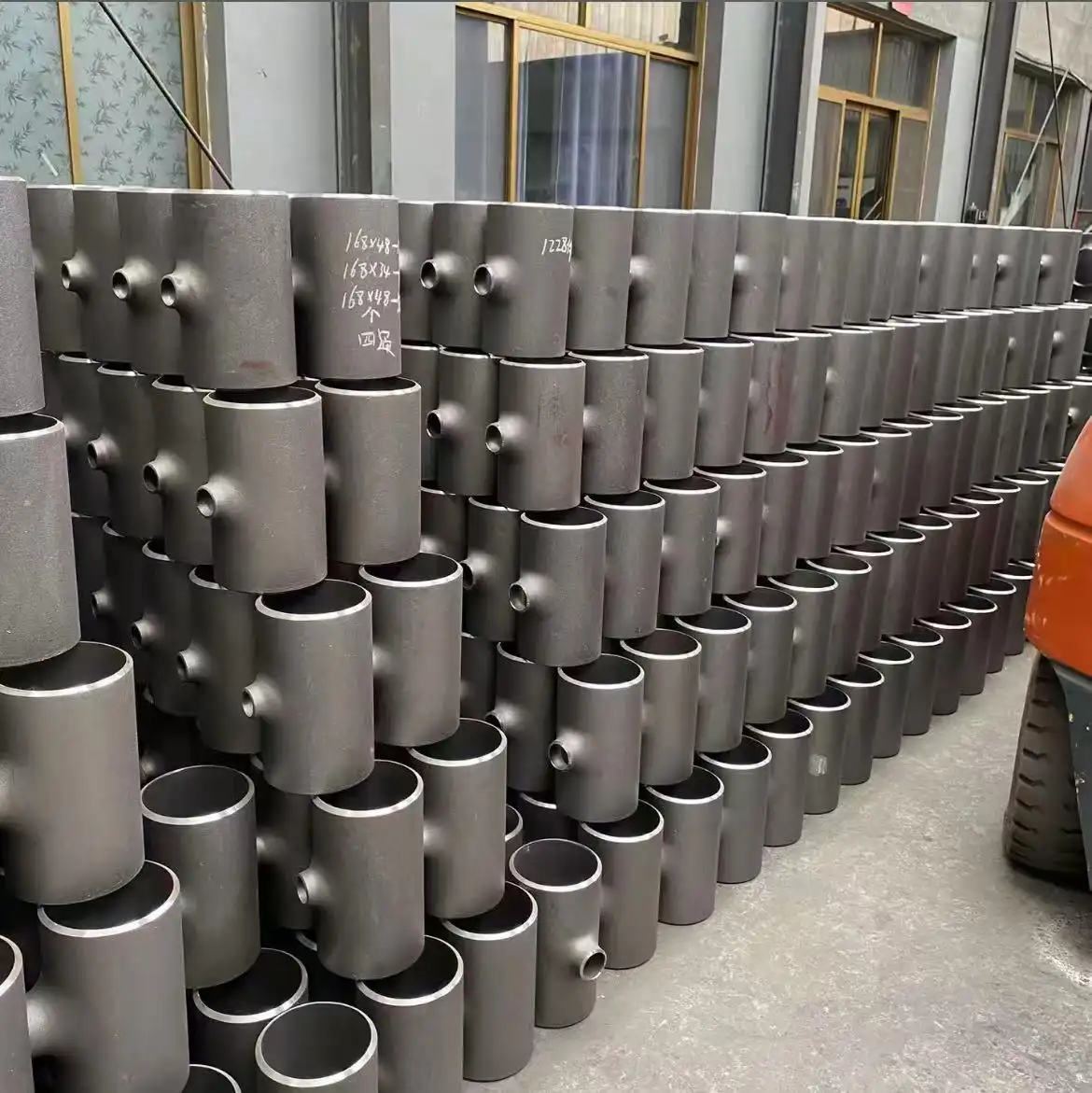
Forging and casting are two very distinct ways of making metal parts. Casting involves pouring molten metal into a mold and letting it solidify, while forging involves shaping solid metal by controlled deformation. Each procedure has its own pros and disadvantages.
One of the possible advantages of forging is the decrease of certain of the internal discontinuities associated with solidification, such as shrinkage-related flaws and gas porosity. Good grain flow and uniform mechanical characteristics may also be obtained with adequate forging. However, this should not be understood to indicate that all forged parts are inherently defect-free. Its quality is a function of the beginning material, forging temperature, amount of deformation, die design, heat treatment, machining, and inspection.
Cast fittings may be successfully built for challenging applications with the proper material, casting technique, inspection, and suitable standards. So the best analogy is not "forged is always good and cast is always bad." Instead, engineers should evaluate the production process against the needed geometry, material properties, operating circumstances, inspection criteria, and project specifications.
High-Temperature Service Requires More Than Room-Temperature Strength
A fitting in an ordinary utility line is in a different mechanical environment than a functioning fitting, continually at an increased temperature. Thermal expansion may shift the connecting pipes, and repeated startup/shutdown cycles can produce thermal strains. Long-term exposure to high temperature may also be a design challenge in certain applications due to creep.
The design of the tee is important since the branch connection affects the local stress distribution. The structural stability necessary may be provided by a well-specified forged tee, but the fitting still has to be incorporated with the overall pipe system. Support spacing, pipe flexibility, welding techniques, expansion allowances, and running cycles may all impact the actual stresses delivered to the fitting.
That is why the forged tee fittings are misleadingly referred to as “thermally stable” just because they are forged. A more practical check is to see whether the material used will have acceptable mechanical qualities over the whole temperature range and if the pipe system has been built to tolerate thermal movement.
Corrosion Resistance Comes Primarily From Material Selection
The high-temperature service may accelerate certain corrosion pathways; however, forging itself should not be considered a corrosion-resistant treatment. Carbon steel is still vulnerable to corrosion in a harsh environment, regardless of whether the component is forged or cast.
The proper material relies upon the process media and operating circumstances. If corrosion resistance is necessary, austenitic stainless steels may be used. If elevated-temperature strength is of more importance, alloy steels are beneficial. Nickel-based alloys may be considered for extremely severe chemical or high-temperature conditions.
Other service-specific dangers to consider while choosing include chloride exposure, sulfur-containing environments, hydrogen, acidic media, oxidation, and erosion. Corrosion and erosion may also occur together in certain situations, especially if high-velocity fluids include suspended particulates or corrosive substances.
Therefore, a procurement specification for forged tee fittings should specify the service medium and anticipated operating conditions, not just ask for a "high-temperature forged tee.” The fitting material must be suitable for the process fluid and the piping system and the predicted temperature and pressure ranges.
What Should Engineers Check Before Specifying Forged Tee Fittings?
Start With the Actual Material Grade
Material selection should be based on the complete service environment. Carbon steel, alloy steel, stainless steel, and nickel-based alloys can all have legitimate uses, but they are not interchangeable.
ASTM A234/A234M is specifically associated with wrought carbon steel and alloy steel fittings for moderate and elevated-temperature service, while ASTM A182/A182M includes forged or rolled alloy and stainless steel flanges, forged fittings, valves, and parts for high-temperature service.
This distinction matters because “stainless steel” or “alloy steel” is not a complete material specification. The exact grade, heat treatment condition, chemical composition, and mechanical requirements need to match the project specification.
For high-temperature applications, engineers should also consider whether the material is susceptible to creep, embrittlement, oxidation, thermal fatigue, or a particular form of corrosion under the expected operating conditions. A material that performs well in a dry steam line may not necessarily be the best choice for a chemical process containing corrosive contaminants.
Match the Fitting to the Connection Standard
The term "forged tee" can cover different product configurations, so the connection type must be identified before selecting the applicable dimensional standard.
ASME B16.11 covers forged fittings with socket-welding and threaded connections, while ASME B16.9 covers factory-made wrought butt-welding fittings. These standards should not be treated as interchangeable simply because both can be associated with tee fittings.
ASME B16.5 has a different scope. It addresses pipe flanges and flanged fittings and includes pressure-temperature ratings, materials, dimensions, tolerances, marking, and testing requirements. It should therefore not be described as a general standard for measuring the temperature and pressure capacity of forged tees.
This distinction is important when preparing a purchase order. The specification should identify the fitting type, connection method, size, material specification, dimensional standard, rating, and any supplementary inspection requirements. Clear documentation reduces the risk of receiving a product that technically matches the word “tee” but does not meet the intended piping configuration.
Consider Pressure, Temperature, and Thermal Cycling Together
The design temperature should represent the actual service condition rather than a normal operating temperature selected in isolation. Startup, shutdown, upset conditions, pressure fluctuations, and repeated thermal cycles may impose additional loads on the piping system.
For example, a steam line may operate at a relatively stable temperature during normal production but experience significant temperature changes during startup and shutdown. These changes can cause expansion and contraction throughout the piping network. The tee must therefore be compatible with the loads anticipated by the piping design.
Pressure-temperature ratings should also be checked against the applicable material and standard. ASME B16.5, for example, contains pressure-temperature rating requirements for the flanges and flanged fittings within its scope.
Rather than selecting a fitting solely because its nominal pressure class appears higher than the line pressure, engineers should confirm that the rating applies to the actual material and temperature range.
Review Manufacturing and Inspection Records
Quality documentation is especially important when fittings are destined for critical high-temperature service. A reliable supplier should be able to provide traceable information about the material and manufacturing process.
ASTM requirements for wrought fittings can include chemical analysis and mechanical testing, while common requirements under ASTM A960/A960M include tension, hardness, impact, and hydrostatic testing depending on the applicable product specification and purchase requirements.
Depending on the project, buyers may also require heat-treatment records, material test certificates, positive material identification, dimensional inspection, hardness verification, hydrostatic testing, or non-destructive examination. The exact inspection package should be based on the applicable specification and project requirements rather than automatically applying every possible test to every fitting.
This is where supplier transparency becomes valuable. A manufacturer should be able to explain how raw materials are identified, how forming and heat treatment are controlled, how dimensions are inspected, and how finished products are released. These details provide more useful evidence of manufacturing capability than broad claims such as “premium quality” or “high durability.”
Conclusion
Forged tee fittings can play an important role in high-temperature piping systems because their controlled manufacturing process can provide consistent material properties and a suitable structural basis for demanding pressure applications. However, their performance should never be judged by the word “forged” alone. Material grade, heat treatment, connection type, pressure-temperature rating, thermal cycling, corrosion environment, applicable standards, and inspection requirements all influence whether a particular fitting is suitable for service.
The distinction between forged and cast fittings also needs to be made carefully. Forging can reduce certain risks associated with cast structures and provide favorable grain flow, but it does not automatically guarantee higher temperature capability, corrosion resistance, or longer service life. Those characteristics must be established through the correct material specification and engineering evaluation.
For high-temperature applications, the best selection is therefore the fitting that matches the complete piping design and service environment. A supplier that can provide appropriate standards, traceable materials, controlled manufacturing, inspection records, and technical support can give engineers and purchasing teams greater confidence when specifying forged tee fittings for demanding industrial systems.
Oudi: Your Trusted Global Partner for High-Quality Pipe Solutions
Since 1998, Cangzhou Oudi Pipe Manufacture Co., Ltd. has focused on the production of carbon steel pipe fittings, valves, and flanges for industrial applications. Located in Mengcun Hui Autonomous County, known as an important pipe fitting manufacturing center in China, Oudi serves customers across sectors including chemical processing, petroleum, natural gas, water conservancy, construction, shipbuilding, and electric power.
The company states that it manufactures fittings to American, Japanese, German, and British standards and has an annual production capacity of approximately 16,000 tons. Its product range and manufacturing capabilities are intended to support customers with different piping configurations and project requirements.
For high-temperature piping projects, the value of a manufacturer is not limited to supplying a tee fitting with the correct nominal size. Material traceability, dimensional accuracy, manufacturing control, inspection documentation, and the ability to match products with the specified standard are equally important. Oudi's quality management system and manufacturing experience provide a foundation for supplying pipe fittings for industrial projects where consistency and documentation are important.
When selecting forged tee fittings for a high-temperature application, customers can provide the required material grade, size, connection type, operating temperature, design pressure, applicable standard, and inspection requirements so that the proposed product can be evaluated against the actual service conditions. This specification-driven approach helps avoid unsuitable substitutions and makes the final fitting selection more reliable for the complete piping system. For inquiries, please contact us at oudi-04@oudiguandao.com.
References
1. Smith, J. A., & Johnson, R. B. (2019). Advanced Materials for High-Temperature Piping Systems. Journal of Industrial Engineering, 45(3), 287-301.
2. Lee, S. H., et al. (2020). Comparative Analysis of Forged and Cast Fittings in Extreme Temperature Environments. International Journal of Pressure Vessels and Piping, 178, 104-118.
3. Brown, M. K. (2018). Material Selection Criteria for High-Temperature Forged Components. Materials Science and Technology, 34(9), 1056-1070.
4. Garcia, C., & Martinez, L. (2021). Advances in Manufacturing Processes for High-Temperature Resistant Fittings. Journal of Manufacturing Science and Engineering, 143(8), 081001.
5. Wilson, D. R., et al. (2017). Corrosion Behavior of Forged Tee Fittings in Aggressive High-Temperature Environments. Corrosion Science, 122, 53-67.
6. Thompson, A. J. (2020). Quality Control and Testing Methods for High-Performance Forged Fittings. NDT & E International, 109, 102192.

Need help finding the right solution with our experts. Please contact us.

SINCE 1998 Your Reliable Pipeline Manufacturer