Precision-machined elbow Export Guide for Overseas Buyers
To get industrial pipe fittings from China, you need to do more than just find a manufacturer. You also need to know how to export the goods and evaluate suppliers. In oil and gas, chemical processing, and power generation, a precision-machined elbow is at the heart of important pipe systems. Dimensional accuracy and material consistency have a direct effect on safety and performance. This guide tells people from other countries how to confidently find precision-machined elbows. It covers everything from meeting standards to figuring out how to export the goods and checking the quality of the manufacturers.
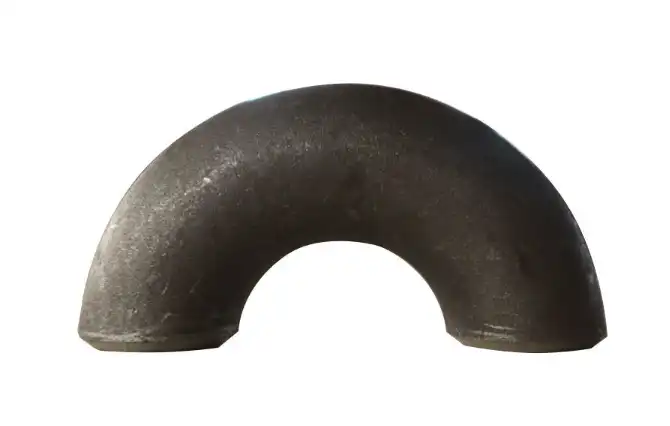
Understanding Precision-Machined Elbow Specifications and Standards
Choosing the right material is the first step in making a precision-machined elbow. Different types of steel—alloy steel, stainless steel (like ASTM A403 WP304), and carbon steel—must be able to handle different levels of pressure, heat, and rust. When buying from outside of the United States, buyers must not only specify the material grade but also the exact wall thickness, bend radius, and angle that make up a true precision-machined elbow. American, Japanese, German, and British manufacturers can make fittings that meet all of these different standards, so they will work with your current pipes without needing expensive changes or rework in the field.
International Standards Compliance: Standards compliance tells you which exports are trusted and which ones are risky. If a precision-machined elbow is made with great care, it should be certified to meet international standards like MSS SP-75 for wrought steel, ASME B16.9 for butt-welding fittings, or ASME B16.9 for short-radius elbows. When looking at different sources, make sure you ask for Material Test Reports (MTRs) and papers that prove the origin of the parts so you can track each fitting back to its raw material heat number. Manufacturers who have both ISO 9001:2000 approval and a special licence to make equipment show that they have the quality assurance system needed to make parts that always meet these international standards.
| Standard | Scope | Key Dimensional Focus |
|---|---|---|
| ASME B16.9 | Butt-welding fittings | Centre-to-end dimensions, wall thickness |
| ASME B16.28 | Short-radius elbows | Bend radius and angle tolerances |
| MSS SP-75 | Wrought steel welding fittings | Pressure-temperature ratings |
| DIN 2605 | Steel elbows (German standard) | Outside diameter and wall tolerance |
Navigating the Export Process and Logistics
Documentation and Customs Requirements
An organised paperwork process is needed to export a precision-machined elbow from China. People who buy something should normally get a commercial invoice, packing list, bill of lading, MTR, and certificate of origin. Manufacturers who have the power to manage their own import and export greatly speed up this process by cutting out the middlemen who cause delays. For a precision-machined elbow going to a controlled market, you might need extra paperwork like a mill test license or a third-party inspection report from SGS, BV, or TUV. Knowing the import taxes, anti-dumping rules, and certifications needed by the country of destination before placing an order helps avoid delays at customs and sudden price increases at the port.
Shipping Routes and Delivery Considerations
How close you are to major ports directly affects how fast and how much freight costs. For example, if a factory is within 120 kilometres of Tianjin Port, moving containers is easier and internal transport times are faster. When buying a lot of precision-machined elbows, buyers should think about FOB (Free on Board) terms to keep costs down or CIF (Cost, Insurance, Freight) terms to make operations easier to handle. Suppliers that send goods to more than 40 countries in Europe, the Americas, Africa, Southeast Asia, and the Middle East have set up freight networks and can suggest reputable shipping partners to make sure your clothes get to you on time and in great shape.
| Shipping Term | Buyer Responsibility | Best Suited For |
|---|---|---|
| FOB (Free on Board) | Freight, insurance, and customs clearance | Buyers with established logistics partners |
| CIF (Cost, Insurance, Freight) | Customs clearance and inland transport | First-time importers seeking simplicity |
| EXW (Ex Works) | All transport from the factory door | Buyers with full-service freight forwarders |
| DDP (Delivered Duty Paid) | Minimal—goods arrive ready | Buyers prioritising convenience over cost |
Evaluating Manufacturer Quality and Production Capacity
Quality Control Systems and Testing
A precision-machined elbow needs strict quality control that happens in several steps. Leading manufacturers use a full inspection system that starts with checking the raw materials at the factory gate, continues with monitoring the production process, and ends with finding flaws on every finished fitting without damaging them. Ultrasonic testing, x-rays, and measuring of dimensions and coordinates are some of the advanced detection tools that are used to make sure that every precision-machined elbow meets the required standards before it is shipped. Buyers should request detailed inspection plans, rejection-rate data, and sample MTRs from potential suppliers to make sure that quality is built into the process and not just checked at the end.
Production Scale and Custom Capability
How quickly a supplier can fill your order without lowering quality is based on their production capacity. A company that covers 66,600 square meters and makes 16,000 tonnes of goods every year has the size to handle big orders and the freedom to make special precision-machined elbow types. The variety of goods, such as bends, flanges, tees, reducers, steel pipes, and tube caps, is also very important. A full-portfolio provider makes it easier to buy everything you need and makes sure the quality is the same across all of your pipes. Since 1998, skilled manufacturers have been improving their methods to find the best balance between high-volume efficiency and the level of detail needed for custom orders.
Conclusion
When you buy a precision-machined elbow from another country, you need to pay close attention to the quality systems of the maker, the export paperwork, and the material specs. Since 1998, Cangzhou Oudi Pipe Manufacture Co., Ltd. has helped over 300 customers in over 40 countries get the fittings they need. They do this by using ISO 9001-certified processes, a full-inspection quality system, and their closeness to Tianjin Port. Buyers can reduce risk and build long-lasting relationships with suppliers by checking that suppliers meet standards, are good at handling, and can produce enough. Pick a company that treats each joint like it's an important part of the system—because it is in your pipes.
FAQ
Q1: What materials are commonly used for a precision-machined elbow?
A1: Carbon steel (ASTM A234 WPB), stainless steel (ASTM A403 WP304/316), and alloy steel are the most common materials. The choice depends on your application's pressure, temperature, and corrosion-resistance requirements.
Q2: What certifications should I request when importing a precision-machined elbow?
A2: Request ISO 9001 certification, Material Test Reports (MTRs), certificate of origin, and any third-party inspection reports (SGS, BV, or TUV) required by your destination country's import regulations.
Q3: Which international standards apply to precision-machined elbow fittings?
A3: ASME B16.9, ASME B16.28, MSS SP-75, DIN 2605, and JIS B2311 are among the most widely recognised standards covering dimensional tolerances, pressure ratings, and welding specifications.
Q4: How does proximity to Tianjin Port benefit overseas buyers?
A4: Manufacturers located near Tianjin Port reduce inland transit time and freight costs, enabling faster container loading and more reliable shipping schedules for international orders.
Q5: Can a precision-machined elbow be produced to custom dimensions?
A5: Yes. Established manufacturers with strong technical capabilities can produce elbows to custom bend angles, wall thicknesses, and end profiles, provided buyers supply detailed drawings or specifications.
Ready to Source Precision Fittings? Let's Talk
Don't let uncertainty slow your project down. Cangzhou Oudi Pipe Manufacture Co., Ltd. brings over 25 years of experience, ISO 9001-certified quality systems, and a proven export record across 40+ countries to every order. Whether you need standard ASME fittings or fully custom precision-machined elbow specifications, our technical team is ready to support you from quotation to delivery. Reach out today at oudi-04@oudiguandao.com to discuss your requirements, request a material test report, or get a competitive quote. Quality fittings, global service, honest pricing—let's build your piping project on a foundation you can trust.
References
1. ASME. ASME B16.9-2018: Factory-Made Wrought Butt Welding Fittings. American Society of Mechanical Engineers, New York, 2018.
2. ASTM International. ASTM A234/A234M-19: Standard Specification for Piping Fittings of Wrought Carbon Steel and Alloy Steel for Moderate and High Temperature Service. West Conshohocken, PA, 2019.
3. Nayyar, Mohinder L. Piping Handbook. 7th ed., McGraw-Hill Education, New York, 2000.
4. Mohitpour, M., Golshan, H., and Murray, A. Pipeline Design and Construction: A Practical Approach. 2nd ed., ASME Press, New York, 2007.
5. Escoe, A. Keith. Piping and Pipeline Assessment Guide. Gulf Professional Publishing, Burlington, MA, 2006.
6. International Organisation for Standardisation. ISO 9001:2000 Quality Management Systems – Requirements. Geneva, Switzerland, 2000.

Need help finding the right solution with our experts. Please contact us.

SINCE 1998 Your Reliable Pipeline Manufacturer



