Seamless Pipe Caps vs Welded Pipe Caps: Key Differences
Selecting a pipe cap is not simply a matter of choosing between a lower price and a higher price. The cap must match the piping material, design conditions, dimensional requirements, applicable standards, and inspection level of the system in which it will be installed. This becomes particularly important when engineers compare a seamless pipe cap with a welded pipe cap for industrial applications. Both products are designed to close the end of a pipe and can be manufactured for demanding service, but their production routes and quality considerations are different. In oil and gas facilities, petrochemical plants, power generation systems, chemical processing equipment, and other industrial piping applications, the manufacturing method can influence how a pipe cap is evaluated. A seamless design eliminates a welded seam in the body of the cap, while a welded cap is manufactured by forming a plate or another suitable material and joining sections by welding. However, the absence of a weld does not automatically make one product suitable for every application. The better choice depends on the complete operating and purchasing specification. Understanding the differences between these two types of pipe caps allows engineers and purchasing teams to compare products on technical requirements rather than relying on price or the word “seamless” alone.
How Seamless and Welded Pipe Caps Are Made?
Manufacturing Route of a Seamless Pipe Cap
A seamless pipe cap is commonly produced from seamless tubular material or another suitable steel starting material and then formed into the required end cap geometry. Depending on the product design and applicable specification, hot forming, pressing, or other controlled forming operations may be used. The important characteristic is that the finished body does not contain a longitudinal welded seam.
This continuous construction can simplify the evaluation of the cap because there is no body weld that needs to be assessed as part of the manufacturing process. It can also provide a relatively uniform material structure when the raw material, forming process, and heat treatment are properly controlled.
However, buyers should not assume that every seamless cap has identical mechanical properties. The material grade, manufacturing route, heat treatment, wall thickness, dimensions, and applicable standard still determine whether the finished component is appropriate for the intended service. For this reason, a supplier should provide product documentation that identifies the material and manufacturing requirements rather than describing the product simply as “seamless.”
For commonly used carbon steel, alloy steel, and stainless steel fittings, applicable specifications may include ASME B16.9 for dimensional requirements and ASTM material specifications such as ASTM A234, ASTM A403, or ASTM A420 when the corresponding material and service conditions apply. The correct specification should always be confirmed against the project requirements.
How Welded Pipe Caps Are Manufactured?
Welded pipe caps are generally manufactured from plate or other suitable flat material that is cut, formed, and welded into the required shape. The welding procedure becomes an important part of quality control because the joint must satisfy the applicable manufacturing and inspection requirements.
A properly manufactured welded cap is not necessarily a low-quality component. Modern forming and welding processes can produce fittings for demanding industrial applications when the material, welding procedure, heat treatment, dimensional control, and nondestructive examination are appropriately managed.
The key difference is therefore not simply that one product is “strong” and the other is “weak.” Instead, a welded pipe cap introduces a welded joint into the manufacturing route, which means buyers may need additional information about welding procedures, weld inspection, heat treatment, and applicable acceptance criteria.
Welded construction can also provide greater manufacturing flexibility for certain large-diameter or special-size requirements. This can make welded caps a practical option when standard seamless manufacturing is unavailable or when project specifications permit fabricated construction.
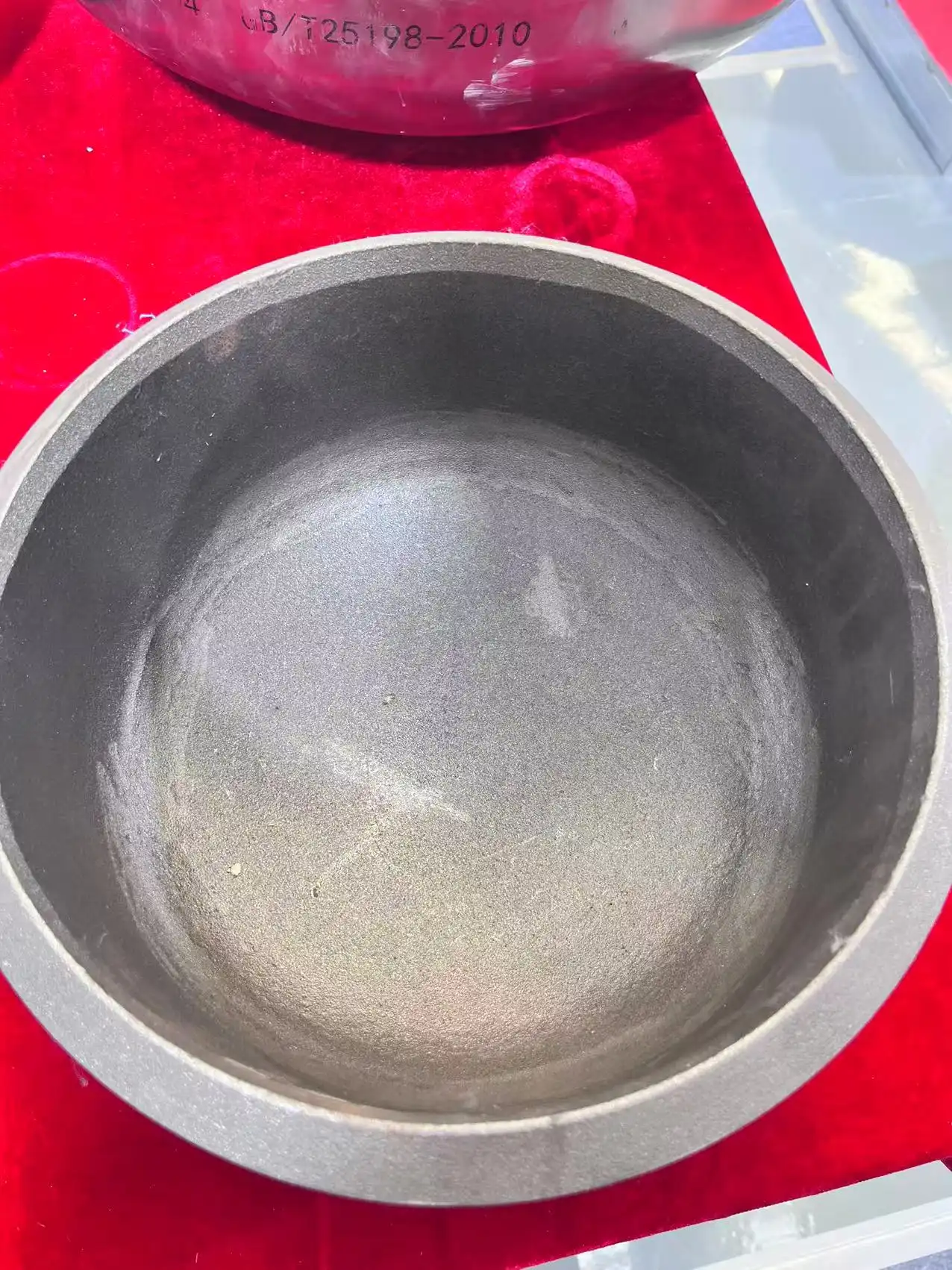
Where the Two Pipe Cap Designs Differ in Service?
Structural Performance Depends on More Than the Seam
A major advantage of a seamless pipe cap is the absence of a welded seam in the cap body. This can be valuable in applications where eliminating a body weld simplifies the quality assessment or where the project specification specifically calls for seamless construction.
Nevertheless, structural performance should be evaluated using the complete product specification. Design pressure, temperature, material grade, wall thickness, cap geometry, forming method, and heat treatment all influence performance. A seamless cap made from an unsuitable material or with inadequate wall thickness would not become suitable simply because it is seamless.
Welded pipe caps can also achieve reliable service when the weld and the finished fitting comply with the relevant requirements. For critical applications, the quality of the welding process and the extent of nondestructive examination become particularly important.
This distinction is useful for engineers because it shifts the decision away from a simplistic assumption that seamless construction is always superior. In practice, the right product is the one that satisfies the design specification and provides an appropriate level of manufacturing and inspection control.
Pressure Service Requires a Specification-Based Comparison
Pressure is one of the first factors that should be reviewed when selecting a pipe cap, but pressure alone does not determine whether a seamless or welded product should be used.
A seamless pipe cap may be selected for high-pressure piping because it eliminates the body weld and can be available in materials and dimensions suitable for demanding service. Applications may include process piping, refinery systems, high-pressure utility lines, and other installations where the project specification requires seamless fittings.
At the same time, welded caps can be used in pressure systems when their design, materials, welding, and inspection satisfy the applicable requirements. The purchaser should therefore avoid using a generic statement such as “seamless is always stronger” as the sole purchasing criterion.
A better approach is to give the supplier the pipe outside diameter, wall thickness, material grade, design pressure, design temperature, applicable standard, and inspection requirements. The supplier can then confirm whether the proposed cap is manufactured and tested for those conditions.
Temperature and Thermal Cycling Need Careful Evaluation
Temperature changes can create additional stresses in piping systems, particularly when equipment repeatedly moves between hot and cold operating conditions. A seamless pipe cap can be advantageous when the project specification favors a continuous body without a welded seam, but its temperature capability still depends heavily on the selected material and manufacturing condition.
For high-temperature service, buyers should check the allowable material properties at the actual design temperature rather than selecting the cap based only on its manufacturing type. Low temperature and cryogenic applications require the same level of care because toughness and material behavior at low temperatures can become critical considerations.
Welded caps can also be suitable for elevated or reduced temperature service when the selected material and welding procedure meet the applicable requirements. In applications involving severe thermal cycling, the quality of the weld, heat-affected zone, heat treatment, and inspection documentation may receive additional attention during engineering review.
Material Selection and Quality Control Matter Equally
Comparing Material Uniformity
A seamless manufacturing route avoids a welded joint within the main body of the cap, which can provide a more continuous material structure. This is one reason seamless products are often considered for applications where the project specification places particular emphasis on material continuity.
However, material uniformity should not be confused with corrosion resistance. A seamless carbon steel cap will not automatically resist corrosion better than a welded stainless steel cap. Corrosion performance is primarily related to the selected alloy, the process medium, temperature, pressure, surface condition, and operating environment.
For this reason, material selection should begin with the service conditions. Carbon steel may be appropriate for many general industrial systems, while stainless steel, alloy steel, duplex stainless steel, or nickel-based alloys may be considered when the process environment demands greater corrosion or temperature resistance.
Inspection Should Match the Risk of the Application
Both seamless and welded pipe caps require quality control. The appropriate inspection program depends on the product specification and the criticality of the service.
Visual inspection and dimensional inspection are basic checks for confirming surface condition and ensuring that the cap conforms to the required dimensions. Depending on the material and project requirements, nondestructive examination may include ultrasonic testing, radiographic testing, or magnetic particle testing. Other examinations may also be required by the applicable specification.
For welded caps, inspection of the weld area is particularly important because the weld is an integral part of the manufacturing process. For seamless caps, inspection still matters because defects can occur during forming, heat treatment, machining, or handling.
For critical projects, purchasers may also require a material test certificate, heat number traceability, chemical composition results, mechanical test data, heat treatment records, dimensional inspection reports, and NDT documentation. These records provide much more useful evidence of product quality than a supplier's general statement that the fitting is “high quality.”
Cost and Availability Can Change the Better Choice
Why Welded Pipe Caps May Be More Economical?
Welded pipe caps can offer a cost advantage in certain sizes and applications because plate-based manufacturing and fabrication can provide production flexibility. This can be particularly relevant for large-diameter products or projects where the specification permits welded construction.
For utility piping, water systems, building services, and other applications where the design requirements are moderate, a compliant welded cap may provide the required performance without the additional cost associated with a seamless product.
The lower purchase price should not, however, be considered in isolation. If a project requires extensive weld examination, special heat treatment, or additional documentation, the total procurement cost can become different from the initial quotation.
When a Seamless Pipe Cap Can Provide Better Long-Term Value?
A seamless pipe cap may have a higher purchase price, but the additional cost can be justified when seamless construction is required by the project specification or when the application places greater emphasis on eliminating a body weld.
For critical process systems, the cost of a fitting should also be considered alongside the potential consequences of leakage, unplanned maintenance, shutdowns, or replacement. This does not mean that seamless products always have a longer service life. Instead, the economic decision should consider whether the additional manufacturing and inspection requirements provide value for the specific service.
A good purchasing comparison should therefore evaluate the complete delivered cost, including testing, certification, lead time, inspection requirements, and compatibility with the rest of the piping system.
Selecting the Right Pipe Cap for the Application
Start With Design Conditions Rather Than Product Names
The most reliable way to select a pipe cap is to begin with the piping design. The pipe size and schedule establish important dimensional requirements, while design pressure and temperature determine the service conditions the fitting must withstand.
The process medium should also be considered because the fluid can influence material selection and corrosion requirements. A cap used in a water line may face very different material considerations from one installed in a refinery process line or a chemical processing system.
Engineers should also determine whether the project specification requires seamless construction, permits welded construction, or identifies a particular manufacturing standard. Once these requirements are established, the comparison between seamless and welded products becomes much more straightforward.
Match the Cap to the Project Standard
Dimensional compatibility is essential because the cap must fit the pipe or piping component to which it will be connected. The applicable fitting standard should be confirmed before an order is placed, particularly for projects involving different nominal pipe sizes, schedules, material grades, or international standards.
For example, ASME B16.9 is commonly referenced for factory-made wrought welding fittings, while ASTM specifications may define material and manufacturing requirements for particular alloy groups. The purchaser should confirm which combination applies to the project rather than assuming that one standard covers every aspect of the product.
This is also where an experienced supplier can add value. Instead of quoting only a product name, a capable manufacturer should be able to review the buyer's technical requirements and identify any mismatch between the requested cap and the intended piping system.
Conclusion
Both welded pipe caps and seamless pipe caps have vital functions in industrial piping systems, but they are not interchangeable items and should not be specified without considering the application requirements. Seamless construction may be selected when the project specification, service circumstances, or inspection philosophy requires seamless construction. A seamless design removes the body weld. In contrast, a welded cap may be a practical, cheap alternative if the production, welding, material, and inspection criteria comply with the appropriate standard.
The main thing is “seamless” must not be a shortcut to assessing the whole product. Material grade, wall thickness, dimensions, design pressure, design temperature, corrosion conditions, manufacturing route, heat treatment, and inspection documents all contribute to the applicability of a pipe cap.
The optimum selection method for engineers and buying teams is to begin by reviewing the actual operating circumstances and project requirements. Once those needs are determined, then the choosing of seamless vs. welded becomes a technical and commercial decision rather than a simple comparison of product names or pricing. Selecting a manufacturer that can supply traceable materials, adequate testing, exact measurements, and thorough documentation will further decrease the procurement risk and assist assure that the chosen pipe cap will work reliably over the planned service life.
For master direction on selecting the right pipe caps for your application, contact Cangzhou Oudi Pipe Fabrication Co., Ltd. at oudi-04@oudiguandao.com.
FAQ
1. What is the main difference between seamless and welded pipe caps?
Seamless pipe caps are manufactured from a single piece of metal, while welded caps are made by joining cut metal sheets.
2. Are seamless pipe caps always better than welded ones?
Not necessarily. Seamless caps are generally superior for high-pressure and extreme temperature applications, but welded caps can be suitable for many standard uses.
3. Why are seamless pipe caps more expensive?
The manufacturing process for seamless caps is more complex and requires specialized equipment, contributing to higher costs.
4. How do I choose between seamless and welded pipe caps?
Consider factors such as pressure requirements, temperature conditions, corrosion resistance, and specific industry standards for your application.
References
1. Smith, J. (2019). Pipe Fitting Selection: A Comprehensive Guide. Journal of Industrial Engineering, 45(3), 78-92.
2. Johnson, R. & Williams, T. (2020). Advances in Seamless Pipe Cap Manufacturing. International Journal of Materials Science, 12(2), 145-160.
3. Brown, A. et al. (2018). Comparative Analysis of Seamless and Welded Pipe Caps in High-Pressure Applications. Journal of Pressure Vessel Technology, 140(4), 041302.
4. Lee, S. & Park, H. (2021). Temperature Effects on Pipe Cap Performance: Seamless vs. Welded. Materials Science and Engineering: A, 812, 141085.
5. Thompson, C. (2017). Cost-Benefit Analysis of Pipe Cap Selection in Industrial Settings. Industrial Economics Review, 29(1), 55-70.
6. Garcia, M. et al. (2022). Regulatory Considerations for Pipe Cap Selection in Critical Industries. Journal of Engineering Standards and Compliance, 8(3), 201-215.

Need help finding the right solution with our experts. Please contact us.

SINCE 1998 Your Reliable Pipeline Manufacturer