Seamless vs Welded Fittings: A Detailed Grade Comparison
The primary distinction between seamless pipe fittings and welded alternatives rests in the production processes and structural integrity of the two types of pipe fittings. Pipe fittings that are seamless are made from solid billets that do not have any joints, which provides them with higher strength and resilience to pressure. In order to generate welded fittings, materials are joined together by welding operations. This makes welded fittings more cost-effective, but it also makes them potentially less resilient when subjected to extreme conditions. In industrial applications, where performance, safety, and lifespan are the factors that define the success of a project, having a solid understanding of these distinctions becomes absolutely necessary.

Understanding the Core Manufacturing Differences
Seamless pipe fittings are produced using different procedures, which results in diverse properties that have an effect on the industrial applications of these fittings. Solid metal billets are the starting point for seamless steel fittings, which are then subjected to techniques such as hot extrusion or piercing. Through the use of this manufacturing process, possible weak areas that could arise at weld seams are successfully eliminated.
Flat steel plates or strips are used in the production of welded fittings. These plates or strips are then shaped into shape and linked along seam lines. The process of welding involves fusion bonding, which can result in the formation of heat-affected zones (HAZ), which might potentially change the metallurgical properties of the material of interest.
Three core manufacturing differences include:
- Material uniformity - Seamless fittings maintain consistent grain structure throughout
- Stress distribution - No weld seams means more even stress handling
- Production complexity - Seamless manufacturing requires specialized equipment and higher temperatures
There is a major difference in the quality control criteria across these different manufacturing techniques. If you want to fabricate seamless pipe, you need to maintain accurate temperature control during the formation process. On the other hand, welded fittings require intensive inspection of the weld seams to check for problems such as porosity or incomplete penetration.
When you need fittings for high-pressure applications that surpass 15,000 PSI, seamless choices are more suitable for retaining structural integrity under harsh conditions. This is because seamless options are used more frequently.
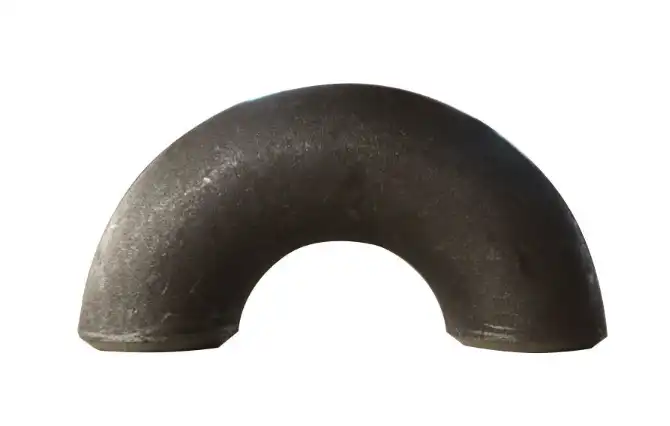
Pressure Rating and Performance Analysis
There is a discernible difference in the pressure-handling capabilities of seamless fittings and welded fittings, as demonstrated by their superior performance characteristics. The results of tests conducted in accordance with the ASME B31.3 standards reveal that seamless pipe elbows are capable of withstanding operating pressures that are routinely 15-20% greater than their welded equivalents within the same dimensions.
Even when the temperature is at room temperature, seamless carbon steel fittings that are approved for Schedule 160 applications are able to resist operating pressures of up to 6,000 PSI. The operating pressures that can be applied to similar welded fittings are normally limited to around 4,800 PSI under conditions that are identical.
The pressure performance advantages stem from several factors:
- Absence of longitudinal weld seams eliminates potential failure points
- Uniform wall thickness distribution across the fitting
- Consistent material properties without heat-affected zones
- Superior fatigue resistance under cyclic pressure loading
It has been demonstrated through temperature cycling studies that seamless pipe tees are able to maintain pressure ratings across a wider temperature range. When exposed to temperatures that reach 850 degrees Fahrenheit, seamless fittings maintain roughly 85 percent of their pressure ratings at room temperature, but welded alternatives may lose from 70 to 75 percent of their pressure ratings.
As seamless pipe connectors provide improved consistency for important applications, they are an excellent choice for situations in which you require dependable performance in settings with changing pressure.
Material Grade Specifications Comparison
Material grade availability varies between seamless and welded fitting categories, affecting their suitability for specific industrial applications. ASTM standards define different grade classifications that impact chemical composition, mechanical properties, and application suitability.
Common seamless stainless steel fittings grades include:
- 316L - Low carbon content for enhanced corrosion resistance
- 321 - Titanium stabilized for high-temperature applications
- 347 - Niobium stabilized for welding applications
- 904L - Super austenitic for aggressive chemical environments
Welded fitting grades often focus on weldability characteristics:
- 304 - General purpose austenitic stainless steel
- 316 - Molybdenum enhanced for marine environments
- duplex 2205 - High strength with good corrosion resistance
- Inconel 625 - Nickel-based superalloy for extreme conditions
Temperature tolerances for chemical composition vary from one industrial process to another. Because of the uniform melting process, seamless alloy seamless pipe fittings are able to retain a more stringent control over their composition. When filler materials contribute differing element concentrations, welded fittings may exhibit modest compositional differences between weld zones. These variations can be seen in the fittings.
Through the use of mechanical property testing, it has been discovered that seamless pipe reducers often exhibit yield strength values that are 10-15% higher than those of welded equivalents. When it comes to high-stress applications, such as offshore drilling platforms, this strength advantage becomes very crucial.
When it comes to metallurgical uniformity, seamless choices offer higher performance, which is essential when you require consistent material qualities throughout the fitting.
Cost Analysis and Economic Considerations
Economic factors play a significant role in fitting selection decisions, with welded options generally offering lower initial costs. Manufacturing efficiency allows welded pipe adapters to be produced at approximately 30-40% lower costs compared to seamless alternatives.
The cost differential stems from several manufacturing factors:
- Simplified production equipment requirements
- Lower energy consumption during forming processes
- Reduced raw material waste
- Faster production cycles
However, lifecycle cost analysis reveals a more complex economic picture. Seamless hydraulic fittings demonstrate longer service lives in demanding applications, potentially offsetting higher initial investments through reduced replacement frequency.
Maintenance cost comparisons show interesting trends:
- Inspection requirements - Welded fittings need more frequent weld seam monitoring
- Replacement scheduling - Seamless fittings extend maintenance intervals
- Downtime costs - Premature failures in critical systems create expensive shutdowns
Installation costs remain relatively similar between fitting types, though seamless pipe unions may require specialized handling due to tighter dimensional tolerances.
Total cost of ownership calculations favor seamless fittings for applications with:
- High consequence of failure scenarios
- Extended service life requirements
- Minimal maintenance access
If you need to minimize long-term operational costs in critical systems, then seamless pipe joints provide better economic value despite higher initial investment.
Application-Specific Performance Requirements
Different industrial sectors demand specific performance characteristics that influence fitting selection criteria. Oil and gas applications typically require seamless pipe caps for wellhead assemblies due to extreme pressure and temperature conditions encountered in downhole environments.
Chemical processing industries face unique challenges where seamless pipe flanges prove essential for handling corrosive media. The absence of crevices at weld lines reduces corrosion initiation sites that could lead to premature failure.
Power generation applications utilize both fitting types strategically:
- Boiler feed systems - Seamless pipe bends for high-pressure steam lines
- Cooling circuits - Welded fittings for lower-pressure water systems
- Turbine piping - Seamless pipe couplings for critical steam pathways
There are issues associated with saltwater corrosion in marine applications, and seamless stainless steel fittings indicate improved performance in these situations. While welded alternatives with the possibility of grain boundary sensitization are more successful at preventing pitting corrosion, the uniform grain structure is more effective at preventing it.
In places that are prone to earthquakes, seamless pipe nipples are preferred due to their better fatigue resistance, which is a seismic factor. Ground movement causes cyclic loading, which results in stress concentrations at weld seams. These stress concentrations can lead to the development of cracks.
If you want fittings for situations that are corrosive and experience temperature cycling, seamless solutions offer improved durability as a result of higher metallurgical stability.
Quality Standards and Certification Requirements
International quality standards establish minimum performance criteria for both seamless and welded fittings across various industrial applications. ASME B16.9 specifications define dimensional tolerances, while ASTM standards govern material properties and testing requirements.
Certification requirements often specify fitting types for critical applications:
- API 6A - Wellhead equipment requires seamless construction for pressure ratings above Class 5000
- ASME Section III - Nuclear applications mandate seamless fittings for primary circuit components
- DNV-GL - Offshore platforms specify seamless pipe welding fittings for riser systems
Quality assurance testing protocols differ between fitting manufacturing processes:
Seamless Fitting Tests:
- Hydrostatic pressure testing to 1.5 times working pressure
- Ultrasonic thickness verification across the entire surface
- Grain structure analysis through metallographic examination
Welded Fitting Tests:
- Radiographic inspection of all weld seams
- Dye penetrant testing for surface defects
- Heat-affected zone hardness mapping
Traceability requirements demand complete material documentation from raw steel through final inspection. Seamless pipe standards often require heat-by-heat chemical analysis certification, while welded fittings need weld procedure qualification records.
Third-party inspection agencies like Lloyd's Register or Bureau Veritas provide independent verification of manufacturing compliance. Their certification stamps become essential for international project acceptance.
If you need fittings meeting stringent nuclear or offshore certification requirements, then seamless construction typically provides an easier compliance pathway.
Conclusion
The choice between seamless and welded fittings depends on specific application requirements, performance criteria, and economic considerations. Seamless pipe fittings excel in high-pressure, high-temperature, and corrosive environments where structural integrity remains paramount. Welded alternatives provide cost-effective solutions for standard applications with moderate operating conditions. Understanding material grades, pressure ratings, and quality standards enables informed decisions that optimize both performance and project economics. Consider lifecycle costs alongside initial investments to determine the most suitable fitting type for your specific industrial application.
Oudi's Advanced Seamless Pipe Fittings Manufacturing Excellence
Oudi stands as a leading seamless pipe fittings manufacturer with over 25 years of specialized experience serving global industrial markets. Our state-of-the-art facility in Cangzhou produces 16,000 tons annually of premium seamless steel fittings meeting ANSI, JIS, DIN, and BS standards. With ISO 9001:2015 certification and special equipment manufacturing licenses, we deliver uncompromising quality to over 300 customers across 40+ countries. Contact our technical specialists at oudi-04@oudiguandao.com to discuss your specific seamless pipe fittings requirements and experience why industry leaders trust Oudi for their most critical applications.
References
1. American Society of Mechanical Engineers. "ASME B16.9-2018: Factory-Made Wrought Buttwelding Fittings." ASME Press, 2018.
2. ASTM International. "ASTM A403/A403M-19: Standard Specification for Wrought Austenitic Stainless Steel Piping Fittings." ASTM Standards, 2019.
3. Bhadeshia, H.K.D.H. and Honeycombe, Robert. "Steels: Microstructure and Properties, Fourth Edition." Butterworth-Heinemann, 2017.
4. Det Norske Veritas. "DNV-OS-F101: Submarine Pipeline Systems - Offshore Standard." DNV GL Group, 2020.
5. Mohitpour, M., Golshan, H., and Murray, A. "Pipeline Design & Construction: A Practical Approach, Third Edition." ASME Press, 2007.
6. Pressure Vessel Handbook, 16th Edition. "Materials, Design, Fabrication, Inspection, and Testing." Pressure Vessel Publishing, 2019.

Need help finding the right solution with our experts. Please contact us.

SINCE 1998 Your Reliable Pipeline Manufacturer



